Support

Drummond Island

About

Drummond Island is a true paradise for nature lovers and those seeking solitude, often called the "Gem of the Huron." This picturesque island offers tourists a unique opportunity to escape the city bustle and immerse themselves in an atmosphere of tranquility and adventure.

Located at the eastern tip of Michigan's Upper Peninsula, it is the second-largest freshwater island in the USA. Getting here by ferry adds a touch of romance to the journey. Despite a modest population of just over 1,000 people, the island boasts a developed tourist infrastructure while maintaining its coziness and authenticity.
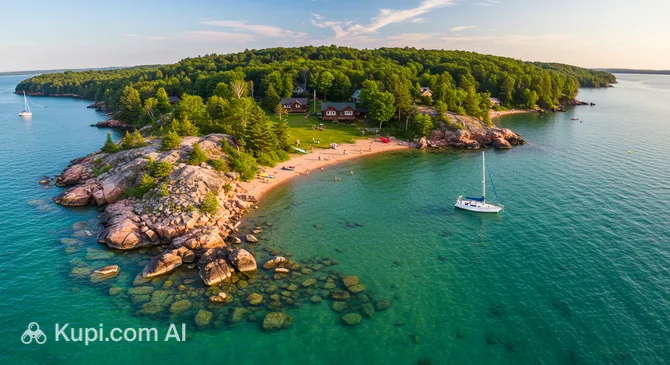
Drummond Island. Illustration.
Source: Kupi.com AI

The fascinating history of Drummond Island is inextricably linked to its unique landscape. One of the main natural attractions is the Maxton Plains—a rare alvar ecosystem where unique plant species grow on limestone plateaus. This place attracts naturalists and photographers with its rugged beauty.

The island is also known as one of the best places in the region for outdoor activities. There is an extensive network of trails for ATVs and off-road vehicles winding through dense forests and rocky paths. Water sports enthusiasts will appreciate the kayaking opportunities along the jagged coastline and excellent fishing in the waters of Lake Huron.

If you are looking for a place to enjoy the purest air, starry skies, and pristine nature, Drummond Island will be the ideal destination for your next trip.

Weather Overview

The climate of Drummond Island is characterized by pronounced seasonality, allowing tourists to enjoy various types of recreation throughout the year. Summers here are generally mild and comfortable: in July and August, the average temperature is around 19°C, and maximums rarely exceed 21.5°C, creating excellent conditions for exploring nature.

Winter months bring frosty weather. January is usually the coldest month with an average temperature of -5.7°C and lows down to -8.2°C. The shoulder seasons, spring and autumn, are cool: in May, the air warms to an average of 8.3°C, and by October, it cools to 10°C. Precipitation is distributed fairly evenly throughout the year, with more wet days during the autumn-winter period.

To properly prepare for your trip and choose suitable clothing, we recommend checking what the expected weather in Drummond Island is for your travel dates.

Expect moderately warm summers with occasional rain and cold winters with frequent precipitation.

Average monthly temperature

Average monthly precipitation

Interesting Facts

Beyond the main attractions, Drummond Island holds many fascinating secrets that reveal themselves only to the most curious travelers. Here are a few facts to help you see this island in a new light:

  • The Last British Stronghold. Drummond Island has a unique historical status: it was the last territory in the USA occupied by British troops. Soldiers held the local Fort Drummond (Fort Collyer) until 1828—a full 13 years after the end of the War of 1812. The British only left the island after a boundary commission finally confirmed it belonged to America.

  • Puddingstones. The island's geological "calling card" is a rare jasper conglomerate that locals call "Puddingstones." They got their name from English settlers: the white quartzite boulders with bright flecks of red jasper reminded them of traditional boiled pudding with berries or raisins. Finding such a souvenir on the beach is considered great luck.

  • Icebreaking Ferry. Since there is no bridge connecting the island to the mainland, the local ferry crossing is the only "lifeline." The ferry operates 365 days a year, and in winter, it acts as an icebreaker, thundering through the frozen DeTour Passage, which is a spectacular sight in itself.

  • The Mystery Barge. For diving enthusiasts, the island has a special secret—a sunken vessel known as the "Mystery Barge." It lies at a depth of about 15 meters, and to this day, no one knows its real name or the story of its sinking, adding an air of mystery to the dive.

How to Get There

Planning a trip to this secluded island requires attention to detail, as there are no direct flights to the island itself. The journey usually involves a flight to the nearest major city on the mainland, followed by a drive and a ferry ride. You can learn more about how to get to Drummond Island by exploring all available routes.

There is no airport in the town of Drummond Island itself, but you can fly into Chippewa County International Airport (IATA: CIU), located in Sault Ste. Marie. This is the closest hub airport, situated approximately 62.5 km from Drummond Island. The trip from there by taxi or rental car takes about 2 hours (including the ferry crossing).

For those looking for more flight options, Cherry Capital Airport (IATA: TVC) in Traverse City is a good choice. It is a larger transport hub with high passenger traffic, receiving flights from many US cities. It is about 203 km from Drummond Island, and the trip to the destination takes about 5.5 hours.

You can also consider Sault Ste. Marie Airport (IATA: YAM), which is located in the Canadian part of Sault Ste. Marie, about 79 km from the island. Travel time is around 2.5 hours, though you must account for the border crossing.

For convenience, here is a summary of the main airports:

AirportPassenger trafficDistance
Chippewa County Airport52 50062 km
Sault Ste. Marie Airport160 40679 km
Emmet County Airport57 42096 km
Alpena County Regional Airport26 000106 km
Cherry Capital Airport787 114203 km

Rail service in this region is less developed and is not the most popular way to reach the island. There is no railway station in Drummond Island itself, but you can arrive at Sudbury Junction (IATA: XDY) in Sudbury, Canada, which is about 217.6 km from Drummond Island. From there, you can reach the island by taxi or bus in about 6 hours, though this route can be complicated due to the distance and border crossing.

Below is information about the nearest railway station:

StationPassenger trafficDistance
Sudbury Junction Station218 km

Main Attractions

Drummond Island offers travelers more than just a vacation; it’s a true immersion into a world of untouched nature and geological wonders. While there are no massive entertainment centers here, the island is rich in places that leave a lasting impression with their pristine beauty and history.

Start your introduction to the region's culture at the Drummond Island Historical Museum. This atmospheric building, constructed from local logs, is a true treasury of memories. The museum's exhibits cover a wide span of time: from the life of Native Americans and the period of British occupation to the heyday of logging and sport fishing. Here, you can see unique artifacts and vintage photographs that help you better understand the rugged yet alluring character of this land.

One of the most amazing natural locations is the Fossil Ledges, located on the northern part of the island in the Maxton Plains area. This place is a true dream for geology and natural history buffs. Walking along the stone terraces, you are literally stepping on the floor of an ancient sea that existed here hundreds of millions of years ago. Fossils of ancient corals and mollusks are perfectly preserved in the limestone rocks and can be seen in minute detail.

For those seeking spectacular views and ready for adventure, a trip to Marble Head is a must. This is the easternmost point of Michigan's Upper Peninsula. High dolomite cliffs here drop straight into the waters of Lake Huron, offering a breathtaking panoramic view. Getting to the lookout point isn't easy: the path leads through challenging forest trails, making it a popular route for off-road enthusiasts in Jeeps and ATVs.

Also worth noting is the famous The Rock golf club, which is known far beyond the island. This is not just a sports venue but a picturesque park where the fairways are organically integrated into the wild landscape among forests, wetlands, and rocky outcroppings. Even if you don't play golf, a stroll around the grounds will provide aesthetic pleasure thanks to the well-maintained territory and harmony with nature.

Local Cuisine

The culinary scene on Drummond Island is the quintessence of Upper Peninsula traditions, where hearty, simple, and incredibly tasty food is valued. You won't find pretentious restaurants with strict dress codes here; instead, cozy establishments await you, where every guest is greeted like an old friend and portions are generous.

The island's main culinary treasure is rightfully considered the Whitefish. This fish is caught right off the coast in the cold waters of Lake Huron, so it is always exceptionally fresh. Local chefs prepare whitefish masterfully: it is most often served lightly fried in golden breadcrumbs (fish fry), planked with lemon and herbs, or as a delicate smoked pâté that is perfect as an appetizer.

Another absolute signature of the region that you must try is the Pasty. This hearty hand-held pie filled with minced beef, potatoes, onions, and rutabaga is the historical legacy of Cornish miners. The pasty is the perfect food for travelers: the pie stays warm for a long time and is convenient to take on a picnic during an ATV trip or a long walk in the forest.

As for drinks, pay special attention to the products from Michigan breweries. The state is famous for its craft beer culture, and local bars will certainly offer you an excellent selection of local ales, stouts, or lagers. During the cooler months, warming drinks like hot chocolate or Irish coffee are popular and pleasant to sip by the fireplace after a day in the fresh air.

The food culture on the island is characterized by its casual nature. The main points of attraction are family diners and restaurants at tourist lodges. A relaxed atmosphere prevails here: at adjacent tables, you might find fishermen discussing their morning catch and tourists sharing impressions of their excursions. Breakfasts here are traditionally hearty and early, to fuel you up for a full day of adventure.

Travel Tips

A trip to Drummond Island is an immersion into a world of wilderness that requires some preparation for maximum comfort. To ensure your vacation on the "Gem of the Huron" goes smoothly and leaves only pleasant memories, we have compiled a list of important practical recommendations.

  1. Clothing and Gear. Weather in the Upper Peninsula is changeable. Even in summer, be sure to bring a fleece jacket and a windbreaker, as evenings by the water can be cool. Comfortable, broken-in, and preferably waterproof shoes are necessary for walking through forests and along rocky shores. Important note: during the warm season, there are many mosquitoes and biting flies in the forests, so a high-quality repellent and long-sleeved clothing are a must.

  2. Transport. There is no public transport (buses or taxis in the usual sense) on the island. The only way to move around comfortably is by private or rental car, preferably one with high ground clearance if you plan to go out into nature. Remember that you can only get to the island by ferry from DeTour Village, which carries vehicles year-round.

  3. Finances. The official currency is the USA dollar. Bank cards are accepted in main stores, restaurants, and gas stations, but having cash on hand is strongly recommended for paying for small services or purchases in small shops. There are very few ATMs on the island, so it's better to withdraw money beforehand on the mainland. Tipping in restaurants is standard for the country—15–20%.

  4. Health and Safety. Drummond Island is a very safe place with low crime rates. The main risks are nature-related: watch out for ticks in tall grass and be careful on slippery rocks by the water. There is a medical center on the island, but it is not open 24/7, and serious medical help is only available on the mainland. Be sure to bring a first-aid kit with necessary medications.

  5. Communication. The primary language of communication is English. Mobile service and mobile internet work stably near the ferry crossing and the main village, but in remote parts of the island, such as near the Maxton Plains, the signal often disappears. We recommend downloading offline maps of the area in advance so you don't get lost on the forest roads.

  6. Local Etiquette. The atmosphere here is friendly and informal. It's customary to greet passersby and drivers of oncoming cars with a slight nod or a wave—this is known as "island politeness." Life on the island moves at a leisurely pace, so service in cafes may be slow—please be understanding.

  7. What to Avoid. Strictly avoid driving off marked trails onto private property. A significant portion of the land on the island is privately owned, and locals are very protective of their boundaries. Also, don't miss the last ferry if you haven't booked accommodation on the island.

  8. Tip for Car Enthusiasts. If you plan to explore the island's famous off-road routes by Jeep or ATV, ensure you have a valid Michigan state ORV sticker. Rangers regularly check for permits on the trails.

By following these simple tips, you can avoid everyday troubles and focus entirely on the unique beauty and tranquility of Drummond Island. We wish you a safe journey and unforgettable impressions from your encounter with nature!

Entertainment & Nightlife

Nightlife on Drummond Island is significantly different from the usual rhythm of major tourist centers. You won't find noisy nightclubs with electronic music, pretentious lounges, or neon entertainment districts here. Evenings on the island are a time for cozy "Up North" relaxation, where the main values are friendly conversation, simple but delicious food, and a relaxed atmosphere after a day spent in nature.

The center of evening activity is roughly the area known as "The Four Corners"—the intersection of the island's main roads where the core infrastructure is concentrated. Establishments here usually stay open until 10:00 PM or midnight, depending on the season and day of the week. The crowd is a colorful mix of locals, hunters, off-road enthusiasts, and tourists sharing stories of their adventures over a pint of beer.

If you're looking for a place to spend the evening, be sure to stop by Pins Bar & Grill. This is one of the island's most popular spots, located at the Drummond Island Resort. It has a lively atmosphere, often broadcasts sports games, and offers bowling on weekends. It's an excellent place for large groups, where you can not only enjoy a cocktail but also have a hearty dinner of pizza or burgers.

Another iconic spot is The Northwood Restaurant & Bar. This is a classic American bar with wood finishes, a jukebox, and a pool table. The atmosphere here is as casual and authentic as it gets: there's no dress code, and patrons often arrive straight from riding snowmobiles or ATVs. It's the perfect location to feel the true spirit of the island and chat with local residents.

Practical Tips and Safety:

When planning an evening out, keep in mind that there are no ride-sharing services like Uber or Lyft on the island. Since distances can be significant and roads unlit, arrange a designated driver in advance or choose accommodation within walking distance of the bars. Drummond Island is very safe in terms of crime; you can walk around at night without worry. The main hazards are wild animals, especially deer, which often wander onto the roads at dusk, so be extremely careful while driving.

The average check in local bars is quite moderate: beer costs about $4–6, and a hearty dinner will run between $15–25. Cash is welcome, though cards are accepted almost everywhere.

As for daytime entertainment, it is inextricably linked with nature and history. In addition to the activities already mentioned, tourists can visit small souvenir shops of local artisans or stop by the island's library, which occasionally hosts cultural events. Those who prefer quiet relaxation will enjoy bird watching in the parks or picnics on the shores of Lake Huron, where you can enjoy the silence before an evening visit to a bar.

Parks & Museums

Despite its modest size and distance from major metropolises, Drummond Island offers guests a wonderful combination of natural beauty and carefully preserved historical heritage. There are no massive exhibition halls or noisy amusement parks here, but the local green spaces and museums possess a special, intimate charm that allows for a deeper understanding of the soul of this rugged land.

The main place for quiet outdoor relaxation is the Drummond Island Township Park. Located on the shores of the picturesque Potagannissing Bay, this park is an ideal location for a family picnic or a relaxed day by the water. A sandy beach is available here, which is a rarity for the island's rocky coast, and the shallow water makes swimming safe even for children. Tourists appreciate this place for its well-maintained walking trails and the opportunity to enjoy the sunset in a silence broken only by the cries of gulls and the splash of waves.

For those seeking complete solitude with the forest, the Williams Nature Preserve is worth a visit. This is a protected natural area with hiking trails winding through dense thickets of coniferous and deciduous trees. The preserve is particularly beautiful in spring when wildflowers bloom and in autumn when the forest is painted in gold and crimson tones. It's an excellent spot for birdwatching: you can find many species of birds native to the Upper Peninsula here.

The cultural heart of the island is rightfully the Drummond Island Historical Museum. The museum building itself is an exhibit—it is built from local logs in a traditional style. Inside, an impressive collection tells the story of Native American life, the period of British occupation, and the island's emergence as part of the USA. Visitors can see authentic everyday items of the early settlers, tools of loggers and fishermen, and learn the history of the famous ferry. The museum is interesting for its homey atmosphere and the enthusiasm of the staff, who are ready to share many local legends.

Art lovers should take note of the local craft shops and studios, which effectively serve as art galleries. Many island residents are talented artisans creating works from wood, ceramics, and stone. Visiting places like the studios at souvenir shops allows you not only to purchase unique works but also to chat with the creators who draw inspiration from the surrounding nature.

Among the historical monuments, the ruins of Fort Drummond hold a special place. Although only stone chimneys and foundations remain of the once-powerful fortification, the site possesses a strong energy. A walk among the ruins allows you to touch the island's military past from the early 19th century. It is a true open-air museum where history intertwines with the landscape.

Insider Tip: Be sure to stop by the museum gift shop or the library to find books by local authors. Often, it is in these books that the most interesting stories about "puddingstones" and sunken ships are hidden—stories you won't find in standard guidebooks.

Getting Around

The public transport system on Drummond Island has its own unique characteristics due to its island location and small population. It is important to note right away that the usual urban transport—subway, trams, or a network of scheduled buses—does not exist here. All logistics are built around private vehicles and the ferry crossing, which is the main transport artery connecting the island to the "mainland."

The only form of regular public transport can be considered the Drummond Island Ferry. It runs between DeTour Village on the mainland and the island itself across the St. Marys River. The ferry carries both passengers and vehicles: from cars and motorcycles to trucks and RVs. This is a reliable system that operates year-round, even in winter months when the vessel acts as an icebreaker.

Ferry fares are paid directly at the crossing. Tickets are sold as a round trip, meaning you pay once when entering the island, and the return trip is already included in the price. Cash dollars and major credit cards (Visa, MasterCard, Discover) are accepted. The cost depends on the type of vehicle; pedestrians pay a nominal amount, but traveling around the island without a car is extremely difficult.

To move around the island itself, tourists are strongly encouraged to use a rental car. Since there are no offices of major chain rental companies on Drummond Island, it is best to rent a car in advance at your arrival airport or in major cities on the mainland. Ride-hailing apps like Uber or Lyft do not work here, and classic taxi services are practically non-existent, so they should not be relied upon.

A popular alternative to standard transport here are off-road vehicles (ORVs) and ATVs. The island is famous for its extensive network of off-road trails, and many tourists rent such equipment at local rental points not only for fun but also as a means of transport along forest roads. In the warmer months, you can also rent a bicycle, though keep in mind that distances between attractions can be significant.

Tourists should remember a few important rules: there are only two gas stations on the island, so keep an eye on your fuel level. The ferry runs on a schedule (usually once an hour, and more frequently during peak hours), but night service stops or becomes very rare. Be sure to check the current ferry schedule before your trip so as not to be left on the shore until morning.

Accommodation

Accommodation options on Drummond Island perfectly match its spirit as a secluded natural refuge. Here, you won't find the usual chain high-rise hotels or noisy urban-style hotel complexes. The housing stock primarily consists of cozy cottages, log cabins, small motels, and resort lodges that blend harmoniously into the forest landscape.

For tourists accustomed to a full range of services, resort hotels are the best choice. The most famous example is the large-scale Drummond Island Resort, located in the northern part of the island. Such places offer more than just a place to sleep; they provide a complete infrastructure: restaurants, bars, equipment rentals, and access to entertainment like golf or bowling. This is an excellent option for those who want to combine modern comforts with proximity to the wilderness.

However, the most popular and authentic way to stay on the island remains renting private homes and cottages. Numerous offers range from modest fisherman's huts with no frills to luxury lakeside villas with private docks and fireplaces. This is the perfect choice for large families, groups of friends, or a romantic getaway.

Geographically, accommodation can be divided into two main zones. The first is the area near the ferry crossing and "The Four Corners." By staying here, you will be within walking or a quick driving distance of shops, the only gas station, and the main cafes. The second category includes remote corners of the island, such as the shores of Scammon or Potagannissing Bays. People choose accommodation here for the silence, the starry sky, and the ability to step right out of the house to the water.

Booking Tip: Drummond Island is a popular destination not only in summer but also in winter (snowmobile season) and autumn (hunting season). Since the number of places is limited, it is strongly recommended to book your stay 2–3 months in advance, especially if you plan to visit during holidays or in July and August.

The price range on the island can be described as moderate, although there are budget options in campgrounds as well as expensive exclusive lodges. Booking is available through major international online platforms or directly through the websites of local management companies, which is often more cost-effective.

Nearby Cities

For those who want to explore the surrounding area, Drummond Island serves as an excellent starting point for day trips to several interesting nearby locations:

The most convenient and popular destination is Sault Ste. Marie. It is the oldest city in Michigan, located just an hour's drive from the ferry crossing. The main attraction here is the famous Soo Locks, an engineering marvel that allows massive freighter ships to move between Lakes Superior and Huron. Tourists can visit observation decks or take a boat cruise through the locks.

If you are ready for a longer journey, consider Traverse City. Known as the "Cherry Capital of the World," this city offers picturesque views of Grand Traverse Bay, many excellent wineries, and restaurants. Although the drive takes more time, its proximity to the famous Sleeping Bear Dunes makes it an attractive spot for nature lovers.

CityPopulationDistance
Bar River52 km
Mackinac Island50071 km
Sault Ste. Marie13 52371 km
Sault Ste. Marie73 36872 km
Elliot Lake10 74193 km

These nearby destinations provide insight into the diverse culture and landscapes of the region, complementing your island vacation with new experiences.

Shopping & Souvenirs

General Overview

Shopping on Drummond Island is the complete opposite of the hustle and bustle of major cities. You won't find multi-story malls or boutiques of famous international brands here. Trade on the island is intimate, almost domestic in nature, focused on providing residents with necessities and offering tourists unique items that serve as reminders of their vacation. The main feature of local shopping is authenticity: many goods are produced by local artisans or are related to the region's history and geology.

Main Shopping Areas and Streets

The center of the island's commercial life is the area known as "The Four Corners." This is the intersection of the main roads where most of the shops are concentrated. Here you can find general stores, shops with outdoor clothing, and small gift boutiques. A walk through this area won't take long, but it's where you can feel the rhythm of the local community.

Shopping Centers

There are no large shopping centers on the island. Their role is filled by "General Stores"—universal shops where everything from groceries and household goods to souvenirs and fishing tackle is sold under one roof. A prime example of such a place is Sune's Food Center, which serves not just as a supermarket but also as a kind of community hub where you can buy branded clothing with the island's logo and local delicacies.

Markets and Studios

While classic markets are few, the island is famous for its artisan studios and seasonal fairs. Along the roads, you can often find small stands where locals sell firewood, homemade jam, or handcrafted items. Special attention should be paid to the shops at art studios, where unique wood products, ceramics, and textiles created by nature-inspired artists are sold.

Souvenirs

The main souvenir to bring back from Drummond Island is something made of Puddingstone. This rare conglomerate with red jasper inclusions is turned into beautiful jewelry, clocks, coasters, or simply sold in polished form. Other popular items include:

  • Clothing (hoodies, caps) with the island's logo or the silhouette of the state of Michigan.
  • Local maple syrup and honey.
  • Locally produced dried fish and smoked meats.
  • Items made of deerskin and antlers.

Opening Hours and Payment

Most shops operate from 9:00 or 10:00 AM to 5:00–6:00 PM. During the summer season, hours may be extended, while in winter, they may be reduced. The main currency is the USA dollar. Bank cards (Visa, MasterCard) are accepted almost everywhere, however, in small seasonal stands or when buying firewood by the road, cash may be required.

Taxes (Tax Free)

The state of Michigan has a 6% sales tax, which is usually not included in the price of the item and is added at the checkout. The Tax-Free refund system for foreign tourists is not common in the USA, and it is not possible to use such a service on Drummond Island.

Reached the end of the page?

That means the route is fully explored