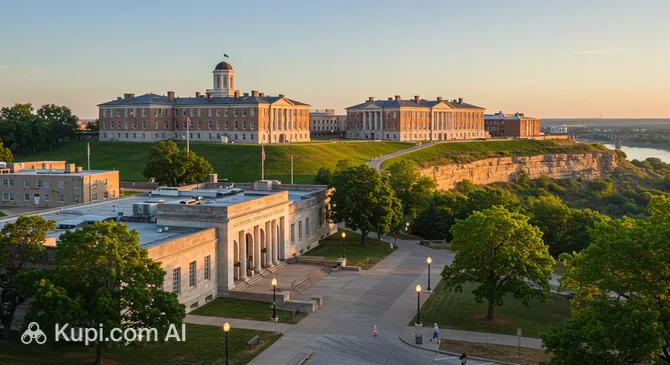
The landscape of Fort Leavenworth is a harmonious mix of manicured military grounds, rugged river bluffs, and deep historical resonance. While the post is primarily a center for army education, its open spaces and cultural institutions offer visitors a chance to explore the natural beauty of the Missouri River valley alongside the rich heritage of the American frontier.
For those seeking fresh air and scenic views, Merritt Lake is a serene spot located just inside the main gate. This small, picturesque body of water is surrounded by walking paths and mature trees, making it a favorite location for a quiet afternoon stroll or a picnic. It serves as a peaceful buffer between the bustling city outside and the disciplined atmosphere of the post. Nearby, the banks of the Missouri River offer a more rugged natural experience. The bluffs here are historically significant, providing vantage points that have been used for centuries to survey the river traffic and the rolling plains beyond.
Just outside the military installation, Leavenworth Landing Park connects the history of the fort with the mighty river that sustained it. Located in the adjacent city of Leavenworth, this linear park features a quarter-mile walking trail along the riverfront. It is an excellent place to watch boats navigate the water and to imagine the steamboats of the 19th century unloading supplies for the frontier army. The park also includes sculptures and interpretive signage that link the natural setting to the area's development.
The cultural heart of the post is undoubtedly the Frontier Army Museum. This institution is essential for understanding the specific role Fort Leavenworth played in western expansion. Its collection is unique, focusing heavily on the equipment and logistics of the 19th-century soldier rather than just battles. Visitors can examine an extraordinary array of authentic stagecoaches, sleighs, and prairie schooners, offering a tangible look at how people and goods moved across the wild landscape. It is a fascinating stop for anyone interested in the mechanics of history.
A short distance from the fort's gates, the Richard Allen Cultural Center offers a profound look at local history, with a special emphasis on the African American experience. The center is housed in a former home of a Buffalo Soldier and features exhibits dedicated to the Black dignitaries and soldiers who lived in the area. It provides crucial context to the Buffalo Soldier Monument located on the post, fleshing out the stories of the men who served in the 9th and 10th Cavalry Regiments.
Another unique cultural venue nearby is the C.W. Parker Carousel Museum. While not military in nature, it reflects the leisure culture of the late 19th and early 20th centuries. The museum preserves the legacy of the "Carnival King" C.W. Parker, who manufactured carousels in Leavenworth. Visitors can see beautifully restored horses and even ride a vintage carousel, providing a whimsical contrast to the solemn history of the fort.
Among the significant historical sites on the post is the Main Parade Ground. This sprawling green expanse has been the center of military life since the fort's founding. Surrounded by historic brick buildings and officers' quarters, it evokes the classic image of a 19th-century army post. Walking along its perimeter allows you to appreciate the architectural evolution of the base. Additionally, the Memorial Chapel, built in 1878, is a must-see architectural gem. Its Gothic Revival style and stunning stained-glass windows honor the soldiers who served on the frontier, adding a spiritual dimension to the site's cultural heritage.
For a truly authentic experience, seek out the Santa Fe Trail Ruts visible on the steep slopes near the river. These physical depressions in the earth were carved by the iron-rimmed wheels of thousands of heavy freight wagons heading west. Seeing these scars in the landscape offers a powerful, visceral connection to the past that no museum exhibit can replicate.