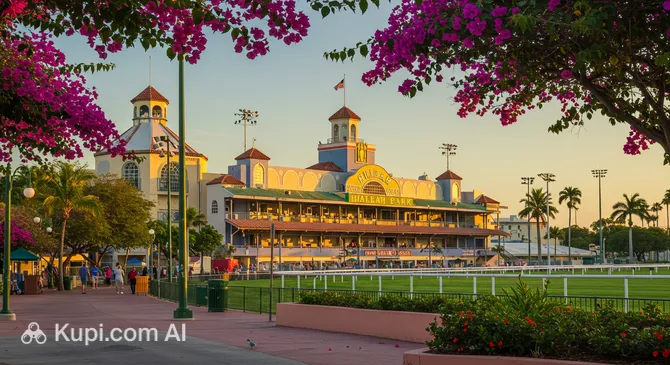
Hialeah is a city with a unique character, located in the sunny state of Florida, USA. Known as one of the largest cultural centers of the Cuban diaspora, it offers travelers more than just a vacation, but a true immersion into the authentic atmosphere of Latin America. The city's name, derived from the Seminole language, translates as "High Prairie," a reminder of its location on a picturesque plain between Biscayne Bay and the Everglades National Park.
Hialeah. Illustration.
Source: Kupi.com AI
Today, approximately 224,000 people live here, making it the sixth-largest city in Florida. Hialeah owes its rapid development to a unique history that transformed marshlands into a dynamic industrial and commercial hub. The main highlight of the city is its demographics: more than 90% of the population is of Hispanic or Latino descent, which leaves a vibrant mark on the local architecture, music, and the rhythm of daily life.
While Hialeah is primarily a residential and industrial area, it attracts visitors with its legendary landmarks, such as the historic racetrack and its flamingo-filled park. It is a perfect destination for those who want to see a "different Florida"—vibrant, bustling, and incredibly hospitable, where Spanish is heard at every turn and the aroma of strong Cuban coffee fills the air.
Weather Overview
The climate in Hialeah is classified as humid subtropical, which means hot, sunny summers and incredibly mild, pleasant winters. The city is influenced by its proximity to the Atlantic Ocean and the Everglades, which creates high humidity levels throughout much of the year. You can check the current forecast on the page providing the weather in the city.
The summer months, from May to October, are characterized by high temperatures—averaging around 28-31°C—and frequent but short tropical rain showers, which usually occur in the afternoon. Winter in Hialeah is considered the ideal time to visit: the average temperature in January is a comfortable 20.5°C, and frosts are exceptionally rare. Expect warm summers with periodic rain and dry, sunny weather during the winter period.
Average monthly temperature
Average monthly precipitation
Interesting Facts
Hialeah was officially founded in 1925 by the duo of aircraft designer Glenn Curtiss and cattleman James H. Bright, who recognized the potential of these plains several years prior.
The city holds the status of being one of the most "Spanish-speaking" in the USA: according to the 2020 census, about 94% of residents speak Spanish at home.
The famous Hialeah Park racetrack is not only a gambling establishment but also an officially recognized bird sanctuary where majestic pink flamingos roam freely.
The city's name has indigenous roots: in the Seminole language, it means "High Prairie," describing the vast grassy plains that existed here before development began.
More than 75% of Hialeah's population are from Cuba or their descendants, making the city a true cultural enclave of Cuban identity in Florida.
How to Get There
Hialeah enjoys a strategic location in Miami-Dade County, making it easily accessible for travelers. The city is surrounded by a network of major highways, including I-75, which provides quick connections to other regions of Florida. For those planning a trip, it is useful to check information in advance on how to get to the main points of interest in the area.
The primary air gateway is Miami International Airport (MIA), located in close proximity. A car ride from the terminals to the city center takes only 20–30 minutes, though during peak hours, it is wise to allow twice as much time due to heavy traffic. The airport receives flights from all over the world, offering tourists maximum convenience when planning their route.
Rail service in the region is also well-developed: lines connecting Hialeah with Miami and the northern suburbs pass through the city. This is a convenient alternative for those who want to avoid traffic jams. The Miami-Dade Transit system complements transportation options, offering regular bus routes connecting Hialeah with the county's key transport hubs.
The legendary Hialeah Park has remained the city's main center of attraction for nearly a century. This vast complex, covering over 80 hectares, combines the excitement of a casino with the tranquility of nature. Here, you can not only try your luck at poker or slot machines but also visit the Audubon Bird Sanctuary. It is home to the famous colony of pink flamingos, which has become one of the city's symbols and attracts photography enthusiasts from all over the world.
For those interested in culture and contemporary events, the Milander Center for Arts and Entertainment is a must-visit. This modern space regularly serves as a venue for art exhibitions, cultural festivals, and ceremonies dedicated to the region's history. Architecturally, the city is interesting for its Latin American neighborhoods, where traditional Spanish motifs intertwine with functional 20th-century development.
Among the city's walking spaces, the Martin Luther King Jr. Memorial Park stands out. This well-maintained area serves as an important reminder of the civil rights movement and offers residents and visitors a peaceful environment to relax amidst the urban bustle. While Hialeah is not overflowing with classic architectural monuments, its streets, filled with local flavor and cozy family-run establishments, are a living attraction in themselves.
Local Cuisine
The gastronomy of Hialeah is a true paradise for lovers of Cuban and Latin American cuisine. The city is infused with the aromas of spices and freshly brewed coffee. Be sure to try ropa vieja—tender shredded beef that is a regional classic, or picadillo—spiced ground meat with olives and raisins. A traditional accompaniment to any meal is black beans with rice and sweet fried plantains.
The food culture here is inextricably linked to family traditions. One of the iconic spots is La Bodeguita Restaurant, serving authentic dishes in the spirit of old Havana. If you are looking for something more casual and unique, stop by El Palenque Cuban Pizzeria to try Cuban pizza with its characteristic thick dough and generous toppings.
It is impossible to imagine a visit to this city without a cup of café cubano—an incredibly strong and sweet espresso that locals drink throughout the day. It is also worth visiting local markets for fresh-squeezed juices made from guava, mango, or passion fruit. Hialeah's culinary scene is appealing for its honesty: the food is prepared "like it's for family," using recipes tested over decades and only the freshest ingredients.
Travel Tips
Planning a trip to Hialeah requires considering its cultural and climatic characteristics. These tips will help you feel confident and get the most out of your visit.
Language Barrier: Be prepared for the fact that Spanish is heard here more often than English. It is recommended to learn a few basic Spanish phrases—this will help you establish contact with locals more quickly.
Transport: To fully explore the city and its surroundings, it is best to rent a car. Public transport exists, but it can be crowded during peak hours and is not always convenient for tourist routes.
Weather and Clothing: Summers in the region are very hot and humid, with frequent thunderstorms. Bring light clothing made of natural fabrics, sunscreen, and an umbrella. The best time to visit is from November to April.
Finance: US dollars are the currency. Cards are accepted almost everywhere, but for small cafes and markets, it is worth having a little cash on hand. Don't forget about the tipping culture (usually 15–20% in restaurants).
Safety: Hialeah is generally safe, but as in any large suburb, avoid walking in unlit industrial zones at night. Stick to busy streets and popular public areas.
Connectivity: Wi-Fi is available in most cafes and hotels. For constant internet access, it is easiest to buy a prepaid SIM card from one of the major American carriers at the nearest shopping center.
Local Etiquette: Local residents are very sociable and friendly. Do not be surprised by loud conversations and active gesturing—it is part of the vibrant Latin American temperament.
May your introduction to this colorful corner of Florida be filled with bright colors and pleasant discoveries!
Entertainment & Nightlife
Entertainment in Hialeah has its own specific rhythm, closely tied to local traditions. The epicenter of evening leisure is Hialeah Park Racing & Casino. Here, visitors can enjoy not only gambling and poker tournaments but also live performances by artists and broadcasts of horse races. It is a place where you can feel the atmosphere of old Florida combined with modern comfort and vibrant shows.
If you are looking for cultural events, check the schedule at the Milander Center for Arts and Entertainment. It often hosts exhibitions by local artists and themed evenings reflecting the city's Cuban heritage. For food-focused entertainment, excellent choices include establishments like La Bodeguita Restaurant or El Palenque Cuban Pizzeria, where dinner is often accompanied by the rhythms of Latin American music.
It is worth noting that Hialeah is more of a family-oriented and quiet area, so for wild nightlife with massive clubs and dancing until dawn, locals and tourists usually head to neighboring Miami. Nevertheless, the city offers a safe and cozy atmosphere for evening strolls and visits to local bars, where you can meet hospitable residents in a relaxed setting.
Parks & Museums
The green zones of Hialeah are, first and foremost, historical landscapes. The most remarkable place is the territory of Hialeah Park. Across its 200 acres lies a true oasis, recognized as a bird sanctuary. The park's hallmark is the pink flamingos that live here surrounded by exotic plants. This place is ideal for leisurely walks and nature observation in the heart of an industrial district.
For cultural enrichment, visit the Milander Center for Arts and Entertainment. This is the city's main exhibition venue, where you can see works by contemporary Florida artists and learn more about the Latin American influence on American art. Additionally, the city is home to the Martin Luther King Jr. Memorial Park, which is an important public space for relaxation and commemorative events.
While Hialeah does not boast a vast number of museums, its proximity to the Everglades allows tourists to easily reach open-air natural exhibits. Local parks, though small, are always well-kept and offer great opportunities for a family picnic or a morning jog under shady palms, allowing you to temporarily forget the city rhythm.
Getting Around
Hialeah's transport system is primarily oriented toward motorists, which is typical for most Florida cities. Nevertheless, public transportation is represented by an extensive network of Miami-Dade Transit buses. These routes connect residential neighborhoods with shopping centers and metro stations, allowing for travel through the city without a private car, though it may take more time.
For trips to downtown Miami or the airport, it is convenient to use the Metrorail—an elevated rapid transit system with stations located at key points in the city. Fares are paid using reloadable EASY Cards or via a mobile app, making the system transparent for tourists. Free shuttles (trolleys) also run throughout the city, covering major social and commercial sites.
If you value time and comfort, taxi or ride-sharing services such as Uber and Lyft, which operate here around the clock, are the best choice. For active tourists, car rentals are available, which is especially relevant for trips to national parks. Bicycle infrastructure in the city is moderately developed, so for long rides, it is better to choose park areas or specialized paths.
Accommodation
The hotel infrastructure in Hialeah has its own unique characteristics: it is difficult to find massive chain resort hotels here, as the city is mostly composed of residential neighborhoods. The accommodation stock primarily consists of small motels, apartments, and guesthouses catering to budget travelers and those visiting on business. This is an excellent option for those who want to save on housing without being far from Miami's key sites.
For more demanding tourists, staying in the nearby suburbs or the airport area, where well-known global brands are represented, may be a good solution. If you decide to stay in Hialeah itself, it is worth looking at the private sector—renting an entire house or apartment through popular services will allow you to better experience the local Latin American lifestyle and coziness.
It is recommended to book accommodation in advance, especially if your trip coincides with major holidays or the racing season at Hialeah Park. Prices here are usually lower than in the tourist centers on the coast, making the city attractive for longer stays. When choosing a place, always check for parking, as a car is the best way to get around the area.
Nearby Cities
Hialeah is an excellent starting point for exploring the most interesting corners of South Florida. Just a few minutes' drive away is Miami—a metropolis with its famous skyscrapers, financial districts, and endless opportunities for cultural leisure. A trip to the center of the region's largest city takes very little time, allowing you to combine the calm pace of a suburb with the dynamics of a mega-city.
For those who prefer nature, the Everglades National Park should be a mandatory stop on the itinerary. This unique wetland ecosystem offers airboat tours where you can see alligators in their natural habitat. Also worth noting are Miami Springs and neighboring Doral, which are famous for their green spaces and excellent golf courses.
If you miss the ocean breeze, the famous beaches of Miami Beach can be reached in about 40 minutes. Exploring the surroundings of Hialeah is an opportunity to see subtropical wilderness, fashionable resorts, and colorful ethnic neighborhoods all in one trip. Be sure to take the chance to expand your travel geography, as Florida knows how to surprise with its diversity.
Shopping & Souvenirs
Shopping in Hialeah is primarily about practicality and local flavor. The city does not claim to be a high-fashion capital, but it offers excellent opportunities to buy everyday goods at affordable prices. The city's main shopping center is Westland Mall, featuring popular American brands of clothing, footwear, and electronics. It is a convenient place for comprehensive shopping in the comfortable conditions of air-conditioned halls.
For those looking for something unique, head to the local Latin American markets and small shops. Here you can find authentic Cuban products, spices, real coffee beans, and traditional clothing. Handicrafts reflecting Caribbean themes or high-quality cigars (keep your country's customs regulations in mind) are often brought home as souvenirs from Hialeah.
Shops in the city usually operate from 10:00 AM to 9:00 PM, though smaller stores may close earlier. Credit cards are accepted everywhere, but a little cash in dollars might be useful in small family bakeries or at markets. If your goal is luxury brands and massive outlets, it's worth spending thirty minutes to reach the neighboring shopping giants in Miami or Doral.