Support

Huntsville (Redstone AAF)

About the Airport

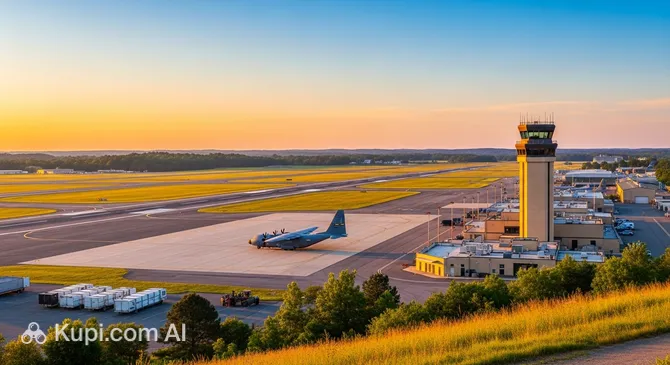
Redstone Army Airfield. Source: Kupi.com Binoculars

Redstone Army Airfield is not just a point on the map of Alabama, but the true heart of the legendary "Rocket City". Located within the territory of the famous arsenal, this facility is steeped in the history of space exploration and advanced technologies. Although you are unlikely to land here on a standard passenger liner, the airfield's proximity to NASA centres makes it a landmark for anyone passionate about aviation and the stars.

IATA CodeHUA
ICAO Code KHUA
City Huntsville
Distance to Centre ~10 km
Status Military / Private
Passengers per Year No commercial flights
ScheduleOnline board

Features and Regional Significance:

Although Redstone Army Airfield is closed to civil aviation and mass tourism, it plays a key role in the unique atmosphere of Huntsville. It was here, adjacent to the Marshall Space Flight Center, that the history of American astronautics was forged. Travellers should note that the neighbouring Huntsville International Airport (HSV) is used for regular flights; however, Redstone remains a symbol of technical progress. While in the city, you may often see unique aircraft in the sky performing missions for NASA or government agencies, adding a special flair to your trip.

Contact Information

  • Official Airport Website: home.army.mil/redstone (Redstone Garrison website, to which the airfield belongs).
  • Helpline Phone: +1 (256) 876-2151 (Base General Switchboard) or +1 (256) 876-1916 (Airfield Operations Centre).
  • Airport Address: Redstone Army Airfield, Redstone Arsenal, Huntsville, AL 35898, USA.
  • Email: usarmy.redstone.imcom.list.garrison-pao@army.mil (Public Affairs Office).
  • Social Media: Facebook (Team Redstone).
  • Lost Luggage Information: Service not provided, as the airfield is a military facility and does not service commercial passenger flights.
  • Passenger Support Contacts: For questions regarding access to the base, please contact the Visitor Control Center at Gate 9 (Rideout Road).

How to Get to the Airport

Since Redstone Army Airfield is an active military facility with restricted access, the ways to get there differ significantly from a standard route to a civilian airport. It is important to understand that regular public transport does not run here, and entry to the territory is strictly regulated.

Most tourists and travellers heading to this region use civilian aviation hubs. The nearest and most convenient is Huntsville International Airport, located just 9 km away. If tickets there are unavailable, you might consider flying into Birmingham-Shuttlesworth International Airport (about 124 km) or Chattanooga Airport (141 km). For long-haul international flights, travellers often choose the major Nashville International Airport, a drive from which takes about two hours.

If your goal is specifically to visit the Redstone Arsenal base (where the airfield is located) for official duty or by invitation, please review the available transport options below.

Car and Taxi

A personal or rented car is the primary method of reaching the base gates. The journey from Huntsville city centre takes only 15–20 minutes. The main entry point for visitors without a permanent pass is Gate 9 on Rideout Road. The Visitor Control Center is located next to it, where a one-time pass must be processed.

Taxis and ride-sharing services (Uber, Lyft) are available in the city but have limitations. A taxi driver can only take you as far as the Visitor Center at Gate 9. Entry onto the base territory itself by taxi is generally prohibited unless the driver has a special permit. The cost of a trip from the city centre to the checkpoint is approximately $20–30.

Public Transport

Huntsville operates the Orbit bus network, but there are no direct routes entering the airfield territory or approaching the terminals closely. The nearest public transport stops are at a significant distance from the checkpoint, so the bus is not considered a viable option for transfer with luggage.

Car Rental

You can rent a car at the neighbouring civilian Huntsville Airport or at rental company offices in the city. This is the most recommended option for moving around the region. Please note: to enter Redstone Arsenal in a rental car, you will need a valid driving licence, the rental agreement, and insurance. Vehicle inspection at the checkpoint is a standard procedure.

Parking

Parking at the airfield itself is intended exclusively for official use and authorised personnel. Visitors who have received a pass to the base should check parking rules with their hosting party. Leaving cars in unauthorised places on the territory of the military facility is strictly prohibited and may result in towing and fines.

Recommendations Before Travel:

  • Always carry your passport or ID. Driving licences must be valid.
  • Allow extra time (from 15 to 45 minutes) for passing control at the Visitor Center, especially during morning rush hours.
  • Clarify the exact address or building number on the base with the hosting party in advance, as the Arsenal territory is vast, and navigation can be difficult.

Terminals and Map

Structure and Terminals: Military Facility Features

When planning a visit to Redstone Army Airfield (HUA), travellers and seconded specialists must immediately discard the usual expectations of civilian aviation hubs. Here, you will not find crowded waiting halls, Duty Free shops, or a confusing system of gates. The airfield infrastructure is subject to strict military regulations and functionality.

Number of Terminals and Their Purpose

In fact, the airport has one main Base Operations Building, which functions as a terminal. It exclusively services:

  • Military aviation (helicopters and aircraft of the US Army).
  • Government aircraft.
  • Cargo and special NASA flights (in the interests of the Marshall Space Flight Center).
  • Corporate flights for Department of Defence contractors (by special permission).

There is no separation into international and domestic terminals here, as the facility does not accept regular commercial flights.

Airport Layout and Service Zones

The airfield territory is a highly secured area with clear zoning:

  • Departure and Arrival Zone: This is a single space on the apron in front of the operations building. Passengers (usually military personnel or official delegations) disembark from transport directly at the aircraft or pass through a short corridor in the operations building.
  • Hangars and Technical Zones: Most of the infrastructure is occupied by hangars for equipment maintenance and warehouses. Access here for passengers is strictly prohibited.
  • Waiting Rooms: Inside the operations building, there is a small rest area for crews and high-ranking guests, equipped with basic amenities (briefing room, toilets, water dispensers), but it is not intended for long stays.

Transfers and Navigation

The concept of "transfer between terminals" is irrelevant here. Logistics are designed as simply as possible: a road leads from the base checkpoint (usually Gate 9) to the airfield. Navigation inside the building itself is intuitive due to its compact size. All movements on the airfield are carried out only when accompanied by ground personnel or in specialised transport.

Check-in and Security Procedures

The process of "checking in" for a flight at HUA differs significantly from the civilian one:

  • Processing Time: The main time is spent not on luggage screening before departure, but on passing control when entering Redstone Arsenal base. The queue at the checkpoint (Gate 9) can take from 15 to 45 minutes, especially in the morning.
  • Registration: There are no check-in counters as such. Passenger lists are approved in advance. Document checks (military ID, ID card, passport) take place directly before boarding.
  • Security Screening: Conducted by base security services. It may be more thorough than in civilian airports but proceeds faster due to the low flow of people.

Navigation Recommendations for Visitors

If you have a flight departing from or arriving at Redstone Army Airfield, follow these rules:

  1. Orient yourself towards Gate 9: This is the main entrance for visitors and commercial transport, located off Rideout Road. Do not attempt to enter through service gates without a special pass.
  2. Follow escort instructions: Often, driving to the airfield itself inside the base requires an accompanying person (Sponsor) from the garrison or NASA staff.
  3. Do not rely solely on GPS: Navigators may plot routes through closed zones. Follow road signs inside the base pointing to "Airfield" or "Base Ops".

Airport History

The history of Redstone Army Airfield (HUA) is a chronicle of how a small airstrip transformed into a key hub for American astronautics and the defence industry. Its destiny is inextricably linked with the evolution of Huntsville itself from a quiet town into the famous "Rocket City".

Foundation and Military Origins

The airfield's roots go back to World War II. In 1941, Redstone Arsenal was founded here as a chemical plant and ammunition assembly shop. Initially, the aviation infrastructure was modest and intended for basic logistical needs of the army. However, a turning point came in 1950, when a team of German rocket engineers led by Wernher von Braun was transferred to the base. It was then that the need arose for a significant expansion of the airfield to transport heavy equipment and rocket components.

The "Space Race" Era

In the 1950s and 60s, the airfield witnessed historic events. On 8 September 1960, President Dwight Eisenhower landed here to officially open the NASA Marshall Space Flight Center, located next door. This event cemented the airfield's status as the main air gateway for the US space programme. During these years, the runway received aircraft delivering stages of the Saturn rockets, which subsequently sent humans to the Moon.

Modernisation and the Shuttle Era

One of the most significant pages in HUA's history was the Space Shuttle programme. In the late 1970s, the airfield underwent massive reconstruction. The runway was reinforced and lengthened to 2,200 metres (7,300 feet) to accommodate the modified Boeing 747 (Shuttle Carrier Aircraft), which carried space shuttles "on its back". Important tests with the shuttle mock-up "Enterprise" were conducted here, including the famous Mated Vertical Ground Vibration Tests.

Records and Achievements

Redstone Army Airfield is known for regularly hosting unique aircraft:

  • The legendary transport aircraft Super Guppy, whose huge cargo cabin resembles a bloated fish, frequently landed here. It delivered oversized rocket parts that could not be transported by road.
  • The airfield became one of the key points in the development and testing of US Army helicopter technology, including the famous Apaches and Black Hawks.

Modern Stage

In the 21st century, the airfield continues to play a strategic role. In the 2010s, the infrastructure was updated in connection with the expanded presence of various federal agencies on the base, including the FBI. Today, HUA remains a closed military facility, but its historical legacy lives on: every takeoff of a heavy transporter or test helicopter reminds us that the road of humanity to the stars began right here.

Interesting Fact: Few people know that the old airfield control tower was long considered one of the symbols of the base until it was replaced by a modern digital command centre capable of coordinating flights for both manned aviation and the latest unmanned systems.

Services and Amenities

Services and amenities at Redstone Army Airfield (HUA) differ radically from what tourists are accustomed to in civilian airports. Strict functionality reigns here: the infrastructure is tailored for performing official tasks, not for traveller entertainment. Since the airfield does not service commercial flights, classic Duty Free zones or food courts are absent here. Nevertheless, a basic set of services ensuring comfortable arrival and departure is provided for authorised personnel and official guests.

Restaurants, Cafés, and Shops

There are no catering outlets directly in the airfield operations building (Base Operations). Passengers and crews are advised to arrange meals in advance.

  • On Base Territory: If you have permission to move around the Redstone Arsenal garrison, you can use the base infrastructure. A few minutes' drive from the airfield, there are chain cafés (Subway, Burger King), as well as canteens and a food court in The Exchange (PX) shopping centre.
  • Shops: Souvenirs with NASA or Army symbols can only be purchased in specialised stores on the Arsenal territory or at the Space & Rocket Center museum outside the base. There are no shops in the terminal itself.

Lounges and VIP Service

The concept of a VIP lounge has a different meaning here. Existing rest zones are intended for crew briefings, or for waiting high-ranking military officials or government delegations. These are small, modestly furnished rooms with soft furniture, a television, and coffee/water machines. Access to them is regulated by mission status, not by loyalty cards or business class tickets.

Connectivity and Finance

  • Wi-Fi: A secure military network operates within the operations building. Access to civilian Wi-Fi for visitors is generally unavailable or requires special authorisation. It is recommended to rely on your own mobile data (cellular coverage on the base is good).
  • Charging Stations: There are no specialised stands for charging gadgets, but a sufficient number of standard power sockets (US standard, 110V) are available in waiting areas.
  • Banks and Currency Exchange: There are no currency exchange points at the airfield. ATMs are located in other garrison buildings (for example, near the PX or administrative blocks), so it is better to withdraw cash before entering the base.

Medical Services and Accessibility

As a military facility, the airfield has means for providing first aid, but there is no full-scale medical centre or pharmacy in the terminal building. In case of an emergency, assistance is provided by garrison medics (Fox Army Health Center is located on the base territory).

  • For Passengers with Reduced Mobility: The operations building is single-storey and equipped with ramps in accordance with US federal standards. However, special assistance services (as in civilian airports) are absent; assistance with boarding is provided by the hosting party or the crew.
  • For Passengers with Children: Mother and child rooms or play areas are not provided, as the facility is not designed for family travel.

Accommodation: Hotels on Base and Nearby

If your visit requires an overnight stay, the choice of accommodation depends on your access status.

On Redstone Arsenal Territory (Only for individuals with clearance):

  • Candlewood Suites Building 3440: A modern hotel of the IHG Army Hotels chain, located right on the base. Convenient for long business trips; rooms are equipped with kitchens.
  • Redstone Inn: A historic hotel built during the era of the rocket programme's inception. It offers atmospheric accommodation in close proximity to administrative centres.

Outside the Base (For all categories of tourists):

The nearest civilian hotels are located in the Bridge Street Town Centre area and near the US Space & Rocket Center, just 10–15 minutes' drive from Gate 9.

  • The Westin Huntsville: A high-class hotel with a lake view and access to shops.
  • Huntsville Marriott at the Space & Rocket Center: Located as close as possible to the city's main museum and the base entrance.
  • Drury Inn & Suites: A popular option with a good price-quality ratio.

Conference Rooms and Business Services

The airfield itself has rooms for pre-flight briefings and operational meetings. For larger events, the garrison infrastructure is used: the Heiser Hall conference centre or halls in the headquarters building. Booking these premises is possible only through official channels and in advance.

Where to Eat

When looking for dining options at Redstone Army Airfield (HUA), travellers should keep in mind the specific nature of this location. Since it is an active military facility without commercial passenger terminals, you will not find the usual variety of restaurants, coffee shops, and bars in the airside or arrival zones here. Dining infrastructure here is strictly functional and designed for military personnel and base employees, not tourists.

Dining Inside the Terminal (Operational Building)

In the flight operations building (Base Operations) itself, from where military and government flights depart, full-service catering establishments are absent.

  • Format: Exclusively vending machines.
  • Assortment: Bottled water, soda, canned coffee, crisps, chocolate bars, and crackers.
  • Recommendation: If you have a flight, it is strongly recommended to have a substantial meal before arriving at the airfield or bring food with you. There will be no opportunity to buy hot food immediately before boarding.

Restaurants on Base Territory (Redstone Arsenal)

If you have a pass to the garrison territory and time before your flight, you can use the base infrastructure. Most establishments are a 5–10 minute drive from the runway.

Food Court at The Exchange (PX)

The base's main shopping centre offers a classic set of American fast food.

  • Options: Chain cafés such as Burger King, Subway, Taco Bell, and Qdoba Mexican Eats.
  • Prices: Budget-friendly ($10–15 for lunch).
  • Opening Hours: Usually from 10:30 to 18:00 (hours may be reduced on weekends).
  • Dietary Requirements: At Subway and Qdoba, you can assemble vegetarian or gluten-free bowls (salads without bread). Please note that Halal options are generally limited to vegetarian items.

The Summit at Redstone

The base's entertainment complex (formerly the Officers' Club), where more substantial food can be found.

  • Cuisine: American classics — burgers, steaks, salads.
  • Features: Here they serve full meals in a quiet atmosphere. Bar service is available (usually during non-working hours or for events).
  • Average Bill: $15–25.

The Links at Redstone (Golf Course)

A restaurant at the base golf club, open to all employees and visitors with clearance.

  • Menu: Sandwiches, soups, breakfasts. An excellent place for a quiet snack overlooking the course.

What to Try in the Region: Local Specialities

Since the gastronomic experience at the airfield itself is limited, true culinary discoveries await you just outside the base gates, in the city of Huntsville (especially in the Bridge Street Town Centre area, which is very close to Gate 9).

Dishes worth looking for in local restaurant menus:

  • Chicken with Alabama White Sauce: The state's main gastronomic calling card. This is chicken smoked over charcoal and covered with a piquant sauce based on mayonnaise, vinegar, and pepper.
  • "Meat and Three": A traditional Southern lunch format where you choose one meat dish (for example, meatloaf or fried chicken) and three side dishes (macaroni and cheese, green beans, mashed potatoes, or fried okra).
  • Fried Green Tomatoes: A classic Southern snack popular in Alabama.

Recommendations for Dining Before Departure

For a quick snack: If you are in a hurry, it is best to stop by The Exchange zone on the base (if access is available) or any fast food outlet on the approach to Gate 9. Inside the airfield building, count only on snacks.

For a full lunch: It is recommended to visit the Bridge Street Town Centre area (off-base, 10 minutes' drive). There is a wide selection of restaurants represented there: from steakhouses (Connors Steak & Seafood) to Asian cuisine (P.F. Chang's). It is also easiest to find specialised vegan, gluten-free, and high-quality Halal dishes there before heading for a special flight.
Tips for Travellers

Travelling through Redstone Army Airfield (HUA) differs significantly from a standard flight on civilian airlines. Since this is a military facility with restricted access, standard rules operate differently here. The main advice for all passengers is to remember that you are on the territory of an active military base, where order and chain of command are more important than comfort.

Recommendations on Arrival Time

Unlike major hubs where you need to arrive 2–3 hours early, logistics here depend on obtaining a pass to the base. The boarding procedure itself is quick, but the journey to the airfield can take time.

  • Main Obstacle — Checkpoint: If you do not have a permanent pass (CAC card), allow at least 30–45 minutes for processing a temporary pass at the Visitor Center at Gate 9. In the morning (from 07:00 to 09:00), there may be queues here.
  • Time Before Departure: It is recommended to arrive at the Base Operations building 1 hour before the scheduled departure time. This is sufficient for document checks and safety briefings.

Check-in and Security Features

Forget about check-in counters and online check-in. Your name must already be on the flight manifest (passenger list), approved by the command or mission organisers.

  • Documents: Always keep your identification (ID or passport) and travel orders with you if you are military personnel. For civilians, possessing an identification document compliant with Real ID requirements is mandatory.
  • Screening: Conducted by military police or base security services. The procedure may be less formalised than at TSA, but stricter regarding personal belongings and electronics.

Tips on Choosing a Seat on the Plane

Seat selection here is a nominal concept. On military and government aircraft (for example, C-12 Huron or Gulfstream business jets), seating is often free or determined by the senior officer/mission leader.

  • If you are flying on a cargo plane with passenger seats, be prepared for minimal comfort: seats may be fold-down (mesh) and located along the sides.
  • Tip: If possible, take seats further away from the engines (to reduce noise) and closer to the exit, as disembarkation often happens rapidly.

Hand Luggage: What is Allowed and Prohibited

Luggage rules depend on the type of aircraft, but there are general recommendations for flights from military airfields:

  • Electronics: Clarify in advance whether the use of laptops and phones is permitted on board. In some cases (secret missions), gadgets may be confiscated for the duration of the flight or prohibited from use.
  • Photography: It is strictly prohibited to photograph airfield infrastructure, the runway, and equipment without special permission from a Public Affairs Officer (PAO).
  • Dimensions: Overhead bins on service aircraft are often smaller than standard ones. It is recommended to use soft bags which are easier to stow in limited spaces.

Recommendations for Passengers with Connections

Redstone Army Airfield is not a transit hub. There are no connecting flights here.

  • If your route involves a further flight by commercial airlines, you need to get to Huntsville International Airport (HSV). The distance is about 10 km. Factor in time for exiting the base (passing the checkpoint on exit is free, but traffic can be dense).
  • Taxis are generally not allowed onto the base territory for transfers between airports. Order a car to the Visitor Center at Gate 9 or arrange for official transport from the hosting party.

Tips for Saving Time and Money

  • Food and Water: There are no shops or cafés at the airfield. To avoid going hungry (especially if the flight is delayed), be sure to bring a snack and water with you. This will save your nerves, as buying food on-site is impossible.
  • Transport: Do not try to arrive at the airfield via Uber/Lyft directly to the steps — the driver will be turned away at the gates. It is best to go to the Visitor Center and transfer there to a car of a meeting colleague with clearance.

What to Do in Case of Flight Delay

Delays at military airfields are often related to task priority ("Mission Essential") or weather, as flight safety requirements here are extremely high.

  • Be Autonomous: There may be no Wi-Fi or entertainment in the waiting area. Download books, films, or work to your devices in advance. Bring a power bank, as there may not be enough sockets for everyone.
  • Communication: Find out the direct contact number of the flight coordinator (Flight Operations) or your escort (Sponsor) to receive information promptly. There are no information boards here like in ordinary airports.

Reached the end of the page?

That means the route is fully explored