Support

Ellis Field

About the Airport

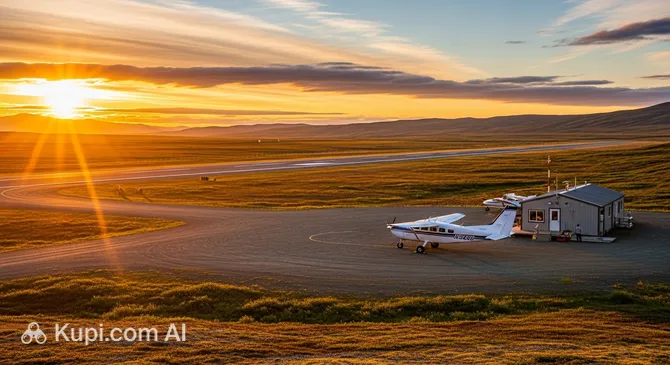
Ellis Field. Source: Kupi.com Binoculars

Ellis Field Airport is not merely a transport hub, but a true "lifeline" for the residents of the unique Nunivak Island in the Bering Sea. This small but vital airfield connects the secluded community of Mekoryuk with the "mainland," ensuring the delivery of mail, groceries, and medicines in harsh Arctic conditions. For tourists venturing into this region, Ellis Field serves as a gateway to the world of the ancient Cup'ig culture and wild nature, where herds of muskoxen can be encountered.

IATA Code MYU
ICAO Code PAMY
City Mekoryuk
Distance to Centre ~5.5 km
Status Regional
Annual Passengers ~1,200 (2023)
Schedule Check with airline

Features and Advantages of the Airport:

Ellis Field Airport possesses modest infrastructure, characteristic of remote corners of Alaska. There are no familiar terminals with shops and cafés here; instead, travellers are met by a small waiting building that offers protection from frequent winds and bad weather. The runway has a gravel surface, which requires special skill from pilots, especially in conditions of fog or snowfall.

The main advantage of the airport is its strategic importance. Regular flights (mostly on small Cessna-type aircraft) connect the island with the city of Bethel, from where one can reach Anchorage. Thanks to this air bridge, guests of the island can touch the pristine nature of the Arctic, see walrus haul-outs, and get acquainted with the traditional lifestyle of the indigenous population.

Contact Information

As Ellis Field (MYU) is a small regional airfield located in a remote area, it does not have its own separate website or a permanent office with administrative staff directly in the terminal building. Management is carried out by the Alaska Department of Transportation (DOT&PF) from a regional centre, and passenger service is handled by local air carriers.

Below is the most up-to-date contact information for planning your trip and resolving operational issues:

  • Official Page (within the Alaska Airport System): dot.alaska.gov/stwdav (Alaska Department of Transportation & Public Facilities)
  • Airport Manager Phone (based in Bethel): +1 907-543-2498 (Airport Manager, Alaska DOT&PF)
  • Airport Address: Ellis Field Airport, 3 miles West of City, Mekoryuk, Nunivak Island, AK 99630, USA (The airport is located approximately 5.5 km west of the city of Mekoryuk)
  • Email (Airport Management): nick.norwood@alaska.gov (Regional Airport Manager)
  • Social Media (Airport Owner): Facebook DOT&PF (News on Alaska infrastructure status)
  • Lost Luggage and Flight Status Information: The airport does not have its own baggage tracing service. For all questions regarding luggage and flight delays, it is necessary to contact the airline operating the flight directly (see contacts below).
  • Passenger Support Contacts (Airlines):
    • Grant Aviation: +1 888-359-4726 (General Line), +1 833-842-6011 (Mekoryuk Office), email: res@flygrant.com
    • Ryan Air: +1 907-562-2227 (Customer Service), +1 907-827-8314 (Agent in Mekoryuk)

How to Get to the Airport

Getting to Ellis Field airport in the city of Mekoryuk is a task that differs from a trip to a familiar metropolitan air terminal. Since Mekoryuk is located on the remote Nunivak Island and represents a small community, the standards of megacities do not apply here. The road to the terminal is part of the local flavour, where instead of yellow taxis and express trains, you may be met by ATVs or snowmobiles.

The distance from the residential part of the village to the runway is only about 5.5 km. Travel time usually takes 10–15 minutes, but may vary depending on weather conditions and the state of the dirt road.

Transfers and Taxis

There are no official taxi services or ride-hailing apps (like Uber) in Mekoryuk. The main and most reliable way to get to the airport is by prior arrangement.

  • Transfer from the host: If you are flying to the island as a tourist, photographer, or hunter, your guide or lodge owner will almost always organise meeting and drop-off. This is often included in the cost of the tour or accommodation.
  • Private rides: You can agree with local residents for a ride in a private pickup truck or SUV. The cost of such a service is negotiable and often symbolic (or around 20–30 dollars), as everyone in the village knows each other.
  • Seasonal transport: Be prepared that the mode of transport depends on the season. In summer, it might be a car or an ATV (All-Terrain Vehicle), and in winter — a snowmobile. Luggage in such cases is secured on special sleds or trailers.

Public Transport and Car Rental

There is no familiar public transport (buses, minibuses, or trains) on the island. There are also no car rental counters (Rent-a-Car) here. The road network is limited to the boundaries of the village and the approach to the airport, so renting a car here is impractical.

For hiking enthusiasts, walking to the airport is an option if you have a light backpack and the weather permits. However, given the strong winds of the Bering Sea, this option is recommended only for prepared travellers.

Parking

Near the small Ellis Field airport building, there is an unequipped parking area. This is an open space with a dirt surface.

  • Cost: Free.
  • Security: Absent. Leaving transport here is safe from the perspective of low crime rates, but weather factors should be considered.

Recommendations Before Departure

Due to changeable weather, flights may be delayed or cancelled. It is recommended to arrive at the airport approximately 40–60 minutes before departure. Be sure to contact the airline representative on the day of departure to confirm the flight before leaving the village, as the terminal building may be closed if the plane has not departed from the hub.

Regional Transport Hubs

Ellis Field is the endpoint for many routes, but for planning complex logistics across Alaska, it is useful to know about other airfields in this region. The main connecting link for Mekoryuk is the large regional hub — Bethel Airport, through which the majority of passengers pass. Also within a radius of 250 km are other local airports serving neighbouring communities:

Terminals and Map

The structure of Ellis Field (MYU) airport is extremely simple and adapted to the harsh conditions of the Arctic. You will not find confusing mazes, endless corridors, or travelators here. The airport complex consists of a single small one-storey structure performing all functions at once.

Terminals and Their Purpose

The airport operates with one single terminal. It is a compact heated building that serves simultaneously as a waiting room, check-in area, and meeting place for arriving passengers. There is no separation into "domestic" and "international" departures, as all flights here are internal (regional), connecting Nunivak Island with mainland Alaska.

Map and Navigation

Navigation at Ellis Field is intuitive and does not require the use of maps or diagrams.

  • Entrance: The entrance to the building is located on the side of the access road.
  • Waiting Area: Inside is a small area with seats where passengers can shelter from the wind and frost while waiting for the plane.
  • Boarding Gate: The door leading directly to the apron (airfield) is in the same room.

It is impossible to get lost here: the entire path from the building entrance to the plane steps takes no more than one minute on foot.

Departure and Arrival Zones

Due to the small size of the building, the departure and arrival zones are effectively combined.

  • Arrival: After landing, the aircraft (usually a small Cessna or Piper) taxis to the building. Passengers step onto the ground and walk a few metres to the terminal or directly to the meeting transport. Baggage claim is done manually: the pilot or ground staff unload bags from the plane and hand them to passengers right on the airfield.
  • Departure: Passengers wait for the boarding call inside the building. When the plane is ready, the airline representative or pilot invites everyone to board.

Terminal Features

The terminal infrastructure is minimalist and aimed at providing basic comfort:

  • Heating: The most important function of the terminal is protection from extreme weather conditions.
  • Sanitary Facilities: Simple restrooms are usually available in or near the building.
  • Absence of Services: There are no Duty Free shops, cafés, ATMs, or currency exchange points here. Travellers are advised to carry a supply of water and snacks, as well as cash in advance.
  • Connectivity: Mobile connection may work unstably; Wi-Fi for passengers is generally absent.

Check-in and Security

Procedures at Ellis Field differ from major hubs in their informality and speed, but require compliance with special flight safety rules for small vessels.

  • Check-in Time: It is recommended to arrive 30–45 minutes before departure. The processing procedure itself takes 5–10 minutes.
  • Weighing: This is a critically important stage. Airline staff weigh not only the luggage but often the passengers themselves (or ask for exact weight). This is necessary for the correct balancing of the small aircraft.
  • Screening: A classic TSA screening zone with metal detector frames and scanners is generally absent here. However, pilots have the right to visually inspect luggage. Passengers undergo full screening at the transit hub (e.g., at Bethel Airport) if transferring to mainline flights.

Navigation Recommendations

Since there are no jet bridges and boarding is done from the ground, the main rule of navigation at Ellis Field is to watch your step. The apron surface may be uneven, slippery, or snow-covered. Be careful when moving from the building to the plane and always follow the pilot's instructions, as the rotating propellers of neighbouring planes can pose a danger.

Airport History

The history of Ellis Field is inextricably linked with the era of heroic polar aviation and the exploration of inaccessible territories of Alaska. Before the appearance of an equipped runway, the connection of Nunivak Island with the mainland was episodic. In the first half of the 20th century, only brave "bush pilots" flew here, landing their seaplanes in coastal waters or using flat stretches of beaches during low tide as improvised airfields.

Formation and Development

The need for stable air communication matured by the middle of the last century, when the settlement of Mekoryuk began to be officially established as a permanent centre of residence for the community. The official registration of the airfield and the construction of a stationary dirt strip occurred during the period of active development of the Alaska regional transport network (1950s–1960s). This allowed seasonal and tide-dependent landings to be replaced by regular flights, vital for the delivery of mail and emergency medical aid.

Modernization and Reconstruction

Throughout its history, the airport has undergone several stages of modernization aimed at combating the harsh climate of the Bering Sea. Significant work was carried out in the 2000s, when the embankment of the runway was strengthened. Due to permafrost and boggy soil characteristic of the tundra, engineering services had to regularly add and level the gravel surface to prevent ground subsidence.

An important stage was equipping the airfield with modern lighting equipment. The installation of powerful lights along the runway allowed aircraft to be accepted in conditions of polar night and frequent fogs, which significantly increased flight safety and reduced the number of cancelled flights in the winter period.

Historical Events and Facts

The airport played a key, albeit indirect, role in a unique biological project. Nunivak Island is known as the place where muskoxen were introduced in the 1930s to restore the population. In subsequent decades, it was the development of aviation and the presence of Ellis Field that allowed scientists and biologists to regularly visit the island to monitor the herd, and later — to organise controlled eco-tourism and trophy hunting, the income from which supports the local community.

Interesting Features of History:

  • Battle with the Elements: The airport's history records many cases where it became the only salvation for the island during storms when sea navigation was impossible for weeks. The airfield literally saved residents from isolation.
  • Versatility: In the first decades of operation, the field was often used not only for planes but also as a gathering ground for residents during important events, as it was one of the flattest and driest places in the district.
  • Evolution of Transport: Old-timers remember times when mail from the plane was delivered to the village on dog sleds. Today, this path is travelled by snowmobiles and ATVs, which clearly demonstrates the technical progress around the air harbour.

Services and Amenities

For passengers planning a departure from Ellis Field Airport (MYU), it is important to understand the specifics of this transport hub. This is not a classic international hub with glittering showcases and food courts, but a purely functional facility in Arctic conditions. The level of service here is defined by the "bush airport" format (airfield for small aviation), where the main priority is safety and protection from the cold, not entertainment or premium-class comfort.

Below is a description of available (and missing) services so you can properly prepare for your journey.

Restaurants, Cafés, and Shops

There are no catering or retail outlets in the terminal building.

  • Food and Drinks: It is impossible to buy even a bottle of water or a sandwich here. Travellers are strongly advised to stock up on provisions in advance. If you are flying from Mekoryuk, buy a snack at the local village store. If flying in transit, take care of food at the departure airport (e.g., in Bethel).
  • Shops: There are no souvenir stalls, newsstands, or Duty Free shops. Unique handmade souvenirs (items made from walrus ivory or muskox wool) are best purchased directly from artisans in the village before departure.

Waiting Halls and VIP Services

The airport has one general waiting room for all passengers.

  • Comfort: The hall is a small heated room with seats. Its main function is to provide an opportunity to wait for the plane in warmth.
  • VIP Lounges: Separate lounge zones, business lounges, or priority corridors (Fast Track) do not exist at Ellis Field. All passengers are in equal conditions.

Connectivity and Electronics

Digital infrastructure in this part of Alaska is poorly developed.

  • Wi-Fi: Public Wi-Fi for passengers is generally absent.
  • Mobile Connection: Cellular network signal (the main provider in the region is GCI) may be available, but its quality and mobile internet speed often depend on the weather.
  • Device Charging: There are no special stands with USB ports. There may be ordinary power sockets in the waiting room, but their number is limited, and they are not always free. It is recommended to have a fully charged power bank with you.

Banks and Currency Exchange

Financial services at the airport are completely absent.

  • ATMs: There are none in the terminal.
  • Currency Exchange: Not performed.
  • Payment: Airlines may accept credit cards, but in conditions of unstable connection, payment terminals may not work. It is strongly recommended to carry cash US Dollars (in small bills) for paying for taxis or unforeseen expenses.

Medical Services

There is no medical post or pharmacy at the airport. Airline staff can only provide the most basic first aid (presence of a first aid kit is mandatory). In case of serious health problems, it is necessary to contact the clinic in the city of Mekoryuk, located 5 km from the airfield.

Services for Passengers with Children

There is no specialised infrastructure (mother and child rooms, changing tables, play areas) at Ellis Field. Given the possible long wait for a flight due to weather, parents should take toys, books, and warm food for the child in a thermos with them.

Services for Passengers with Disabilities

Despite the lack of high-tech equipment (lifts, ambulifts), staff of local airlines (Grant Aviation, Ryan Air) traditionally provide comprehensive assistance to passengers with reduced mobility.

  • Boarding: Carried out from the ground via a small ramp or steps. Pilots or ground staff personally help passengers board the plane.
  • Terminal Accessibility: The building is single-storey, which facilitates movement. However, the gravel surface around can be difficult for wheelchairs, especially during thaw or snow.

Hotels and Accommodation

There are no hotels in the airport itself or within walking distance. Sleeping in the terminal is also not permitted, as the building may close for the night. The nearest accommodation options are in the settlement of Mekoryuk:

  • Guest Houses (B&B): Several small private guest houses operate in the village. The number of places in them is extremely limited.
  • School: Sometimes travellers are accommodated in the local school building (by prior arrangement with the administration), which is a common practice in remote Alaskan villages.

Important: Never fly to the island without a prior accommodation booking or agreement with the host, as there may simply be no available places.

Conference Halls and Business Centres

Business services (document printing, meeting room rental, fax) are not provided at the airport.
Where to Eat

The issue of dining at Ellis Field Airport (MYU) requires special attention and careful planning. Since the airport represents a remote point on the map of Alaska with minimal infrastructure, passengers should not count on familiar service.

Restaurants, Cafés, and Bars

In the single small terminal building, catering establishments are completely absent. Here you will not find:

  • Cafeterias or coffee shops;
  • Bars or restaurants with service;
  • Vending machines with snacks or drinks;
  • Kiosks with ready-made food.

The departure and arrival zone (which are combined here into one room) is intended exclusively for short-term waiting for a flight and protection from bad weather.

Where to Eat: Strategy for Passengers

The only available dining option for travellers at Ellis Field is the principle of "bring your own". Given the unpredictability of the weather and possible flight delays, it is strongly recommended to take care of provisions in advance.

1. Buying Food in Mekoryuk Village (Before Departure)

If you are flying from the island, the last chance to buy food is to visit the local store in the settlement of Mekoryuk before heading to the airport (which is 5.5 km from the residential zone).

  • Assortment: In the rural General Store, you can usually find a basic set of products: canned goods, crackers, chips, chocolate, soda, and juices. Fresh pastries or ready-made sandwiches are extremely rare.
  • Local Flavour: As a snack for the road, you can purchase (if available) dried fish (yukola) or venison products — this is filling and convenient for transport.
  • Prices: Be prepared for a high price range. The cost of products on the island is 2–3 times higher than on the mainland due to complex cargo delivery logistics. An ordinary chocolate bar or a pack of biscuits may cost significantly more than usual.
  • Opening Hours: Shops in the village may close for a lunch break or operate on a reduced schedule on weekends. Plan your visit in advance.

2. Dining in Transit (Before Arrival)

If you are flying to Nunivak Island, it is best to have a hearty lunch or buy food to take away at the transfer airport — Bethel Airport. There is a small restaurant and vending machines there, offering far more opportunities for refreshment before a flight on a small plane.

Dietary Requirements (Vegetarian, Halal, Gluten-Free)

In the absence of public catering, adhering to a diet falls entirely on the passenger's shoulders.

  • For Vegans and Vegetarians: Finding specialised products in the village is difficult. Fresh fruits and vegetables are a scarcity and are delivered by planes, so their presence on store shelves is not guaranteed. It is recommended to bring nuts, dried fruits, or protein bars from the mainland.
  • Gluten-Free and Halal Food: Specialised labelling on goods in the local store may be absent, and the choice is extremely limited. Passengers with strict restrictions need to bring their entire food supply with them from Anchorage or Bethel.

Drinks and Water

There are no drinking fountains in the terminal. Tap water in the restroom (if it is functioning) may be technical and unsuitable for drinking.

  • Recommendation: Be sure to carry a bottle of water or a thermos with hot tea/coffee, especially in the winter period. A hot drink will help keep you warm while waiting for boarding in the cold climate of the Bering Sea.

Summary: Recommendations for Quick Snacks and Lunch

  • For a Full Lunch: Eat at the guest house (lodge) in Mekoryuk before departure or at Bethel Airport before flying to the island. There are no conditions for a full meal (no tables) at Ellis Field.
  • For Snacks: The ideal option is energy bars, nut mixes, chocolate, or jerky. These are products that do not take up much space, do not spoil, and provide the necessary energy.

Travel Tips

Travelling through Ellis Field Airport (MYU) differs significantly from flights through major international hubs. The laws of small aviation and the harsh climate of Alaska reign here. To ensure your visit to Nunivak Island goes smoothly, we have prepared a number of practical tips considering local specifics.

Arrival Time and Planning

Unlike large airports, there is no need to arrive 2–3 hours early here. However, being late is also not an option — small planes fly on a tight schedule and depend on daylight hours.

  • Optimal Time: Arrive at the airport 45–60 minutes before departure. This time is sufficient for weighing luggage and processing documents.
  • Contacting the Airline: On the morning of departure, be sure to call the airline representative to check the flight status. Weather on the island changes instantly, and the flight may be delayed or cancelled even before the plane takes off from Bethel.

Check-in, Luggage, and Safety

The processing procedure here is simple but has its strict rules dictated by flight safety on light aircraft (Cessna, Piper).

  • Weighing: Be prepared for the airline employee to ask you to step on the scales not only with your suitcase but also yourself with your hand luggage. Do not be embarrassed — this is critically important for calculating the aircraft's centre of gravity. Honestly state your weight if there are no scales.
  • Luggage Type: Use soft bags or backpacks instead of rigid plastic suitcases. They are much easier to place in the limited luggage compartment of a small plane.
  • Hand Luggage: There are no familiar overhead bins in the cabin. All large items, including "standard" size carry-on backpacks, will likely be taken into the hold. Take only the most valuable items into the cabin: documents, phone, camera, and necessary medicines.
  • Dangerous Items: Rules for carrying liquids and sharp objects are the same here as everywhere else. Pay special attention to bear sprays — carrying them in the cabin is strictly prohibited, and in luggage, it is possible only with special packaging and notifying the pilot.

Choosing a Seat on the Plane

On regional planes, there is no possibility of online seat selection or booking a specific seat when buying a ticket.

  • Seat Allocation: The pilot will indicate where you should sit based on the weight distribution (balancing) of the vessel. One cannot argue on this matter.
  • Tip: If the load permits, you can politely ask the pilot to seat you by the window or even in the co-pilot's seat (if company rules allow this and the seat is free). Views of the tundra and the Bering Sea from a bird's eye view are unforgettable.

Tips for Transit Passengers

Most tourists arrive in Mekoryuk via the hub airport in the city of Bethel. Connections have their nuances.

  • Through Check-in: Generally, luggage is not automatically registered to the final destination if you are flying with different airlines (e.g., Alaska Airlines to Bethel, and then Grant Aviation to Mekoryuk). You will have to collect your luggage in Bethel and check it in again.
  • Time Buffer: Allow at least 2–3 hours for the transfer. In winter, it is better to plan an overnight stay at the hub, as non-flying weather can delay departure to the island for a day or more.

Customs and Documents

Since all flights to Ellis Field are domestic (from other US cities), there is no customs or passport control upon arrival.

  • Documents: Nevertheless, keep a photo ID with you (passport or driving licence). Airline staff are obliged to check it before boarding according to federal regulations.

How to Save Time and Money

A trip to remote corners of Alaska is not a cheap pleasure, but a sensible approach will help avoid unnecessary expenses.

  • Cash: Always have a supply of cash with you. There are no ATMs in Mekoryuk and the airport, and payment terminals may not work due to connection failures. Cash will be needed to pay for taxis or purchases from locals.
  • Food with You: Groceries on the island are very expensive. Bring a supply of snacks, tea, and freeze-dried food from the "mainland". This will save your budget and help out if the store is closed.
  • Transfer: Arrange a meeting at the airport in advance with the host (guide or accommodation owner). "Catching" a car on the spot is difficult, and walking 5 km with luggage in the wind is a dubious saving.

Actions During Flight Delays

Delays and cancellations due to fog, wind, or blizzards are common for Ellis Field. One needs to treat this philosophically.

  • Plan "B": Always have the contact details of your accommodation in Mekoryuk. If the flight is cancelled, you may have to return to the village.
  • Patience: There is no information board in the small terminal. You will learn all news personally from the airline agent. Do not go far from the airport building if the flight is delayed, as a "window" of good weather can open suddenly, and boarding will be announced quickly.
  • Warm Clothing: Even if it seems warm outside, keep a jacket handy. Waiting can drag on, and the heating in the terminal does not always cope with the Arctic wind.

Reached the end of the page?

That means the route is fully explored