Support

Tuluksak Airport

About the Airport

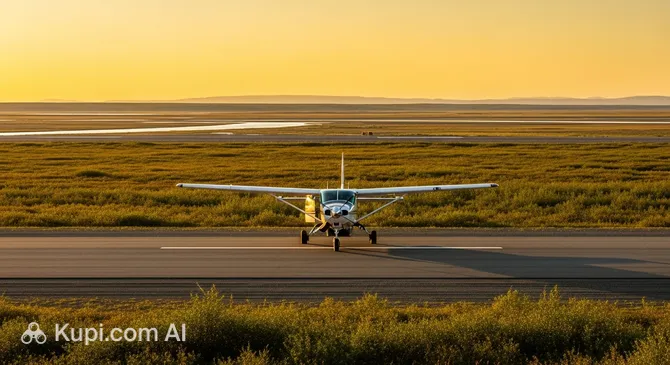
Tuluksak Airport. Source: Kupi.com Binoculars

Tuluksak Airport is not merely a dot on the map, but a true "lifeline" for a small indigenous settlement in southwestern Alaska. You will not find the usual glass-fronted terminals or noisy departure lounges here; passengers are greeted by the harsh yet mesmerising beauty of the tundra and a modest gravel strip. For the local community, this air harbour serves as the only reliable link to the outside world, ensuring the delivery of mail, food, and medicine to a place that is impossible to reach by land.

IATA Code TLT
ICAO Code PALT
City Tuluksak
Distance to city centre ~1 km
Status Regional / Domestic
Passengers per year About 3,000
Schedule Regular flights to Bethel

Airport Features and Highlights:

  • Key Artery: The airport is a vital link connecting the isolated village with the regional hub — the city of Bethel.
  • Alaskan Authenticity: The gravel runway, approximately 750 metres long, accommodates only small aircraft, offering passengers a unique experience of flying over the wild nature.
  • Accessibility: Despite its modest size and lack of complex infrastructure, the airport operates year-round, supporting the vitality of the settlement.

Contact Information

  • Official Airport Website: The airport does not have its own web resource. Official information and technical data are posted on the Alaska Department of Transportation and Public Facilities portal: dot.alaska.gov.
  • Information Desk Phone: There is no direct telephone line at the terminal, as the facility operates without permanent staff. For administrative questions, you can contact the regional airport manager in Bethel: +1 907-543-2498.
  • Airport Address: Tuluksak Airport, Tuluksak, AK 99679, USA.
  • Email: There is no direct email for passengers. Official inquiries should be sent via the feedback forms on the Alaska Department of Transportation website.
  • Social Media: Official pages on social networks are not maintained.
  • Lost & Found Information: There is no centralised "Lost & Found" service at the airfield. In case of loss or damage to belongings, you must immediately contact the airline that operated the flight (the main carriers in the region are Grant Aviation and Yute Commuter Service).
  • Customer Support Contacts: Information support regarding flights and tickets is provided exclusively through the call centres of the respective air carriers.

How to Get to the Airport

Transport logistics in Tuluksak differ radically from standard urban conditions. Since the settlement is not connected by a road network to the rest of Alaska or major metropolises, you can only get here (and, accordingly, to the airport) by air or river. The airport is located just 1 kilometre from the residential part of the village, making the journey short but specific in terms of transport choice.

Public Transport

There are no familiar buses, trains, or metro systems in Tuluksak. Due to the small size of the settlement and the lack of paved roads, there is no need for classic public transport. Locals move around on foot or use personal vehicles adapted to tundra conditions.

Taxi, Transfers, and Local Experience

There are no official taxi services (like Uber or city taxi fleets) here. However, an informal transport system exists in the village:

  • Quad Bikes (ATV): In the warmer months, this is the main mode of transport. Locals often give passengers with luggage a lift to the runway for a nominal fee or by agreement.
  • Snowmobiles: In winter, when everything is covered in snow, snowmobiles become the main means of transport. This is the fastest way to get to the plane.
  • On Foot: Given the proximity of the airport to homes (the distance rarely exceeds 1–1.5 km), many passengers with light hand luggage prefer to walk to the airfield.

Car Rental

There are no car rental agencies in Tuluksak itself. The road network is limited to the boundaries of the settlement, so renting a car here is impossible and pointless. The nearest point where you can find any service transport or rental is the major regional hub, Bethel Airport, from where most flights to Tuluksak originate.

Parking

There is no specially equipped asphalt parking lot with markings at the airport. Instead, there is an open gravel area next to the runway where those seeing people off can leave their quad bikes or snowmobiles. Parking is free and unguarded, operating on a "park and fly" principle based on trust within the small community.

Travel Time and Cost

  • Time: The journey from any point in the village to the aircraft steps takes from 5 to 15 minutes.
  • Cost: If you arrange a lift with a local resident, the price is usually negotiable and can range from 5 to 20 US Dollars, often in cash. Walking is free.

Important Recommendations for Travellers

The main factor affecting the ability to get to and fly from the airport is the weather. Fog and blizzards can suddenly cancel flights. Also, bear in mind that small aircraft have strict baggage weight limits. If you are planning a complex route through the region, for example, via Kalskag Municipal Airport or other neighbouring hubs, check the allowable cargo dimensions with the carrier in advance, as space on board a Cessna is limited.

Terminals and Map

The infrastructure of Tuluksak Airport (TLT) is extremely minimalist and fully complies with Alaska's small aviation standards. Travellers accustomed to multi-storey complexes with Duty Free shops and business lounges should be prepared for basic conditions. There is no complex navigation system here, and the entire area can be seen at a glance.

Number of Terminals and Structure

There is virtually no terminal at the airport in the traditional sense of the word. The entire airport complex is represented by a single functional zone located next to the apron. Often this is a small service building or a heated module designed to protect waiting passengers and cargo from the harsh tundra weather conditions. There is no separation into international and domestic sectors, nor are there any gates.

Arrival and Departure Zones

Departure and arrival processes take place in the same location — directly on the gravel area by the aircraft.

  • Departure: Passengers wait for the aircraft's arrival at the edge of the airfield or in a shelter. When the plane lands and unloads, the pilot invites passengers to board.
  • Arrival: After the propellers stop, passengers descend via built-in steps or a ladder directly onto the ground and collect their luggage, which the pilot unloads from the cargo hold by hand.

Navigation Features and Transitions

The airport layout is elementary: it consists of a runway and an adjacent aircraft parking area. There is absolutely no need for a map or navigational signs. It is impossible to get lost here — the distance from the arrival point (where the snowmobile or quad bike dropped you off) to the plane is only a few dozen metres. No walkways, escalators, or shuttles between facilities are provided.

Check-in and Pre-flight Procedures

Check-in procedures in Tuluksak take place in an informal and expedited atmosphere, but require discipline:

  • Arrival Time: It is recommended to be on site 20–30 minutes before the scheduled departure time. Small aircraft fly according to visual flight rules and weather conditions, so the schedule may shift.
  • Check-in: Carried out by an airline representative or the pilot himself right at the aircraft. You must present identification.
  • Baggage and Weighing: This is a critical stage. Due to the small size of the aircraft, every kilogram counts. You and your bags may be asked to stand on scales to calculate the aircraft's balance.
  • Security Screening: There are no classic metal detector frames or scanners here. Visual security checks are conducted by the crew.

Recommendations for Passengers

Given that the "terminal" may be locked or full of cargo, and waiting often takes place outside, the main recommendation for comfort is to dress according to the weather. In winter, waiting for a flight in the piercing wind without warm gear can be dangerous to health. Always maintain visual contact with the pilot: they coordinate all movements on the apron.

Airport History

The history of aviation in Tuluksak is inextricably linked with the era of heroic "bush pilots," who in the mid-20th century began to replace traditional dog sleds and boats, becoming the main link between the isolated Yup'ik village and the outside world. The airport has gone from a spontaneous landing site to a vital transport hub.

Inception and Official Opening

The official date of the airport's activation in the registries is considered to be October 1959. However, the first landings were made here even earlier. Initially, pilots used natural features: in summer, seaplanes landed on the Tuluksak River, and in winter, ski landing gear allowed landing directly on the frozen ice. The construction of a permanent gravel strip in the late 1950s became a necessity to ensure year-round and safe access that did not depend on ice thickness or river water levels.

Development Stages and Modernisation

The history of Tuluksak Airport is a chronicle of constant adaptation to the harsh conditions of Alaska.

  • Transfer to State Control: In subsequent decades, as regional infrastructure developed, the airport came under the management of the Department of Transportation. This allowed for standardised maintenance: the strip began to be regularly graded and reinforced with gravel, which increased flight reliability.
  • Lighting and Navigation: A crucial stage of modernisation was equipping the airfield with lighting equipment. Given the polar nights, the installation of high-intensity lights and a rotating beacon allowed flights to be received in the dark, which is critical for emergency medical evacuation.
  • Erosion Control: The Tuluksak River has a willful character and often changes its course, creating a threat of erosion to adjacent territories. Throughout the airport's history, engineering services have repeatedly had to carry out work to strengthen the coastline to preserve the runway.

Significant Facts: The "Postal Revolution"

The airport played a special role in the 1970s with the introduction of the By-Pass Mail system. This government programme, launched years after the airfield opened, allowed cargo and food to be sent to rural Alaska at affordable postal rates, bypassing intermediate sorting centres. For Tuluksak, this was a turning point: thanks to established air links and the new logistics system, fresh fruit and vegetables appeared in local shops, which radically changed the population's quality of life.

Today, the airport continues to be a modest but indispensable facility, preserving the spirit of true polar aviation, where pilot skill and equipment reliability are more important than architectural refinements.

Services and Amenities

Passengers planning a trip through Tuluksak Airport (TLT) need to understand the specific nature of this location. This is not a standard city airport, but a remote landing strip in the Alaskan wilderness. The level of service here is limited to the basic needs of small aviation, so preparation for the flight requires complete autonomy from travellers.

Dining and Shops

There are absolutely no catering or retail outlets on the airfield territory or in its immediate vicinity:

  • Restaurants and Cafés: There are no coffee shops, vending machines, or snack bars here. If you have to wait for a flight, it is strongly recommended to stock up on water, a thermos with tea, and snacks in advance.
  • Shops: Duty Free, souvenir shops, or newsstands are not provided. The nearest small village store (Trading Post) is located in the village of Tuluksak itself, about a 15–20 minute walk away, but its opening hours can be unpredictable.

Financial Services and Connectivity

Infrastructure for handling financial or business matters is absent at the airport:

  • ATMs and Currency Exchange: There are no ATMs or currency exchange points at the airport or in the village. All payments (for example, for a private transfer to the strip) are best made in US Dollars cash. Withdraw the necessary amount in advance at a major hub airport.
  • Wi-Fi and Device Charging: There is no public Wi-Fi network on the runway. Mobile coverage may work intermittently depending on your operator and weather conditions. There are no power outlets for charging phones or laptops, so be sure to bring fully charged portable chargers (Power Banks) with you.
  • Prayer Facilities: There are no dedicated prayer rooms or multi-faith spaces available at the airstrip.

Comfort and Waiting Areas

Concepts like "Business Lounge" or "VIP Lounge" do not apply in Tuluksak. The waiting area serves as either a small unheated shelter (depending on the current state of infrastructure) or the open-air space next to the aircraft parking spot. Amenities are minimal, so dress warmly and according to the weather.

Services for Passengers with Children

There are no specialised mother-and-child rooms or play areas here. Travelling with small children requires careful preparation: all necessary hygiene products, baby food, and warm clothes must be carried in your hand luggage. Given the lack of toilets at the airfield, take care of the child's sanitary needs before leaving home or before flying out of the hub airport.

Conditions for Passengers with Reduced Mobility

Tuluksak Airport presents certain difficulties for passengers with reduced mobility:

  • Surface: The runway and adjacent territory have a ground surface (gravel, earth, in winter — snow and ice), which makes movement in a wheelchair extremely difficult.
  • Boarding the Aircraft: Jet bridges and ambulifts are absent. Boarding small aircraft like the Cessna is carried out via narrow steps.
  • Assistance: There is no escort staff on site. All assistance during boarding and disembarking is provided by the aircraft pilot. It is strongly recommended to notify the airline of your needs at least 48 hours before departure.

Medical Assistance

There is no medical post or pharmacy at the airport. In case of an emergency, you must contact the local clinic in the settlement of Tuluksak, where health aides are on duty, or call for air ambulance services via pilots or local residents.

Hotels and Accommodation

There are no commercial hotels, hostels, or guest houses at the airport itself or in the village of Tuluksak. Tourism is not developed here, and overnight stays are only possible by personal arrangement with locals or, in emergencies, in the school building (with permission from the administration). Most travellers plan their route to fly out on the same day to the regional centre, where a wide selection of hotels is available.
Where to Eat

The issue of food at Tuluksak Airport (TLT) requires special attention and advance planning from the traveller. Since the airport is a remote landing site in the Alaskan wilderness, familiar catering infrastructure is completely absent here. Passengers should not count on restaurants, food courts, or even coffee machines.

Restaurants, Cafés, and Bars

The airport has no terminals in the classic sense, and, accordingly, no catering establishments. You will not find a departure zone with cosy tables or lounges to wait for your flight.

  • Terminals: Infrastructure is limited to the runway and, occasionally, a small unheated shelter. Places for selling food and drinks are not provided.
  • Vending: Vending machines with water or snacks are also absent.

Local Cuisine and Alternatives

You won't be able to try local delicacies or signature dishes immediately before departure. In the village of Tuluksak itself, located about a kilometre from the strip, there is a small rural store (Trading Post) where you can buy a basic set of products: canned food, crackers, carbonated drinks, and chocolate bars.

  • Important to know: The shop operates on its own schedule, which may not coincide with your flight time. Ready-made hot food is usually not sold there.
  • Water: Access to drinking water at the airfield is absent. It is strongly recommended to carry a supply of bottled water with you.

Dietary Recommendations

Given the complete autonomy of the location, the only strategy for passengers is the principle of "bring everything with you".

  • For Special Dietary Requirements (Halal, Vegetarian, Allergies): Since it is impossible to buy food on site, and the assortment of the rural store is extremely limited and unpredictable, passengers with special dietary needs (Halal, gluten-free diet, etc.) must bring their entire ration with them from the point of departure. Please note that Halal options are generally not available in remote Alaskan villages.
  • Quick Snack: The optimal option is to take energy bars, nuts, dried fruits, or sandwiches in sealed packaging in your hand luggage.
  • Hot Food: If you face a long wait in the cold, a thermos with hot tea or coffee will be your best friend. There is nowhere to fill it with boiling water at the airport, so do this in advance.

Best Strategy for a Full Meal

The most reliable option is to eat a hearty meal before departing from the hub airport from which you are heading to Tuluksak (most often this is Bethel). Cafés and diners are available there. You should arrive in Tuluksak well-fed and with a supply of high-calorie snacks in case the return flight is delayed due to weather conditions.

Travel Tips

Travelling through Tuluksak Airport is a unique experience that has little in common with flights through major international hubs. Here, the laws of small aviation, the changeable Alaskan weather, and trusting relationships within the community rule. To ensure your trip goes smoothly and safely, use the following practical tips.

  • Arrival Time: Forget about the "two-hour rule". In Tuluksak, it is sufficient to be on the airfield 20–30 minutes before the appointed time. This is enough for the pilot to mark you on the list, accept your luggage, and prepare the plane. However, do not be late: mail flights and air taxis will not wait for a single passenger to the detriment of the schedule.
  • Check-in and Security: There are no check-in counters, luggage belts, or metal detector frames here. "Check-in" takes place right at the aircraft: the pilot will check your ID and weigh your luggage. Important: be prepared to state your exact body weight. This is not a matter of politeness, but a critical safety requirement for calculating the balance of a small aircraft.
  • Seat Selection: In aircraft like the Cessna or Piper Navajo, seats are not assigned when booking. Seating is directed by the pilot. They will indicate where you should sit based on weight distribution on board. If you want to sit by the window or next to the pilot (co-pilot seat), you can politely ask, but the final decision always rests with the aircraft commander.
  • Luggage and Hand Luggage:
    • Avoid hard plastic suitcases. The best choice for flying in Alaska is soft sports bags, holdalls, or backpacks, which are easier to fit into a limited cargo hold.
    • Overhead bins for hand luggage are absent. Everything you take into the cabin (camera, medicines, documents) will have to be kept on your knees or at your feet.
    • Strictly observe weight limits. Excess weight can be very expensive or may not fly with you at all if the plane is fully loaded.
  • Recommendations for Transit Passengers: Most flights from Tuluksak head to Bethel, where passengers transfer to larger planes to Anchorage. Allow at least 2–3 hours for the connection, or better yet — plan your departure from the village with a large margin. Weather in the tundra changes instantly, and a delay in the "air taxi" from Tuluksak can lead to missing the main flight.
  • Customs Control: The airport handles exclusively domestic flights, so customs and border procedures are absent here.
  • Saving Time and Money:
    • Cash: Always carry small bills (1, 5, 10, 20 US Dollars). You will need them to pay for a ride on a quad bike or snowmobile from the village to the plane, as cards are not accepted by locals.
    • Food with You: Groceries in rural Alaskan stores cost 2–3 times more than on the "mainland". Buy snacks in advance in a major city.
  • Actions in Case of Flight Delay: This is the most common problem in the region. If the flight is postponed due to fog or wind:
    • Check information directly with the airline by phone (it is better to save the numbers in advance).
    • Dress in layers. Waiting can drag on, and there are no warm halls at the airport. Thermal underwear, a hat, and gloves are mandatory even in summer.
    • Have a "Plan B": contacts of locals or an arrangement for an overnight stay at the school if the flight is rescheduled for the next day.

Remember that in Tuluksak, the plane is not just transport, but the only link to civilisation. Treat possible difficulties with understanding and enjoy the views of the wild nature that open up immediately after takeoff.

Reached the end of the page?

That means the route is fully explored