Support

Napaskiak Sea Plane Base

About the Airport

Napaskiak Sea Plane Base. Source: Kupi.com Binoculars

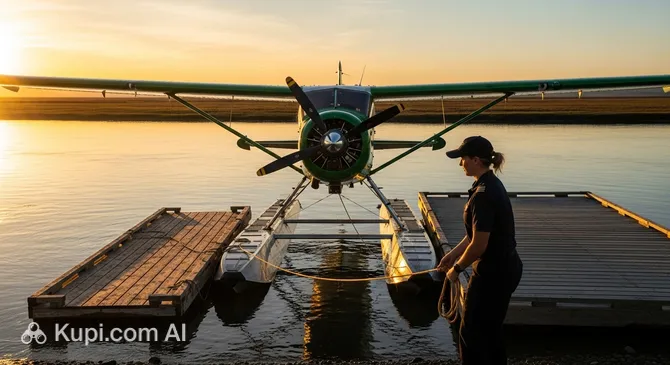
Napaskiak Sea Plane Base is not just a transport hub, but a true "lifeline" for the residents of this remote corner of Alaska, where winding rivers and endless tundra replace familiar highways. Located on the banks of the majestic Kuskokwim River, this facility embodies the spirit of true polar aviation, accommodating both seaplanes landing directly on the water and small aircraft on a gravel strip. Here, amidst the harsh yet picturesque nature, every takeoff and landing turns into a small adventure, connecting a tiny community with the "mainland."

For travellers, arriving here is a unique opportunity to see Alaska as it was a century ago: without the hustle and bustle of metropolises, but with the sincere hospitality of the locals. A flight over the river delta reveals breathtaking views of wild landscapes that are impossible to see from the ground, making the journey to Napaskiak an unforgettable part of the trip.

IATA Code PKA
ICAO Code PAPK
City Napaskiak
Distance to centre 2 km
Status Domestic (Regional)
Annual Passengers ~1,500
Schedule Check with local carriers

Features and Advantages:

Unique Location: The airport and seaplane base are located in immediate proximity to the Kuskokwim River, allowing the use of both wheeled landing gear for gravel landings and floats for water landings. This makes transport connections more flexible and dependent on the season and weather conditions.

Access to Wildlife: For tourists, Napaskiak serves as an excellent starting point for fishing expeditions and eco-tours. The proximity to water and the absence of dense urban development create ideal conditions for getting acquainted with the flora and fauna of the region immediately after disembarking.

"Bush Piloting" Atmosphere: Here you can observe the work of true aces of small aviation. Pilots flying into Napaskiak possess the highest level of skill, manoeuvring in the complex weather conditions of Alaska, which adds a special ambience to the entire stay in this place.

Contact Information

  • Official Website: The airport does not have its own separate website. Current technical information is posted on the portal of the Alaska Department of Transportation and Public Facilities (Alaska DOT&PF).
  • Airport Address: Napaskiak Airport, Napaskiak, AK 99559, USA.
  • Information Desk Phone: +1 (907) 269-0760 (Alaska Central Region Airports Management Office). Please note: there is no permanent staff or telephone on the runway itself.
  • Email: There is no direct email for enquiries. For official requests, use the general contacts of DOT&PF.
  • Social Media: Official social media accounts for the airport are not maintained.
  • Lost Luggage Information: Due to the absence of a terminal, all issues regarding lost items must be resolved directly with the airline operating your flight (most often Grant Aviation or Yute Commuter Service).
  • Passenger Support Service: Provided by local air carriers. It is recommended to save the airline's phone number before departure.

How to Get to the Airport

Transport logistics in Napaskiak differ radically from familiar urban conditions. Here, in the heart of wild Alaska, the journey to the airport or seaplane base is not a trip on the metro or bus, but a small adventure dictated by the season and weather. Since the village is not connected to the mainland road network, the main methods of movement are closely tied to the Kuskokwim River and small aviation.

Public Transport

Classic public transport (scheduled buses, trolleybuses, or trains) does not exist in Napaskiak. The village infrastructure is compact, and most facilities are within walking distance. The key transfer hub for connecting with the outside world is Bethel Airport, located just a few kilometres upriver. It is from there that the majority of passengers and cargo arrive.

Taxis, Transfers, and Local Specifics

Instead of the usual yellow taxis, a unique system of private transport operates here, the type of which depends on the time of year:

  • Summer (Water Taxi): The main way to get from Bethel or neighbouring settlements to the seaplane landing site is by motorboats (skiffs). Locals often offer private transport services along the river.
  • Winter (Ice Crossing): When the Kuskokwim River freezes, it turns into the region's main highway — the "ice road." During this period, trips on snowmobiles or specially equipped cars are popular.
  • Inside the Village: To get from a guest house to the airstrip, quad bikes (ATVs) are most often used in summer or snowmobiles in winter. This is the most common "local transport."

Car Rental

There are no car rental points in Napaskiak itself. You can only rent a car in the neighbouring city of Bethel, but you will only be able to use it for a trip to Napaskiak during the winter season when the ice crossing on the frozen river is officially open. Tourists without experience driving on ice are strongly advised to use the services of local drivers with prepared vehicles.

Parking

There are no specialised paid parking lots at the airport. Since traffic is minimal, vehicles (ATVs or snowmobiles) are usually left in the immediate vicinity of the runway or seaplane dock. This is free and safe, as everyone in the community knows each other.

Travel Time and Cost

The journey from the residential area of the village to the takeoff point takes from 5 to 15 minutes on foot or a couple of minutes on an ATV. If you are travelling from Bethel:

  • Time: A trip by boat or via the winter road takes about 20–30 minutes.
  • Cost: Prices are negotiable and depend on the current cost of fuel. Approximately, a boat trip from Bethel may cost from 20 to 50 dollars per person (it is better to have cash).

Neighbouring Transport Hubs

The Yukon-Kuskokwim Delta region is served by a whole network of small airfields that support the life of remote villages. If your route is complex, information about other nearby points may be useful:

Recommendations for Tourists: Always arrange a meeting with the host party or guide in advance. Given the lack of mobile coverage in some zones and unpredictable weather, a reliable transfer by boat or snowmobile should be booked before your arrival at the regional hub.

Terminals and Map

The infrastructure of Napaskiak Airport (PKA) is a striking example of the minimalism characteristic of Alaskan small aviation. Here you will not find multi-storey buildings, glass walkways, duty-free shops, or confusing gate maps. A "terminal" in the usual sense of the word is absent here, and all operations take place literally under the open sky, in immediate proximity to the runway or river dock.

Structure and Service Zones

Instead of a single terminal complex, the airport is functionally divided into two independent zones, each serving a specific type of aircraft. The distance between them is small, but covering it requires going into the village.

  • Zone 1: Gravel Airstrip. Located to the east of the main village settlement. It is a compacted dirt strip about 900 metres long. Wheeled aircraft (Cessna, Piper) land here, carrying out scheduled and charter flights, as well as mail planes. Infrastructure is limited to a small turnaround area and parking for meeting transport (snowmobiles or ATVs).
  • Zone 2: Seaplane Base. Located directly on the Kuskokwim River. This is a seasonal zone, active in the summer period when the river is free of ice. The "terminal" here is a wooden dock or a gently sloping bank where seaplanes moor. In winter, this same zone can be used for landing planes on ski landing gear directly onto the river ice.

Navigation Scheme and Transfers

Navigation in Napaskiak is intuitive and does not require maps. Since there are no enclosed spaces for passengers, it is impossible to get lost here. The entire "airport" is visible at a glance.

Transfer between the gravel strip and the river dock is carried out along the village's dirt roads. A walk will take about 10–15 minutes, but considering the changeable weather and the presence of luggage, locals and tourists almost always use transport (ATVs or snowmobiles).

Departure and Arrival Zones

The concept of separating flows into "departure" and "arrival" is nominal here. Everything happens at one point:

  • Arrival: Passengers leave the aircraft immediately after the engine stops. Baggage claim takes place right there: the pilot unloads items from the cargo hold directly onto the ground or into the hands of those meeting you.
  • Departure: Waiting for the flight takes place outside next to the strip. In case of bad weather, it is recommended to wait for the plane in the village (for example, in the school building or store) and head to the strip only when the sound of the approaching motor is heard, as there are no special waiting rooms on the strip.

Check-in and Pre-flight Procedures

The absence of complex terminals also means the absence of the bureaucracy typical of large airports. The processing procedure is simplified to the maximum, but has its strict safety rules:

Processing Time:

It is recommended to arrive at the landing site 15–20 minutes before the appointed time. This is quite sufficient for all formalities. There are no long queues here.

Screening and Registration Features:

  • No TSA: There are no metal detector frames or luggage scanners here. Screening as such is absent, however, the pilot has the right to visually inspect cargo.
  • Weighing: This is the most important stage. Instead of checking in at a counter, the pilot may ask passengers to state their exact weight and weigh luggage on hand scales. For small planes, correct weight distribution is critically important for flight safety.
  • Boarding Passes: Paper or electronic passes are usually not required. The pilot checks against the passenger list (manifest) simply by surnames.

Navigation Recommendations for the Tourist

The main advice when visiting Napaskiak Airport is to dress for the weather. Since the "terminal" is the street, you will be fully exposed to wind and precipitation during waiting or unloading. If you are flying with a transfer to a seaplane, arrange a transfer between the strip and the river with locals in advance so as not to carry things over rough terrain.
Airport History

The history of aviation in Napaskiak is a chronicle of the exploration of the harsh North, where the development of transport infrastructure went hand in hand with the struggle for survival. Unlike large international hubs, air communication here formed evolutionarily, going from landings on ice to the creation of reliable ground infrastructure.

The Era of Hydroaviation and First Flights

Aviation communication with the village existed long before the appearance of official maps and strips. It is known that the seaplane base in Napaskiak was actively functioning even before 1959. In those times, when Alaska was just preparing to become the 49th US state, pioneer pilots used the Kuskokwim River as a natural runway. In summer, planes were equipped with floats for water landings, and in winter — with skis for landing on ice. This period laid the foundations of the unique culture of "bush piloting" (flying in the wilderness), where pilot skills were more important than instruments.

Official Opening and a New Era

A key milestone in the history of the region's transport accessibility was June 1974, when the land runway of Napaskiak Airport (code PKA) was officially activated. This event had colossal significance for the local community. The construction of the gravel strip allowed for breaking the seasonal isolation that arose during periods of freezing and ice drift, when the river became inaccessible for both boats and seaplanes. From this moment, the village received a guaranteed year-round connection with the "mainland."

Development Stages and Modernisation

Over the past decades, the airport has gone from a simple embankment to an important regional node. Management was transferred to the Alaska Department of Transportation and Public Facilities (DOT&PF), which ensured regular maintenance. The most important stages of modernisation were:

  • Surface Improvement: Regular work on levelling and compacting the gravel allowed for the acceptance of heavier and more capacious aircraft, such as the Cessna 208 Caravan, which became the main "workhorses" in the region.
  • Lighting Equipment: The installation of high-intensity lights on the strip and a rotating beacon made flights possible in polar night conditions, which is critically important for emergency medical evacuations in winter.
  • Navigation: The introduction of modern GPS approaches allowed pilots to safely approach for landing even with low cloud cover, characteristic of the river delta.

Interesting Historical Facts

Napaskiak Airport possesses unique historical features that distinguish it from others:

  • Dual Status: This is one of the few air hubs that has preserved historical continuity. Despite the opening of the land strip in 1974, the seaplane water base was not closed and continues to be used to this day, preserving the aviation traditions of the mid-20th century.
  • No Controllers: Throughout its existence, there has never been a control tower (KDT) here. Flight safety is historically built on pilot professionalism, visual control, and radio communication on a common frequency (CTAF), which is the standard for small airports in Alaska.
  • "Ice Strip": In historical periods of particularly severe winters, the channel of the Kuskokwim River was officially marked as a temporary runway, accepting planes directly onto the ice when the gravel strip required repair or was covered in snow.

Services and Amenities

Passengers planning a departure or arrival at Napaskiak Airport should take into account the specifics of this place. Since the airport consists of a dirt strip and a dock in a remote rural area, the usual set of services characteristic of city terminals is absent here. Preparation for a trip here requires a certain level of autonomy.

Restaurants, Cafés, and Shops

There are no catering outlets, cafeterias, or vending machines on the territory of the airstrip and seaplane base. You will not be able to buy coffee or a snack here before departure.

  • Recommendation: Be sure to bring a supply of water and food with you, especially if travelling with children.
  • Shops: In the village of Napaskiak itself, there is a small General Store where you can purchase basic groceries, canned goods, and necessities. It is within walking distance of the landing site, however, its operating hours may vary.

Waiting Areas and Connectivity

The concept of VIP halls or business lounges is not applicable here. Waiting for a flight takes place in the open air. In case of bad weather, locals usually await the arrival of the aircraft in nearby public buildings in the village or at home, heading to the strip only at the sound of the plane.

  • Wi-Fi and Gadget Charging: There is no public Wi-Fi or electrical outlets at the airfield. There is mobile coverage in the village, but signal quality and mobile internet speed can be unstable and depend on the operator (GCI usually has the best coverage). It is recommended to fully charge all devices before departing from a major hub (Bethel).
  • Conference Services: Business centres and meeting rooms are absent.

Financial and Medical Services

There are no ATMs, currency exchange points, or bank branches at the airport. Most settlements in the village, including payment for private boat transfers, are made in cash.

  • Medical: There is no first aid station directly on the strip. A small clinic operates in the village, staffed by medical assistants who can provide basic help. In emergency cases, sanitary evacuation is carried out to the regional hospital in the city of Bethel.

Services for Passengers with Special Needs

The airport infrastructure has natural limitations related to the dirt surface and lack of paved paths.

  • Passengers with Reduced Mobility: Boarding small planes (Cessna, Piper) often requires climbing narrow steps without the use of jet bridges or ambulifts. Moving in a wheelchair on gravel or snow is difficult. It is critically important to notify the air carrier of your needs in advance: pilots in Alaska are always ready to provide physical assistance with boarding and disembarking.
  • Passengers with Children: Mother and child rooms are absent. Given the lack of toilets on the strip, all hygiene procedures are recommended to be carried out before heading to the plane.

Accommodation (Hotels)

There are no classic hotels, inns, or hostels in Napaskiak itself. Tourism is not mass-market here, so accommodation is possible only by personal arrangement with locals or in the school building (in emergency situations and with the permission of the administration).

The nearest comfortable hotels and guest houses are located in the city of Bethel, which is just a few minutes away by flight or a short boat ride. It is recommended to plan your overnight stay there.

Where to Eat

It is important to immediately adjust to the realities of rural Alaska: at Napaskiak Airport (PKA), catering zones familiar to travellers are completely absent. There are no terminals with food courts, coffee shops, bars, or even snack machines. The airport consists of a dirt strip and a riverbank, so passengers need to resolve the issue of food in advance and independently.

Restaurants and Cafés

There are no dining establishments on the territory of the airfield and hydroport itself. All "infrastructure" is under the open sky. Passengers should not count on being able to have breakfast or drink a cup of coffee while waiting for a flight directly by the plane.

The Only Alternative: Village Store

If you have an urgent need to buy food, the only option is to visit the local store in the village of Napaskiak (Napaskiak General Store). It is within walking distance of the runway (about 10–15 minutes walk).

  • Assortment: A basic set of long-life products. Here you can find crisps, chocolate bars, fizzy drinks, canned goods, biscuits, and water. Ready-made hot food (sandwiches, soups) is generally not sold here.
  • Prices: Be prepared for the cost of products to be significantly higher than in cities on the "mainland" or even in neighbouring Bethel. This is due to the complex and expensive logistics of delivering cargo to remote settlements.
  • Opening Hours: The store operates on a schedule convenient for locals, usually from 10:00 to 18:00, but may close for lunch or on weekends.

Local Cuisine and Delicacies

Although there are no restaurants at the airport, the region is famous for its traditional products, which form the basis of the Yup'ik (indigenous people) diet. You can try them only if you are invited to visit by locals, as there are no ready-made dishes for commercial sale.

  • What is Valued: The basis of local cuisine consists of salmon (dried, smoked, or salted), moose meat, and wild berries (cloudberries, blueberries).
  • Akutaq: Famous "Eskimo ice cream." This is a mixture of whipped fat (traditionally reindeer or seal, now often shortening is used), sugar, fresh snow, and berries. This dish cannot be bought at the airport, but it is the main gastronomic symbol of the region.

Recommendations for Vegetarians and Special Diets

Travellers adhering to a vegetarian, vegan, gluten-free, or Halal diet are strongly advised not to rely on purchasing food in Napaskiak. The assortment of the village store is extremely limited and rarely includes specialised dietary products.

Best Strategy: Bring all necessary food supplies with you from Anchorage or buy everything you need at a large supermarket in the city of Bethel before flying to Napaskiak.

Tips for Organising Meals Before Flight

Since the flight to Napaskiak is usually carried out via Bethel Airport, it is wisest to have a snack or a substantial lunch there, before boarding the small plane.

  • Quick Snack: Take nuts, energy bars, or fruit with you on the flight. Remember that catering is not provided on board small planes (Cessna, Piper), and the flight may take place in turbulence.
  • Water: Be sure to have a bottle of water with you. There are no drinking fountains at Napaskiak Airport.

Travel Tips

Travelling through Napaskiak Sea Plane Base differs significantly from flights via large international hubs. There are no long queues or complex procedures here, but the harsh conditions of Alaska dictate their own rules. To ensure your flight is comfortable and safe, use the following recommendations.

Optimal Arrival Time

In conditions of "wild" aviation, there is no need to arrive at the airport 2–3 hours early. Pilots work efficiently, and planes do not stay on the ground longer than necessary for unloading and loading. The recommended arrival time at the runway or dock is 15–20 minutes before the scheduled arrival time of the aircraft. This is enough to meet the pilot, hand over luggage, and take a seat. It is not worth waiting outside for too long, especially in winter or windy weather.

Check-in and Safety: What You Need to Know

The check-in procedure here is simplified to the maximum, but has specific nuances:

  • Weighing: Be prepared to state your exact weight. In small aviation, this is not a matter of politeness, but a critical safety factor. The pilot may ask you to stand on scales together with your hand luggage to calculate the aircraft's balance.
  • Personal Screening: There is no classic screening with frames and scanners. However, the pilot bears full responsibility for the aircraft and has the right to visually inspect your items if doubts arise about their safety.
  • Documents: Always keep photo identification (ID) with you, even if it seems it won't be needed in a small village.

Choosing a Seat on the Plane

In small planes (like Cessna or Piper), seats are not assigned when booking. Seating is directed by the pilot based on even weight distribution.

  • Tip: If the aircraft load permits, politely ask the pilot if you can occupy the co-pilot seat. This will give you unforgettable views of the river delta and the opportunity to observe the operation of the machine. However, if the pilot points to a specific seat in the back, do not argue — this is a balancing requirement.

Luggage and Hand Luggage

Space in the cabin of "air taxis" is extremely limited. There are no overhead bins for suitcases here.

  • Type of Bags: It is strongly recommended to use soft sports bags or backpacks instead of rigid plastic suitcases. Soft luggage is easier to place in a small cargo hold.
  • Dangerous Items: Rules for transporting liquids, sharp objects, and aerosols here are just as strict as in major aviation. Gas canisters for burners, bear spray, and fuel are strictly prohibited in the passenger cabin. Check the rules for transporting such cargo with the airline in advance.

Transit and Transfers

The absolute majority of flights from Napaskiak go to the regional hub — the city of Bethel. If you have a connecting flight to Anchorage or another large city scheduled, allow at least 2–3 hours for the transfer. The weather in the Kuskokwim River delta is changeable, and a departure delay from the village of an hour or two is a common occurrence.

Customs Control

Flights to Napaskiak are exclusively domestic. Customs and border control are absent here. If you are an international tourist, you will pass all immigration formalities at the first point of arrival in the USA (usually Anchorage, Seattle, or Los Angeles) long before reaching this remote region.

How to Save Time and Money

  • Group Up: Private charters are expensive. If you are travelling as a group, it is more profitable to charter the entire plane than to buy tickets individually.
  • Your Own Food: Since there is no café at the airport, and prices in the village store are high, bring a snack with you from Bethel. This will save your budget.
  • Weight Limit: Small aviation airlines strictly monitor excess baggage weight and charge a high fee for it (per pound). Travel light, leaving excess equipment in storage in Bethel if you plan to return.

Actions in Case of Flight Delay or Cancellation

Delays due to fog, strong wind, or icing are part of life in Alaska. There are no information boards at the airport.

  • Do Not Stand on the Strip: If the plane is not there at the appointed time, do not wait for it in the wind. Return to the village (to the school, store, or host family).
  • Contact with the Airline: Keep the dispatcher's phone number of your carrier (Grant Aviation, Yute, etc.) at hand. It is better to find out information about flight status by phone.
  • Plan "B": Always have a backup option for accommodation or a supply of food in case bad weather "closes" the sky for a day. Locals are used to such situations and usually help stranded tourists.

Reached the end of the page?

That means the route is fully explored