Support

Gateway National Recreation Area

About

Gateway National Recreation Area is a vast and amazing natural space located within New York City and partially in the state of New Jersey, USA. This unique recreation area covers over 40 square miles, which is nearly twice the size of the famous island of Manhattan. It offers residents and visitors of the metropolis a rare opportunity to connect with nature and take a break from the urban bustle.
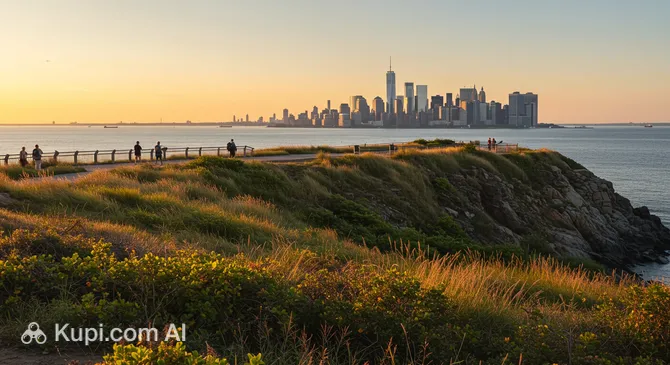
Gateway National Recreation Area. Illustration.
Source: Kupi.com AI

Traveler photos:

Created as part of the national park system, the Gateway National Recreation Area represents an evolution in the concept of park spaces. Its uniqueness lies in the fact that it integrates natural and cultural sites with recreational opportunities directly within an urban environment. Here, you can find diverse ecosystems, including scenic tidal mudflats and established marinas, making it attractive for many different types of recreation.

The significance of the Gateway National Recreation Area is also highlighted by its historical aspect: part of the park's territory is located on the site of a former airport, which adds a special atmosphere to the place. It is not just a park, but a living testament to how urban spaces can be transformed, providing residents with access to nature and active leisure. A visit to this recreation area will give you unforgettable impressions and allow you to see New York from a completely new perspective.

Contacts

Gateway National Recreation Area is a vast territory. For the most up-to-date information on operating hours, the availability of specific zones, or to contact the park administration, it is recommended to visit the official U.S. National Park Service website or the dedicated Gateway page. Useful information can also be found at the visitor centers located within the recreation area or by contacting local tourist information points in New York.

How to contactContact
Address26 Hudson Rd, Highlands, NJ 07732, USA
Websitewww.nps.gov

What to Do

A variety of engaging outdoor activities await visitors at the Gateway National Recreation Area. You can set off on hikes along scenic nature trails, enjoying the beauty of the surrounding environment and observing birds or other local wildlife. It is an excellent spot for picnics away from the city noise. A hallmark of the park is the harmonious blend of natural landscapes and cultural sites, making it interesting for all kinds of travelers.

One of the gems of the Gateway National Recreation Area is the Jamaica Bay area. Its tidal mudflats represent a unique ecosystem that attracts many bird species. Nature lovers here can not only go birdwatching but also get a closer look at the diverse coastal flora and fauna. This place offers a rare opportunity to see wildlife in close proximity to the metropolis.

In addition to its natural beauty, the park offers a journey into history. On its territory lies the former Floyd Bennett Field airport, which is now an important historical site. Visitors can learn many interesting facts about the history of aviation and how New York's urban infrastructure developed. This historical aspect adds a special depth to the experience of visiting the park, allowing you to touch the city's past.

Getting There

Gateway National Recreation Area is an expansive territory covering several boroughs of New York and part of New Jersey. Therefore, the way you get there will depend significantly on which specific part of the park you plan to visit. It is recommended to decide on your area of interest in advance — whether it be the Rockaway beaches, the historic Fort Wadsworth on Staten Island, the nature trails of Jamaica Bay, or the Sandy Hook coastline in New Jersey.

Many parts of the Gateway National Recreation Area are accessible by public transport. For example, areas in Brooklyn and Queens, such as Jamaica Bay or the Rockaway beaches, are served by subway lines (such as the A train to Broad Channel or the Rockaway Park Shuttle) and numerous bus routes. To travel to Staten Island, you can take the famous free Staten Island Ferry from Whitehall Terminal in Lower Manhattan and then transfer to a local bus heading to the park zones. Always check current routes and schedules on the official websites of New York transportation agencies, such as the MTA.

If you prefer to travel by car, access to various parts of the Gateway National Recreation Area is also possible. For instance, Floyd Bennett Field and Canarsie Pier in Brooklyn are easily reached via the Belt Parkway. Bridges from Brooklyn and New Jersey lead to Staten Island. Keep in mind that parking can be challenging in popular spots and on weekends, and some areas may charge a parking fee. Taking a taxi or using rideshare services from central New York is convenient, but the cost can vary significantly depending on the distance to your chosen part of the park and current traffic conditions.

For some areas, such as Sandy Hook in New Jersey, ferry services are usually available during the summer season directly from New York (for example, from Manhattan). This can be not only a convenient but also a very scenic way to reach your destination while enjoying harbor views. Before traveling to any of the Gateway National Recreation Area zones, it is highly recommended to check the official U.S. National Park Service (USA) website for the most accurate and up-to-date information on accessibility, hours of operation, parking availability, and possible seasonal routes.

Nearest city: New York City

History & Facts

The vision for creating the Gateway National Recreation Area emerged in the 1960s when members of the U.S. Congress realized the growing need to preserve natural areas near major urban centers. The first concrete step was a 1969 proposal by the Regional Plan Association to form a new national seashore in the New York area, intended to be managed by the U.S. Department of the Interior. This moment became the starting point in the history of one of the country's most unusual urban parks.

The idea received significant support in 1970 when then-U.S. President Richard Nixon spoke in favor of a similar project, though with an important clarification: the new protected area was to receive national park status rather than just being a national seashore. In May of that year, the President initiated the process of obtaining approval from Congress. The efforts were successful: the U.S. House of Representatives approved the creation of the Gateway National Recreation Area in September 1972, after which significant land parcels were transferred to the National Park Service for inclusion in the new recreation area.

The official birth date of the Gateway National Recreation Area was October 27, 1972. Notably, another iconic recreation area — Golden Gate in San Francisco — was established on the same day. At the time of its creation, Gateway Park covered an impressive area of over 26,000 acres (about 11,000 hectares). The establishment of this unique natural enclave was made possible through years of collaborative effort by concerned citizens, urban planners, activists, National Park Service staff, and members of Congress, underscoring its special value to society.

Time Needed

Estimating the exact time needed to fully explore the Gateway National Recreation Area is quite difficult, as it is a massive and diverse territory. The duration of your visit will depend heavily on your interests, chosen activities, and which part or parts of the park you plan to explore. Covering everything in a single day is practically impossible due to the scale and dispersion of its various sites.

If you want to make a quick trip—for example, to visit one of the beaches, walk a short nature trail, or see a specific point of interest like the former Floyd Bennett Field—2 to 3 hours might be enough. For a deeper immersion, such as exploring a significant part of the Jamaica Bay Wildlife Refuge with its birdwatching opportunities or detailed study of historical sites and natural zones in one of the park sectors, you should set aside half a day or even a full day. If you plan to combine several types of activities—such as beach relaxation, hiking through different sections, and visiting historic forts—this may require several days.

It is recommended to study a map of the Gateway National Recreation Area in advance and choose the areas that interest you most. Given that the recreation area includes locations in Brooklyn, Queens, Staten Island, and even New Jersey (Sandy Hook), planning will help you optimize your time and get the most out of visiting this unique natural and recreational space.

Working Hours

Gateway National Recreation Area is a vast territory with many different sections, so there is no single operating schedule for the entire area. The opening hours for individual parks, beaches, visitor centers, and attractions within the recreation area can vary significantly and depend on the season. Most outdoor spaces are generally open from dawn to dusk year-round; however, access to certain facilities or services may be limited to specific hours or seasons.

To get the most accurate and up-to-date information regarding the opening hours of the specific locations you are interested in within the Gateway National Recreation Area, as well as whether you need to pre-book tickets or sign up for tours (which may be required for some programs or events), it is highly recommended to visit the official U.S. National Park Service website or contact the park's visitor centers directly. This will help you plan your visit in the best possible way.

6:00 – 21:00

Nearby

A visit to the Gateway National Recreation Area will certainly be a highlight of your trip to New York. However, to make your experience even richer and more complete, it is worth paying attention to other interesting places located nearby. Exploring the surroundings will allow you to dive deeper into the atmosphere of this multifaceted city and discover new, unexpected sides of the USA.

Near the Gateway National Recreation Area, there are other attractions that can complement your itinerary. Below is a list of some of them, along with approximate distances.

NameDistance
Coney Island Beach14.7 km
Ocean Wonders: Sharks!15 km
Jacob Riis Park Beach17.6 km
Launch Family Entertainment Center Queens26.7 km
Statue of Liberty28.1 km
The Dead Rabbit29.3 km
Wheeler Spray Park30.1 km

Have you reached the end of the page?

So the route has been studied inside and out