Support

Baltimore Museum of Industry

About

Have you ever wondered how the powerhouse of American industry was forged? In the city of Baltimore, there is a unique place where the history of labor literally comes to life. The Baltimore Museum of Industry is a fascinating portal to the past, located within the walls of the historic Platt & Company cannery built in 1865. It is the only surviving building of its type in the region, carefully restored and transformed into a modern cultural center.
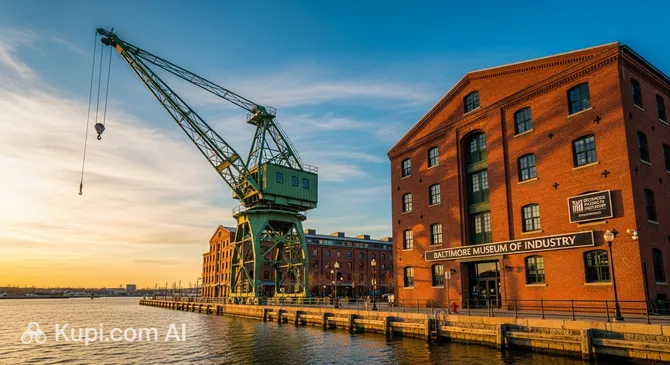
Baltimore Museum of Industry. Source: Kupi.com Binoculars

Located on the scenic banks of the Patapsco River in the Inner Harbor, this museum in the USA has preserved the chronicle of technical progress for over 150 years. It houses about one million artifacts, each telling its own story—from early machine tools to complex mechanisms. The museum welcomes more than 160,000 guests annually, offering them more than just a look at display cases, but a deep dive into the world of human innovation and craftsmanship.

The museum's main mission is to interpret the significant labor stories that shaped Baltimore. It is a place where old brick walls and the scent of machine oil meet modern educational programs, making it a must-visit for anyone interested in technology and social history.

Contacts

To plan your visit and clarify details, you can use the following contact information:

Address 1415 Key Hwy, Baltimore, MD 21230, USA
Phone +1 410-727-4808
Website http://www.thebmi.org/

What to Do

There is certainly no time to be bored at this museum, as its space is filled with interactive exhibits. You can peek into the worlds of canning and textile production, explore the intricacies of printing, and even learn the secrets behind the famous Old Bay seasoning. Visitors are invited to see rare oyster processing equipment and artifacts from Dr. Bunting's pharmacy, where Noxzema ointment was once invented.

One of the most memorable moments is the chance to sit behind the wheel of a vintage 1953 Packard Clipper or watch antique printing presses in action. For maritime enthusiasts, a real treasure is the Steam Tug Baltimore—the oldest surviving steam tug in the country, built in 1906 and designated a National Historic Landmark.

In addition to permanent exhibits, the museum regularly hosts lectures and special events. The museum grounds also serve as a base for the Downtown Sailing Center, so sailboats are often seen at the piers. This place wonderfully combines the spirit of old industry with the vibrant energy of a modern city, offering entertainment for explorers of all ages.

Getting There

The Baltimore Museum of Industry is conveniently located at 1415 Key Highway, in the scenic Inner Harbor area on the northwest bank of the Patapsco River. Thanks to its central location, it is easily accessible for tourists exploring the city's main attractions.

For those who prefer to travel by car, a pleasant bonus is the availability of free parking directly on the museum grounds, which is a rarity for central districts. If you are using public transport, the museum can be quickly reached from the city center by bus or taxi.

The harbor area is well-connected to the rest of the city, so a walk to the museum can be a delightful addition to your itinerary, offering magnificent views of industrial landscapes and the waterfront.

History & Facts

The history of this site began in 1977 as an initiative of Mayor William Donald Schaefer's administration. At that time, businesses were rapidly leaving the city, and there was an urgent need to preserve the memory of the region's industrial achievements. A young staff member, Roger B. White, led the search for a suitable location, and his choice fell on the abandoned Platt & Company factory.

This building holds special value: it was once one of eighty canneries operating around the harbor. In November 1981, after extensive preparation, the museum officially opened its doors. The exhibits were divided into three key periods of industrial growth: from the dawn of industrialization in the 1790s to the technological peak of the 1970s.

A major milestone for the institution came in 1996, when Alonzo Decker Jr., the former head of the famous Black & Decker company, donated $1 million. This generous gesture allowed for a large-scale restoration to be completed, turning the museum into a modern cultural center.

Today, the Baltimore Museum of Industry is considered one of Baltimore's primary cultural "anchors." It does not just store artifacts; it tells the living stories of the people whose innovations and labor shaped the face of modern Maryland.

Time Needed

To leisurely browse the main exhibits and soak in the atmosphere of the old factory, a typical visitor is recommended to schedule about 2–3 hours. This is usually enough time to get acquainted with the key galleries and see the main exhibits.

If you are a fan of technology or history, or plan to participate in interactive programs and workshops, your visit may last 3–4 hours. The museum offers many interesting details that are worth studying without haste, especially if you decide to step aboard the historic steam tug.

Working Hours

The museum usually welcomes guests from Wednesday to Sunday, though schedules are subject to change. Tuesdays and Wednesdays often have specific visiting hours (for example, on Wednesdays, the museum is sometimes open until 8:00 PM), while from Thursday to Sunday, the doors are open from 09:00 AM to 04:00 PM. Monday is a closing day.

Admission prices are approximately $15 for adults, with discounts available for seniors and students. Children under 5 can enter for free. Since schedules and prices can change depending on the season or special events, we strongly recommend checking the official website for up-to-date information before your trip.

Nearby

Exploring the harbor surroundings can significantly enrich your trip experience. After diving into the city's industrial history, it's worth checking out the recreational areas and walking spots located within easy reach.

Near the museum and in adjacent neighborhoods, you'll find numerous parks and entertainment centers that are particularly appealing to families with children.

Name Distance (km)
Ambrose Kennedy Park Splash Pad 3.2
Druid Hill Park Swimming Pool 5.9
Sky Zone Trampoline Park 7.9
Sky Zone East Baltimore 12.1
Urban Air Trampoline and Adventure Park 13.6
North Arundel Aquatic Center 15.4
iFLY Indoor Skydiving - Baltimore 15.9
Sky Zone Timonium 18.2
The Go-Kart Track 19.4
Terrapin Adventures Check In 24.9

Reached the end of the page?

That means the route is fully explored