Support

Jefferson Vineyards

About

The legendary Jefferson Vineyards is more than just an agricultural enterprise; it is the true "cradle" of American winemaking. Located in the picturesque outskirts of Charlottesville, USA, it occupies the very land that Thomas Jefferson and the Italian Filippo Mazzei chose for viticulture back in the 18th century.
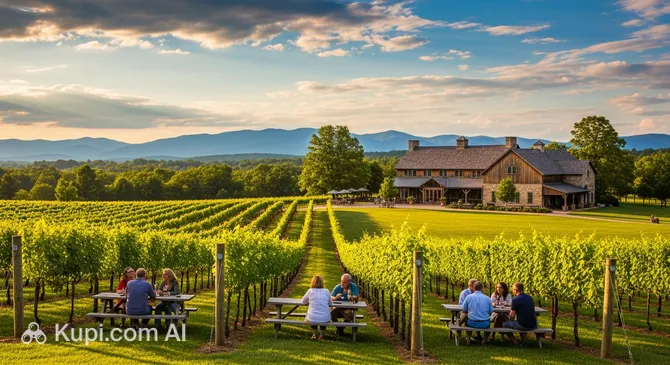
Jefferson Vineyards. Source: Kupi.com AI

Today, the estate harmoniously blends deep historical traditions with modern production technologies. Varieties such as Chardonnay, Cabernet Sauvignon, and the famous Virginian Viognier are grown here. The winery building, designed in a refined Palladian style, serves as a reminder of the classical architecture of the University of Virginia and complements the aesthetics of this tranquil spot.

Visitors are drawn not only by the award-winning premium wines but also by the status of the protected territory. Nearly 700 acres of land are under a special conservation easement, preserving the pristine views of the vineyards and rolling landscapes once admired by presidents.

Contacts

To check the latest information on events or to book tastings for large groups, you can contact the winery representatives directly. Below are the primary contact details for Jefferson Vineyards.

Address 1353 Thomas Jefferson Pkwy, Charlottesville, VA 22902, USA
Phone +1 434-977-3042
Official Website http://www.jeffersonvineyards.com/

What to Do

The highlight for every guest is a premium wine tasting in the cozy tasting room or on the outdoor terrace. Here you can sample the famous Viognier, considered the state’s signature grape, as well as a rich Petit Verdot and classic Cabernet Sauvignon. The winery's experts are happy to share insights about each vintage and the connection between the local terroir and its historical past.

For those who enjoy active recreation, a walk through the vineyards is highly recommended. You can see some of the oldest vines, planted in the early 1980s, and appreciate the craftsmanship of modern viticulturists. It is an ideal spot for photoshoots against a backdrop of pastoral landscapes and architecture inspired by Jefferson’s own sketches.

Outdoor picnics are particularly popular. You can purchase a bottle of your favorite wine and settle on the lawn, enjoying the peace and magnificent views of the Blue Ridge Mountains. The winery frequently hosts cultural events, maintaining the atmosphere of a welcoming historic estate.

Getting There

Jefferson Vineyards is conveniently located just a 10-minute drive from downtown Charlottesville and the University of Virginia campus. The main route follows the scenic Thomas Jefferson Parkway or US-250. If you are arriving by air, the drive from Charlottesville-Albemarle Airport (CHO) takes approximately 20 minutes.

Since public transportation is limited in this part of the state, visitors are encouraged to use taxis or popular rideshare services like Uber and Lyft. For those who prefer complete freedom of movement, renting a car is the best option. The winery provides ample free parking for guests.

Travelers from larger cities will also find it easy to reach this historic site: the drive from Richmond takes about an hour and a half via I-64, while the trip from Washington, D.C. lasts between 2 to 2.5 hours. A visit to the winery pairs perfectly with tours of the nearby Monticello and Highland estates, both located within a 5–10 minute drive.

History & Facts

The history of this site began in 1773 when Italian viticulturist Filippo Mazzei arrived in Virginia with a collection of European vines. On the advice of Thomas Jefferson, he settled adjacent to Monticello, receiving a gift of land that became part of the modern Jefferson Vineyards. By 1774, the Virginia Wine Company was established here, with George Washington himself among its 38 shareholders.

This venture became the first official commercial wine company in the USA, laying the foundation for the country's future industry. Despite early challenges and severe frosts, Mazzei managed to produce the first batches of wine from both native and European varieties, proving the potential of Virginia soil. Jefferson’s vision for a flourishing American wine industry began to take shape on these very hills.

The modern chapter of the winery's history began in the late 1960s when the Woodward family purchased the land to preserve the historic landscape. In 1981, professional winemaker Gabriele Rausse planted new vineyards, and in 1986, the elegant Palladian-style building was constructed, echoing the architecture of the legendary Rotunda. In 1993, the site received its current name, finalising its status as the successor to Jefferson's viticultural legacy.

Time Needed

To fully soak in the atmosphere of this historic site, a typical visitor will need between 1.5 and 2.5 hours. This is enough time to enjoy a leisurely tasting, hear about the local grape varieties, and stroll through the rows of grapevines.

If you plan to have an outdoor picnic or wish to study the estate's architectural features in detail, you should set aside a bit more time. Given its proximity to other popular attractions, many tourists choose to include Jefferson Vineyards as part of a half-day itinerary, combining it with a visit to the neighboring Monticello estate.

Working Hours

Jefferson Vineyards is open to visitors daily, making it easy to include in your travel plans. The standard operating hours are Monday through Thursday and Sunday from 11:00 AM to 5:00 PM, while on Friday and Saturday, the doors remain open slightly longer—until 5:30 PM.

As the winery may host private events or seasonal festivals, visitors are strongly encouraged to check the official website before visiting to confirm current hours of operation for holidays.

Nearby

Located in the heart of historic Albemarle County, a visit to the winery is the perfect excuse to explore other iconic sites in the region. The surrounding area is filled with architectural and historical landmarks inextricably linked to the Founding Fathers.

Attraction Name Distance (km)
James Monroe's Highland 1.4
Monticello 2
Michie Tavern ca. 1784 2.6
Michie Tavern 2.6
Blue Ridge Sanatorium 3.2
Fry's Spring Beach Club 6.8
Statue of Homer 7
The Rotunda 7.1
Thomas Jefferson Statue 7.1
Edgar Allan Poe Room 7.2

Reached the end of the page?

That means the route is fully explored