Support

The Franklin Institute

About

The Franklin Institute is one of the leading science museums and educational centers, located in the heart of Philadelphia, Pennsylvania, USA. This iconic institute proudly bears the name of Benjamin Franklin, the outstanding American scientist, inventor, and one of the country's Founding Fathers, whose legacy continues to inspire discovery to this day.
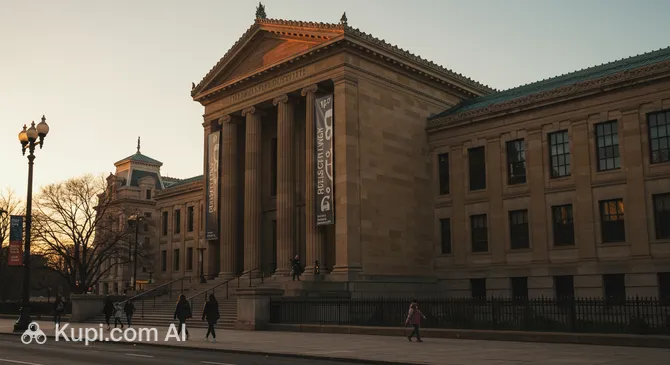
The Franklin Institute. Illustration.
Source: Kupi.com AI

Traveler photos:

The Franklin Institute represents a unique combination of a museum, educational center, and research institution. Its mission is to inspire a passion for science and technology. The most famous part of the complex is the Science Museum, which attracts visitors of all ages with its interactive displays. Here, you can not only learn about scientific laws and achievements but literally touch science. One of the gems of the collection is the world's largest collection of artifacts from the workshop of the famous Wright brothers, pioneers of aviation.

Visitors can expect exciting journeys through various fields of knowledge: from the human body and electricity to space and mechanics. The institute offers a variety of programs, exhibitions, and events, making science accessible and engaging for everyone. It is not just a museum, but a true beacon of scientific enlightenment and cultural heritage, where curiosity is encouraged and the pursuit of knowledge finds fertile ground.

Contacts

For the most up-to-date information on opening hours, ticket prices, and special events at The Franklin Institute, it is recommended to visit the museum's official website. You can also find useful information, including contact phone numbers or email addresses, at Philadelphia visitor information centers or on specialized travel portals.

How to contactContact
Address222 N 20th St, Philadelphia, PA 19103, USA
Phone number+1 215-448-1200
Websitewww.fi.edu

What to Do

At The Franklin Institute, visitors become active participants in an exciting scientific journey. Here, you can do more than just observe the exhibits; you can interact with them, diving into the world of physics, biology, astronomy, and many other disciplines through numerous interactive exhibitions. The educational programs are designed to engage both young researchers and adults seeking to broaden their horizons, offering opportunities to explore scientific displays and participate in educational activities.

One of the main highlights for visitors is the unique opportunity to see the largest collection of artifacts from the Wright brothers' workshop. This exhibition will especially impress aviation and technology history enthusiasts. Additionally, the institute regularly hosts fascinating interactive demonstrations where complex scientific concepts are explained in simple and visual terms. Guests can also attend lectures and special educational events to deepen their knowledge.

The Franklin Institute strives to offer something interesting for every visitor, whether you are a history buff, a science enthusiast, or just a curious traveler. Permanent and temporary exhibitions are dedicated to various aspects of science and technology, from studying the human body to exploring outer space. Various special programs and exhibitions enrich the visiting experience, making it educational and unforgettable for all categories of guests.

Getting There

Getting to The Franklin Institute in Philadelphia is quite simple thanks to its central location. The city has a well-developed public transport system, and visitors can take buses or the subway to the stops nearest to the museum. Many bus routes pass in the immediate vicinity of the institute, making this a convenient and cost-effective way to travel.

If you prefer a more direct and faster method, taxis or popular ride-sharing services are always at your service. A taxi ride from most downtown hotels or other Philadelphia attractions to The Franklin Institute won't take much time. Also, if you are in the city center and enjoy walking, the museum is easily reachable on foot, allowing you to enjoy the city's architecture and atmosphere along the way.

Before your trip, it is recommended to check the current routes and public transport schedules on the official website of the Philadelphia transit authority or by using navigation apps. This will help you plan your journey most efficiently and reach one of the main scientific landmarks in the USA without any extra hassle.

Nearest city: Philadelphia

History & Facts

The Franklin Institute has a rich history dating back to the early 19th century. It was founded in Philadelphia on February 5, 1824, by Samuel Merrick and William Keating. The institute's original mission was to research and develop the so-called “mechanical arts” (artes mechanicae) and to actively disseminate scientific knowledge to the general public. From the very beginning, it was envisioned as a center of progress and innovation, striving to make science accessible.

During the 19th century, The Franklin Institute played a key role in the professionalization of American science and technology. It became a pioneer in early research on steam engines and hydropower. The institute actively promoted scientific research and education by running schools, publishing the influential “Journal of The Franklin Institute”, organizing exhibitions, and recognizing scientific achievements and inventions with prestigious medals and awards. Notably, the first woman to become a member of The Franklin Institute was Elizabeth Skinner in 1833, highlighting the institution's progressive spirit for its time.

In the 20th century, the focus of The Franklin Institute's activities shifted from pure research to public education through its museum. Nevertheless, the institute remained a venue for significant events. It was here that the International Electrical Exhibition was held from September 2 to October 11, 1884 – the first major exhibition of its kind in the USA. On August 25, 1934, The Franklin Institute made history by hosting the world's first public demonstration of a fully electronic television system, which was a true breakthrough of its time and a harbinger of a new era of communications.

A landmark event for The Franklin Institute was its move in 1934 to its current location on the Benjamin Franklin Parkway. The new building, designed by architect John T. Windrim in the majestic Beaux-Arts style, not only became an architectural landmark of Philadelphia but also allowed the institute to significantly expand its exhibition space and educational programs. This opened a new chapter in its mission to popularize science and technology, making it one of the world's leading science museums.

Time Needed

When planning a visit to The Franklin Institute, you should expect that a thorough look at its numerous exhibits will take at least 3-4 hours. This time will allow you to leisurely walk through the main halls, interact with the hands-on exhibits, and get a general overview of the wonders of science presented here.

However, if you are a true science enthusiast or traveling with children who love to touch and explore everything, feel free to set aside half a day or even more. It's easy to lose track of time at The Franklin Institute, immersing yourself in the study of the human body, experimenting with the laws of physics, exploring space, or learning about the history of aviation through the unique collection of Wright brothers' artifacts. The depth and variety of the exhibitions are such that everyone will find something fascinating, and rushing will only diminish the enjoyment of your visit.

To make the most efficient use of your time, especially if it's limited, it is recommended to check the museum map and the list of current exhibitions on the official Franklin Institute website in advance. This will help you choose the sections most interesting to you and plan your route. Regardless of the length of your visit, this place promises to leave lasting impressions and spark curiosity.

Working Hours

The Franklin Institute is generally open to visitors year-round, offering its fascinating exhibits in any season. However, exact opening hours may vary depending on the day of the week, the time of year, and special events or exhibitions. Usually, science museums of this scale operate during the daytime, for example, from 10:00 AM to 5:00 PM, but for the most current and accurate information, it is highly recommended to check the official Franklin Institute website right before your visit.

Given the popularity of The Franklin Institute, especially on weekends and during school holidays, it is advisable to consider buying tickets online in advance. This will not only help you avoid queues at the entrance but, in some cases, may guarantee you access, especially if you plan to visit temporary exhibitions where the number of tickets may be limited. You can also find information about possible discounts, combined tickets, or special offers on the official website.

9:30 – 17:00

Nearby

A visit to The Franklin Institute is undoubtedly a highlight; however, exploring its surroundings can further enrich your experience of Philadelphia. This historic city in the USA offers many interesting places, many of which are within walking distance or a short drive from the institute.

By taking the time to explore nearby attractions, you can dive deeper into the city's atmosphere, discover its cultural diversity, and create a more fulfilling itinerary. Whether you are interested in art, history, or simply want to enjoy a walk, the area around The Franklin Institute offers plenty of options for an engaging pastime. Below is a list of some of them:

NameDistance
Academy of Natural Sciences of Drexel University0.2 km
Barnes Foundation0.3 km
Victory Brewing Philadelphia0.4 km
Mütter Museum0.6 km
Philadelphia Museum of Art Steps0.9 km
Eastern State Penitentiary1.1 km
Philadelphia Museum of Art1.1 km

Have you reached the end of the page?

So the route has been studied inside and out