Support

The Academy of Natural Sciences of Drexel University

About

Imagine a place where time seems to stand still among the giant skeletons of ancient reptiles and masterfully created natural panoramas. The Academy of Natural Sciences of Drexel University is not just a museum, but the oldest natural history research institute in the USA, having opened its doors back in 1812. Located in the heart of Philadelphia, it is a true treasure trove of knowledge about our planet.
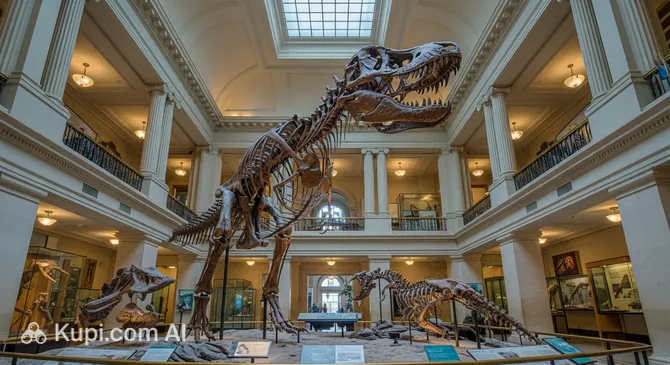
\n
Academy of Natural Sciences of Drexel University. Source: Kupi.com Binoculars
\n

Today, this iconic institution houses a colossal collection of more than 19 million biological specimens. Here you can see everything from rare minerals and exotic insects to unique dinosaur skeletons that once ruled the Earth. The Academy serves as an important base for studying evolution, ecology, and climate change, combining centuries-old traditions with modern scientific achievements.

\n

The museum building on Benjamin Franklin Parkway has become a true cultural beacon. Visitors can expect not only static exhibits but also interactive displays, live animal centers, and famous dioramas that are considered among the best in the world. It is a place where every guest, regardless of age, can feel like a true discoverer.

Contacts

You can contact the museum administration or clarify the details of your planned visit using the contact information below. Academy staff are always ready to help tourists navigate the schedule of special events and current exhibitions.

Address 1900 Benjamin Franklin Pkwy, Philadelphia, PA 19103, USA
Phone +1 215-299-1000
Official Website ansp.org

What to Do

Immersion into the natural world begins with the impressive Dinosaur Hall, where the skeletons of Tyrannosaurus rex and other prehistoric giants tower above. Be sure to stop by "The Big Dig" area, where children and adults can arm themselves with paleontologist tools and "excavate" fossils themselves, feeling the excitement of a real scientific expedition.

The historic dioramas, which were created over decades, deserve special attention. These three-dimensional scenes are so realistic that it seems as if the mountain goats or lions are about to come to life. For nature lovers, there is a special pavilion with tropical butterflies and terrariums where you can observe the behavior of our planet's modern inhabitants up close.

In addition to exploring the exhibits, the Academy regularly hosts science shows and lectures. If you are interested in how scientists work, take a look at the open laboratories: here, through the glass, you can see the process of cleaning ancient bones from rock. And for those seeking solitude, one of the world's richest natural history libraries with rare volumes is open to the public.

Getting There

Finding the Academy of Natural Sciences is easy — it is located in the heart of the city's cultural corridor at 1900 Benjamin Franklin Pkwy. If you are in the city center, a pleasant walk along the parkway to the museum will take very little time, allowing you to enjoy views of other architectural landmarks along the way.

The most convenient way for tourists is to use the Phlash Trolleys, which run between the main attractions and have a stop right at the museum entrance. If you prefer the subway, the nearest stations are 15th Street (Market-Frankford Line) or Race-Vine (Broad Street Line). It is about a 10–15 minute walk from these stations to the Academy building.

For those traveling by car, there are several paid underground parking lots and surface garages in the Parkway area. The museum is also easily accessible by taxi from anywhere in the city or by bus routes No. 38 and No. 49, which stop in the immediate vicinity of the entrance.

History & Facts

The history of this scientific giant began on the cold evening of January 25, 1812, when six enthusiastic naturalists gathered at a private home in Philadelphia. Their goal was to create a society for the "encouragement and cultivation of the sciences." In those days, the collections were housed in a small rented space above a shop, but the founders' passion for understanding the world quickly transformed the modest circle into the country's leading institute.

In the 19th century, the Academy became the primary organizer of large-scale expeditions. The institution's scientists participated in the exploration of the upper Mississippi and the legendary Wilkes Expedition across the Pacific Ocean. Thanks to these journeys, the museum gathered one of the world's largest ornithological collections, which forced the organizers to change buildings five times until they settled in the current majestic structure on Benjamin Franklin Parkway in 1876.

A new chapter in the museum's history opened in 2011 when the Academy officially became part of Drexel University. This merger allowed for the creation of a powerful research center where students and professors work side-by-side studying biodiversity and global warming issues. Today, the institution successfully combines the spirit of a classic Victorian-era museum with cutting-edge 21st-century technology.

Time Needed

To leisurely explore all levels of the museum and study the main exhibits in detail, it usually takes about 3 to 4 hours. This is quite enough time to get acquainted with the dinosaurs, appreciate the craftsmanship of the diorama creators, and check out the interactive zones.

If you plan to attend special lectures, participate in educational programs, or are traveling with children who will likely want to linger at the interactive play areas, it is better to set aside about 5 hours for the visit. The museum is so rich in detail that rushing would be unnecessary.

Working Hours

Currently, the museum follows a specific schedule: the doors are open to visitors on Friday, Saturday, and Sunday from 10:00 AM to 5:00 PM. On weekdays from Monday to Thursday, the institution is usually closed for general admission.

Before planning your trip, we strongly recommend checking the Academy's official website, as operating hours may change during holidays or special events.

Nearby

Philadelphia is a city where every block is steeped in history and culture, so a visit to the Academy can easily be combined with exploring other interesting places. A walk around the Benjamin Franklin Parkway area will allow you to see many iconic landmarks and parks, turning a simple museum trip into a full travel adventure.

Nearby are many entertainment centers and theme parks that will be of particular interest to families with children and outdoor enthusiasts. Below is a list of the most notable sites within driving distance of the museum:

Attraction Name Distance (km)
Adventure Aquarium 3.6
Thrillz High Flying Adventure Park 20.8
Topgolf Mount Laurel 22.7
Urban Air Trampoline and Adventure Park 22.7
Clementon Park & Splash World 23.2
The Funplex 23.8
Funcity Adventure Park 25
Sahara Sam's Water Park formerly Big Kahuna's 25.9
Diggerland USA 26.5
Sesame Place Philadelphia 35.9

Reached the end of the page?

That means the route is fully explored