Support

Penn Museum

About

The Penn Museum, officially known as the University of Pennsylvania Museum of Archaeology and Anthropology, is one of the most significant repositories of ancient artifacts and cultural heritage in the USA. Located in Philadelphia, it offers visitors a unique opportunity to connect with human history and explore the rich diversity of world civilizations.
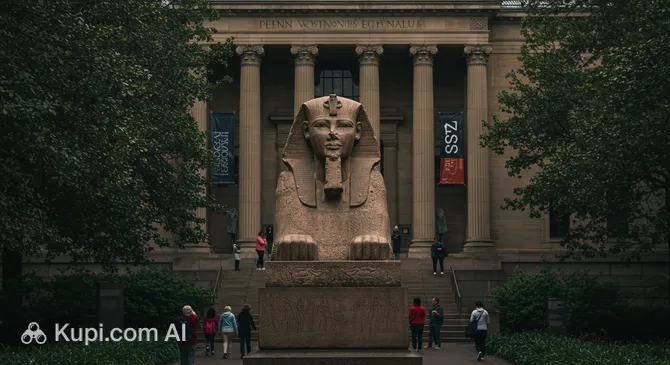
Penn Museum. Illustration.
Source: Kupi.com AI

Traveler photos:

The museum boasts a truly impressive collection, with over one million objects from around the world. This makes it a real treasure for both curious tourists and serious researchers interested in archaeology and anthropology. Every exhibition is carefully curated to tell a compelling story about the past.

The museum's displays cover a vast geographical and chronological range. Here, you will find materials from archaeological and anthropological expeditions to Ancient Egypt, mysterious Mesopotamia, vibrant Africa, refined East Asia, and distinctive Latin America. Among the unique exhibits that should not be missed are the famous Lyres of Ur, which are striking for their antiquity and craftsmanship.

Visiting the Penn Museum is not just about viewing exhibits; it is a true journey through time and space, providing a deeper understanding of the world's diverse cultures and civilizations. It is a place that will undoubtedly leave a lasting impression and enrich your knowledge of humanity's past.

Contacts

To find the most up-to-date information regarding opening hours, ticket prices, and special events at the Penn Museum, we recommend visiting its official website. Detailed information can also be obtained directly on-site in Philadelphia or through local tourist information centers.

How to contactContact
Address3260 South St, Philadelphia, PA 19104, USA
Phone number+1 215-898-4000
Websitewww.penn.museum

What to Do

At the Penn Museum, a fascinating immersion into history awaits through its permanent exhibitions, showcasing the rich cultural heritage of various world civilizations. You can examine in detail the artifacts collected during iconic early 20th-century expeditions. Pay special attention to the collections from Egypt, Mesopotamia, Africa, East Asia, and Latin America, each of which tells a unique story. Among the thousands of exhibits, you will see rare historical items, including impressive finds from the ancient city of Nippur in modern-day Iraq, which will help you better understand the human past.

Beyond studying the priceless exhibits, don't miss the chance to appreciate the Penn Museum building itself, which is a true architectural masterpiece. Built in the Romanesque Renaissance style, it impresses with its grandeur and the famous Harrison Rotunda. Designed by renowned architects such as Wilson Eyre, Cope & Stewardson, and Frank Miles Day, the building is a reflection of the architectural ambitions of the late 19th and early 20th centuries. Walking through its halls allows you to enjoy the unique atmosphere of a historical space and feel a deeper connection across time while studying exhibits in such an impressive setting.

Getting There

The Penn Museum is conveniently located on the University of Pennsylvania campus in Philadelphia. Thanks to its prime location and the city's well-developed transport infrastructure, reaching this cultural hub is quite easy.

You can use Philadelphia's public transport to visit the museum. Various bus routes and subway lines run near the university campus. Since the Penn Museum is situated directly on campus, we recommend checking the most convenient routes and nearest stops in advance on the official museum website or the Philadelphia transit authority websites. This will help you save time and plan your visit efficiently.

Another comfortable way to reach the Penn Museum is by taxi or popular rideshare services. A trip from downtown Philadelphia or other areas of the city is especially convenient if you value your time or are traveling with family. If you plan to arrive by rental or personal car, it's worth checking parking options around the University of Pennsylvania beforehand, as spaces may be limited.

Nearest city: Philadelphia

History & Facts

The Penn Museum, also known as the University of Pennsylvania Museum of Archaeology and Anthropology, has a rich history dating back to the late 19th century. It was founded in 1887 at the University of Pennsylvania in Philadelphia. The initial driving force behind its creation was the university's desire to actively develop and promote archaeology and anthropology as essential scientific disciplines. This laid the foundation for future large-scale research and the formation of a unique collection.

By the early 20th century, the museum had launched extensive activities, organizing a series of significant archaeological and anthropological expeditions. These scientific journeys spanned various corners of the globe, including mysterious Egypt, ancient Mesopotamia, vibrant Africa, refined East Asia, and distinctive Latin America. The artifacts and materials meticulously gathered during these expeditions form the core and most valuable part of the museum's extensive collection that visitors see today.

Notably, the museum's original collections, resulting from university-funded expeditions, include outstanding finds from the ancient city of Nippur, located in modern-day Iraq. These artifacts did more than just expand the collection; they laid the groundwork for one of the most extensive repositories of antiquities in the USA. Over its more than century-long history, the Penn Museum has evolved into one of the world's leading centers for the study and preservation of humanity's priceless archaeological and anthropological heritage.

Today, the museum's collection comprises over a million objects, each telling its own unique story. This vast assemblage reflects not only the scale of the research conducted but also the museum's unwavering commitment to its mission: making the past accessible and understandable to a wide audience. A visit to the Penn Museum is an opportunity to experience the results of years of painstaking research and witness rare testaments to world history.

Time Needed

When planning your visit to the Penn Museum, you should allow approximately 2 hours. This is generally enough time to tour the main exhibitions and get acquainted with the most significant artifacts on display. You will have time to form a general impression of the rich collections spanning various civilizations and eras.

Of course, if you have a deep interest in archaeology, anthropology, or a specific culture represented in the museum, you may need more time. Those who love to study exhibits in detail, reading all the information plaques and wishing to dive deeper into the history of each item, can easily set aside half a day for the Penn Museum. It all depends on your pace and level of interest.

Working Hours

To find the current opening hours for the Penn Museum, we strongly recommend visiting the official museum website or contacting them directly. Hours may vary depending on the season, day of the week, or special events. You can also check the official resource to see if advance ticket booking is required, especially during periods of high tourist activity.

Generally, museums of this caliber are open to visitors year-round, except for certain public holidays. Nevertheless, it is always best to check the latest information before planning your visit to ensure your trip to Philadelphia and your visit to the Penn Museum are as comfortable and interesting as possible.

DayOpening hours
MondayClosed
Tuesday10:00 – 17:00
Wednesday10:00 – 17:00
Thursday10:00 – 17:00
Friday10:00 – 17:00
Saturday10:00 – 17:00
Sunday10:00 – 17:00

Nearby

A visit to such a significant site as the Penn Museum is an event in itself. However, to truly soak up the atmosphere of Philadelphia and make your trip even more fulfilling, it is worth exploring the nearby attractions. Scouting the surrounding area will allow you to discover new facets of the city, find interesting spots, and get a more complete picture of its cultural diversity.

Many other notable landmarks are located near the Penn Museum, which may pique the interest of a curious traveler. This is an excellent opportunity to expand your itinerary and see more without spending too much time on travel. Below is a list of some of these attractions, including approximate distances.

NameDistance
Mütter Museum1.4 km
The Franklin Institute1.8 km
Academy of Natural Sciences of Drexel University1.9 km
Philadelphia Museum of Art2 km
Philadelphia Museum of Art Steps2 km
Barnes Foundation2 km
Victory Brewing Philadelphia2.1 km

Have you reached the end of the page?

So the route has been studied inside and out