Support

United States Holocaust Memorial Museum

About

The United States Holocaust Memorial Museum is the official memorial of the USA, dedicated to the memory of millions of victims of one of the greatest tragedies in human history. Located in the heart of Washington, D.C., it is not just a museum but a national organization dedicated to documenting, studying, and interpreting the history of the Holocaust. Its primary mission is to tell the story of this horrific period and serve as a living reminder of the dangers of hatred.

The museum serves as a poignant and living memorial aimed at preserving the memory of those who perished and providing visitors with an opportunity to reflect more deeply on the moral questions raised by these events. The museum's exhibition, which includes thousands of artifacts, archival documents, and photographs, tells the personal stories of individuals affected by the genocide. A visit to the museum is a deeply moving experience that encourages reflection on civic duty and human dignity.
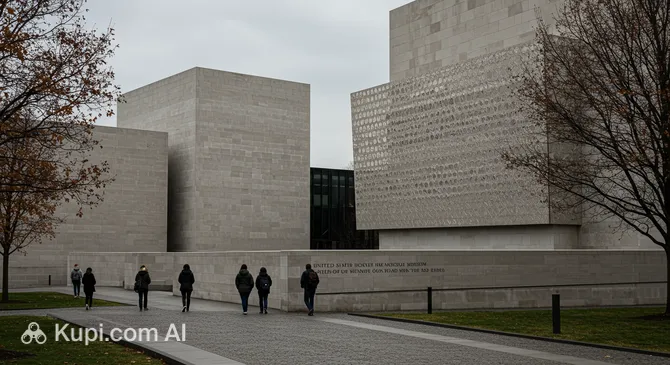
United States Holocaust Memorial Museum. Illustration.
Source: Kupi.com AI

Traveler photos:

The architecture of the building is part of the narrative itself. The project was designed by James Ingo Freed—an architect who was forced to flee Nazi Germany with his family as a child. His personal history is woven into the design of the museum, giving the space a special emotional depth and symbolism, helping visitors feel the atmosphere of that time.

Contacts

To plan your visit and obtain additional information, it is recommended to visit the museum's official website or contact its representatives directly. All up-to-date information regarding opening hours, special exhibitions, and visiting rules is available on official resources.

How to contactContact
Address100 Raoul Wallenberg Pl SW, Washington, DC 20024, USA
Phone number+1 202-488-0400
Websitewww.ushmm.org

What to Do

Visiting the United States Holocaust Memorial Museum is a deeply educational and moving experience. The core of the museum is its Permanent Exhibition titled "The Holocaust," which spans three floors and chronologically tells the story of the events from 1933 to 1945. Visitors can see thousands of personal items belonging to victims and survivors, allowing for a deeper understanding of the personal stories of people who faced this tragedy. The exhibition uses numerous artifacts, archival documents, and photographs to create a detailed narrative of the scale of what happened. At the entrance, each visitor can receive an identification card of a real person whose fate they follow while walking through the halls, which creates a powerful effect of personal immersion.

The museum's collection is impressive in its scale: it includes nearly 19,000 artifacts, over 95 million pages of documents, and about 86,000 historical photographs. In addition to the permanent exhibition, the museum regularly hosts temporary exhibitions that explore various aspects of the genocide, the rise of antisemitism, and threats existing in the modern world. The museum is also an important educational center, hosting film screenings, lectures, and meetings with survivors who share their testimonies. The museum's research work has led to the identification of 42,500 ghettos and concentration camps, emphasizing its meticulous approach to preserving historical memory.

It is important to understand that the museum is not a "house of horrors," but a memorial space created to preserve memory and reflect on the lessons of history. Its goal is not only to show the horrors of the past but also to encourage visitors to think about civic duty, human dignity, and the dangers posed by hatred and prejudice. A visit to the museum leaves a strong impression and serves as an important reminder of the need to prevent such tragedies in the future.

Getting There

The United States Holocaust Memorial Museum is conveniently located in the very heart of Washington, on the National Mall, making it easily accessible for visitors. It can be reached in several ways; however, public transportation is the most convenient and recommended option as parking in the area is limited. This allows you to avoid the difficulties of finding a parking spot and focus fully on your upcoming visit.

The easiest way to reach the museum is by using the Washington Metrorail. The closest station is Smithsonian, which is just one block from the museum building. It serves the Blue, Orange, and Silver lines. Also within walking distance are the L'Enfant Plaza and Metro Center stations, where Yellow, Green, and Red line trains stop, providing options for a convenient route from different parts of the city and suburbs.

In addition to the metro, the museum can be reached by bus—many routes have stops nearby, such as on Independence Avenue and 14th Street. You can also use taxi services or ride-sharing apps, which is particularly convenient if you are traveling in a group. If you still decide to arrive by private car, please note that the museum does not have its own parking lot. There are paid parking garages nearby and a limited number of metered spaces along the streets, but they may be occupied.

Nearest city: Washington, D.C.

History & Facts

The history of the United States Holocaust Memorial Museum began in the 1970s. The idea of creating a national memorial officially launched on November 1, 1978, when US President Jimmy Carter established the President's Commission on the Holocaust. It was chaired by Elie Wiesel, a famous American writer and public figure who survived the horrors of concentration camps. It was this commission that presented a report to the president in 1979 recommending the creation of a memorial that included a museum, an educational center, and an archive.

The process of creating the museum was lengthy and significant for the entire country. The official groundbreaking ceremony for the building took place on October 5, 1988, and President Ronald Reagan participated in the ceremony. Nearly five years later, on April 22, 1993, the museum was officially opened. The opening ceremony was attended by President Bill Clinton, as well as the project's visionary Elie Wiesel and other Holocaust survivors. This day marked an important milestone in the preservation of historical memory in the USA.

Among those who stood at the museum's origins were people with deeply personal stories related to the tragedy. One of the founders was William Herskovic, a former Auschwitz prisoner who managed to escape and survive. His participation gave the project a special poignancy and authenticity. Notably, the very first visitor to the museum was the 14th Dalai Lama, a Nobel Peace Prize laureate, which highlighted the global humanistic significance of this memorial complex from its very first day of operation.

Time Needed

When planning a visit to the United States Holocaust Memorial Museum, you should set aside at least 2–3 hours. This time will be enough to go through the main Permanent Exhibition, "The Holocaust," which occupies three floors and covers the events of 1933–1945 in detail. Given that the visiting experience can be deeply emotional, it is important to give yourself the opportunity to thoughtfully engage with the materials presented.

If you want to study all aspects of the museum in more detail, including temporary exhibitions, the Hall of Remembrance for quiet reflection, and the special exhibition for children "Daniel's Story," it is better to allocate half a day or even more. Some visitors spend 4–6 hours in the museum to fully immerse themselves in studying archival documents, watching films, and learning about the personal stories of survivors. This approach allows you not only to view the exhibits but also to process the information without feeling rushed.

Working Hours

The United States Holocaust Memorial Museum is open to visitors year-round, except for two days: Yom Kippur (an important Jewish holiday whose date varies) and Christmas Day (December 25). The museum's standard operating hours are daily from 10:00 AM to 5:30 PM. This allows guests to plan their visit at a convenient time on almost any day.

While admission to the museum itself is free, timed entry tickets are required to visit the main Permanent Exhibition, "The Holocaust." It is highly recommended to book these tickets in advance on the museum's official website, especially during peak tourist seasons, to guarantee a spot. A small transaction fee is charged for online bookings. For those who were unable to book tickets in advance, a limited number of same-day tickets are available—they become available online every morning. Before visiting, it is always helpful to check the official website for the most up-to-date information on hours and visiting rules.

10:00 – 17:30

Nearby

After visiting the United States Holocaust Memorial Museum, which leaves a deep emotional impression, a walk through its surroundings can be a good way to reflect on what you've seen and explore other iconic sites of the USA capital. The museum is located in the heart of Washington, in an area rich in history and culture, making it an ideal starting point for further exploration of the city.

In close proximity to the museum are many of the country's most famous landmarks, including memorials and museums that make up the famous National Mall. This makes it easy to combine a visit to the Holocaust Museum with a tour of other important cultural and historical sites without spending much time on travel.

NameDistance
National Mall0.3 km
National Museum of African American History and Culture0.5 km
Smithsonian National Museum of American History0.6 km
Thomas Jefferson Memorial0.7 km
World War II Memorial0.7 km
National Museum of Natural History0.8 km
Smithsonian National Air and Space Museum1.1 km

Have you reached the end of the page?

So the route has been studied inside and out