Support

Yankee Stadium

About

Yankee Stadium is more than just a sports arena; it is a true symbol of American baseball and one of the most recognizable landmarks in New York City. Located in the Bronx, this modern complex serves as the home field for the legendary New York Yankees baseball team and the New York City FC soccer club. Its grand architecture and atmosphere, steeped in the history of great victories, attract tourists from all over the world.

The current building opened in 2009, replacing the historic 1923 stadium known as "The House That Ruth Built" in honor of the great baseball player Babe Ruth. The new complex largely mirrors the design of its famous predecessor, including the iconic limestone facade, while offering guests modern amenities and enhanced comfort. This is a place where the sporting heritage of the USA meets 21st-century technology.
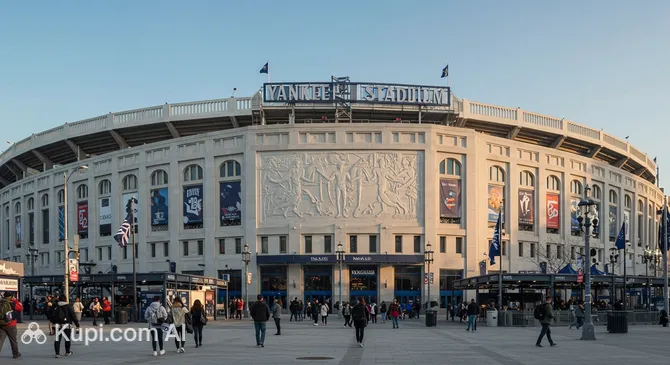
Yankee Stadium. Illustration.
Source: Kupi.com AI

Traveler photos:

In addition to exciting baseball and soccer matches, Yankee Stadium regularly hosts large-scale concerts by world stars and other major events. For visitors wishing to dive deeper into history, the stadium features the Yankees Museum and Monument Park, where the names of the team's greatest players are immortalized. Visiting the stadium is a unique opportunity to touch American sports culture and feel the incredible energy of one of the most famous stadiums in the world.

Contacts

To plan your visit to the stadium, book a tour, or clarify details about upcoming events, you can use the contact information provided below. The most up-to-date and complete information is always available on the arena's official website.

How to contactContact
Address1 E 161st St, Bronx, NY 10451, USA
Phone number+1 212-926-5337
Websitewww.mlb.com

What to Do

Visiting Yankee Stadium is much more than just watching a game. To immerse yourself in the team's history, take one of the tours. A classic tour includes access to the field, the locker rooms, and Monument Park—an open-air museum immortalizing the greatest Yankees players. A key tip: Monument Park opens when the stadium gates do but closes 45 minutes before the game starts, so plan your visit accordingly. For a deeper experience, there are other types of tours, such as guided tours or special match-day offers. When buying game tickets, it is recommended to use official platforms to avoid counterfeits; tickets are electronic, and showing a QR code on your phone is sufficient for entry.

The culinary experience at the stadium is just as important. Instead of standard fast food, try the signature dishes: for example, the legendary steak sandwich from Lobel's or the flavorful brisket from Mighty Quinn's BBQ. Don't forget to stop by the New York Yankees Museum, located on the main level of the stadium. Here, you will see unique exhibits: the famous "Wall of Balls" with hundreds of autographs, championship rings, World Series trophies, and personal items from baseball legends like Babe Ruth and Derek Jeter. This is a completely separate exhibition that complements the Monument Park experience and allows you to touch the most iconic moments in the club's history.

Getting There

Getting to Yankee Stadium is easy thanks to New York City's well-developed transportation infrastructure. The subway is arguably the most convenient and fastest way. Right at the arena's entrance is the 161 St-Yankee Stadium station, served by the D and 4 lines. These routes directly connect the stadium with Manhattan and other boroughs, allowing you to avoid traffic and unnecessary transfers.

In addition to the subway, you can reach the stadium by city bus or taxi. For those who prefer to travel by car, paid parking lots are available around the arena. However, keep in mind that on match days or during other major events, the roads in this area become very congested and the number of available parking spaces is very limited. For this reason, it is highly recommended to use public transportation so that your visit to the stadium leaves only positive impressions.

Nearest city: New York City

History & Facts

The history of the modern Yankee Stadium is inextricably linked to its legendary predecessor. The original stadium, opened back in 1923, was the home of the New York Yankees for decades. However, by the beginning of the 21st century, it became clear that the aging arena required replacement. A truly New York solution was found: a new stadium was built literally across the street from the old one, opening its doors to fans on April 2, 2009. Afterward, the historic building was finally demolished in 2010, and its site is now home to Heritage Field, a public park that serves as a reminder of the past.

When creating the new complex, architects faced a difficult task: to build an ultra-modern arena while preserving the spirit and atmosphere of "The House That Ruth Built." To achieve this, many elements of the original stadium were incorporated into the design, including its famous limestone facade. Construction, which began in August 2006, became one of the most ambitious projects in sports history. This approach allowed for the creation of a place where fans can enjoy 21st-century comfort without losing touch with the team's rich heritage.

One of the most remarkable facts about the new Yankee Stadium is its cost. The project cost approximately $1.5 billion, which at the time of its opening made it the most expensive baseball stadium in history. Some sources point to a total cost of $2.3 billion, accounting for all expenses. This colossal sum reflects not only the scale of construction and the use of advanced technologies but also the ambition to create an arena worthy of one of the most decorated and famous sports franchises in the world.

Time Needed

When planning a visit to Yankee Stadium, you should allow between 2 and 4 hours for a full experience without attending a sporting event. This time is usually enough to see the key locations without rushing. A standard itinerary includes a stadium tour, which lasts about an hour, a visit to the New York Yankees Museum, and the famous Monument Park, where the names of baseball legends are immortalized.

Within these same 2–4 hours, you can also budget time for buying souvenirs or even having a snack at one of the local restaurants. However, if you plan to attend a baseball game or a concert, be prepared to spend more time here—from 3 to 5 hours. This buffer will allow you not only to take your seats without a rush but also to fully enjoy the pre-game atmosphere and the event itself. Thus, a couple of hours might suffice for an educational tour, but for a full immersion into the world of American sports, it is better to set aside half a day.

Working Hours

Operating hours for Yankee Stadium are not fixed and depend entirely on the schedule of events: baseball games, concerts, or tours. On game days or for major events, the gates usually open for spectators 1–2 hours before the start. As for tours, they are generally held daily, mostly in the morning. However, their schedule can change, so it's worth checking details before your visit.

Since the stadium does not have standard visiting hours like a typical museum, it is highly recommended to check the current schedule on the arena's official website. This is the most reliable way to find out the exact start times for tours or sporting events. It is best to book tickets for tours and games online in advance to guarantee a spot and avoid inconvenience, especially during peak tourist season or on popular game days.

Nearby

A visit to Yankee Stadium is a great excuse to explore not only the arena itself but also its surroundings. The Bronx, where the stadium is located, and the adjacent parts of New York City boast a rich culture and many points of interest. By taking a little time for a stroll nearby, you can discover new facets of the city and make your trip even more fulfilling and memorable.

Very close to the stadium, you will find both world-famous attractions and less touristy but equally charming spots. From picturesque parks and unique museums to historic bridges, everyone will find something to their taste. Below is a list of some interesting places located nearby.

NameDistance
The Met Cloisters3.9 km
The Metropolitan Museum of Art6.4 km
Beacon Theatre7.1 km
Bow Bridge7.1 km
The Museum of Modern Art8.7 km
Rockefeller Center9 km
Intrepid Museum9.5 km

Have you reached the end of the page?

So the route has been studied inside and out