Support

Palo Alto

About

Palo Alto is more than just a point on the map; it is a true symbol of technological progress and intellectual power. This picturesque city, nestled in the southern part of the San Francisco Bay Area, is rightfully considered the unofficial capital of Silicon Valley. Here, among green hills and shaded alleys, academic rigor, the rebellious spirit of startups, and the relaxed pace of a prestigious Californian suburb intertwine in a fascinating way.

With a population of about 68,000, the city maintains a cozy, intimate feel while possessing the influence of a global metropolis. Thanks to its mild Mediterranean climate, a trip to this unique corner of the USA is comfortable at any time of year: it is practically eternal spring here, with warm, dry summers and mild winters. The city is literally immersed in the greenery of parks and squares, creating ideal conditions for walking and finding inspiration.
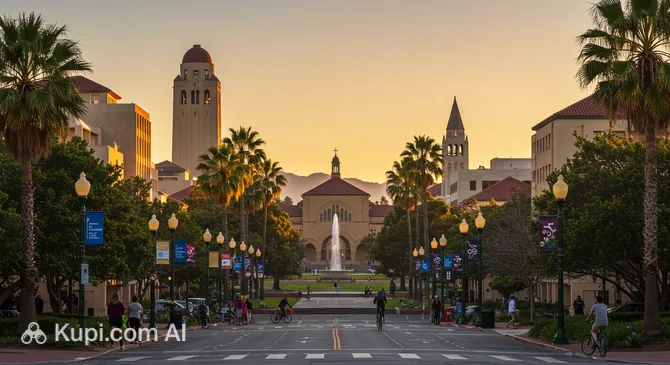
Palo Alto. Illustration.
Source: Kupi.com AI

The eventful history of Palo Alto is inextricably linked with the development of the legendary Stanford University, whose lands served as the foundation for the city. Today, this place attracts tourists not only with the chance to see the headquarters of tech giants and the famous "HP Garage," where the digital era began, but also with its magnificent natural areas, such as the Baylands Nature Preserve. Here, futuristic offices exist harmoniously alongside historical architecture and lively streets filled with cozy cafes and galleries.

Palo Alto invites you to immerse yourself in an atmosphere where the future is being created right before your eyes. Whether you are interested in science, art, or simply want to enjoy the beauty of California, this city will provide unforgettable impressions and perhaps inspire your own discoveries.
Weather Overview

Palo Alto is famous for its mild and pleasant climate, which closely resembles a Mediterranean one, making the city attractive to visit at any time of year. Expect warm, sunny summers with a total absence of precipitation and cool winters, which account for the main rainy season.

The summer period, from June to September, is ideal for walking: the average temperature stays around 18-20°C, with daily highs reaching a comfortable 23-25°C. Rain is an exceptional rarity during this time. In winter, especially in December and January, it becomes cooler (averaging about 11°C), and the number of rainy days increases to about 10 per month; however, severe frosts almost never occur here.

Spring and early autumn offer a "golden mean" with moderate warmth and blooming nature. To plan your wardrobe and choose the best dates for your visit, be sure to check the detailed weather in Palo Alto by month. The warmest month is usually September, which often feels like a continuation of summer.

Average monthly temperature

Average monthly precipitation

Interesting Facts

Palo Alto holds many fascinating secrets and historical details beyond its global fame as a high-tech hub. This city can surprise travelers with unexpected contrasts, where innovation exists alongside centuries-old traditions and wilderness.
  • The city owes its name to a specific tree—the giant redwood El Palo Alto, which translates from Spanish as "the tall stick." This living symbol is over a thousand years old; the tree still stands tall above the railroad bridge, serving as a reminder of the days when it was a landmark for early Spanish explorers.

  • Palo Alto is officially considered the birthplace of Silicon Valley. The legendary story began in a modest garage on Addison Avenue, where two Stanford graduates founded Hewlett-Packard. Today, this garage holds the status of a National Historic Landmark, symbolizing the start of the digital age.

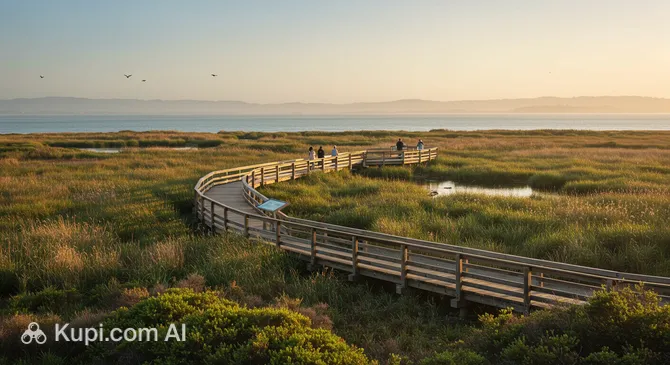
  • Despite urbanization, the city has preserved a unique piece of wilderness—the Baylands Nature Preserve. This is one of the largest marshlands in California, where you can enjoy absolute silence and see rare birds just a few minutes' drive from the headquarters of tech giants.

  • The city is literally saturated with the spirit of startups: local coffee shops here often serve as informal offices. At various times, visionaries like Steve Jobs and Larry Page lived and worked in Palo Alto, so an ordinary breakfast in a cafe might take place surrounded by future creators of global corporations.

Baylands Nature Preserve. Illustration.
Source: Kupi.com AI

Traveler photos:

How to Get There

Palo Alto enjoys an enviable location in the heart of Silicon Valley, situated in close proximity to several major aviation hubs. Since the city does not have its own civil airport, travelers usually arrive in neighboring metropolises. You can find out more about how to get to Palo Alto to plan your route as efficiently as possible.

One of the most popular options for tourists is San Francisco International Airport (SFO). It is located in San Francisco, approximately 28 km from Palo Alto. It is the region's largest hub, receiving flights from all over the world. A trip from here by taxi or rental car takes about 45–60 minutes, depending on traffic.

The most convenient and closest option is often San Jose Mineta International Airport (SJC), located in the city of San Jose. The distance to downtown Palo Alto is only about 21 km, making it possible to reach your destination by car in approximately 25–35 minutes. This airport is especially convenient for domestic US flights.

As an alternative, you can consider Oakland International Airport (OAK), located in San Leandro on the opposite side of the bay. It is 33 km from the city, and the drive by car will take about 40–50 minutes, not accounting for bridge traffic.

For clarity, here is summary information on the main airports:
AirportPassenger trafficDistance
Norman Y. Mineta San Jose International Airport11.8 mln21 km
San Francisco International Airport52.3 mln28 km
Metropolitan Oakland International Airport10.8 mln33 km
Stockton Airport127 00094 km
Monterey Regional Airport622 54399 km

Rail service is another popular way to reach Palo Alto, especially if you are traveling from San Francisco or San Jose. The main transport artery here is the Caltrain commuter rail system. The "Palo Alto" station is located in the very center of the city, next to University Avenue and the Stanford campus. Trains run regularly, allowing you to avoid highway traffic. There is also a second station in the city—"California Avenue," located closer to business districts.

For those who prefer car travel, Palo Alto is easily accessible via two key highways: US-101 (Bayshore Freeway), which runs along the bay, and the scenic I-280, which goes through the hills. Both routes connect the city with San Francisco to the north and San Jose to the south.

Main Attractions

Palo Alto is not only a technological mecca but also a city rich in cultural and natural attractions. Many iconic sites are concentrated within the famous Stanford University campus, but travelers will find plenty of interest beyond its borders as well.

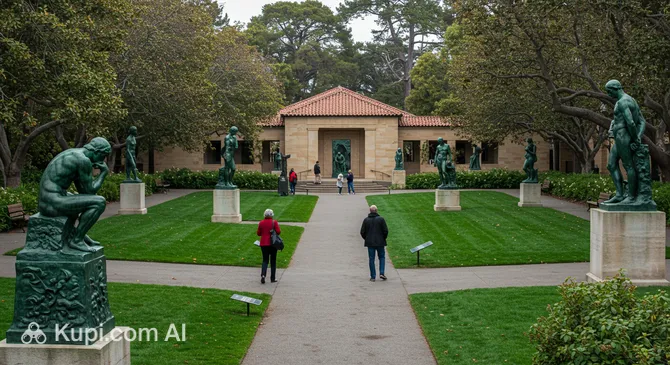
One of the main cultural centers is the Cantor Arts Center. Located on the Stanford campus, this museum offers an impressive collection of artworks from around the world—ranging from ancient sculptures to modern installations. Adjacent to the center is the famous Rodin Sculpture Garden, which features one of the largest collections of the great master's works outside of France, including the monumental "The Gates of Hell."

Rodin Sculpture Garden. Illustration.
Source: Kupi.com AI

Traveler photos:

It is impossible to imagine Palo Alto without the Hoover Tower, an 87-meter-tall symbol of Stanford University. After ascending to the observation deck, you can enjoy a breathtaking panoramic view of the entire campus, the city, and the San Francisco Bay. The tower is also part of the Hoover Institution, which houses unique archives on 20th-century history.

For nature lovers and those who enjoy quiet walks, the Baylands Nature Preserve is an ideal spot. It is the largest undisturbed marshland in the Bay Area, offering over 24 kilometers of walking and cycling trails. Here, you can observe dozens of bird species and enjoy the peaceful scenery.

If you are traveling with family, be sure to visit the Palo Alto Junior Museum and Zoo. This interactive space is designed specifically for children to explore science and the animal world in a fun, engaging way. Here, they can not only see exotic animals but also participate in educational activities.

Local Cuisine

The gastronomic palette of Palo Alto is surprisingly diverse and high-quality. Here, in the heart of Silicon Valley, food is elevated to a cult status, with the main principles being ingredient freshness and sustainability. Local cuisine is a vibrant mix of culinary traditions from around the world, adapted to the Californian lifestyle, where healthy eating harmoniously blends with gastronomic delights.

The menus of many establishments are based on so-called "California cuisine," characterized by the abundant use of local farm products. Tourists should definitely try signature salads with ripe avocado, the freshest oysters delivered straight from the bay, and, of course, California pizza with unusual toppings. Asian cuisine is also immensely popular: from exquisite sushi to rich soups. A bright representative of this trend is the Ramen Nagi restaurant, where you can appreciate the authentic taste of Japanese noodles.

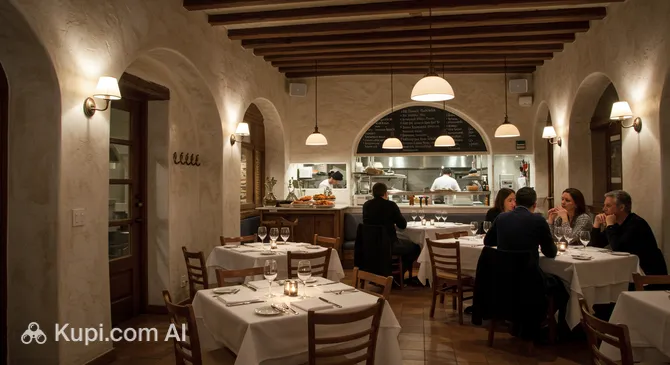
Evvia Estiatorio. Illustration.
Source: Kupi.com AI

Traveler photos:

The city's beverage culture rests on two pillars: coffee and wine. It is impossible to imagine Palo Alto without the aroma of freshly roasted beans—numerous coffee shops here often serve as informal offices for startup founders. As for alcohol, the proximity to famous wine regions dictates the rules: magnificent Californian varieties dominate the wine lists. For dinner in an elegant setting and an introduction to fine dining, the restaurant Evvia Estiatorio, a true local legend, is a perfect choice.

Locals prefer to have breakfast and lunch on the lively terraces along University Avenue, where the main gastronomic life is concentrated. A special atmosphere reigns in the city on weekends when traditional farmers' markets open. These are not just places to buy organic cheeses, homemade bread, and seasonal strawberries, but real social events where you can grab delicious street food to the sound of live music and feel the relaxed rhythm of Palo Alto.

Travel Tips

Welcome to the heart of Silicon Valley! To ensure your trip to Palo Alto is as comfortable as possible and leaves only pleasant impressions, we have prepared a list of important recommendations to help you feel at home here.

  1. Clothing and Climate. The main rule of the Californian wardrobe is layering. During the day in Palo Alto, it can be hot, but as soon as the sun goes down, the temperature drops sharply, and you will definitely need a hoodie or a light jacket. Since the city encourages long walks around the Stanford campus and parks, bring comfortable shoes (sneakers or trainers). A strict dress code is rare here; "tech casual" style (jeans and a t-shirt) is appropriate almost everywhere.

  2. Transport Nuances. For trips within the city and to the campus, the free Stanford Marguerite Shuttle is perfect—it's a real pro-tip for tourists. If you plan to visit San Francisco or San Jose, choose the Caltrain to avoid traffic. Renting a car makes sense if you plan trips along the coast, but remember that parking in the city center (especially on University Avenue) can be difficult.

  3. Finances and Tipping. In the USA, cards and contactless payments (Apple Pay, Google Pay) are accepted almost everywhere; cash may only be useful for small purchases at farmers' markets. Be prepared for high price levels for food and accommodation. Tipping culture is mandatory here: it is customary to leave 18–22% of the bill in restaurants, and about 15-20% for taxi drivers and bartenders.

  4. Health and Safety. Palo Alto is one of the safest cities in the region; you can safely walk even in the evening. However, medical care for tourists is very expensive, so insurance is mandatory. Pharmacies (such as CVS or Walgreens) often sell not only medicine but also essential goods. Don't forget sunscreen: even with a cool breeze, the Californian sun is very active.

  5. Communication and Internet. The primary language of communication is English, but due to the multinational population, you can hear languages from all over the world. There will be no problems with the internet: free Wi-Fi is available in most cafes, parks, and public areas. For navigation and calling a taxi, be sure to install the Uber or Lyft apps, as well as Google Maps, which work flawlessly here.

  6. Local Etiquette. Residents of Palo Alto are friendly but value personal space. It is customary to greet staff in shops and smile at passers-by when making eye contact. The question "How are you?" is part of a greeting, to which a short positive response is expected, not a story about your life. In lines (e.g., for coffee), maintain a respectful distance.

  7. What to Avoid. Strictly follow smoking rules: in California, smoking (including vapes) is prohibited in restaurants, bars, parks, and within 6 meters (20 feet) of building entrances. Also, do not take photos of people (especially children) without their permission, and do not enter private property, even if the fence looks symbolic.

  8. Extra Tip. Pay attention to the operating hours of establishments. Unlike many metropolises, life in Palo Alto winds down quite early: many restaurant kitchens close as early as 9:00 PM–10:00 PM. Plan your dinner in advance so you don't go hungry after a busy day.

By following these simple tips, you can easily blend into the measured and intellectual rhythm of life in Palo Alto. Enjoy the innovative atmosphere, the beautiful weather, and the unique spirit of this amazing city!

Entertainment & Nightlife

Nightlife in Palo Alto has its own unique character: you won't find massive mega-clubs operating until dawn like in Las Vegas or New York. Instead, the city offers a sophisticated and intellectual atmosphere where evening leisure follows the rhythm of Silicon Valley. Most of the fun is centered on the city's main artery—University Avenue—as well as the quieter but equally charming California Avenue.

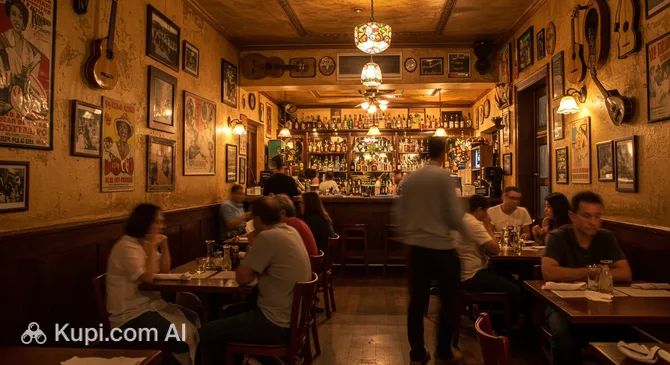
A magnet for lovers of live music and dancing is La Bodeguita del Medio. This colorful venue, named after the famous Havana bar, brings Cuban passion to the city's measured pace. Here, you can enjoy excellent cigars, try authentic cocktails, and dance to the fiery rhythms of salsa. It is one of the few places in the city where the festive atmosphere lasts late into the night.

La Bodeguita del Medio. Illustration.
Source: Kupi.com AI

Traveler photos:

If you prefer a more classic American style of relaxation, it's worth stopping by Sundance Steakhouse. This establishment with a rich history is perfect for starting the evening: it features an excellent wine list, dim lighting, and the atmosphere of a good old gentleman's club. Locals often come here for "happy hour" after work to discuss the latest IT industry news over a martini.

The crowd in Palo Alto venues is quite specific: a mix of Stanford students, successful startup founders, and venture capitalists. The dress code is democratic, often described as "California casual"—jeans and a quality t-shirt are perfectly appropriate even in expensive bars, although you might choose smart casual for evening restaurants.

Speaking of daytime entertainment that flows into the evening, the cultural component is hard to ignore. Several theaters and concert venues operate in the city, often associated with Stanford University, such as Stanford Live. Another popular spot for daytime leisure is the Stanford Shopping Center, where shopping can be combined with a stroll through beautiful outdoor promenades.

Practical Tips for Night Owls:

  • Opening Hours: Remember that nightlife here winds down fairly early. Most bars close by 11:00 PM or midnight, with only a few staying open until 1:30 AM. Plan your evening in advance.
  • Prices: Be prepared for "Valley prices." Cocktails and cover charges can be higher than the national average.
  • Safety and Transport: Palo Alto is a very safe city, and walking central streets at night poses no threat. However, public transport is rare at night. The most reliable way to get to your hotel is to call a taxi via the Uber or Lyft apps.

Parks & Museums

Palo Alto harmoniously combines the dynamics of a technological hub with the tranquility of a green suburb. The city offers residents and tourists many well-maintained parks, historic gardens, and cultural institutions that provide a break from the hustle and bustle and a touch of beauty.

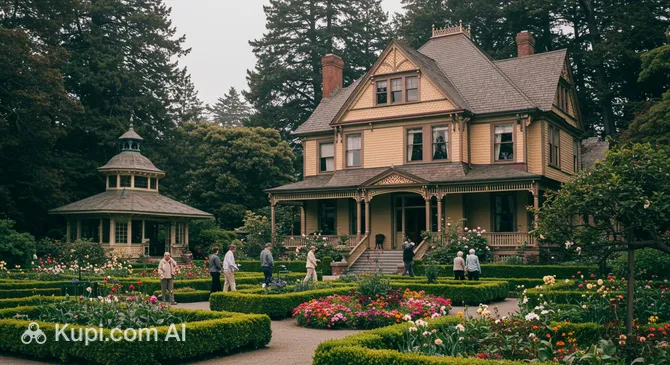
Among the green zones, a special place is held by the Elizabeth F. Gamble Garden. This is a historic estate with a magnificent garden that is open to the public for free every day. Here, you can stroll among blooming flower beds, ancient trees, and elegant fountains, enjoying the atmosphere of the early 20th century. Another popular spot for relaxation is Rinconada Park. It is famous for its majestic redwoods, public swimming pool, and a library located right on its grounds, making it an ideal place for family leisure.

Elizabeth F. Gamble Garden. Illustration.
Source: Kupi.com AI

Traveler photos:

The heart of university life and a favorite picnic spot is the Stanford Oval. This vast green lawn in front of the main university entrance is always full of people playing frisbee or simply relaxing on the grass with a view of the campus. If you are looking for something more exotic, check out the Arizona Garden—a hidden gem of the Victorian era, housing an impressive collection of cacti and succulents.

The city's cultural life is inextricably linked with art and science. The Cantor Arts Center offers visitors one of the richest university art collections in the world, spanning 5,000 years of history. Admission to the museum is free, making art accessible to everyone. For families with children, a must-visit is the Palo Alto Junior Museum and Zoo. This is an interactive space where young explorers can learn about physical phenomena and the animal world in a fun, game-like format.

Architecture enthusiasts should pay attention to the Stanford Memorial Church. This magnificent building, adorned with stunning mosaics and stained glass, is called the "architectural jewel" of the university. Nearby stands the famous Hoover Tower, a dominant feature of the skyline and a historical symbol of the institution.

Getting Around

Getting around Palo Alto is organized conveniently and logically, allowing tourists to feel comfortable even without a rental car. The foundation of the transport system connecting the city with San Francisco and San Jose is the Caltrain commuter rail. These are comfortable double-decker trains that run regularly. The city has two stations: the main "Palo Alto" station downtown and "California Avenue." This is the ideal option for trips outside the city or for getting here from the airport.

For moving within the city, the free shuttle system is a real find for travelers. The most popular of these is the Stanford Marguerite Shuttle. Named after the flower, these buses are free for everyone (not just students) and run between the train station, the university campus, the shopping center, and downtown. There is also the municipal Palo Alto Crosstown Shuttle, which connects residential areas with libraries and parks. Additionally, the city is served by regional VTA and SamTrans buses, which cover a wider network of routes across Silicon Valley.

The fare payment system in the region is unified. The most convenient way is to purchase a Clipper Card. This is a universal transit pass that works on Caltrain, buses, and most other types of transport in the Bay Area. The card can be purchased at station vending machines or at pharmacies (such as Walgreens). For tourists, it is even easier to use the mobile version of Clipper in Apple Pay or Google Pay—no plastic card is required. Caltrain fares depend on the number of zones crossed (usually from $4 to $8 for a one-way trip), while city buses have a fixed price.

An important practical tip when using trains: be sure to tap your card against the validator on the platform before boarding and after exiting (tag on / tag off). If you forget to do this at the end of your trip, the card will be charged the maximum fare to the end of the line. Train tickets can also be bought at vending machines before boarding, but the Caltrain Mobile app is often more convenient.

Palo Alto is known for its cycling culture. Thanks to the flat terrain and wide bike lanes, a bicycle is an excellent alternative to public transport. Rental services operate in the city, and many hotels provide bicycles for their guests. If you need to get to a specific point quickly, taxi and rideshare services like Uber and Lyft are always available and operate very efficiently here.

Accommodation

The choice of accommodation in Palo Alto reflects the city's status as the capital of Silicon Valley: comfort, high-tech features, and a fairly high price level prevail here. The property market is primarily oriented toward business travelers, investors, and university guests, so the bulk of the offerings consist of mid-range and high-end hotels. Finding classic budget hostels here is almost impossible; budget-conscious tourists often have to consider room rentals or motels in neighboring cities.

When choosing an area, it is best to start with the purpose of your visit. Downtown, around University Avenue, is the ideal place for those who want to be in the heart of the action, walk to restaurants, and have quick access to the Caltrain station. Another popular area is El Camino Real, along which numerous chain hotels are lined up. This is a convenient option for travelers with a car, as parking is easier here and the Stanford campus can be reached in a few minutes.

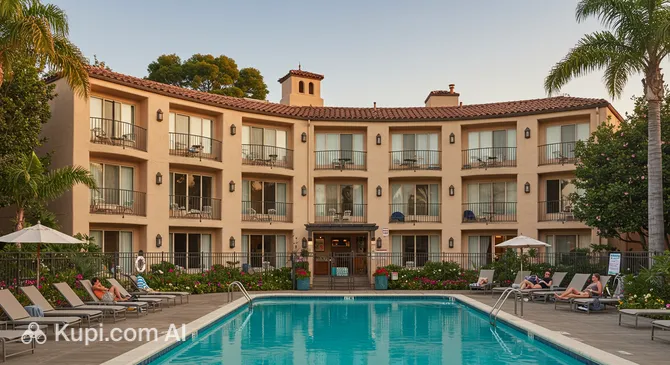
For those accustomed to exceptional service and seeking the atmosphere of a true resort within city limits, the region offers luxury accommodation options. A prominent example is the Four Seasons Hotel Silicon Valley at East Palo Alto. This venue combines elegance with modern amenities, offering guests a rooftop pool with bay views and world-class spa services, allowing for full relaxation after a busy day.

Silicon Valley at East Palo Alto Hotel. Illustration.
Source: Kupi.com AI

Traveler photos:

Booking Tips:

  • Plan Ahead: Demand for housing in Palo Alto is consistently high, especially during major tech conferences or Stanford graduation periods. It is recommended to book your room 2–3 months before your trip.
  • Price Range: Be prepared for the fact that the concept of a "medium budget" here is higher than the US average. A standard room in a 3-4 star hotel can cost from $200–300 per night.
  • How to Book: It is most convenient to use large international online platforms where you can catch discounts, or book directly on hotel websites to earn loyalty program bonuses.

Nearby Cities

For those looking to explore the surroundings, Palo Alto serves as an excellent starting point for day trips to several interesting nearby locations. Its convenient location in the center of the peninsula allows for easy access to neighboring cities, each possessing its own unique charm.

Just a few minutes' drive away is Santa Clara—a city where history intertwines with modernity. Here, you can visit the historic Mission Santa Clara de Asís, located on the local university campus, or head to the massive Levi's Stadium. Nature lovers and those seeking peaceful relaxation will enjoy San Mateo: its famous Japanese Tea Garden in Central Park and the Coyote Point Recreation Area on the bayshore are perfect for family walks. It's also worth stopping by Fremont, known for its historic districts and nature preserves like Coyote Hills.

CityPopulationDistance
East Palo Alto29 8883 km
Stanford16 3333 km
Menlo Park33 6774 km
North Fair Oaks14 3606 km
Los Altos Hills8 5207 km

These nearby destinations provide insight into the diverse culture and landscapes of the region, making your trip through California even richer.

Shopping & Souvenirs

Shopping:

Overview: Shopping in Palo Alto is not just about making purchases; it's a true aesthetic pleasure. Thanks to the magnificent climate and high standard of living, open-air shopping spaces are the dominant format here. The city is famous for its combination of high fashion, technological innovations, and cozy bookstores. You won't find typical enclosed "box" shopping malls here; instead, you'll find manicured gardens, fountains, and the relaxed atmosphere of luxury inherent to Silicon Valley.

Main Shopping Districts: The heart of city commerce is University Avenue. This lively downtown street is perfect for walking. Here, flagship stores of famous brands, including the iconic Apple Store, sit alongside independent clothing boutiques, home decor shops, and cozy cafes. Another important artery is California Avenue, which offers a quieter and more local shopping experience with an emphasis on small shops and services.

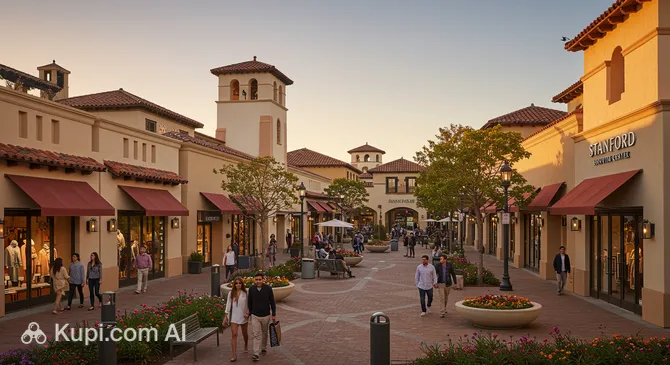
Shopping Centers: The main gem of the region is considered to be the Stanford Shopping Center. This is one of the most prestigious malls in the US, designed as a magnificent open-air park. Here, among blooming flower beds and sculptures, you'll find luxury department stores (such as Bloomingdale's and Neiman Marcus) and hundreds of boutiques from global brands.

Stanford Shopping Center. Illustration.
Source: Kupi.com AI

Traveler photos:

For those seeking a more intimate atmosphere, across the street from the university is Town & Country Village. This historic complex with wooden buildings and rustic charm offers an excellent selection of specialty stores, bakeries, and spots for a quick bite.

Markets: Farmers' markets are an important part of Palo Alto culture. Every Saturday morning, the Downtown Palo Alto Farmers' Market opens, and on Sundays, the market on California Avenue comes to life. Tourists come here not only for the freshest Californian fruits and berries but also for the atmosphere: street musicians play here, and local artisans sell unique handmade items, flowers, and homemade pastries.

Souvenirs: From Palo Alto, it's worth bringing back something related to the spirit of the place. The most popular souvenirs are clothing and accessories with Stanford University symbols (hoodies, t-shirts, mugs), which can be purchased at the campus bookstore. Tech gadgets and merch from IT giants are also highly valued. Those with a sweet tooth should look for local chocolate brands or the famous Californian See's Candies.

Opening Hours and Payment: Large shopping centers are usually open from 10:00 AM to 7:00 PM or 8:00 PM, though Sunday hours may be shorter. Small street boutiques often close around 6:00 PM. Bank cards (Visa, Mastercard, American Express) are accepted everywhere, as well as contactless payments via Apple Pay and Google Pay. Cash might only be needed for small purchases at the farmers' market.

Sales Tax: It is important to remember that in the US, Sales Tax is not included in the price tag and is added at the checkout. In Palo Alto, it is approximately 9.13%. The Tax-Free system (VAT refund for tourists) familiar in Europe practically does not exist in California. It is generally impossible to get a tax refund when flying out of the country, so plan your budget with this surcharge in mind.

Reached the end of the page?

That means the route is fully explored