Support

Stanford

About

Stanford is more than just a dot on the map of California; it is a true magnet for curious and creative people from all over the world. This unique city in the USA is nestled in the heart of Silicon Valley, between the green hills and sunny expanses of the Bay Area, just a few minutes' drive from San Francisco and Palo Alto. It enjoys a warm Mediterranean climate: mild winters, dry summers, and endless blue skies—ideal conditions for walks and discoveries.
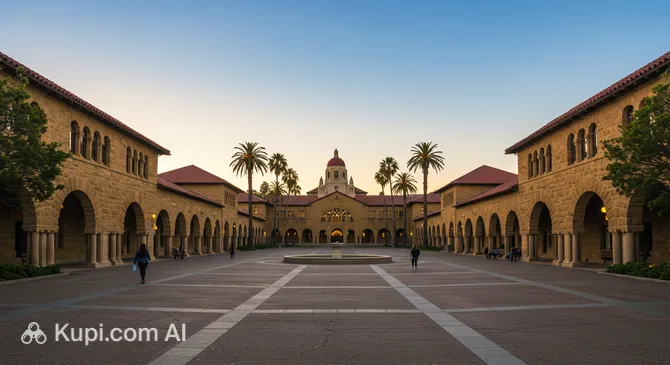
Stanford. Illustration.
Source: Kupi.com AI

The population of Stanford is approximately 16,000, and almost all of them are connected in one way or another to the world-renowned Stanford University. The city literally lives and breathes university life: scientific discussions thrive here, innovative startups are born, and cultural festivals and sporting events take place regularly. Despite its compact size, Stanford holds a unique administrative status: it is considered a census-designated place closely tied to the university and its extensive infrastructure.

The city's atmosphere is inimitable—a wonderful blend of a cozy small college town and the vibrant energy of one of the most innovative places on the planet. Arriving in Stanford, you immediately feel at the center of things, where a rich past and an exciting future meet on the shaded alleys of the famous campus. Key attractions include the university campus itself with its impressive architecture, the Stanford Memorial Church with its magnificent mosaics, and the Cantor Arts Center, famous for its extensive collection, which includes works by Rodin. Additionally, the city is known for its modern laboratories and numerous art installations.

Stanford is a place where you want to linger to get inspired, learn something new, and enjoy every moment. Whether you are looking for intellectual stimulation, cultural enrichment, or simply a pleasant atmosphere for strolling and reflection, Stanford will welcome you warmly.

You can find more interesting facts on the history of Stanford page.

Weather Overview

In Stanford, a Mediterranean climate awaits you, with distinct dry and warm summer months and mild, wetter winters. In summer, especially from June to September, the average temperature ranges from 17.8°C to 19.8°C, with maximum values reaching 24.9°C. Precipitation is virtually non-existent during this period. In winter, from December to February, the average temperature stays around 11.2°C, with minimums around 7-8°C and maximums up to 14-15°C. The winter months bring the majority of the rainfall, averaging 3-4 mm per month, with about 7-10 rainy days. Spring and autumn are transitional seasons with moderate temperatures and gradual changes in precipitation levels.

Expect warm, sunny summers with almost no rain and cool, wet winters. For more detailed climate information and the current forecast, you can visit the weather in Stanford page.

Average monthly temperature

Average monthly precipitation

Interesting Facts

Stanford is not just a synonym for a prestigious university; it is a place with a rich history and many surprising corners. Behind the facade of academic excellence lie facts that make it even more interesting for the inquisitive traveler.

  • The town and the university owe their existence to a personal tragedy. Leland and Jane Stanford founded them in memory of their only son, who died young, dreaming of creating a place where young people could fully realize their potential.

  • The campus is home to the famous Rodin Sculpture Garden—one of the largest collections of works by the great Auguste Rodin outside of France. Here, you can see world-famous masterpieces such as "The Burghers of Calais" and the monumental "Gates of Hell."

  • Botanists and lovers of unusual landscapes will be surprised by the Arizona Cactus and Succulent Garden. This unique outdoor garden, established in the 1880s, contains over 500 species of exotic plants, creating a true desert oasis right in the heart of California.

  • Despite its academic focus, Stanford is a true innovation hub whose alumni founded giants such as Google, Yahoo!, and Netflix. This highlights the unique atmosphere of entrepreneurship and cutting-edge ideas that prevails here.

How to Get There

When planning a trip to the heart of Silicon Valley, it's important to think about logistics in advance. You can find more details on how to get to Stanford on a separate page, but here we will look at the main transport hubs most often used by tourists.

Stanford itself does not have its own civil airport, so travelers usually fly into the airports of nearby major cities. One of the most convenient options is San Jose Mineta International Airport (IATA: SJC). It is located in San Jose, just 22 km from Stanford. This is a modern and comfortable airport with high passenger traffic. Due to its proximity, a trip by taxi or rental car takes about 40–50 minutes.

The main air gateway to the region is San Francisco International Airport (IATA: SFO). It is located in San Francisco, approximately 28.5 km from Stanford. This is a very large international hub receiving flights from all over the world. The journey from here to the university campus usually takes about an hour, depending on traffic.

Alternatively, especially for domestic flights, you can consider Oakland International Airport (IATA: OAK). It is located in San Leandro, about 34 km from Stanford. You can get there by transfer or taxi in about an hour and a bit.

For convenience, here is a summary of the main airports:

AirportPassenger trafficDistance
Norman Y. Mineta San Jose International Airport11.8 mln22 km
San Francisco International Airport52.3 mln28 km
Metropolitan Oakland International Airport10.8 mln34 km
Stockton Airport127 00097 km
Monterey Regional Airport622 54397 km

In addition to air travel, the region has a well-developed rail network. Although there is no long-distance train station in Stanford itself, tourists often use the Caltrain commuter station in neighboring Palo Alto, which is within walking distance of the campus. It is also convenient to reach the city by car via California's scenic highways.

Main Attractions

Stanford, world-famous for its prestigious university, offers travelers a unique combination of academic atmosphere, cultural treasures, and natural oases. Immersing yourself in the life of this town promises unforgettable impressions and discoveries.

The central point of attraction is undoubtedly the Stanford University campus itself. A walk through its vast, well-manicured grounds, among buildings designed in Romanesque and Neoclassical styles with characteristic sandstone arcades and red-tiled roofs, provides true aesthetic pleasure. The campus is full of open spaces, perfect for leisurely exploration and memorable photos.

One of the most recognizable landmarks is Hoover Tower. From its observation deck, located at a height of 87 meters, you can enjoy breathtaking panoramic views of the entire campus, the neighboring city of Palo Alto, and the picturesque surroundings of the San Francisco Bay. The tower is also part of the Hoover Institution, known for its 20th-century history archives, making it attractive not only for panorama lovers but also for history buffs.

Art lovers are highly recommended to visit the Cantor Arts Center. The museum offers an extensive collection spanning world art from antiquity to the present day. The jewel of the center is the Rodin Sculpture Garden, where visitors can thoughtfully stroll among the expressive bronze statues of the great master, including famous works like "The Burghers of Calais." This space allows for a fresh look at Rodin's work in a peaceful outdoor setting, offering a unique contemplative experience.

In the very heart of the campus stands the majestic Stanford Memorial Church. This is not just an active place of worship but a true architectural treasure, boasting intricate mosaics, vibrant stained-glass windows, and a grand organ. The church was built by Jane Stanford in memory of her husband, Leland Stanford, and their son, and remains one of the university's most photographed and spiritually significant locations to this day.

For lovers of unusual landscapes and botanical rarities, the Arizona Cactus Garden is a must-see. This historic garden, established at the initiative of Jane Stanford, offers visitors a chance to dive into a world of amazing shapes and textures of desert flora. Here you can see an impressive variety of cacti and other succulents gathered from all over the world, creating a striking contrast with the lush greenery of the rest of the campus. The garden is not only a place for a contemplative walk but also a living witness to the history of Stanford and its founders.

Local Cuisine

The gastronomic scene in Stanford is a vivid reflection of its cosmopolitanism and Californian spirit. There isn't one single traditional dish, but instead, you'll find the best of what the famous California cuisine has to offer: the freshest salads, exquisite seafood dishes, aromatic grilled vegetables, and light snacks prepared with ingredients from local farms. It is a true paradise for those who value freshness, quality, and a variety of flavors.

Be sure to try dishes that emphasize Stanford's commitment to the "farm-to-table" concept. Look for fresh salads with seasonal ingredients and dishes made with local seafood. Classic American burgers are also popular and can be found in many establishments. Due to the international population of residents and students, authentic Asian, Mexican, and Mediterranean cuisines are widely represented in Stanford. Food trucks hold a special place, offering everything from tacos and rolls to fresh smoothies and exotic desserts.

As for drinks, variety also reigns supreme. Freshly squeezed juices and smoothies are popular, reflecting the Californian trend toward healthy eating. Numerous coffee shops will offer you excellent coffee. Given the proximity to California's wine regions, many restaurants feature a decent selection of local wines. Non-alcoholic drinks are represented by a wide range of lemonades, teas, and craft sodas.

Dining culture in Stanford is very democratic. Locals and students often choose small, cozy restaurants and cafes scattered around the campus and its surroundings for lunch or dinner. Farmer's markets are incredibly popular, where you can not only buy organic vegetables, fruits, and homemade pastries but also grab a bite of ready-made meals. Gastronomic festivals, international cuisine weeks, and outdoor picnics are an integral part of life in Stanford, creating a uniquely friendly atmosphere and allowing you to get acquainted with the culinary traditions of different countries.

Travel Tips

Planning a trip to Stanford? Great! To ensure your journey through this famous university town in the USA goes smoothly and leaves only pleasant impressions, we have prepared some practical tips for you.

  1. Clothing and Essentials:

    The climate in California, where Stanford is located, is Mediterranean—with warm, dry summers and mild, wet winters. We recommend layering your clothes, as even in summer, mornings and evenings can be cool. Be sure to bring comfortable shoes—the Stanford campus is huge, and you'll be doing a lot of walking. Don't forget sunglasses, sunscreen, and a hat, especially during the warmer months. For electrical appliances, you'll need an adapter for American outlets (Type A and B). When visiting Stanford Memorial Church or other religious sites, dress respectfully, though there is no strict dress code in general.

  2. Transport around town and surroundings:

    On the Stanford campus itself, it's convenient to get around on foot, by bicycle (a very popular option!), or on the free Marguerite shuttle, which also connects the campus to Palo Alto and the Caltrain station. For trips to San Francisco or San Jose, use the Caltrain. In Palo Alto, VTA buses are also available. Rideshare apps like Uber and Lyft are widespread and very convenient. Renting a car can be useful if you plan to explore Silicon Valley or the coast, but it's not always necessary for getting around Stanford and Palo Alto, and parking can be expensive and limited.

  3. Finances: All about money:

    The local currency is the US Dollar (USD). You can exchange money at banks in Palo Alto or at the airport, but it's better to have some cash on arrival. Credit and debit cards (Visa, Mastercard) are accepted almost everywhere. ATMs are easy to find. Stanford and Palo Alto are quite expensive places; budget for around $70-150 per day per person, excluding accommodation (food, transport, small expenses). Tipping is an important part of the culture: it's customary to leave 15-20% of the bill at restaurants and cafes with service, as well as for taxi drivers.

  4. Health and Safety:

    Pharmacies (e.g., Walgreens, CVS) are located in Palo Alto; some may be open 24/7 or have extended hours. If medical assistance is needed, Stanford Hospital is a major medical center. Having medical insurance for tourists is highly recommended. In case of emergencies, call 911. Stanford and Palo Alto are generally very safe areas. Nevertheless, always keep an eye on your belongings, especially in crowded places, and don't leave bicycles without a good lock. At night, try to avoid poorly lit and deserted parts of the campus if you are alone.

  5. Communication: Language and Connection:

    The primary language is English. You will be able to communicate in English everywhere without problems. You can buy a local SIM card at the airport or at mobile operator stores (AT&T, T-Mobile, Verizon) in Palo Alto. Free Wi-Fi (Stanford Visitor Wireless) is available across most of the campus, as well as in many cafes and public places. Useful apps include maps (Google Maps, Apple Maps), rideshare apps (Uber, Lyft), and possibly the schedule for the Marguerite shuttle or Caltrain trains.

  6. Local Etiquette and Interaction:

    Americans, and Californians in particular, are usually friendly and open. Greetings are informal: "Hi" or "Hello" will suffice. It is customary to shake hands when meeting someone. In public places, respect personal space and don't speak too loudly. Politeness and small talk are valued. Don't hesitate to ask questions if something is unclear.

  7. What to Avoid:

    First, don't underestimate the size of the Stanford campus—it really is huge, so plan your travel time in advance. Second, smoking is prohibited in most places on the Stanford campus (the campus is a smoke-free zone); pay attention to signs. Also, do not leave valuables unattended, especially when it comes to bicycles—always use a reliable lock.

  8. Special Tip for Stanford:

    Stanford is not just a city, but a unique ecosystem of a world-famous university. Immerse yourself in the campus atmosphere! Attend free public lectures or cultural events if any are being held during your visit (check the calendar on the university website). Explore the numerous gardens, outdoor sculptures (like the Rodin garden), and interesting architectural sites such as Hoover Tower or the Memorial Church. You might even be lucky enough to catch a Stanford Cardinal sporting event.

We hope these tips help you better prepare for your trip and get the most out of your visit to Stanford. We wish you an exciting and unforgettable journey!

Entertainment & Nightlife

Stanford, being a world-famous university town, offers its own special atmosphere for evening and night-time relaxation. You won't find bustling districts with neon signs typical of major metropolises here, but you can enjoy more intimate and intellectual entertainment centered around student life and the neighboring city of Palo Alto.

The primary hub of evening activity is traditionally University Avenue in Palo Alto, located in the immediate vicinity of the Stanford campus. This is where most of the bars, restaurants, and cafes attracting students, faculty, and locals alike are concentrated. On the Stanford campus itself, evening events such as concerts or lectures may take place, and some university cafes or pubs may stay open late.

As evening falls, Stanford and adjacent Palo Alto offer various options for leisure. You will find lively bars where you can socialize over a glass of craft beer or a cocktail, as well as quieter wine bars and restaurants offering fine dining and drinks. There are virtually no large nightclubs in Stanford itself; for that style of entertainment, people usually head to nearby larger cities like San Francisco or San Jose. However, in Palo Alto, you can find venues with live music or dance nights. The atmosphere in these establishments is predominantly casual and friendly, reflecting the spirit of a college town. The dress code is generally casual unless it's a special event or a high-end restaurant.

Opening hours for most establishments are geared toward the local crowd and students. Bars are typically open until midnight or 1:00 AM, especially on Friday and Saturday. Restaurants may close their kitchens earlier, though some offer special late-night menus. To experience the liveliest atmosphere, it's best to head to University Avenue on weekend evenings. The price range varies from affordable student cafes to more expensive restaurants and bars.

In terms of transport, it is convenient to use taxi services or popular ridesharing apps at night. Walking along the well-lit streets of Palo Alto and on the Stanford campus is generally safe, though it's always wise to take standard precautions, especially if you are alone. The Stanford campus is very large and green, and evening walks there can be quite pleasant, especially during the warmer months.

While specific names of popular venues depend on current listings, you will easily find suitable spots around University Avenue and the surrounding streets. Look out for student bars with their lively and informal vibes, pubs with a wide selection of local and imported beers, or more sophisticated wine bars and lounges where you can spend the evening in quiet conversation. Many restaurants in the area also have bar zones popular for evening meetups.

During the day, Stanford offers a rich cultural program. You can visit the famous Cantor Arts Center with its impressive collection including Rodin sculptures, stroll through the vast and manicured campus grounds—which are an attraction in themselves—or climb Hoover Tower for a panoramic view of the area. Additionally, the campus regularly hosts public lectures, concerts, and theatrical productions, which can be an excellent addition to your cultural itinerary.

Parks & Museums

Stanford, known primarily for its prestigious university, offers guests not only an academic atmosphere but also wonderful opportunities for outdoor recreation and exploring cultural heritage. Here you can find both well-kept parks and interesting museums.

Among the green zones of Stanford, the Stanford University Arboretum stands out. This is a vast area with a rich collection of trees from around the world, making it an ideal place for leisurely walks and studying diverse flora. Tourists will find it interesting to see rare plant species and enjoy the peaceful atmosphere. Another notable spot is the Arizona Cactus Garden, also known as the Leland Stanford Jr. Cactus Garden. Founded in the 1880s, this historic garden showcases a unique collection of cacti and other succulents, creating an exotic and photogenic landscape. One cannot overlook the famous "Oval"—a spacious green lawn in front of the main entrance to the university, a popular spot for relaxing and picnicking.

The cultural life of Stanford is centered around its museums and galleries. The key institution is the Cantor Arts Center. This art museum possesses an impressive collection spanning various eras and cultures, from antiquity to modern art. A particular point of pride for the museum is the Auguste Rodin sculpture garden, one of the largest outside of Paris. Fans of 20th-century American art should visit the Anderson Collection at Stanford University, which features works by prominent masters of the post-war period, including abstract expressionists.

Speaking of historical and architectural sites, the Stanford Memorial Church must be mentioned. Located in the heart of the campus, this church is stunning in its beauty, with magnificent mosaics and stained-glass windows, making it a true architectural gem. Another iconic structure is Hoover Tower. From its observation deck at a height of 87 meters, you can enjoy a breathtaking panoramic view of the campus and its surroundings. Inside the tower, there are also exhibition halls dedicated to the life and work of the 31st U.S. President, Herbert Hoover, and the history of the Hoover Institution.

For authentic experiences, besides the main attractions, take a walk through the extensive campus grounds and discover lesser-known but charming themed gardens, such as the Papua New Guinea Sculpture Garden. Also, explore the quiet courtyards between the historic buildings—each has its own unique atmosphere and can be a pleasant discovery.

Getting Around

Getting around Stanford and its surroundings is quite convenient thanks to a well-thought-out public transport system and alternative modes of travel. The city and the famous university are served by several types of transport aimed at students, employees, and visitors alike.

The main means of transport directly on the campus and in the adjacent Palo Alto neighborhoods is the free Marguerite Shuttle system. These buses run on many routes, connecting key points of the university, residential areas, shopping centers, and the Caltrain station. Schedules and route maps are available online on the Stanford University website. This is an excellent and economical way to get to know the campus.

For trips to San Francisco, San Jose, and other cities in Silicon Valley, it is convenient to use the Caltrain commuter rail. The Palo Alto station, which serves Stanford, is on the main Caltrain line. Tickets can be purchased at station kiosks, via the Caltrain Mobile app, or by using a regional Clipper transit card. Fares depend on the zone; a trip to San Francisco, for example, will cost about $7-15 one way.

Local bus service in San Mateo County, including the areas around Stanford, is provided by SamTrans. SamTrans buses complement the Marguerite and Caltrain routes, connecting Stanford to more distant points. You can pay the fare in cash (exact change is preferred), with a Clipper card, or via mobile apps. The standard fare for a single trip is usually around $2-3.

Payment system and tips for tourists: For convenience when moving throughout the San Francisco Bay Area, it is highly recommended to purchase a Clipper card. This is a single reloadable card accepted on Caltrain, SamTrans, BART (the Bay Area's subway), and many other transit systems. The card can be bought and topped up online, at station kiosks, or at retail locations. Before boarding Caltrain, make sure your paper ticket is validated (if you are not using Clipper or the mobile app). Most types of transport operate from early morning until late evening, but the frequency of service may decrease on weekends and holidays, so always check the current schedule.

Alternative modes of travel: Stanford is an extremely bicycle-friendly city. There is an extensive network of bike lanes, and many students and residents prefer cycling. Bike rental points are easy to find. Taxi and ridesharing services (Uber, Lyft) are also widely used. For those who prefer to drive themselves, car-sharing services like Zipcar are available, with cars located at various points across the campus and the city.

Accommodation

When planning a trip to Stanford and neighboring Palo Alto, you will find a variety of accommodation options to suit different needs and budgets. The choices include hotels of various star ratings, budget-friendly motels, short-term rental apartments, and cozy guesthouses. Given the city's close connection to the famous university, many offerings are geared toward campus visitors, business travelers, and families of students.

The most convenient areas to stay are traditionally those located in the immediate vicinity of Stanford University, as well as the central districts of Palo Alto. From here, it is easy to reach not only the academic buildings and research centers but also numerous shops, restaurants, and cafes. For the convenience of guests, some hotels offer shuttle services to the campus or are within comfortable walking distance.

In Stanford and its surroundings, you will find both well-known international hotel chains, guaranteeing a standard set of services and consistent comfort, and independent boutique hotels that attract guests with unique designs and a special atmosphere. There is a suitable option for everyone, depending on personal preferences and the purpose of the trip.

Regarding costs, accommodation in Stanford and Palo Alto can range from value-for-money options to luxury offerings, reflecting the prestige and high demand in this region. It is most convenient to book through popular online platforms such as Booking.com, Expedia, or Airbnb, or directly on hotel websites. It is highly recommended to book in advance, especially if your trip coincides with major university events (such as the start of the academic year, commencement ceremonies, or important conferences). During these times, demand for accommodation spikes, and the best options can sell out quickly.

Nearby Cities

For those looking to explore the surrounding area, Stanford serves as an excellent starting point for day trips to several interesting nearby locations:

CityPopulationDistance
Palo Alto68 6243 km
Menlo Park33 6773 km
East Palo Alto29 8885 km
North Fair Oaks14 3606 km
Los Altos Hills8 5206 km

These nearby destinations provide a glimpse into the region's diverse culture and landscapes.

Shopping & Souvenirs

Shopping in Stanford and its immediate vicinity offers diverse opportunities, although the city is primarily known for its university. Main shopping points are concentrated around the campus and in neighboring Palo Alto. Here you can find shops of famous brands, unique boutiques, and, of course, Stanford University branded merchandise.

The main place for shopping is the Stanford Shopping Center, located in close proximity to the campus (technically in Palo Alto). It is a large open-air shopping mall with a wide selection of clothing stores, electronics, home goods, and restaurants. Another popular shopping area is University Avenue in downtown Palo Alto, where boutiques, bookstores, and specialty shops are located.

As mentioned, Stanford Shopping Center is the primary retail hub, attracting both locals and tourists. It features both luxury brands and mid-range stores. It’s a great place to spend a few hours combining shopping with a break at one of the many cafes.

While there may not be large traditional markets in Stanford itself, farmer's markets are regularly held in neighboring Palo Alto. For example, the market on California Avenue (on Sundays) offers fresh local produce, flowers, and handmade goods. This is a wonderful opportunity to immerse yourself in the local atmosphere and purchase high-quality goods.

From Stanford, the most common souvenirs are products with Stanford University branding: clothing (T-shirts, hoodies), mugs, stationery, and books. Also, given the location in Silicon Valley, various gadgets and accessories are popular. In bookstores, you can find interesting publications related to the university's history or the scientific achievements of its alumni.

Most shops in the Stanford and Palo Alto area operate on a standard American schedule: roughly from 10:00 AM to 7:00 PM or 9:00 PM on weekdays, with shorter hours on weekends. Large shopping centers may have longer operating hours. Credit and debit cards are accepted everywhere. Cash is also accepted, but card payments are more common.

As for tax refunds (Tax Free), in the USA, and specifically in California, there is no unified sales tax refund system for tourists similar to the European VAT-refund system. Sales tax is levied at the state and local levels and is generally not refundable to foreign tourists. It is advisable to clarify this when making large purchases, but typically such an option is not available.

Reached the end of the page?

That means the route is fully explored