Support

Downtown City Park

About

In the heart of the charming city of Paso Robles lies a green oasis known as Downtown City Park. Covering about 5 acres, this spot serves as the true heart of the historic district and a popular attraction for anyone traveling through the USA. The park is a harmonious blend of manicured lawns, shady walkways, and cozy relaxation areas, surrounded by the city's best restaurants and wine bars.
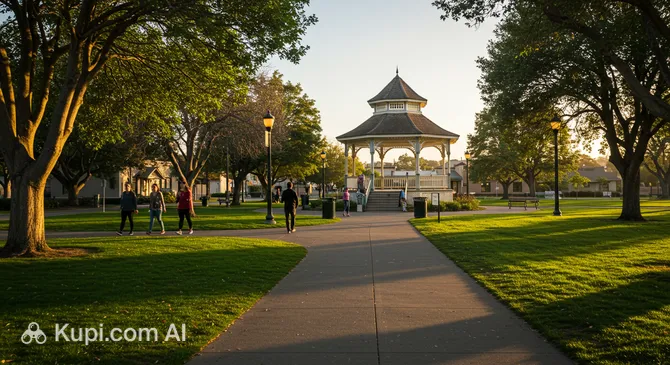
Downtown City Park. Source: Kupi.com AI

The park's main architectural gem is the Carnegie Library—a majestic building constructed in 1908 in the classical style. Listed on the National Register of Historic Places, the library now houses a history museum where you can explore archives and exhibits detailing the region's past. Nearby is an elegant rotunda and the famous fountain, which highlights the tranquil atmosphere of the area.

The park perfectly reflects the spirit of the region, famous for its wineries and thermal springs. Here, you will see not only tourists but also locals relaxing by the fountain or walking their pets, for whom specially equipped water fountains are provided. Historic buildings surrounding the park, such as the Acorn Building with its recognizable clock tower, complete the look of this welcoming space.

Contacts

For up-to-date information on events or to book facilities, you can use the official communication channels. The park is managed by city authorities, ensuring a high level of maintenance and safety.

Phone +1 805-237-3988
Official Website prcity.com
Address Spring St & 12th St, Paso Robles, CA 93446, USA
Google Maps View on map

What to Do

This location offers many options for both relaxation and active recreation. You can enjoy a classic picnic on the soft grass using the provided tables or spend time playing horseshoes on professional courts. For families with children, there is a modern playground with swings and slides, while dog owners will appreciate the dedicated water fountains for their pets.

A stroll to the historic Carnegie Library is particularly enjoyable, where you can admire the architecture and step inside to explore the museum exhibits. Book lovers often choose benches in the shade of old trees, enjoying the peace despite the proximity to busy downtown streets. Its convenient location makes it easy to walk to the cinema, boutiques, and numerous tasting rooms to sample the famous local wines.

If your trip is planned for the summer, don't miss the chance to attend free outdoor concerts held on Thursdays. During this time, the park fills with live music as people bring dinners and blankets. Throughout the year, the park also hosts large-scale events, ranging from wine festivals and farmers' markets to the official Christmas tree lighting ceremony and colorful parades.

Getting There

Finding this green oasis is easy, as it is located at the intersection of Spring Street and 12th Street, right in the heart of the city's activity. If you are traveling by car on the US-101 highway, the city is situated roughly halfway between San Francisco and Los Angeles. Parking spaces are available around the park, making it a convenient starting point for a walk through downtown.

For those who prefer public transport, Paso Robles has an Amtrak station located just one kilometer from the park. The city is also served by local bus routes. If you are arriving from further away, the nearest regional airport—San Luis Obispo County Airport (PAS)—is a 45-minute drive, while major international hubs (SFO and LAX) are 3–4 hours away.

Within the city center, it is most convenient to get around on foot or by bicycle. The park serves as a link in the pedestrian zone, and many tourists prefer to walk here directly from the Paso Robles Inn or after visiting nearby tasting rooms. Local taxis or ride-sharing services are also readily available.

History & Facts

The history of this place began back in 1886, when Paso Robles was just starting to take shape among the willows and poplars near the Salinas River. The city's founders—Drury James, Daniel Blackburn, and James Blackburn—decided to provide residents with a space for recreation. In 1887, they donated two city blocks across from their hotel on the condition that the land be used exclusively for public enjoyment.

Citizens enthusiastically set about developing the vacant lot, turning it into a true botanical garden. By 1890, funds from private theatrical performances were used to build a bandstand for brass band concerts. In those days, the park looked quite exotic: it was enclosed by a cactus hedge and was home to tame deer and a fish pond.

A landmark event for the city was the 1908 opening of the Carnegie Library, a classical building that is today recognized as a historical monument and listed on the National Register. Over time, the park changed, losing its deer and cacti, but it preserved its main function as the heart of the community. Even the historic carousel that once delighted children is now carefully kept in the local museum.

Today, the park is considered a symbol of the region's architectural and cultural heritage. It serves as an anchor for the historic downtown, preserving the atmosphere of the late 19th century. Every element here, from the old trees to the foundation of the former library, serves as a reminder of the founders' vision to create a space where time seems to slow down.

Time Needed

For a typical leisurely stroll through the park, viewing the fountain, and admiring the exterior of the Carnegie Library, 1–2 hours should be plenty. This is enough time to relax in the shade of the trees or enjoy a small picnic on one of the well-maintained lawns.

If you plan to visit the historical society museum located inside the old library, or if your trip coincides with one of the many festivals or concerts, it is worth setting aside 3–4 hours or even half a day. The park is so harmoniously integrated into the downtown area that time flies by as you alternate between relaxing and exploring the surrounding shops.

Working Hours

The park is open to the public daily, allowing visitors to enjoy walks from early morning until evening. Official hours are:

  • Monday – Sunday: 07:00 – 21:00

Despite the set hours, the park remains accessible for quiet strolls at almost any time; however, please note that during major festivals or concerts, access to certain areas may be restricted or require a ticket.

Nearby

The park's location in the very center of the city makes it an ideal starting point for further exploration. Just steps away from the green lawns, you will find numerous dining establishments, art installations, and historic buildings that create the unique character of this California town.

A stroll around the area allows you to sample local cuisine, browse unique boutiques, or simply enjoy the early 20th-century architecture. Exploring these locations will help you get a deeper feel for the atmosphere of a region known for its hospitality and love of fine wine.

Name Type Distance (km)
Pappy McGregor's Gastropub 0.1
Street Side Ale House and Eatery Restaurant / Bar 0.1
Jeffry's Wine Country BBQ BBQ Restaurant 0.1
T & D Theatre Art Piece Art Installation 0.2
Fish Gaucho Mexican Cuisine 0.2
The Hatch Rotisserie & Bar Grill Bar 0.2
Brewster-Dutra House Historic Building 0.9
Rustic Fire Pizzeria 1.7
Riboli Family of San Antonio Winery Winery / Bistro 2.6
Ravine Waterpark Waterpark 4.7

Reached the end of the page?

That means the route is fully explored