Support

UC Santa Cruz Arboretum & Botanic Garden

About

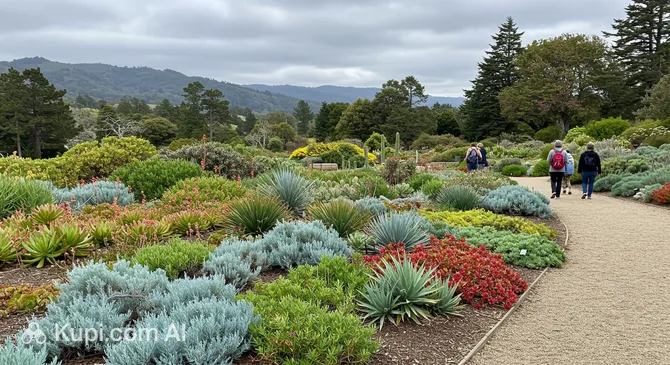
Imagine a living open-air museum where one of the planet's most impressive botanical collections is gathered across 135 acres. The UC Santa Cruz Arboretum & Botanic Garden is more than just a teaching facility; it is a true natural wonder located in the picturesque city of Santa Cruz, USA. Thanks to a unique combination of microclimates and soil diversity, it has become a home for thousands of rare plant species.
\n\n
UC Santa Cruz Arboretum & Botanic Garden. Source: Kupi.com AI
\n\n

This site is rightfully proud of the world's largest collection of Australian flora outside of Australia itself. Visitors can see more than 2,000 species, including whimsical eucalyptus, acacias, and vibrant banksias. Furthermore, the garden is famous for its collections from New Zealand and South Africa, as well as unique California endemics that are threatened with extinction in the wild.

\n\n

Every year, tens of thousands of tourists come here to see "living fossils" and the rarest conifers with their own eyes. The Arboretum is recognized as one of the most significant attractions in the region and is included in lists of the world's greatest gardens, offering guests not only aesthetic pleasure but also a deep dive into the conservation of our planet's ecosystems.

Contacts

To ensure your visit is as comfortable as possible, we recommend checking the garden's contact information in advance. Official representatives are always ready to answer visitors' questions by phone or through the website. Before your trip to Santa Cruz, be sure to check the arboretum's website for the latest updates.

\n\n\n \n \n \n \n \n \n \n \n \n \n \n \n \n \n \n \n
AddressArboretum Rd, Santa Cruz, CA 95064, USA
Phone+1 831-502-2998
Websitearboretum.ucsc.edu
Google MapsView on map

What to Do

Walking through the arboretum is like a world tour in a single day. Start your journey in the California Natives Garden, where you can see majestic Ponderosa pines and delicate California poppies, then move on to the South African Garden. Here you will find King Proteas — their massive blooms look so futuristic they seem like props from a science fiction movie.

\n\n

For wildlife lovers, the garden is an ideal spot for bird and butterfly watching, drawn by the scent of eucalyptus and melaleuca. Be sure to visit the Dudleya collection — it is considered the largest in the world and impresses with the variety of shapes of these resilient succulents. Photographers will find an endless array of subjects here, from exotic "living fossils" to panoramic coastal views stretching from the campus hills.

\n\n

If you want to take a piece of this place home with you, stop by the local gift and plant shop, which often hosts sales by the Friends of the Arboretum community. For those who prefer a deeper dive, educational lectures and themed symposiums are regularly organized. Finally, cozy picnic areas provide a great way to end your walk, allowing you to relax surrounded by the rarest flora of Santa Cruz.

Getting There

The easiest way to reach this green oasis, located at Arboretum Rd, Santa Cruz, CA 95064, USA, is by car. The drive from the city center takes about 10–15 minutes via Highway 1 or local city roads. Convenient parking is available on-site and is usually free for visitors coming to explore the garden's collections.

\n\n

If you prefer public transportation, you can use the Santa Cruz METRO bus system (routes 71, 72, or 74), which serves the UC Santa Cruz campus. From the bus stop, it is about a 15–20 minute walk to the main arboretum gates, following the signs. It is a pleasant stroll that helps set a contemplative mood for your visit.

\n\n

For travelers arriving from other cities, the most convenient entry points are Monterey Regional Airport (about 45 minutes away) or San Jose Mineta International Airport (about an hour's drive). You can also order a taxi or use Uber and Lyft services, which are widely available in the region and can drop you right at the entrance of the Arboretum & Botanic Garden.

History & Facts

The history of this remarkable place began in 1964, when a generous gift of about 90 eucalyptus species was planted on the grounds of the university campus then under construction. This event laid the foundation for the future scientific and cultural center. In 1967, Chancellor Dean McHenry officially initiated the work of the Arboretum Committee, transforming the vacant land into a unique research site.

\n\n

A significant contribution to the garden's development was made by its founder and first director, Ray Collett. Under his leadership, the formation of the famous Southern Hemisphere collections began. The Arboretum became a true pioneer in the U.S. for the propagation of South African proteas and Australian plants, many of which had never been grown on American soil before. Thanks to his enthusiasm, the garden turned into a living archive of rare "fossil" plants.

\n\n

Over the decades, the garden has grown significantly thanks to the support of the Friends of the Arboretum, a community organization founded in 1976. While the group originally consisted of just over a hundred people, today it boasts hundreds of dedicated volunteers. By its 50th anniversary in 2015, the arboretum's territory had expanded to an impressive 135 acres, firmly establishing its status as a world leader in biodiversity conservation.

\n\n

Interestingly, the land where exotic proteas and poppies bloom today once belonged to industry pioneer Henry Cowell. Today, this space serves not only for beauty but also for serious science: it houses research gardens, such as the Elvenia J. Slosson Research Gardens, where the hardiness and ornamental properties of plants are studied to help protect them from extinction in the wild.

Time Needed

For a standard introduction to the main exhibits and a stroll along the garden's most scenic trails, most visitors require 2 to 3 hours. This is ample time to leisurely explore the Australian and South African sectors and take beautiful photos against the backdrop of blooming proteas or rare succulents.

\n\n

If you are a botany enthusiast, a professional photographer, or plan to attend a lecture and browse the gift shop, we recommend setting aside about 4 hours for your visit. The garden invites contemplation, so many guests prefer to linger in the seating areas to enjoy the peace and the songs of the birds living in the dense canopy.

Working Hours

The botanic garden welcomes guests daily, making it a convenient stop on any traveler's itinerary. Official opening hours are from 9:00 AM to 5:00 PM, Monday through Sunday. Please note that the last entry to the grounds is permitted 30 minutes before closing, so it is best to plan your visit for the first half of the day.

\n\n

Despite the consistent schedule, hours may vary slightly due to public holidays or extreme weather conditions. Before visiting, it is recommended to check the official website to ensure all sectors of the garden are accessible and to confirm the gift shop's operating hours.

Nearby

After a stroll among the exotic plants of the arboretum, it is worth exploring other interesting spots in the vicinity. The city is famous for its blend of historical heritage, marine biology, and scenic coastal views that will make your trip even more rewarding.

\n\n

Below are some attractions located near the botanic garden:

\n\n\n \n \n \n \n \n \n \n \n \n \n \n \n \n \n \n \n \n \n \n \n \n \n \n \n \n \n \n \n \n \n \n \n \n \n \n \n \n \n \n \n \n \n \n \n \n \n \n \n
NameDistance (km)
Cowell Ranch Historic Hay Barn0.5
Tree 92.5
Mission Santa Cruz 17912.7
The Painted Barrels3.1
Seymour Marine Discovery Center3.7
Santa Cruz Beach Boardwalk4.3
Steamer Lane4.5
Roaring Camp6.5
Historic Venetian Court9.5
Capitola By The Sea9.6

Reached the end of the page?

That means the route is fully explored