Support

Monterey History and Art Museum

About

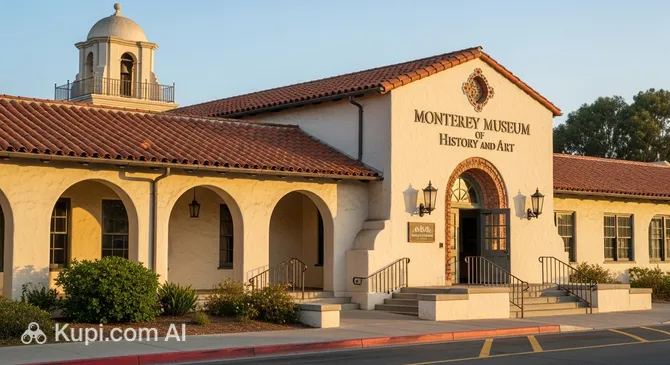
An immersion into the atmosphere of the past begins in the heart of the historic center, where the Monterey Museum of History and Art is located. Occupying the Stanton Center building, this unique cultural institution is dedicated to preserving and promoting the rich heritage that Monterey has accumulated over centuries. Here in California, the USA carefully preserves evidence of the colonial era and local cultural development.
\n
Monterey Museum of History and Art
Monterey Museum of History and Art. Иллюстрация. Источник: Kupi.com AI
\n

The museum is a harmonious blend of historical artifacts and art collections. The exhibitions provide detailed accounts of city life during the periods of Spanish and Mexican rule, as well as the era of American colonization. Thanks to its location in the Custom House Plaza area, the museum building stands alongside other important monuments, forming a unified historical complex that attracts thousands of tourists annually.

\n

Today, it is not just a repository of antiquities, but a vibrant educational center. Visitors can see rare photographs, documents, and everyday items that underscore the city's status as the “cradle of California.” The museum's high ratings and positive reviews attest to it being one of the most interesting places for those who want to understand the true spirit of the Pacific coast.

Contacts

For more information about current events or to book a group tour, you can contact the administration directly. The staff is always ready to help tourists navigate the variety of exhibitions and answer questions about the region's cultural heritage.

\n

Below are the main contact details for reaching out and planning your visit:

\n
How to contactContact
Address5 Custom House Plaza, Monterey, CA 93940, США
Phone+1 831-372-2608
Websitewww.montereyhistory.org

What to Do

The museum's halls offer visitors a fascinating journey through the centuries: here you can see detailed ship models, ancient maps, and interactive displays that bring the events of the Gold Rush and the Spanish mission era to life. Special attention should be given to the collection of everyday items from California ranches, which literally allow you to touch the daily life of the past.

\n

Art lovers will enjoy the temporary contemporary art exhibitions. These often combine historical themes with works by talented local artists, creating a unique dialogue between the past and the present. For a deeper immersion, we recommend using the audio guides or joining a themed tour, where guides will reveal the secrets of maritime traditions and talk about the lives of indigenous peoples.

\n

A family visit becomes even more interesting thanks to special programs for children: 19th-century style craft workshops will not leave young explorers indifferent. After exploring the exhibits, you can stop by the gift shop to purchase replicas of historical artifacts or unique books. Sometimes, the museum's cozy garden hosts open lectures and musical evenings featuring traditional folklore, making the visit truly unforgettable.

Getting There

Located in the heart of the historic district, the museum is within walking distance of most central landmarks. The most pleasant route is a walk from Fisherman's Wharf, which takes no more than 10 minutes. For those who prefer private transport, public parking is available right at Custom House Plaza, as well as a multi-level garage in the historic center, where parking costs about $2–$3 per hour.

\n

If you plan to use public transportation, look for the MST (Monterey-Salinas Transit) buses. Routes 1, 2, and 4 stop at the intersection of Alvarado & Calle Principal, which is just a five-minute leisurely walk from the museum entrance. Travelers arriving at Monterey Regional Airport (MRY) will find it most convenient to take a taxi or use Uber—the 8 km trip takes between 20 and 30 minutes depending on traffic.

\n

For more active tourists, a bicycle is an excellent option: there are several rental stations in the city center, and pedestrian paths and "historic path" signs make it easy to find your way. If you are coming from afar on the Amtrak Coast Starlight train, your stop will be in Salinas, from where a convenient bus transfer to downtown Monterey is provided.

Ближайший город: Monterey

History & Facts

This site is inextricably linked to the history of the Stanton Center, which is part of the famous Custom House Plaza district. The plaza began to take shape in the early 19th century when Monterey served as a vital trading port under the Mexican flag. It was here in 1827 that the first U.S. Custom House on the entire Pacific Coast was built, becoming a symbol of the region's economic prosperity.

\n

The building that houses the collections today underwent a major renovation in the 20th century. Architects sought to preserve the unique adobe style (structures made of sun-dried bricks) characteristic of the Spanish-Mexican period. The museum carefully preserves the memory of 1846, when the USA officially took control of California, transforming the former capital of Alta California into an important American outpost.

\n

The exhibitions cover a vast span of time, starting from the 16th century. Here you can learn about the first contacts between European explorers and the indigenous Ohlone people, as well as trace the development of the whaling and fishing industries that sustained the city for decades. The museum officially opened its doors as a unified center for history and art in the 1980s, continuing the noble work of local historical societies that emerged in the century before last.

Time Needed

To explore all the halls without rushing and delve into the details of the presented artifacts, a typical visitor will need 1.5 to 2.5 hours. This is enough time to view the permanent exhibitions, get acquainted with temporary art projects, and take a short break in the gift shop, where you can find rare books on the region's history.

\n

If you plan to combine your museum visit with a stroll through the adjacent Custom House Plaza and a tour of neighboring historic buildings, it is better to set aside about 3 hours. This approach will allow you to fully enjoy the old town atmosphere and take memorable photos by the ancient walls.

Working Hours

When planning your visit, please note that the museum follows a specific schedule. Typically, the doors are open to visitors from Thursday to Sunday, 12:00 PM to 4:00 PM. A short workday is also scheduled for Monday (12:00 PM – 4:00 PM), while Tuesday and Wednesday are traditionally closed.

\n

Since the schedule may change due to holidays or special cultural events, we strongly recommend checking the current opening hours on the official website before your trip to ensure your introduction to Monterey's history goes perfectly.

DayWorking hours
понедельник12:00–16:00
вторникЗакрыто
средаЗакрыто
четверг12:00–16:00
пятница12:00–16:00
суббота12:00–16:00
воскресенье12:00–16:00

Nearby

The museum's location in the city's historic core allows tourists to easily combine their visit with other iconic sites. A walk through the surrounding area turns into a real journey through time, with an architectural monument or a picturesque view of the bay around every corner.

\n

Exploring the adjacent areas will help you get a deeper feel for the atmosphere of old California and enjoy the sea breeze. Here is a list of nearby attractions to include in your itinerary:

\n
NameDistance
Old Fisherman's Wharf0.1 km
Tap Depot0.2 km
Discovery Whale Watch0.3 km
Monterey County Youth Museum0.4 km
Dennis The Menace Playground0.8 km
San Carlos Cathedral0.8 km
The Sardine Factory1.6 km

Reached the end of the page?

That means the route is fully explored