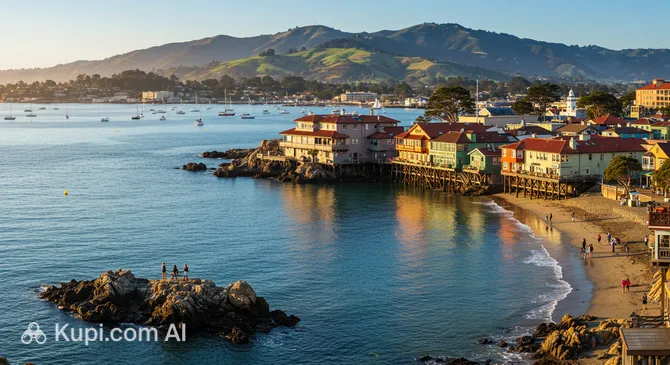
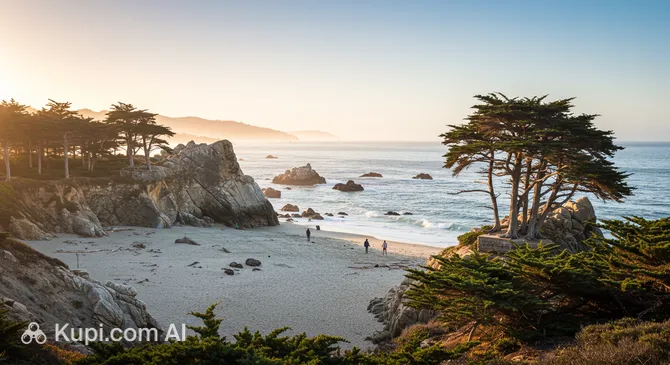
Monterey is a stunning coastal city located in the California region of the United States. Known for its breathtaking ocean views, abundant marine wildlife, and literary fame, this destination offers a perfect blend of natural beauty and cultural depth. With a population of approximately 30,000 residents, it maintains a charming, small-town atmosphere while providing world-class amenities for visitors.
Monterey. Illustration.
Source: Kupi.com AI
Geographically, the city is situated on the southern edge of the expansive Monterey Bay. The climate here is generally mild and temperate year-round, characterized by cool ocean breezes and morning fog that often gives way to sunny afternoons. Exploring the history of Monterey reveals its fascinating past as a vital Spanish capital and later as the bustling sardine-packing hub immortalized by author John Steinbeck.
Travelers flock here to experience iconic attractions such as the world-renowned Monterey Bay Aquarium, which offers an intimate look at the bay's rich ecosystem. A stroll down historic Cannery Row, now filled with unique shops and restaurants housed in converted factory buildings, is a must-do experience. Whether you are watching sea otters play in the kelp forests or enjoying fresh seafood at Old Fisherman's Wharf, Monterey promises an unforgettable coastal escape.
Weather Overview
Monterey enjoys a mild, temperate climate year-round, influenced heavily by the Pacific Ocean. The weather in Monterey is generally comfortable, avoiding the extreme heat or freezing cold found in other parts of the country. This makes it an inviting destination for travelers regardless of the season, though packing layers is always recommended due to the cool coastal breezes.
The warmest period typically occurs in late summer and early autumn. September is often the most pleasant month, with an average temperature of 17.2°C and highs reaching just over 20°C. During the peak summer months of July and August, the city experiences virtually no rainfall, with data showing zero wet days, ensuring plenty of opportunities for outdoor exploration under clear skies.
Winters are cooler and bring the region's rainy season. From December through March, average temperatures hover around 11°C, with nighttime lows dipping to approximately 8°C to 9°C. While never freezing, this season is characterized by more frequent precipitation; for instance, March can see up to 12 wet days, and January typically has around 10. Expect mild, dry summers ideal for beach visits and cooler winters with frequent rainfall suitable for cozy indoor attractions.
Average monthly temperature
Average monthly precipitation
Interesting Facts
Beyond the famous aquarium and scenic waterfront, Monterey holds many fascinating secrets that peel back the layers of California's history and nature. This coastal gem is not just a tourist hub but a city of firsts and unique natural phenomena.
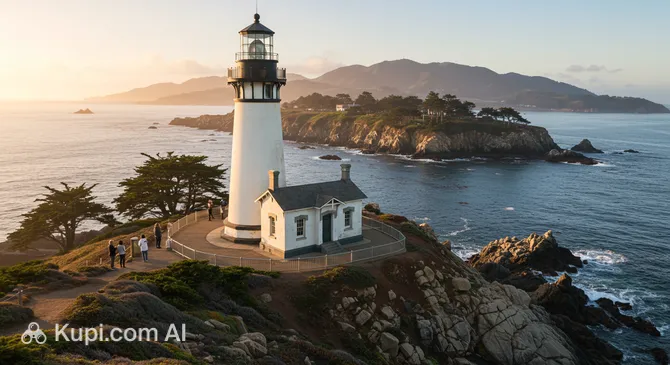
Point Pinos Lighthouse. Illustration.
Source: Kupi.com AI
Traveler photos:
Monterey served as the capital of Alta California under both Spain and Mexico, meaning the state's political history essentially began here. It was at the historic Colton Hall that California's first constitution was drafted in 1849.
The Point Pinos Lighthouse holds the impressive title of the oldest continuously operating lighthouse on the West Coast. Since 1855, its lens has guided mariners through the foggy coastal waters without interruption.
Literature literally changed the map of this city. The famous street now known as Cannery Row was originally named Ocean View Avenue. The city officially renamed it in 1958 to honor John Steinbeck’s well-known novel, which immortalized the area's sardine-packing era.
The San Carlos Cathedral is a significant architectural landmark. Completed in 1794, it stands as the oldest stone building in California and the state's oldest continuously functioning parish.
The region is a vital stop for one of nature's most incredible migrations. The Monarch Butterfly Sanctuary provides a winter home for thousands of Monarch butterflies, which cluster together on eucalyptus trees in such density that they look like shimmering orange leaves.
How to Get There
Reaching this coastal gem is convenient, with several aviation hubs serving the region. For a detailed breakdown of routes and transport tips, you can view all ways to reach the city on our dedicated page.
The most direct entry point is the local Monterey Regional Airport (MRY), situated just 5.3 km from the city center. While it is a smaller facility compared to its neighbors, it offers the advantage of proximity, with a transfer time of approximately 15 minutes by taxi or shuttle. For international travelers, the Norman Y. Mineta San Jose International Airport (SJC) in San Jose is a major alternative. Located about 84.9 km away, the drive to Monterey typically takes around 1 hour. Additionally, the San Francisco International Airport (SFO) in San Francisco provides extensive global connections. It is located roughly 121.1 km from Monterey, and travelers should plan for a ground transfer of about 2 hours.
For clarity, here is a summary of the main airports:
Monterey offers a diverse array of sights, ranging from world-class marine exhibits to historic waterfronts and scenic parks. Whether you are interested in wildlife, local history, or simply enjoying the coastal atmosphere, the city's top locations provide memorable experiences for every type of traveler.
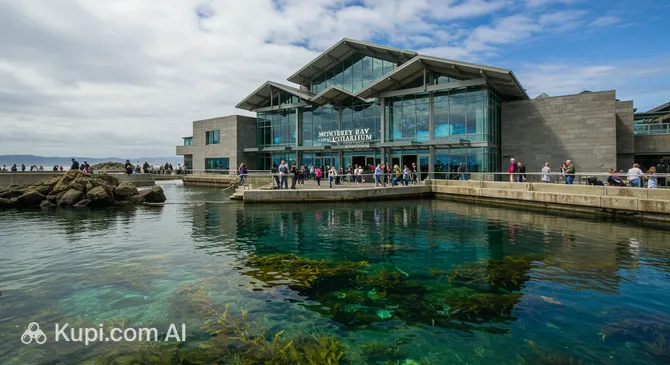
One of the most celebrated destinations on the entire West Coast is the Monterey Bay Aquarium. Located at the end of historic Cannery Row, this facility is famous for its towering kelp forest exhibit and its focus on the local marine habitats of the bay. Visitors can watch sea otters frolic, admire glowing jellyfish, and learn about ocean conservation through interactive displays that captivate both children and adults.
Monterey Bay Aquarium. Illustration.
Source: Kupi.com AI
Traveler photos:
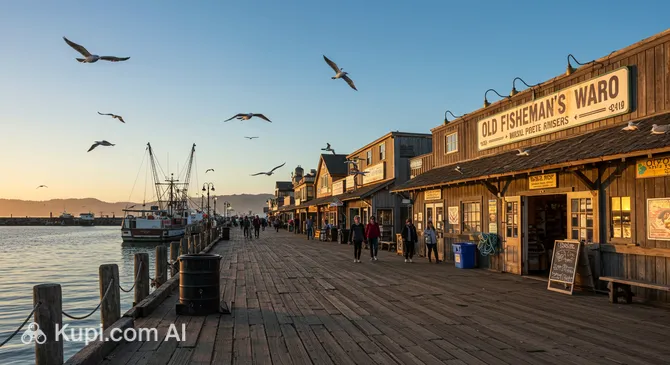
For a taste of the city's maritime heritage, a visit to Old Fisherman's Wharf is essential. This bustling pier is lined with seafood restaurants serving fresh clam chowder samples to passersby, unique souvenir shops, and candy stores. It also serves as the main departure point for many whale-watching tours and fishing charters, making it a lively hub of activity where you can often spot sea lions lounging on the pilings below.
Old Fisherman's Wharf. Illustration.
Source: Kupi.com AI
Traveler photos:
Those seeking outdoor beauty and recreation often head to Lovers Point Park in nearby Pacific Grove. This beautifully landscaped park features a grassy knoll perfect for picnics, a sandy cove safe for swimming and kayaking, and rocky outcroppings that offer panoramic views of the bay. It is a favorite spot for watching the sunrise over the water, a rarity on the West Coast due to the peninsula's orientation.
Families traveling with children should not miss the Dennis The Menace Playground. Designed with the help of Hank Ketcham, the creator of the famous comic strip, this whimsical park includes a suspension bridge, a hedge maze, and unique play structures that encourage imaginative play. It is located within the larger El Estero Park complex, offering a fun break for younger tourists.
Finally, to experience the raw beauty of the coastline, stop by the Spanish Bay Vista Point. Situated along the scenic drive near Pebble Beach, this lookout offers breathtaking views of the restless ocean and white sands. Wooden boardwalks meander through restored native dunes, providing a peaceful setting for a walk while listening to the sound of the surf and, occasionally, the bagpipes played at the nearby inn at sunset.
Local Cuisine
The culinary scene in Monterey is heavily defined by its proximity to the cold, nutrient-rich waters of the Pacific and the fertile soil of the nearby Salinas Valley. Known as a premier destination for sustainable seafood, the city offers a "sea-to-table" dining experience that is hard to match. Fresh catches arrive daily at the local docks, ensuring that menus are consistently stocked with the highest quality ingredients, from Dungeness crab to abalone.
One dish you simply cannot leave without trying is the famous clam chowder, typically served steaming hot in a hollowed-out sourdough bread bowl. This creamy, hearty soup is a staple along the waterfront, particularly at Old Fisherman's Wharf, where the aroma tempts passersby at every turn. Another regional delicacy is the sand dab, a small, sweet flatfish native to the Pacific coast. Often pan-seared with a light lemon butter sauce, it offers a delicate flavor that is unique to this part of California.
Monterey is also historically significant as the "Calamari Capital of the World," so ordering fresh squid—whether fried, grilled, or in a pasta—is a must. For a taste of history combined with fine dining, visitors often head to The Sardine Factory. Located on Cannery Row, this iconic establishment pays homage to the city's canning past while serving world-class seafood in an elegant setting.
The Sardine Factory. Illustration.
Source: Kupi.com AI
Traveler photos:
Beyond seafood, the region is a powerhouse for viticulture. Monterey County is one of California's largest wine-growing regions, celebrated particularly for its Pinot Noir and Chardonnay. You will find numerous tasting rooms scattered throughout the city, offering the perfect way to unwind after a day of sightseeing. If you prefer beer, the local craft brewing scene is thriving, with places like Brophy's Tavern providing a cozy spot to sample local ales.
The dining atmosphere in Monterey ranges from casual oceanfront eateries to lively, music-filled restaurants. For a vibrant and communal experience, Dametra Cafe is a local favorite, known for its Mediterranean cuisine and spontaneous musical performances by the staff. If you are looking for the perfect way to start your day, First Awakenings offers hearty American breakfasts that fuel locals and tourists alike for their coastal adventures.
Travel Tips
Visiting Monterey is a highlight of any California road trip, but the unique coastal environment requires a bit of preparation to ensure a smooth experience. Here are some practical tips to help you navigate the city like a local and make the most of your seaside adventure.
Clothing and Gear: The most important rule for the California coast is to dress in layers. Mornings and evenings are often foggy and cool, even in summer, so bring a light jacket, windbreaker, or sweater. Comfortable walking shoes are essential for exploring areas like Cannery Row or the scenic coastal trails. If you plan to visit upscale restaurants, smart-casual attire is perfectly acceptable.
Transportation: While downtown Monterey and the waterfront are walkable, renting a car is highly recommended if you wish to explore the scenic 17-Mile Drive or nearby Big Sur. For getting around the city itself, the free MST Trolley runs during the summer months and major holidays, connecting the Aquarium, Fisherman’s Wharf, and downtown. Ride-hailing apps like Uber and Lyft are also readily available.
Finances: The local currency is the US Dollar (USD). Credit and debit cards are universally accepted at hotels, restaurants, and shops. ATMs are widely available throughout the city. Tipping is standard practice in the United States; expect to leave 18-20% for restaurant service and a few dollars for hotel staff or taxi drivers.
Health and Safety: Monterey is generally a very safe destination for tourists. However, standard precautions should always be taken; do not leave valuables visible in your car, especially when parked at scenic viewpoints. Pharmacies like CVS and Walgreens are easily accessible for minor health needs, and the city has excellent medical facilities for emergencies.
Communication: English is the primary language spoken, though you will often hear Spanish due to the region's history and demographics. Free Wi-Fi is common in most cafes, hotels, and public areas. If you are visiting from abroad, purchasing a local SIM card is easy at major retailers or mobile phone shops in the city center.
Local Etiquette: The vibe in Monterey is laid-back and friendly. It is polite to greet shopkeepers and servers. A crucial rule of local etiquette involves nature: respect the wildlife. Whether it is sea otters, seals, or birds, observe them from a distance and never attempt to touch or feed them, as this is strictly monitored.
What to Avoid: Do not underestimate the ocean. The water here is cold and currents can be strong, so only swim in designated safe areas like Lovers Point and obey all warning signs. Also, avoid smoking in public parks or on beaches, as California has strict laws against it to prevent wildfires and litter.
Additional Tip: If you plan to visit the Monterey Bay Aquarium, try to go on a weekday afternoon or right when it opens to avoid the largest crowds. Also, consider renting a bicycle to ride the Monterey Bay Coastal Recreation Trail; it is one of the best ways to see the coastline without worrying about parking.
By keeping these simple tips in mind, you will be well-equipped to enjoy everything this charming coastal city has to offer. Pack your layers, bring your camera, and get ready for a memorable journey along the Pacific edge.
Entertainment & Nightlife
While Monterey is widely recognized for its serene coastal beauty and early-to-bed rhythm, the city offers a delightful selection of evening entertainment for those who know where to look. The nightlife here is less about thumping bass and neon-lit dance floors and more about cozy pubs, sophisticated wine lounges, and live jazz venues. The atmosphere is generally relaxed and welcoming, making it easy to strike up a conversation with locals or simply unwind with a craft cocktail after a day of exploration.
The two main hubs for evening activity are Cannery Row and Alvarado Street in downtown Monterey. Cannery Row offers a mix of tourist-friendly bars and hotel lounges with ocean views, while Alvarado Street is the local heartbeat, lined with craft breweries, gastropubs, and historic theaters. Most venues operate with a casual to smart-casual dress code; jeans are acceptable almost anywhere, though you might want to dress up slightly for the hotel bars or upscale lounges in nearby Pebble Beach.
For a quintessential local pub experience, Brophy's Tavern is a must-visit. Located in the heart of the city, this Irish-style pub is a favorite gathering spot known for its lively atmosphere, extensive beer selection, and hearty comfort food. It is the perfect place to catch a sports game or enjoy a pint in a setting that feels both authentic and spirited.
Brophy's Tavern. Illustration.
Source: Kupi.com AI
Traveler photos:
If you prefer a more elegant evening reminiscent of Old Hollywood, head to Terry's Lounge. Often associated with the glamour of the silver screen, this venue specializes in classic cocktails and farm-to-table appetizers. It is an excellent spot for a romantic date or a quiet nightcap, often featuring piano music that enhances the sophisticated yet unpretentious vibe.
For those willing to venture a short distance for luxury and breathtaking scenery, the Pebble Beach Bar offers an iconic setting. Overlooking the famous golf links and the Pacific Ocean, it serves premium spirits and wines. It is an ideal location to watch the sunset transition into a starry night, offering a taste of the high life that defines this stretch of the California coast.
Practical advice for a night out includes planning your transport ahead of time. While downtown Monterey is walkable and safe for evening strolls, the winding coastal roads leading to other areas like Pacific Grove or Pebble Beach are best navigated by taxi or rideshare services like Uber and Lyft. Prices can range from moderate at local pubs to expensive at resort lounges. Most bars close around midnight or 1:00 AM, so it is best to start your evening early.
Before the sun goes down, the region offers plenty of daytime excitement to fill your schedule. Visitors can explore the interactive exhibits at the Pacific Grove Museum of Natural History or enjoy family-friendly thrills at Treasure Hunt: The Ride. Whether you spend your day learning about nature or seeking adventure, Monterey seamlessly transitions into a relaxing and enjoyable evening destination.
Parks & Museums
Monterey and its surrounding peninsula are not only defined by the crashing waves of the Pacific but also by lush green spaces and institutions that preserve the region's rich cultural tapestry. Beyond the famous waterfront, visitors can discover serene pine forests, historic art collections, and interactive educational spaces that offer a deeper connection to this unique Californian destination.
For those looking to escape the coastal fog and enjoy panoramic views, Jacks Peak Park is a hidden gem. Rising above the city, this park features the highest point on the Monterey Peninsula and offers miles of hiking trails that wind through one of the few remaining natural stands of Monterey pine trees. It is a fantastic spot for photography, offering sweeping vistas of the bay and the Carmel Valley. Closer to the water, Asilomar State Beach provides a different kind of natural beauty. Known for its restored sand dunes and rocky coves, it features a mile-long boardwalk that allows visitors to explore the delicate coastal ecosystem without disturbing the native flora.
Asilomar State Beach. Illustration.
Source: Kupi.com AI
Traveler photos:
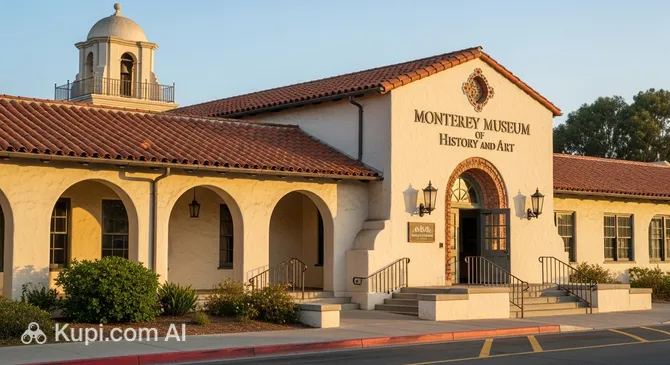
Immersing yourself in the local culture is easy with the city's diverse array of museums. The Monterey Museum of History and Art is an essential stop for history buffs. Located near the waterfront, it houses an impressive collection of artifacts, paintings, and maritime relics that tell the story of Monterey from its indigenous Rumsien Ohlone roots to its days as a Spanish capital and sardine-packing hub. For families traveling with younger children, the Monterey County Youth Museum, affectionately known as "MY Museum," offers a hands-on environment where kids can play and learn through exhibits modeled after a day at the beach, a theater, and a golf course.
Monterey Museum of History and Art. Illustration.
Source: Kupi.com AI
Traveler photos:
Art and history often merge in the streets of Monterey. A stroll along the coast might lead you to the Lovers Point Mural, a vibrant piece of public art that captures the spirit of the community and the beauty of the marine environment. While the Pacific Grove Museum of Natural History is often associated with the annual monarch butterfly migration, it is also a year-round treasure trove of bird specimens and geology exhibits that explain the natural forces shaping the region.
For a truly authentic experience, try visiting the parks on a weekday morning. While weekends can draw crowds to the beaches, places like Jacks Peak often remain quiet and peaceful during the week, allowing for a solitary communion with nature. Additionally, keep an eye out for "museum free days" or community events, which often take place in the plazas surrounding these cultural landmarks.
Getting Around
Navigating Monterey is relatively straightforward, thanks to its compact size and a reliable public transportation network managed by Monterey-Salinas Transit (MST). While the city does not have a metro or tram system, the MST bus fleet provides comprehensive coverage across the peninsula, connecting the downtown area with popular neighboring communities like Pacific Grove, Carmel-by-the-Sea, and Sand City. The buses are clean, safe, and generally run on a consistent schedule, making them a practical option for visitors who prefer not to drive.
A highlight for tourists is the MST Trolley service, which operates seasonally, typically during the summer months and major holidays. These vintage-style rubber-tired trolleys offer a free and scenic way to travel between key attractions such as the Monterey Bay Aquarium, Cannery Row, Old Fisherman's Wharf, and the downtown transit plaza. Riding the trolley is not only cost-effective but also adds a charming, nostalgic element to the travel experience, allowing passengers to hop on and hop off at the city's most visited locations without worrying about parking.
Paying for fares on the bus network is modern and user-friendly. MST has introduced a contactless payment system, allowing riders to simply tap their contactless credit cards, debit cards, or mobile wallets (such as Apple Pay or Google Pay) on the reader upon boarding. For those who prefer cash, exact change is required as drivers cannot provide refunds. Fares are affordable, with standard single-ride tickets costing a few dollars, and day passes available for those planning multiple trips. Reduced fares are often available for seniors and children.
For those seeking alternatives to the bus, the city is incredibly bike-friendly. The Monterey Bay Coastal Recreation Trail stretches for miles along the waterfront, making bicycle rentals a popular choice for getting around while enjoying ocean views. Several rental shops are located near Cannery Row and the Wharf. Additionally, ride-sharing services like Uber and Lyft are widely available and offer a convenient way to reach specific destinations or restaurants late at night when bus frequencies may decrease.
To ensure a smooth journey, tourists are advised to check the latest schedules using real-time navigation apps like Google Maps or the dedicated Transit app. While service is frequent during the day, it can taper off in the evenings and on weekends. Most buses are equipped with bicycle racks, which is a great bonus for those combining cycling with public transit. Whether you choose the free trolley or a standard bus, the system provides a stress-free way to explore the scenic coastline.
Accommodation
Where to Stay:
Accommodation in Monterey caters to a wide spectrum of preferences and budgets, ranging from nostalgic roadside motels to opulent oceanfront resorts. The city’s history as a travel hub means visitors can find charming bed-and-breakfasts in restored Victorian homes, reliable chain hotels, and eco-friendly lodgings nestled in the pine forests. Whether you are looking for a romantic luxury escape or a cost-effective base for a family road trip, the peninsula offers plenty of choices.
Choosing the right area depends largely on your itinerary. For those who want to be in the center of the action, staying near Cannery Row or the waterfront places you within walking distance of the Aquarium and major dining spots, though prices here tend to be higher. Munras Avenue is a popular corridor lined with numerous mid-range hotels and motels, offering convenient parking and easy access to the highway and downtown. For a quieter, more scenic experience, the areas bordering Pacific Grove or the Del Monte Forest provide a peaceful retreat surrounded by nature.
Travelers seeking a mix of history and natural beauty often appreciate the Asilomar Hotel and Conference Grounds. Designed by renowned architect Julia Morgan, this rustic yet comfortable property is set within a dedicated state park, offering a serene atmosphere where deer often graze on the grounds just steps from the dunes.
Asilomar Hotel and Conference Grounds. Illustration.
Source: Kupi.com AI
Traveler photos:
For a more luxurious experience that captures the elegance of the coast, The Inn at Spanish Bay is a premier destination. Located along the famous 17-Mile Drive, this resort is celebrated for its Scottish-style golf links, upscale amenities, and the tradition of a bagpiper playing at sunset, creating an unforgettable ambiance for guests.
Prices in Monterey can fluctuate significantly depending on the season. Summer and early autumn are peak times, with rates reflecting the high demand. It is highly recommended to book your accommodation well in advance, especially if you plan to visit during major local events like Car Week or the Jazz Festival. Most bookings can be made easily through major online travel platforms or directly via hotel websites, which often offer the best cancellation policies.
Nearby Cities
For those looking to explore the surroundings, Monterey serves as an excellent base for day trips to several interesting nearby locations:
City
Population
Distance
Pacific Grove
15 169
3 km
Marina
22 246
13 km
Salinas
199 290
23 km
Prunedale
19 893
28 km
Watsonville
76 285
37 km
Among these options, Santa Cruz is a favorite for its lively beach culture and the historic Santa Cruz Beach Boardwalk, offering a fun contrast to the quiet charm of Monterey. Just inland, Salinas provides a rich cultural experience as the "Salad Bowl of the World" and the birthplace of author John Steinbeck, featuring a dedicated center in his honor. For those interested in unique local flavors, Gilroy is renowned as the "Garlic Capital of the World" and is also a popular destination for its extensive premium shopping outlets.
These nearby destinations offer a glimpse into the diverse culture and landscapes of the region.
Shopping & Souvenirs
Shopping in Monterey offers a delightful variety of experiences, ranging from hunting for unique maritime souvenirs to browsing high-end fashion in open-air settings. The city's retail scene is heavily influenced by its coastal location, with many shops offering locally made art, jewelry, and specialty food items that reflect the region's character.
One of the most popular areas for visitors is the historic Cannery Row. Once the center of the sardine industry, it is now a bustling hub of specialty boutiques and gift shops. Here, you can find everything from Steinbeck-themed memorabilia to handcrafted glass and ceramics. A key highlight in this area is Steinbeck Plaza, which offers a mix of retail and dining options right by the water, providing a scenic backdrop for your shopping spree.
For a more traditional souvenir experience, a walk down Old Fisherman's Wharf is essential. The wooden pier is lined with colorful shops selling seashells, apparel, and the famous saltwater taffy that tempts passersby with its sweet aroma. It is also an excellent place to find pearl jewelry and nautical-themed decor to take home as a memento of your trip.
If you are looking for mainstream brands and a more extensive retail therapy session, the Del Monte Shopping Center is the city's premier destination. This open-air lifestyle center features a garden setting with a wide array of department stores, national retailers, and a movie theater. It is a favorite among locals for its relaxed atmosphere and convenient parking.
Just a short drive from downtown Monterey, the neighboring town of Carmel-by-the-Sea offers a luxurious shopping experience. Carmel Plaza is an upscale outdoor center known for its designer boutiques, gourmet shops, and beautiful architecture. It is the perfect spot to find high-quality fashion and unique gifts in a sophisticated environment.
Most shops in Monterey operate daily, though hours can vary by season, with longer opening times during the summer months. Whether you are searching for the perfect piece of local art or simply enjoying a window-shopping stroll by the bay, the city provides a relaxed and scenic retail experience.