Support

Plymouth

About

Plymouth is more than just a city; it is the true "hometown of America," nestled on the picturesque coast of Massachusetts in the USA. It was here, on the shores of the Atlantic Ocean, that the legendary ship Mayflower arrived in 1620 with the first Pilgrims, starting a new chapter in the continent's history. The city is famous for its breathtaking views, fresh sea air, and the unique atmosphere of an ancient coastal settlement.
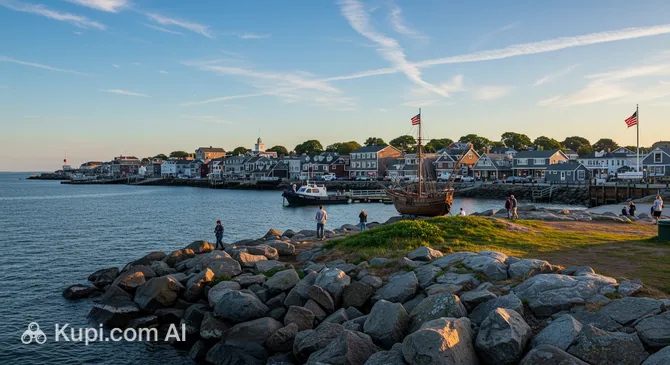
Plymouth. Illustration.
Source: Kupi.com AI

Today, Plymouth, home to about 80,000 people, harmoniously combines a rich historical heritage with a modern rhythm of life. It retains the charm of a small town while being an important tourist center that attracts thousands of travelers annually who want to touch the origins of American culture and history. Strolling through its streets, you will feel the breath of the past, where every corner holds its own legends.

The key attractions that make Plymouth particularly appealing are the famous Plymouth Rock, symbolizing the landing site of the first colonists, and a full-scale replica of the ship Mayflower II, which is open to the public. Be sure to visit the Plimoth Patuxet Museums — a living open-air museum that recreates the life of 17th-century English settlers and Indigenous people. Cozy cafes and restaurants on the waterfront, offering the freshest seafood, will complete your experience.

Plymouth is an ideal destination for those interested in history, looking for a peaceful holiday on the ocean coast, or simply wanting to experience the unique spirit of New England. A visit to this city, where history comes alive at every step, will undoubtedly provide many bright and unforgettable moments.

You can find more interesting facts on the Plymouth city history page.

Weather Overview

The climate in Plymouth is characterized by clearly defined seasons. Summer here is warm, with average temperatures ranging from 19-23°C in June-August. Winters are cold: the average temperature from December to February ranges from -0.5°C to 2.2°C, with minimum values dropping to -3.6°C.

Precipitation falls relatively evenly throughout the year, averaging 2-4 mm per month, while the number of days with precipitation ranges from 8 to 12. Expect a warm summer with occasional rain and cold winters with regular precipitation. You can learn more about weather conditions on the Plymouth Climate page.

Average monthly temperature

Average monthly precipitation

Interesting Facts

Beyond its key role in American history, Plymouth, Massachusetts, holds many surprising details and facts that may not be widely known. Ready to discover some of them?

  • Plymouth is the iconic site where the Pilgrims landed in 1620, founding the first permanent European colony in New England. The legendary Plymouth Rock, which tradition says the first settler stepped upon, has become a powerful symbol of this historical event, although its original size and exact location are still subjects of debate among historians.

  • In the city, you can do more than just see, you can literally step on board the Mayflower II — a meticulously recreated replica of the famous ship that brought the Pilgrims across the Atlantic. This is a unique opportunity to feel like a 17th-century mariner and imagine all the hardships and conditions of that historic voyage.

  • Plymouth is home to the unique living museum Plimoth Patuxet (formerly known as Plimoth Plantation). Here, not only the daily life and culture of 17th-century English settlers but also the lives of the region's Indigenous people — the Wampanoag tribe — are recreated with incredible accuracy. Actors in historical costumes delight in interacting with visitors, immersing them in the atmosphere of the past.

  • In Plymouth stands one of the largest free-standing granite monuments in the USA — the National Monument to the Forefathers. This impressive statue, about 25 meters high, is dedicated to the first settlers and the virtues they considered the foundation of their new society.

How to Get There

There are various ways to reach Plymouth, located on the scenic Massachusetts coast. Most often, travelers choose to fly into major transportation hubs in nearby metropolises and then continue by car or public transport. You can find all the ways to get to the city on a separate page, and below we will look at the most popular and convenient routes.

Plymouth itself does not have a large airport for scheduled passenger flights. Most tourists fly into Logan International Airport (BOS), located in Boston, approximately 54 km from the city. It is the region's largest aviation hub, receiving flights from all over the world. A trip from the airport to Plymouth by rental car or taxi usually takes 45 to 60 minutes in light traffic, though travel time may increase during peak hours. Comfortable Plymouth & Brockton buses also run from the airport, delivering passengers directly to Plymouth.

An alternative option is Theodore Francis Green Memorial State Airport (PVD), located in Providence, Rhode Island. It is situated about 69 km from Plymouth and is often an excellent choice for domestic flights, allowing you to avoid the hustle of Boston traffic. The drive from there by car will take about 50–60 minutes.

For clarity, here is summary information on the main nearby airports:

AirportPassenger trafficDistance
Provincetown Airport15 00039 km
New Bedford Airport30 00039 km
Barnstable Municipal Airport38 00045 km
Logan International Airport43.5 mln54 km
Martha's Vineyard Airport81 66663 km

If you prefer rail transport, keep in mind that major intercity trains arrive in neighboring large cities. The nearest key hub is South Station in Boston. It is 54 km from Plymouth and serves Amtrak trains from across the country. From South Station, you can transfer to the MBTA Commuter Rail (Kingston/Plymouth line), which goes directly to Plymouth, or take a bus.

You can also consider arriving at Providence Station in the city of Providence (about 68 km from Plymouth). From there, it is most convenient to reach your destination by taxi or rental car, which will take about an hour.

Below is information about the nearest major railway stations:

StationPassenger trafficDistance
Route 128 Station1.1 mln48 km
South Station12 mln54 km
Boston Back Bay Station2.6 mln55 km
Providence Railway Station1.4 mln68 km
New Haven Union Station907 758202 km

Main Attractions

Plymouth, known as "America's Hometown," offers visitors a unique opportunity to immerse themselves in the history of the first European settlers. Among its main treasures are several iconic sites that should not be missed, each telling its own part of a fascinating story.

One of the most vivid experiences is a visit to the Plimoth Patuxet Museums (formerly known as Plimoth Plantation). This is not just a museum, but a real time machine: a 17th-century English village and a Wampanoag Indigenous homesite have been recreated here. You can interact with "residents" in historical costumes who will tell you about daily life, beliefs, and the hardships of that era, making history truly tangible.

Proudly standing near the shore is the Mayflower II — a full-scale and functional replica of the famous ship on which the Pilgrim Fathers arrived at the shores of the New World in 1620. By stepping on board, you can feel the cramped cabins, imagine the hardships of a months-long voyage across the Atlantic, and learn about the navigation and daily life of sailors of that time. It is a unique opportunity to touch maritime history and understand the trials the first settlers faced.

Perhaps the most famous symbol of the city is Plymouth Rock. According to legend, this is the very rock the first Pilgrims stepped onto when they landed on American soil. Although historians debate the accuracy of this tradition, Plymouth Rock remains a powerful symbol of the colony's founding and one of the key points of attraction for tourists wishing to see the place where one of the important chapters of American history began.

For those who want to delve deeper into the Pilgrim heritage, the Pilgrim Hall Museum is a must-visit. It is the oldest continuously operating public museum in the United States, founded in 1824. Its halls house a priceless collection of authentic 17th-century artifacts that belonged to the first settlers: furniture, clothing, weapons, books, and personal items. The museum's exhibits detail the daily life, culture, and faith of the Pilgrims, allowing for a better understanding of their contribution to the formation of the American nation.

Local Cuisine

Plymouth, located on the Massachusetts coast, is a true paradise for fresh seafood lovers. The city's gastronomic scene is permeated with a maritime spirit, offering guests the chance to enjoy the bounty of the Atlantic Ocean at its best. Here you can taste the freshest mussels, oysters, and, of course, the famous local lobsters.

Be sure to try lobster, which is prepared in Plymouth in many ways: from classic lobster rolls, where tender meat is served in a soft bun, to exquisite soups. Another iconic dish is traditional New England clam chowder — a thick creamy soup with clams, potatoes, and aromatic spices. Locals are proud of their clam chowder, and it can be found in almost every restaurant in the city.

Those with a sweet tooth should look for pastries and desserts made with cranberries, as Massachusetts is famous for its cranberry bogs. At Plymouth's farmers' markets, you can also find fresh berries, local honey, and other products from farmers that reflect the region's richness.

To fully experience the taste of the region, don't forget to accompany your meal with local drinks. New England, and Massachusetts in particular, is famous for its craft beer, and in Plymouth, you will find interesting varieties from local breweries. It is also worth trying the apple cider traditional to these parts. Among non-alcoholic options, rich cranberry juice is popular, which is unsurprising given the region's famous cranberry bogs, as well as refreshing locally produced lemonades.

The food culture in Plymouth is diverse. You will find many restaurants specializing in seafood with a cozy atmosphere. For a more informal snack, street food is a great choice — try local seafood hot dogs or crab sandwiches. It is also worth visiting local farmers' markets to experience the authentic taste of the region. Plymouth often hosts food festivals where you can get to know the best dishes and local chefs.

Travel Tips

Planning a trip to historic Plymouth, the cradle of American history? These practical tips will help you prepare for your journey and get the most out of your visit to this iconic New England city located in the USA.

  1. Clothing and items by season: The climate in Plymouth is temperate, with four distinct seasons. In summer (June-August) it is warm, but evenings can be cool, especially near the water – bring a light jacket. Spring and autumn offer pleasant weather but require layering your clothing. Winters are cold and snowy, so warm clothes, a hat, gloves, and waterproof shoes are essential. A key element of your wardrobe is comfortable shoes for long walks through historical sites such as Plymouth Rock and the Plimoth Patuxet Museums. Don't forget an adapter for electrical appliances (Type A and B sockets are used in the USA, with a voltage of 120V).

  2. Getting around town: The historic center of Plymouth is quite compact and is best explored on foot. For longer trips, you can use local buses from the GATRA (Greater Attleboro Taunton Regional Transit Authority) network. Taxis and popular rideshare services (e.g., Uber, Lyft) are also available. Renting a car can be a good option if you plan to explore the Massachusetts countryside and other New England towns, but for Plymouth itself, it is not always necessary.

  3. Finances and tipping: The official currency is the US Dollar (USD). Credit and debit cards (Visa, MasterCard, American Express) are accepted almost everywhere. However, it is recommended to carry some cash for small purchases, markets, or in case of unforeseen situations. ATMs can be easily found in banks, supermarkets, and tourist areas. The tipping culture in the USA is very developed: it is customary to leave 15-20% of the bill amount (before tax) in restaurants, and tips are also expected for the services of taxi drivers, bartenders, and hotel maids.

  4. Health and safety: Pharmacies, such as CVS or Walgreens, are easy to find, and some are open 24 hours. In case of a medical emergency, call 911. Travel medical insurance is highly recommended. Plymouth is generally considered a safe city for tourists. However, as with everywhere, follow basic precautions: keep an eye on your belongings and avoid poorly lit and deserted places after dark.

  5. Communication and internet: The main language of communication is English. Staff in hotels, restaurants, and tourist sites generally speak English fluently. You can buy a local SIM card for mobile calls and internet at mobile operator stores (AT&T, T-Mobile, Verizon) or in large supermarkets. Free Wi-Fi is available in many hotels, cafes, libraries, and some public spaces.

  6. Local etiquette: Americans, and New Englanders in particular, are usually friendly and polite. It is customary to greet people ("Hello", "Hi"), say "please," and "thank you." Respecting personal space is valued. In public places such as museums or historical attractions, try not to make noise and be respectful toward the exhibits and the surroundings.

  7. What to avoid: Try not to leave trash in places not intended for it, especially at historical monuments and natural areas – Americans are very sensitive about cleanliness and the environment. Also, you should not take photos of people without their permission, especially children. Discussing sensitive political topics with strangers can also be received ambiguously.

  8. Extra tip: Plymouth is a popular tourist destination, especially during the summer months and during holidays such as Thanksgiving. If you plan to visit iconic sites like the Plimoth Patuxet Museums or take a whale watching tour, it is highly recommended to book tickets and tours in advance online to avoid long lines and guarantee your spot.

We hope these tips help you plan an unforgettable trip to Plymouth. Enjoy every moment of your immersion into the rich history and charm of this amazing American city!

Entertainment & Nightlife

The nightlife in Plymouth differs from that of bustling metropolises: you won't find huge night clubs with techno music until dawn here; instead, the city charms with its cozy, relaxed atmosphere and live music. Evening entertainment is mainly concentrated in the historic center and along the scenic waterfront. It is an ideal place for those who love spending time in quality gastropubs, enjoying craft beer, or listening to local bands perform with an ocean view.

The epicenters of evening activity are Water Street and Main Street. Life here remains vibrant even after sunset. Along the waterfront, there are venues where you can not only dine but also stay for a cocktail to the sound of the waves. The crowd here is diverse: from tourists discussing their day's impressions to locals relaxing after work. The dress code in most places is casual — a "smart casual" style will be appropriate almost everywhere. Jeans and a shirt or a light dress are perfect for an evening out.

Among specific venues worth visiting, East Bay Grille on the waterfront stands out. It is one of the most popular spots in town, known for its spacious patio, fresh seafood, and regular live music performances in the evenings. If you are looking for the atmosphere of a classic American pub with a great selection of craft beers and tasty snacks, stop by Speedwell Tavern on Main Street. For fans of cultural leisure and high-quality sound, The Spire Center for Performing Arts is an excellent choice — a concert venue in a former church building that hosts jazz concerts, theatrical productions, and comedy shows.

When planning your evening, keep in mind that kitchens in many restaurants close around 9:00 PM–10:00 PM, though bars may stay open until 1:00 AM, especially on Fridays and Saturdays. Prices in establishments vary from mid-range to high, particularly in waterfront restaurants (a cocktail might cost $12–$15). Getting back to your hotel at night is easy: although public transport stops running early, taxi and rideshare services (Uber, Lyft) work reliably and quickly.

In terms of safety, Plymouth is a quiet city. Walking along the well-lit tourist streets (Main Street and the waterfront) is safe even after dark. However, as with any trip, it is worth exercising reasonable caution and avoiding unlit alleys. If you want to vary your leisure time before heading to a bar in the evening, the city also offers daytime cultural entertainment: you can visit one of the local theaters, such as the historic Priscilla Beach Theatre, or stroll through the parks, which take on a special romantic charm in the evening.

Parks & Museums

Plymouth, known for its rich history, offers guests not only an immersion into the past but also wonderful opportunities for outdoor recreation and getting to know the cultural heritage. The city carefully preserves the memory of the first settlers, combining it with scenic parks and interesting museums.

Among Plymouth's green zones, Pilgrim Memorial State Park stands out. It is not just a park, but an iconic historical site where the famous Plymouth Rock is located. The park stretches along the coast, offering beautiful views of the bay and the opportunity for peaceful walks. For those seeking a more secluded connection with nature, Myles Standish State Forest is an excellent choice — one of the largest forests in the region. Numerous trails for hiking and cycling are laid out here, and there are lakes for swimming and fishing, making it an ideal place for active recreation. Also, take note of Morton Park, Plymouth's oldest park, which offers quiet corners for picnics and relaxing by the water.

The cultural program in Plymouth is no less rich. The main attraction for tourists is the living history museum Plimoth Patuxet (formerly known as Plimoth Plantation). This unique complex recreates a 17th-century English colonial village and a Wampanoag Indigenous settlement, allowing visitors to literally immerse themselves in the life and culture of that era. Another important historical site is the Pilgrim Hall Museum, the oldest continuously operating public museum in the United States. Its collection contains authentic artifacts from the Pilgrim Fathers, including furniture, clothing, and weapons. It is impossible to imagine Plymouth without the Mayflower II — a full-scale replica of the ship on which the Pilgrims arrived in America. A visit to this vessel, moored at the pier, provides a vivid idea of the hardships of a 17th-century sea voyage.

In addition to these key sites, the historic center of Plymouth itself is a kind of open-air museum. Here you can see the National Monument to the Forefathers — a majestic granite monument dedicated to the first settlers and their values. A walk along the old streets, such as Leyden Street, the oldest continuously inhabited street in English North America, is also a pleasure.

For those seeking lesser-known but authentic experiences, we suggest exploring the trails in the less crowded parts of Myles Standish State Forest or visiting small local galleries where you can find works by artists inspired by Plymouth's history and nature. A visit to the Plymouth Bay Winery can also be interesting, where you can taste local wines and learn about the winemaking traditions in the region.

Getting Around

Moving around Plymouth and its surroundings is possible in several ways, although the public transport system here is not as extensive as in large metropolises. The main form of public transport is buses. Local routes connect key areas of the city, including the historic center, shopping zones, and some residential neighborhoods. Buses are a convenient and relatively inexpensive way to reach major attractions.

Bus fares are usually paid in cash directly to the driver upon boarding. It is recommended to have the exact amount, as change may not be given. The cost of a single trip is typically a few dollars. Information about the availability of transit passes or transport cards is best checked on the official websites of the transport companies serving the region, such as GATRA (Greater Attleboro Taunton Regional Transit Authority), which operates the Plymouth Area Link (PAL) routes. Some bus companies may also offer intercity services to neighboring towns and Boston.

Buses in Plymouth usually run from early morning until evening, but schedules can vary depending on the day of the week and the season. Intervals may be longer on weekends and holidays. It is always better to check the current schedule and route maps in advance on the carriers' websites or at stops. For tourists, this is especially important for planning movements and avoiding time spent waiting.

Given Plymouth's coastal location, ferry services become available during the warmer months. This is not only a way to travel, for example, to Provincetown on Cape Cod, but also an opportunity to enjoy a boat trip and views of the coast. Ferry schedules and ticket prices should be checked in advance, as they depend on the season and weather conditions.

In addition to public transport, other options are available in Plymouth. You can always use taxi services or popular ridesharing services (such as Uber or Lyft), which are easy to order via mobile apps. For more independent travel, especially if you plan to explore the surroundings, renting a car is a convenient option. In tourist areas, especially in summer, you can find bicycle rental points, allowing you to combine sightseeing with active recreation.

Accommodation

Plymouth offers a variety of accommodation options to suit the needs and budget of any traveler. You can find everything here: from cozy guesthouses and traditional B&Bs (Bed and Breakfasts) that immerse you in the New England atmosphere, to modern mid-range hotels and more luxurious options. Renting apartments and vacation homes is also popular, especially for families or large groups wanting more space and privacy.

For tourists, the most convenient areas to stay are considered to be those located near the waterfront and the historic center of Plymouth. This provides easy access to major attractions such as Plymouth Rock, the Mayflower II replica, and the Plimoth Patuxet Museums. Staying in these areas also means being close to numerous restaurants, cafes, and shops. Some hotels may be located along major transport arteries, which is convenient for those planning to explore the surroundings by car.

The city features a wide selection of hotels across various categories. you will find well-known hotel chains offering a standard range of services and comfort, as well as unique boutique hotels with an individual approach to every guest. The price range varies from budget motels to more expensive full-service hotels. It is recommended to book accommodation in advance, especially if your trip coincides with the peak tourist season (summer and autumn), as popular options can sell out quickly. For searching and booking, it is convenient to use popular online platforms or contact hotels directly.

Nearby Cities

For those who want to explore the surrounding area, Plymouth serves as an excellent starting point for day trips to several interesting nearby locations:

CityPopulationDistance
Duxbury16 0049 km
Middleborough24 21921 km
Wareham23 14922 km
Bourne20 36424 km
Norwell11 25825 km

For example, a trip to Brockton, known as the "City of Champions" due to its rich boxing history, might be interesting for sports fans and those who want to explore its historic districts. Taunton, one of the oldest cities in the United States, attracts visitors with its historic architecture and charming Taunton Green square, offering a quiet stroll and an immersion into New England's past. Also worth considering is Abington, which offers scenic parks and opportunities for outdoor recreation.

These nearby destinations provide a glimpse into the diverse culture and landscapes of the region.

Shopping & Souvenirs

Plymouth offers its guests a pleasant and diverse shopping experience, combining the charm of a small historic town with the convenience of modern stores. Although the city is not a metropolis with huge shopping malls on every corner, you can find many unique products here, especially those related to its rich history and maritime heritage. Plymouth is famous for its independent boutiques, craft shops, antique stores, and, of course, souvenir shops where you can purchase mementos of the first Pilgrim settlement.

The main shopping arteries of the city are Main Street and Court Street in downtown Plymouth. Most stores offering clothing, books, jewelry, home goods, and unique gifts are concentrated here. Strolling along these streets is a pleasure in itself, thanks to the historic architecture. It is also worth checking out the shops along Water Street, located by the waterfront, where you can find maritime-themed souvenirs and local crafts.

While there are no giant malls in the historic center of Plymouth itself, the large open-air shopping complex Colony Place is nearby. It is located a few minutes' drive from the city center and offers a wide selection of stores from well-known national and international brands, department stores, as well as restaurants and cafes. This is a great place for those looking for more traditional shopping in large chain stores.

For lovers of fresh produce and local goods, farmers' markets operate periodically in Plymouth, especially during the warmer months. For example, the Plymouth Farmers' Market offers seasonal fruits and vegetables, baked goods, cheeses, honey, and handmade items from local farmers and artisans. This is a wonderful opportunity not only to buy quality products but also to feel the atmosphere of the local community.

As souvenirs from Plymouth, tourists most often bring home items related to the history of the Pilgrims and the Mayflower ship: miniature replicas of the ship, books, and themed clothing. Items with maritime symbols, cranberry products (Massachusetts is famous for its production), as well as works by local artists and craftsmen are also popular. In antique shops, you can find interesting vintage items and collectible rarities.

Most shops in Plymouth are open from approximately 10:00 AM to 5:00 PM or 6:00 PM. During the tourist season, some shops, especially in the center and on the waterfront, may extend their hours. Large shopping centers like Colony Place are usually open later, including evening hours. On Sundays, many small shops may have shorter hours or be closed. Credit and debit cards (Visa, MasterCard, American Express) are widely accepted, as is cash.

In the state of Massachusetts, where Plymouth is located, a sales tax applies to most goods. However, there is an important exception: clothing costing less than $175 per item is not taxed. This is a nice bonus for those planning to update their wardrobe. A special Tax-Free refund system for foreign tourists, similar to the European one, is not provided at the federal level in the USA as a whole, but the tax exemption on clothing in Massachusetts is a favorable condition for buyers.

Reached the end of the page?

That means the route is fully explored