Support

Roanoke Rapids

About

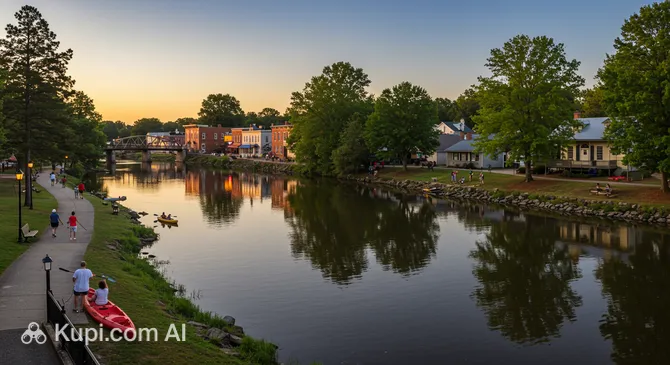
Roanoke Rapids is a cozy and welcoming city located on the picturesque banks of the river of the same name in eastern North Carolina, USA. Due to its convenient location halfway between major metropolises and popular coastal resorts, it has become an ideal stop for travelers seeking tranquility and harmony with nature.

Roanoke Rapids. Illustration.
Source: Kupi.com AI

With a population of about 15,000, the city retains the charm and intimacy of the American heartland. There is no big-city bustle here; instead, a friendly atmosphere prevails, inviting a leisurely vacation. Roanoke Rapids is an important cultural center of Halifax County, and the rich history of Roanoke Rapids attracts those interested in the region's past and wishing to see authentic sites.

Water plays a special role in the life of the city. The famous Roanoke Rapids Lake Dam not only creates an impressive landscape but also shapes the unique energy of the place. Roanoke Rapids is an excellent choice for a family trip or a secluded weekend where you can enjoy walks, local hospitality, and the beauty of nature.

Weather Overview

The climate in this region is characterized by distinct seasons, making a trip interesting at any time of year. Summer here is generally hot and humid, while winter is mild without extreme frosts. Spring and autumn offer the most comfortable conditions for long walks in the fresh air.

The warmest period occurs in July, when the average temperature is about 27.2°C, and on the hottest days, the air can warm up to 31.6°C. When planning a summer trip, consider the high probability of precipitation: 15 to 16 rainy days per month are recorded in July and August. The current weather in Roanoke Rapids will help you pack your bags correctly and choose the best days for excursions.

In winter, the city cools down, but severe cold is a rarity here. In January, the average temperature stays around 6.5°C, and nightly lows rarely drop below 2°C. Precipitation decreases in the winter months, although overcast days still occur (about 9–11 days with precipitation). Expect a hot summer with frequent rain and a cool, relatively mild winter.

Average monthly temperature

Average monthly precipitation

Interesting Facts

In addition to its main attractions, Roanoke Rapids holds many fascinating historical details and cultural features that make it a unique place to explore. Here are a few facts that will help you look at this city from a new perspective:

  • Born from "white gold" and timber. The city was formed as an important industrial hub thanks to the construction of the canal and dam on the Roanoke River. At the beginning of the 20th century, key transport routes for cotton and timber passed through Roanoke Rapids, laying the economic foundation for the entire region.

  • An open-air museum. The local Roanoke Canal Museum and Trail is not just an exhibition hall but a large-scale historical complex. A walk through this area turns into a real journey through time, where you can see preserved engineering structures of the canal and learn about the daily life of the first settlers.

  • The bronze guardian of the city. One of the unofficial symbols of Roanoke Rapids is the statue of Sam Patterson. This monument was erected in honor of a prominent local figure and serves as a reminder of the people through whose efforts the city developed.

  • The county's cultural center. Despite its small size, the city is a magnet for creative people. Under the auspices of the Halifax County Arts Council, exhibitions by local artists and craftspeople are regularly held here, revealing the rich cultural traditions of this part of the state.

How to Get There

When planning a trip to this cozy corner of North Carolina, it is important to think about logistics in advance, as there is no direct air or rail service to the city itself. Travelers will face a combined route involving a flight or train ride to one of the nearby major transport hubs followed by a transfer to a car or bus. You can find out more about how to get to Roanoke Rapids by exploring all available route options.

There is no airport in the city of Roanoke Rapids itself, but you can fly into Pitt-Greenville (IATA: PGV) in Greenville, which is the closest—about 95 km from Roanoke Rapids. This is a regional hub, so the number of flights may be limited. The journey by taxi or rental car from there will take about 1 hour and 15 minutes.

For international travelers and those looking for more flight options, Raleigh-Durham International Airport (IATA: RDU) is an excellent choice. It is located in Raleigh, about 120 km from the destination. It is a large hub with high passenger traffic, from which you can reach Roanoke Rapids via a convenient highway in about 1 hour and 30 minutes. An alternative is Richmond International Airport (IATA: RIC), located in Highland Springs at a similar distance (about 120 km).

For clarity, here is summary information on the main airports:

AirportPassenger trafficDistance
Pitt-Greenville Airport91 00095 km
Richmond International Airport4.9 mln120 km
Raleigh-Durham International Airport15.5 mln121 km
Newport News/Williamsburg International Airport144 966128 km
Norfolk International Airport4.9 mln139 km

If you prefer ground transport, keep in mind that there is no railway station in the city of Roanoke Rapids itself. The closest convenient arrival point is Richmond Train Station (ZRD), located in the city of Glen Allen, about 129 km from Roanoke Rapids. From the station, you can reach the city by taxi or bus; the travel time will be about 1 hour and 30 minutes.

You can also consider arriving at Williamsburg Train Station (ZWB), which is 123 km from Roanoke Rapids (territorially closer to Newport News). This is a popular tourist destination, so the transport infrastructure for further transfers is well-developed here.

Below is a table with the nearest railway stations:

StationPassenger trafficDistance
Williamsburg Railway Station74 837124 km
Newport News Railway Station97 597124 km
Richmond Railway Station461 871129 km
Washington Union Station5.6 mln276 km
New Carrollton Station3.5 mln284 km

Main Attractions

Although Roanoke Rapids is a small city, it has several iconic sites that offer a deeper look into the region's history and the beauty of North Carolina. The tourist program mainly focuses on natural wealth and historical heritage closely linked to the river.

The undisputed gem of the city is the Roanoke Canal Museum and Trail. This place uniquely combines active recreation with immersion into the past. The picturesque trail, about 12 kilometers long, runs along the old canal bed and is ideal for walking, morning jogs, or cycling. The museum itself, housed in a historic former power plant building, offers interactive exhibits telling the story of the canal's construction in the 1820s and its role in the region's economic development. Tourists can see preserved locks and massive stone aqueducts—true monuments of 19th-century engineering.

For those seeking tranquility by the water, Roanoke Rapids Lake and its adjacent park are an excellent choice. This is a favorite location for both locals and visiting anglers. The region is famous for excellent fishing, especially for striped bass (rockfish), the fishing season for which attracts enthusiasts from all over the state. Besides fishing, there are excellent conditions for kayaking, boating, and family picnics against the backdrop of peaceful water landscapes.

Culture lovers should visit The Roanoke Rapids Theatre. This is a modern and spacious venue that serves as the center of the city's entertainment life. It regularly hosts country and bluegrass music concerts, comedy performances, and various shows. Visiting the theater is a great way to end a busy day, immersing yourself in the atmosphere of American Southern hospitality and music.

Local Cuisine

The cuisine of Roanoke Rapids is the embodiment of the culinary traditions of the American South, where food is considered not just a way to satisfy hunger, but an important part of the hospitality culture. Due to the proximity to the river, dishes from the fresh catch take pride of place in local menus. Travelers should definitely try the golden fried catfish or the classic Southern combination—juicy shrimp with creamy corn grits. Meat delicacies are equally popular: the famous North Carolina barbecue, slow-cooked over a low fire, and a hearty chicken pie are excellent choices for a filling lunch.

For those with a sweet tooth, the city will be remembered for its magnificent homemade baked goods served in cozy family cafes and diners. Traditional pecan or sweet potato pies are prepared here according to old recipes passed down from generation to generation. Additionally, the region is famous for its rich farmers' markets. In season, you can enjoy the taste of fresh peaches, watermelons, strawberries, and sweet corn, as well as buy a jar of homemade jam or sauce as a tasty souvenir.

Speaking of drinks, one cannot fail to mention the legendary Sweet Tea—the region's main non-alcoholic hit, which perfectly refreshes on a hot day and accompanies almost any meal. The dining culture in Roanoke Rapids encourages leisurely conversation: locals love to gather at large tables at food festivals, where you can not only taste the state's best dishes but also feel the true spirit of the local community.

Travel Tips

Welcome to Roanoke Rapids! To make your journey to this hospitable corner of North Carolina as comfortable and worry-free as possible, we have prepared a list of useful recommendations to help you feel confident in any situation.

  1. Clothing and Essentials. The climate here is humid subtropical, so your wardrobe depends directly on the season. In summer (June–August), choose light clothing made of natural fabrics, a hat, and sunglasses. In winter, a warm jacket and sweater are sufficient, as severe frosts are rare. Be sure to bring comfortable shoes for walking along the canal trails. Tourists from Europe will need a power adapter (Type A and B), as the voltage in the USA network is 110 V.

  2. Transport. Roanoke Rapids is a typical American city oriented toward drivers. Public transport is poorly developed and not suitable for full-scale tourism. The best solution is renting a car immediately upon arrival at the airport. This will give you freedom of movement between the city, the lake, and neighboring attractions. Taxi apps (Uber, Lyft) work, but the wait time for a car can be long, especially in the evening.

  3. Finances and Tipping. The official currency is the US Dollar (USD). Bank cards are accepted almost everywhere: in hotels, shops, and gas stations. However, we recommend having some cash (1, 5, 10 dollar bills) for small expenses. ATMs are available everywhere. Remember the tipping culture: in restaurants, it is customary to leave 15–20% of the bill, as service is usually not included, and for taxi drivers and bartenders, 1–2 dollars or 10–15% is considered the norm.

  4. Health and Safety. The city is calm and safe, but standard precautions should be followed: lock your car and do not leave valuables in plain sight. In emergency situations, call 911. Large chain pharmacies (such as CVS or Walgreens) are here, but most close in the evening, so it's better to pack a basic first-aid kit in advance.

  5. Communication. The primary language is English. Locals speak with a characteristic Southern accent, but it is quite understandable. Free Wi-Fi is available in most fast-food cafes and hotel lobbies. For stable connection and navigation, it is better to purchase a local SIM card (T-Mobile, AT&T) at service centers or use a travel eSIM, as signal may be lost in park areas by the river.

  6. Local Etiquette. North Carolina is famous for its Southern hospitality. It is customary here to say hello and smile even to strangers upon eye contact. A polite "Hello" or "How are you?" when entering a shop or cafe is a mandatory norm. Locals are open and friendly, so "small talk" about the weather is considered a sign of good manners.

  7. Things to Avoid. Strictly avoid trespassing on private property. If you see a "Private Property" or "No Trespassing" sign, do not enter that territory under any circumstances—owners' rights are taken very seriously here. Also, do not discuss politics loudly or criticize local traditions—this may be perceived as disrespect.

  8. Tip for Anglers. If you plan to fish on the lake or the Roanoke River, remember that a state Fishing License is required. Fishing without a permit can result in a large fine. A license can easily be obtained online or purchased at local gear stores (for example, at Walmart).

By following these simple tips, you can avoid organizational difficulties and fully immerse yourself in the holiday atmosphere. Roanoke Rapids is waiting for you to offer the peace of nature and the warmth of a true Southern welcome!

Entertainment & Nightlife

Entertainment and nightlife in Roanoke Rapids possess a special provincial charm characteristic of the American "heartland" USA. You won't find noisy metropolitan parties, neon lights of night clubs, or 24-hour movement here. Evenings in this city are spent in a calm, almost family atmosphere, where the main values are face-to-face communication, delicious food, and local cultural events. It is an ideal place to slow down and take a break from the hustle and bustle.

The center of evening activity is traditionally considered the historic district around Roanoke Avenue. Although there is no officially designated entertainment quarter, it is this street and its adjacent blocks that concentrate the city's main establishments. Keep in mind that most places close quite early, around 10:00–11:00 PM, so it is better to plan dinner or a meeting in advance. The crowd here is predominantly local and friendly, and the dress code is very casual: casual style is appropriate almost everywhere.

For connoisseurs of quality drinks and atmospheric places, Weldon Mills Distillery is an excellent choice. Technically, the distillery is located in the neighboring town of Weldon, just a 5–10 minute drive away, but it is a major attraction for residents and guests of Roanoke Rapids. Its location on the scenic riverbank, frequent live music concerts, and a great selection of bourbon and cocktails make it one of the best places for evening leisure in the region.

If you are looking for entertainment, check the schedule at The Roanoke Rapids Theatre. It is not just a concert hall, but the true heart of the city's cultural life. It regularly hosts country performers, tribute shows of legendary bands, and comedy nights. For more active and informal recreation, Fairwood Lanes bowling center is a great place to have fun with family or a group of friends, combining a game with a light dinner.

Practical tips for an evening out:

  • Transport: Public transport does not operate at night, and waiting for a taxi (Uber or Lyft) can be long due to the small number of drivers. If you plan to consume alcohol, it is strongly recommended to arrange a transfer in advance or designate a "sober driver" from your group.
  • Safety: Roanoke Rapids is a calm and safe city. Evening walks along the central streets pose no threats, but as in any unfamiliar place, it is sensible to avoid poorly lit outskirts and deserted empty lots.
  • Budget: Prices for entertainment and dinner here will pleasantly surprise you with their affordability compared to the country's major tourist centers. The average bill for dinner with drinks usually varies within 20–40 dollars per person.

Daytime hours can be dedicated to more relaxed forms of leisure that transition smoothly into the evening program. Visiting local galleries, walking in the riverside parks, or visiting the Roanoke Canal Museum will help you set the right mood and better understand the culture of this hospitable region before heading out for dinner.

Parks & Museums

The cultural landscape and green zones of Roanoke Rapids are closely interwoven with the history of local industrial development and the region's main waterway. The city offers tourists more than just a standard set of squares; it offers places where the picturesque nature of the USA meets engineering monuments of the past, creating a unique atmosphere for walks and informative leisure.

The main natural attraction is undoubtedly the Roanoke Canal Trail. It is not just a hiking route, but a true linear park over 11 kilometers long. The green corridor passes through dense forests and open stretches along the old canal bed, offering visitors a chance to see the region's wildlife: from rare birds to deer. The trail is ideal for those who want to combine physical activity with viewing historical 19th-century locks and aqueducts hidden in the greenery.

For a more relaxed time by the water, head to Roanoke Rapids Lake Park. This is a well-maintained day-use area located right at the water's edge. It features picnic spots, volleyball courts, and a popular disc golf course. Tourists and locals value this park for its magnificent panoramic views of the lake and the opportunity to swim in a designated area on hot summer days.

You can dive into the region's past at the Roanoke Canal Museum. The museum's interactive exhibition tells in detail how the Roanoke River turned from a trade route into a powerful energy source for the textile industry. Visitors can learn about the lives of the canal builders and early settlers, as well as understand the operating principles of hydraulic structures. This place will be interesting not only to history buffs but also to those fascinated by engineering and technology.

From an architectural standpoint, the true gem of the city is the Roanoke Rapids High School building. Built in 1921 in the Tudor Gothic style, it looks more like a majestic castle or a university campus than an ordinary educational institution. Designed by the famous architect Hobart Upjohn, the building impresses with its details and scale, being a source of pride for locals and a must-visit photo spot for tourists.

Insider tip: If you are interested in architecture, take a walk through the historic district around the school. Many houses here were built during the same era for textile mill workers and have retained their authentic early 20th-century look, creating the atmosphere of a living open-air museum.

Getting Around

The transport infrastructure of Roanoke Rapids is typical for small American cities: it is entirely oriented toward personal car owners. You won't find a metro, trams, or an extensive urban transport network familiar to metropolises here. Public transport serves more of a social function, so tourists should plan their ways of getting around in advance.

Bus service in the region is provided by the Choanoke Public Transportation Authority (CPTA). However, it is important to note that this is not classic city transport with regular trips every 10–15 minutes. Bus schedules are often limited and mainly focused on the shifts of local enterprises or delivering residents to social facilities. Routes and departure times can change, and there are often no trips at all on weekends, so relying on the bus as a primary means of transport for sightseeing will be difficult.

If you still decide to use the bus, be prepared for a conservative payment system. Bank card validators are rare, so you must have cash with you. Drivers generally do not give change, so it is worth changing bills in advance and preparing the exact fare ("exact change") in small coins and 1-dollar bills.

The most convenient alternative for travelers without a personal car remains taxis and ridesharing services such as Uber and Lyft. They operate in the city, but due to the small number of drivers on the line, the wait time for a car can be 15–20 minutes, especially in the evening. You can also use the services of local taxi fleets, the numbers for which are best obtained at the hotel reception.

For complete freedom of movement and comfortable visits to the lake or surrounding parks, renting a car is the optimal solution. This will allow you not to depend on the specific public transport schedule. For short walks within the historic center or along the Roanoke Canal, walking or cycling is suitable, but for trips between distant areas, transport will be necessary.

Accommodation

Accommodation in Roanoke Rapids is primarily focused on practicality and convenience, as the city often serves as a rest stop for travelers along the east coast of the USA. You won't find luxury five-star resorts or exclusive boutique hotels here. The hotel stock mainly consists of reliable mid-range chain hotels, classic American motels, and budget hotels offering a decent level of comfort for reasonable money.

Geographically, the choice of neighborhood for staying here is quite obvious and convenient. The vast majority of hotels are concentrated along the main transport artery—Interstate I-95 (especially near the intersection with Julian R. Allsbrook Highway). This strategically advantageous location allows tourists to quickly reach both the city center and historical attractions, as well as continue their journey along the highway without unnecessary time spent. Staying in this area also guarantees walking distance to numerous restaurants and shops.

For those who prefer a more home-like setting or plan a long stop, apartment rentals or small guest houses are available in the region via popular online platforms. However, keep in mind that such offers are less common than standard hotel rooms.

Booking Tips:

  • Seasonality: Since Roanoke Rapids is a popular transit point, demand for housing increases in the summer months and during national holidays when traffic on I-95 is at its peak. During these times, it is recommended to book a room several weeks before the trip to ensure availability and the best price.

  • Amenities: Most local hotels offer free parking, which is critical for road travelers, as well as breakfast included in the price. Many hotels are equipped with outdoor pools open during the warm season, which is a nice bonus after a long drive.

The price range in the city can be described as budget and mid-range. The cost of a standard double room usually varies from 60 to 150 dollars per night depending on the hotel level and season. Booking is most convenient via major international aggregators or official hotel chain websites, which often allows you to take advantage of loyalty programs.

Nearby Cities

For those who want to explore the surroundings, Roanoke Rapids serves as an excellent starting point for day trips to several interesting nearby places. The city's convenient location allows travelers to easily reach neighboring cultural and historical centers, each with its own unique character.

For example, a trip to Petersburg (Virginia) will be of interest to history buffs: the city is famous for its architecture and rich heritage associated with important events in the American past. The city of Wilson attracts tourists with its famous kinetic sculpture park (Vollis Simpson Whirligig Park), which is a true wonder of engineering and art. And Wake Forest offers the cozy atmosphere of a classic college town with picturesque parks and a charming historic center where it is pleasant to spend a day with the family.

CityPopulationDistance
Emporia24 22027 km
South Hill66 71352 km
Tarboro10 73364 km
Winton11 62365 km
Louisburg5 00071 km

These nearby destinations offer an insight into the region's diverse culture and landscapes, making your journey even more fulfilling.

Shopping & Souvenirs

Shopping in Roanoke Rapids is a blend of practicality and provincial charm. The city does not claim to be a high-fashion capital with luxury boutiques, but it offers tourists comfortable conditions for buying everything they need: from clothes and electronics to unique antiques. Thanks to its location along the busy I-95 highway, the large chain store segment is well-developed here, neighboring cozy private shops in the historic center.

The heart of local commerce, steeped in history, is Roanoke Avenue. This street, which locals simply call "The Avenue," is a classic American downtown. It is pleasant to walk here, browsing small family stores, art galleries, and antique shops. This is the best place to find something special and authentic, away from the standard selection of retail chains.

For larger and more familiar purchases, head to Premier Boulevard. This is the city's main commercial corridor, located in close proximity to the interstate. Popular American retailers, supermarkets, and specialized home and sporting goods stores are concentrated here. If you need to update your wardrobe at chain stores, buy electronics, or stock up on supplies for the road, this area is the most convenient choice.

Among the shopping centers, Becker Village Mall stands out. Although it cannot boast the huge size of metropolitan malls, it houses the main clothing, shoe, and accessory stores popular with locals. This is an indoor space where you can shop comfortably in any weather, have a snack at the food court, or simply escape the heat.

Special attention should be paid to the Roanoke Valley Farmers Market. It operates seasonally and offers the best products from the region. Tourists come here not only for fresh vegetables and fruits but also for the atmosphere. You can often find homemade jams, honey, baked goods, and crafts by local artisans at the market, which make great reminders of your trip.

As souvenirs from Roanoke Rapids, items related to the history and nature of North Carolina are most often taken home. The region is famous for its peanuts, so a jar of local salted or sweet peanuts makes a wonderful gift. Also popular are handmade items from local antique shops and goods with rockfish (striped bass) symbolism, as the city is considered the unofficial capital of fishing for this fish.

Most shops operate on a standard schedule: from 10:00 AM to 9:00 PM Monday through Saturday, and on Sunday with reduced hours (usually from 12:00 PM to 6:00 PM). Small private shops in the center may close earlier, around 5:00–6:00 PM, and might not open on weekends. Bank cards and US dollar cash are accepted everywhere. Tax Free systems for tourists are generally not provided in the state, and sales tax is added to the bill at the checkout, so the final price will be slightly higher than the one on the price tag.
Reached the end of the page?

That means the route is fully explored