Support

National Voting Rights Museum and Institute

About

A journey through the Southern states is unimaginable without visiting the places that changed the course of history. In the heart of Selma, located in the USA, lies a unique space that serves as a living reminder of the quest for equality. This place is the National Voting Rights Museum and Institute, recognized as one of the region's most important cultural landmarks.
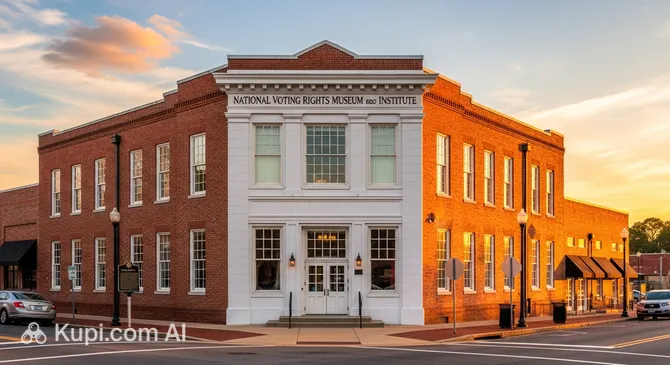
National Voting Rights Museum and Institute. Source: Kupi.com AI

Located just steps away from the legendary Edmund Pettus Bridge, the museum is a true "time capsule." Its galleries house authentic documents, artifacts, and personal belongings of those who stood up for their beliefs in the mid-20th century. The institution's high rating among tourists confirms that its exhibits deeply move visitors from all over the world.

The museum fulfills an important educational mission, offering guests more than just dry facts, but an emotional immersion into the historical context. Here, modern multimedia installations stand alongside authentic materials, creating a comprehensive picture of the past. This is an essential stop for anyone interested in American heritage and culture.

Contacts

For the latest information on special exhibitions or to book group tours in advance, you can use the official contact details provided. The staff are always ready to help travelers plan an informative visit to this historic site.

You can reach the museum administration by phone or through their website listed below:

Address 6 US-80 East, Selma, AL 36701, USA
Phone +1 334-526-4340
Website http://nvrmi.com/

What to Do

Your immersion into the museum's atmosphere begins with a viewing of its rich collection of historical photographs and authentic documents. Visitors can leisurely walk through the themed galleries, where the spirit of Selma's landmark events is recreated. Interactive displays and multimedia materials allow you to literally hear the voices of the era, making for a truly immersive visit.

One of the top recommendations is to join a tour with a professional guide. Local experts share little-known details and personal stories that bring historical facts to life. Special educational programs adapted for different ages are available for families with children, helping young tourists better understand the importance of civil liberties.

After exploring the main exhibit, be sure to walk to the Edmund Pettus Bridge, located within walking distance, to take panoramic photos. You can finish your visit at the gift shop, which offers a wide selection of books, rare editions, and commemorative souvenirs dedicated to the heritage of the city and the state of Alabama.

Getting There

Finding this iconic landmark is easy, as it is located right in the heart of Selma. The institution is situated at 6 US-80 East, in close proximity to the area's main architectural feature—the Edmund Pettus Bridge. Travelers driving to the site will find it most convenient to take the US-80 highway, which passes directly by the museum building.

For those coming from major hubs like Birmingham or Montgomery, the drive takes between an hour and an hour and a half via I-65 and US-80. Free parking is available near the museum complex, making visits by private or rental car very convenient. The nearest major airport, Birmingham-Shuttlesworth International (BHM), is approximately 150 kilometers away.

Since public transportation in this part of the region is limited, a taxi or a car remains the most convenient way to get around. If you are already in the historic district, the museum can easily be part of your walking route, allowing you to enjoy the atmosphere of the old streets and the city's architecture.

History & Facts

The history of this site is inextricably linked to the events of 1965, when Selma became the epicenter of the struggle for justice in the USA. The museum was founded to preserve the memory of the peaceful marches and the people whose courage transformed American law. It focuses on the legacy of the famous bridge, which has become a global symbol of the civil rights movement.

The collections include unique artifacts: from the clothing of historical participants to original posters and speech recordings. Notably, Selma itself has deep roots dating back to the early 19th century, when the city flourished due to trade on the Alabama River. The museum's exhibits skillfully place the struggle for rights within the broader context of the Southern states' development.

Today, the institute continues active research, adding new evidence of the era to its collections. Its work is recognized at the national level as a valuable resource for historians and sociologists. It is not just a building with exhibits, but an active center for education, helping new generations understand the significance of democratic achievements.

Time Needed

To carefully explore all the main galleries and delve into the documents on display, a typical visitor will need about 1.5–2 hours. This is enough time for a self-guided tour of the exhibits and to engage with the key audiovisual materials.

If you plan to join a detailed guided tour or wish to combine your visit with a walk through the historic district and a visit to the famous bridge, you should set aside at least 3 hours. There is no need to rush, as many of the artifacts and personal stories of those involved deserve thoughtful contemplation.

Working Hours

When planning your visit, please note the institution's operating schedule. The museum typically welcomes guests on weekdays: Monday and Friday from 9:30 AM to 4:30 PM, and Tuesday through Thursday from 10:00 AM to 4:00 PM. The complex is usually closed on Saturdays and Sundays.

Before your trip, be sure to check the official website or call the contact number, as there may be temporary changes to the schedule due to holidays or special cultural events.

Nearby

Exploring the surroundings of Selma will help you gain a more complete picture of the region's rich past. A walk through the neighboring blocks will reveal many memorial markers and architectural monuments that complement the story of the events that took place here decades ago.

Nearby, you will find charming historic homes and iconic churches, each with its own unique story. The table below lists the most interesting sites located within walking distance of the museum:

Attraction Distance (km)
Bridgetender's House 0.5
Sleeping Prophet Edgar Cayce Memorial 0.6
Rev. James Reeb memorial plaque 0.8
Old Town Historic District 0.9
Brown Chapel AME Church 1.1
Gen William J Hardee House 1.2
Nathan Bedford Forrest Monument 1.5
Mabry-Jones House 1.5
John Tyler Morgan House 1.6
Icehouse Historic District 1.6

Reached the end of the page?

That means the route is fully explored