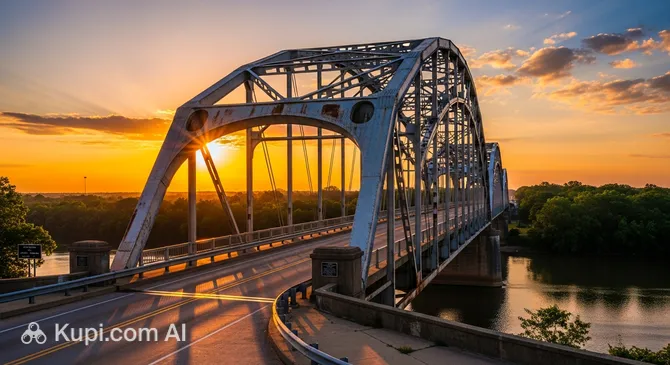
The Edmund Pettus Bridge is a majestic steel structure spanning the Alabama River in the city of Selma. As a striking example of mid-century arch architecture, this bridge is one of the most recognizable landmarks that the USA offers to tourists.
Edmund Pettus Bridge. Illustration.
Source: Kupi.com AI
Traveler photos:
Built in 1940, the bridge consists of 11 spans, and its central steel arch rises 30 meters above the water level. This functional engineering marvel not only provides passage for U.S. Route 80 but also serves as an important historical landmark. The scale of the construction and its elegant curves make it a popular subject for photographers and history buffs.
Today, the site holds the status of a National Historic Landmark. Its significance goes far beyond being a simple transport crossing, turning the bridge into a true symbol of the city and an essential point on Alabama's tourist map.
Contacts
To plan your visit to this iconic location, you can use the following contact information. The landmark is located in the heart of the city and is easily recognizable by its distinct silhouette.
The main activity here is taking a walk along the bridge's pedestrian paths. Ascending to the highest point of the arch, you can appreciate the scale of the engineering and enjoy panoramic views of the Alabama River. The bridge looks especially picturesque during sunset hours when the metal structures are bathed in warm tones.
Photography enthusiasts should head down to the waterfront, which offers the best view of the entire architectural ensemble from below. From there, the bridge's arch appears particularly monumental against the sky. Artists and tourists are often seen here, seeking to capture this classic view of old America.
Your visit to the bridge can be complemented by studying the informational signs and strolling through the adjacent historic district of the city. Thanks to 24-hour access, it is pleasant to be here at any time: during the day for the bright scenery, and in the evening for the quiet and atmospheric night lighting.
Getting There
The landmark is located directly in the city of Selma at Selma, AL 36703, USA. The main route to the site is via U.S. Route 80, which crosses the Alabama River at this point. For precise navigation, travelers most often use modern map services.
The most convenient way to get here is by car. If you are driving from Montgomery, the trip will take about an hour (approximately 50 miles west), while the journey from Birmingham is about 90 miles. Convenient parking for visitors is available near the entrance to the bridge on the city side.
Public transportation is represented by scheduled buses that stop in Selma. From the bus station, you can reach the bridge on foot (about 2 km) or use a local taxi. For those arriving from further away, the nearest major air hub is Montgomery Regional Airport, where car rentals are available.
Nearest city: Selma
History & Facts
Construction of the bridge was completed in 1940. It replaced an outdated swing bridge that could no longer handle the growing traffic flow. The structure was named in honor of Edmund Winston Pettus, a senator and prominent Alabama jurist. At that time, Selma, founded back in 1820, was an important trading hub situated on the river's high bluffs, and the new bridge became a symbol of the region's technical development.
The city flourished thanks to the cotton trade, and the economic boom contributed to the appearance of magnificent Greek Revival buildings in the area. The bridge fit harmoniously into this architectural environment, becoming a key piece of infrastructure in Alabama's "Black Belt." Its arched form and steel structures still command admiration from engineers today.
In 2013, the site was officially listed as a National Historic Landmark. Although bridge standards have changed over the decades, this structure remains operational and is carefully preserved as an important piece of 20th-century American heritage.
Time Needed
For a standard tour and a walk across the pedestrian part of the bridge, tourists typically need about 30 to 60 minutes. This is quite enough time to leisurely cross the river, take commemorative photos, and enjoy the panorama of the water.
If you decide to combine your visit with exploring the historical monuments in the vicinity or want to wait for the particularly beautiful sunset lighting, we recommend allowing 1.5–2 hours for your itinerary. This will let you experience the unique character of this location without rushing.
Working Hours
The Edmund Pettus Bridge is an active piece of road infrastructure, so it is available for visiting and viewing 24/7. You can come here any day of the week, including weekends and holidays — access is open 24 hours a day.
There are no specific operating hours for pedestrians, though tourists are recommended to plan their walk during daylight hours for better visibility. Before your trip, it is worth checking information on official city portals to ensure there are no temporary closures for maintenance work.
Open 24 hours
Nearby
Exploring the surroundings of the bridge will allow you to dive deeper into the atmosphere of old Alabama and learn more about the region's cultural heritage. Many interesting sites are located just a few minutes' walk from the riverfront.
A stroll through the nearby streets will reveal historic buildings and commemorative markers telling the story of different periods in the life of Selma. Below are the most noteworthy places within a 1.5-kilometer radius: