Support

Sheldon Sea Plane Base

About the Airport

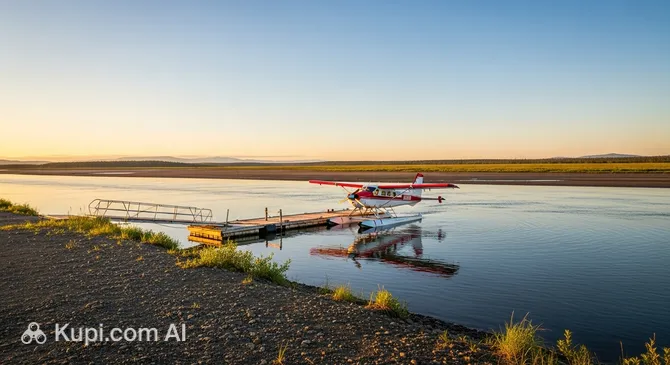
Sheldon Sea Plane Base. Source: Kupi.com Binoculars

Sheldon Sea Plane Base (also known as Sheldon Point Airport) is not merely a transport hub, but a true "lifeline" for the remote settlement of Nunam Iqua in Alaska. Here, you will not find the familiar hustle and bustle of giant terminals; instead, you will be greeted by the rugged beauty of the Yukon Delta and the simple, almost homely atmosphere of the North. Landing here is always a small adventure, opening doors to a world of authentic culture and wild nature, where the aircraft is often the only link to the rest of the world.

IATA Code SXP
ICAO Code Not assigned
City Nunam Iqua (Sheldon Point)
Distance to Centre 1 km
Status Regional / Domestic
Passengers per Year ~500 people
Schedule Local schedule

Features and Advantages of the Airport:

The main feature of Sheldon Point Airport is its critical importance to the local community. In the absence of roads connecting the settlement to other towns, it is light aviation that ensures the delivery of mail, cargo, and the transport of residents. The airport is located in immediate proximity to residential houses, making it maximally accessible for passengers — the journey from the aircraft steps to the doorstep of a home takes mere minutes.

A flight here offers unique visual experiences. Routes passing over the tundra and water arteries of Alaska allow you to see untouched nature from a bird's-eye view. Despite the minimalistic infrastructure (there are no cafes or shops here), the airport is famous for its lack of bureaucracy and queues, offering travellers quick and unimpeded access to one of the most distinctive corners of the USA.

Contact Information

  • Official Airport Website: The seaplane base does not have its own web resource. Official technical and operational information is published on the Alaska Department of Transportation & Public Facilities (DOT&PF) portal.
  • Inquiry Service Phone: +1 907-543-2498 (DOT&PF Regional Unit in Bethel). There is no direct line provided within the airport building itself.
  • Airport Address: Nunam Iqua, Alaska 99666, USA.
  • Email: There is no personal email for the administration. For all questions, it is recommended to contact the air carriers or the regional transport authority.
  • Airport Social Media: Official accounts are not maintained.
  • Lost Luggage Information: There is no separate "Lost & Found" service at the airport. All issues regarding luggage must be resolved directly through the airlines operating the flights (mainly Grant Aviation or Ryan Air).
  • Passenger Support Contacts: Support is provided by airline representatives immediately before departure or through their central contact centres.

How to Get to the Airport

Getting to Sheldon Sea Plane Base (SXP) is a task that differs significantly from a trip to a major metropolitan airport. Since Nunam Iqua (formerly Sheldon Point) is a small isolated settlement in the Yukon Delta, familiar urban attributes like the metro, public buses, or ride-hailing apps are completely absent here. Logistics in this corner of Alaska are subject to the laws of harsh nature and seasonality.

Public Transport and Taxis

There are no scheduled buses or trains in the settlement. You will not find classic taxis here either. The transport system within the village is informal. In summer, locals move around on ATVs (Quad bikes), and in winter — on snowmobiles. Often, the role of a transfer is fulfilled by an arrangement with a local resident or a representative of the host party. If you are flying in for a visit or work, you will likely be met right at the aircraft on a private all-terrain vehicle.

Walking Distance

Given the compactness of the settlement and the proximity of the runway (only about 1 km from the centre of the residential area), many residents get to the airport on foot. The walk takes from 10 to 15 minutes. This is the most reliable and free way to get to your flight if you do not have heavy luggage.

Car Rental and Parking

Rent-a-Car services do not exist in Nunam Iqua, as the village is not connected by a road network to the rest of the world. Consequently, there are no equipped paid car parks at the airport. The area around the landing site is used for the temporary stopping of ATVs and snowmobiles of those meeting passengers. You can leave transport there for free, but "at your own risk," although the crime rate in such communities is usually low.

Alternative Airports Nearby

Since Sheldon Point accepts only light aviation, for long-distance travel, tourists often use larger regional transport hubs, reaching them via connecting flights. The nearest airports playing the role of important hubs in this area are:

  • St. Mary's Airport (95 km) — the nearest significant hub for transfers.
  • Chevak Airport (117 km) — another available option within a hundred-kilometre radius.
  • Nome Airport (223 km) — a large regional airport known for its gold rush history.
  • Bethel Airport (251 km) — the main aviation hub of Western Alaska, through which the main flow of passengers heading to Nunam Iqua passes.
  • Unalakleet Airport (254 km) — serves the eastern coast of Norton Sound.

Recommendations for Travellers:

When planning a departure from Sheldon Point, always consider weather conditions. Fog or strong winds can delay a flight indefinitely. It is recommended to arrive at the landing site 30–40 minutes before departure to calmly hand over luggage to the pilot and go through the simplified check-in procedure, which here often amounts to a roll call of passengers.

Terminals and Map

Terminal Structure

Do not expect complex glass and concrete architecture from Sheldon Point Airport (SXP). This is a classic example of Alaska's "bush aviation" infrastructure, where functionality prevails over form. The airport consists of a single compact complex serving all arriving and departing light aviation flights.

In fact, there is one single terminal operating here, which most often represents a small heated building or simply a specially designated area next to the runway. Concepts like "gates" or aerobridges do not exist here — boarding takes place directly from the apron, where the aircraft taxis after landing.

Map and Navigation

Navigation at Sheldon Point Airport is intuitively clear and does not require the use of maps or applications. The entire "sterile area," waiting area, and boarding exit are within direct line of sight.

  • Departure and Arrival Zone: This is a unified space. Passengers waiting for departure and arriving travellers often cross paths in the same place. Arrival here looks as simple as possible: you descend the aircraft steps onto the ground and immediately find yourself in the settlement territory.
  • Transfers: Since there is only one terminal, there is no need for shuttles or long walks. The distance from the waiting area to the aircraft is only a few dozen metres.

Service Features and Procedures

The main advantage of Sheldon Point Airport is speed and the absence of the bureaucracy typical of large hubs. Processes that take hours in big cities take minutes here.

Check-in and Screening:

  • There may not be check-in counters in the usual sense. Check-in is often conducted by the pilot himself or an airline representative right at the aircraft, checking against the passenger list.
  • There is typically no strict TSA security screening with metal detector frames and luggage scanners. However, the pilot has the right to visually inspect luggage and assess the weight of the cargo for proper aircraft balancing.
  • Processing Time: The entire procedure from greeting to sitting in your seat takes 5–10 minutes. Nevertheless, it is recommended to be on-site in advance so the pilot has time to arrange the cargo.

Amenities and Services

The terminal building (if open) usually provides a minimal set of amenities for protection against the weather: an area with benches for waiting and, possibly, a heater. There are no Duty Free shops, cafes, or ATMs here, so one should stock up on everything necessary (water, food, cash) in advance in the village of Nunam Iqua itself.

Navigation Recommendations:

If you are flying from Sheldon Point for the first time, simply orient yourself towards the aircraft or the group of people with luggage. It is impossible to get lost here, and any local resident will always tell you exactly where your airline's aircraft stops.

Airport History

The history of Sheldon Point Airport (SXP) is not just a chronicle of construction, but a dramatic record of the confrontation between man and the elements in one of the harshest corners of Alaska. The development of the aviation hub here is inextricably linked to the survival of the settlement itself, which transformed from a seasonal fishing camp into a permanent village in need of a reliable connection with the outside world.

Foundation and the Era of Seaplanes

In the early stages of settling the area, aviation communication relied exclusively on seaplanes landing on the waters of the Yukon River in summer, and aircraft with ski landing gear in winter. The official history of ground infrastructure began in the 1970s, when the population started settling here year-round. The first attempts to create a runway involved simple clearing and compacting of the soil to ensure emergency delivery of medicines and food during the off-season periods.

The Endless Battle with the River

A key challenge for the airport became soil erosion. In the early 2000s, the problem intensified: the Yukon River began rapidly eroding the shoreline, threatening the existing runway. The history of the airport's reconstruction during this period is not a story of a single successful relocation, but a saga of a constant struggle to preserve the transport artery.

Engineers and road services have to regularly carry out repair works and strengthen the surface, as the unstable swampy soils of the tundra and the encroaching water constantly test the infrastructure's durability. The airport has become a symbol of the community's resilience: every repair of the strip is perceived by local residents not as a technical procedure, but as a guarantee that life in the village will continue.

Name Change and Preserving Heritage

An important milestone in the place's history was 1999, when residents voted in a referendum to return to historical roots. The settlement changed its colonial name Sheldon Point to the traditional Eskimo name Nunam Iqua, which translates as "The End of the Earth." However, in aviation registries, the airport retained its historical code and name — Sheldon Point (SXP). This creates a unique historical dualism, reminding of the past name even when the town is already living in the future.

Interesting Facts from History:

  • Dual Geography: Due to the retention of the SXP code, many novice pilots and logistics systems still use the old name "Sheldon Point," whereas on modern maps, the point is designated as Nunam Iqua. This is one of the few locations in Alaska with such a pronounced "split personality."
  • Salvation from Floods: The airport's history records several instances when the elevated runway became the only dry island during spring floods, serving as an assembly point for the evacuation of the entire population.
  • Technological Leap: An important modernisation was the installation of a modern runway lighting system controlled via radio channel. This allowed air ambulances to land during the polar night, which radically reduced mortality in emergency cases.

Services and Facilities

Travellers heading to Nunam Iqua via Sheldon Airport (SXP) must be prepared in advance for the fact that the usual level of service is absent here. This is a classic "wild Alaska" airport, where infrastructure is reduced to the absolute minimum necessary for flight safety. There are no commercial zones here, and the level of comfort depends entirely on your personal preparation for the trip.

Dining and Shopping

Within the airport perimeter, there are absolutely no restaurants, cafes, food vending machines, or shops. It is impossible to buy even a bottle of water or a cup of coffee here. Travellers are strongly advised to bring a supply of food and drinks with them, especially if waiting for a return flight. In the village of Nunam Iqua itself, there is a small General Store with a limited assortment of products, but it is located at some distance from the runway, and its operating hours may vary.

Connectivity, Wi-Fi, and Finance

Do not expect public Wi-Fi or fixed charging stations for gadgets at the airport. Mobile reception in this area can be intermittent and depends on your operator (GCI usually has the best coverage). It is extremely important to carry a fully charged power bank (portable battery).

Also, there are no ATMs or currency exchange points at the airport or in its immediate vicinity. In the village, transactions are often made in cash, and bank cards may not be accepted due to connection issues. Travellers need to withdraw cash US dollars in advance at a major hub, such as Anchorage or Bethel.

Waiting Areas and Comfort

The concept of VIP lounges or business centres is not applicable in Sheldon Point. The "waiting room" here serves as either a small unheated shelter (at best — a heated post office room, if open) or simply an open-air space next to the strip. It is recommended to dress in layers and warmly, as it is not always possible to take shelter from wind and precipitation.

Medical Services and Passenger Assistance

There is no medical post or pharmacy on the airport territory. The nearest qualified assistance is available at the clinic in the village of Nunam Iqua, managed by the regional health corporation (Yukon-Kuskokwim Health Corporation). In emergency cases, evacuation is carried out by medical flights.

For Passengers with Children and Limited Mobility:

  • There are no specialised mother-and-child rooms or changing tables.
  • Infrastructure for citizens with limited mobility (ramps, hard paths) is practically absent. Boarding a light aircraft is done from the ground, often via a shaky ladder.
  • Airline personnel (usually the pilot themselves) are always ready to provide physical assistance during boarding and disembarking, but special needs must be communicated to the carrier in advance, at the ticket booking stage.

Accommodation (Hotels)

There are no commercial hotels or inns at the airport or in the village of Nunam Iqua itself. Tourism is not developed here, and accommodation is usually provided only by prior arrangement with the local council (Tribal Council) or the school, often in the format of a sleeping place in a classroom or community centre. If your flight is cancelled and there is no arrangement for an overnight stay, this can become a serious problem. The nearest full-service hotels are located only in the city of Bethel (about 250 km by air).
Where to Eat

Dining at the Airport: Important Information for Passengers

When planning a trip through Sheldon Sea Plane Base (SXP), it is important to understand the specifics of this remote location. Unlike standard airports with lively food courts and coffee shops, absolute minimalism meets passengers here. In the "terminal" itself (waiting area by the strip) and the surrounding area, there are absolutely no catering outlets.

Here you will not find:

  • Restaurants, cafes, or juice bars.
  • Vending machines with snacks or drinks.
  • 24-hour convenience stores.
  • Points selling takeaway food.

Dining Recommendations and "Survival Strategy"

Since it is impossible to buy food immediately before departure at the airport, organising meals falls entirely on the traveller's shoulders. Your "departure zone" and "arrival zone" are not equipped for gastronomic pauses, so the best solution is to take care of provisions in advance.

Shopping in Nunam Iqua Village

The only alternative is to visit the local General Store in the settlement itself if you have spare time before the flight. It is within walking distance of the runway (about 10–15 minutes walk).

  • Assortment: Limited to basic long-life products. You can buy chips, chocolate bars, canned goods, fizzy drinks, and biscuits. Finding fresh sandwiches, salads, or hot coffee here is practically impossible.
  • Opening Hours: The shop operates on a local schedule which may change. It is usually open during the day but closes in the evening and on weekends.
  • Prices: Be prepared for the cost of products being 2–3 times higher than in major cities ("mainland" USA) due to the complex logistics of delivering goods to Alaska.

For Passengers with Special Dietary Needs

For vegetarians, vegans, as well as those observing a Halal, gluten-free, or lactose-free diet, it is categorically recommended to bring food with you. In the conditions of a remote settlement, finding specialised products is impossible. The local assortment is not designed for complex dietary requests.

Tips for a Proper Meal

If you have a long flight with a connection, it is best to eat a substantial meal at the departure airport (for example, in Anchorage or Bethel), where there are full-service cafes. For a flight from/to Sheldon Point, it is optimal to have with you:

  • A thermos with hot tea or coffee (especially relevant in the cold season).
  • Hearty snacks: nuts, dried fruits, protein bars, or sandwiches prepared in advance.
  • A bottle of drinking water (there will be nowhere to fill it at the airport).

Travel Tips

Travelling through Sheldon Sea Plane Base (SXP) is an experience radically different from flying with regular airlines. The rules of large hubs do not apply here, and the success of the trip depends on understanding the specifics of Alaska's small ("bush") aviation. Here are some practical tips to help make your flight comfortable and safe.

Optimal Arrival Time

Although there are no long queues for security screening here, arriving at the aircraft at the last minute is not advisable. The optimal arrival time is 30–40 minutes before departure. This time is necessary for the pilot not for bureaucracy, but for the correct distribution of cargo. They need to assess the total weight of passengers and luggage to calculate fuel and aircraft balance. Your punctuality is a matter of safety for the entire flight.

Check-in and Security: What to Expect

Forget about shoe scanners and metal detector frames. The "check-in" procedure here often looks like a personal greeting from the pilot. However, there is a nuance that might surprise newcomers: you may be asked to step on the scales together with your hand luggage. Do not take this as tactlessness — for small aircraft (like Cessna or Piper), every kilogram is of critical importance. Standard TSA rules on liquids (100 ml limit) are often not strictly applied here, but the final decision on what can be taken into the cabin always remains with the aircraft commander.

Choosing a Seat on the Plane

In small aircraft, there are no pre-booked seats like 1A or 15F. Seating is directed by the pilot based on the aircraft's centre of gravity.

  • Tip: If you want to sit by the window or in the co-pilot's seat (if permitted), politely ask for this during boarding. Pilots often oblige if it does not disturb the vessel's balance.
  • Views: Do not be upset if you did not get the desired seat. In small planes, excellent visibility opens up from almost any point, and flying at low altitude guarantees stunning panoramas of the tundra.

Luggage and Hand Luggage

The main rule of bush aviation: travel light. Luggage compartments in such aircraft are very compact and irregularly shaped.

  • Bag Type: It is better to use soft sports bags or backpacks. Rigid plastic suitcases on wheels may simply not fit into the compartment, and they might have to be left behind.
  • Prohibited Items: It is strictly forbidden to carry fuel for burners, flammable liquids, and, which is especially relevant for Alaska, bear sprays in the cabin and luggage. If the pilot discovers a spray, it will be confiscated permanently, as the depressurisation of a canister in flight can be fatal for the crew.

Tips for Transit Passengers

Sheldon Point Airport is the endpoint of the route, and all departures from here are connecting flights (usually via Bethel or St. Mary's).

  • Allow a Large Time Buffer: Never plan a "short" connection (less than 3–4 hours) for a further flight to Anchorage or outside Alaska. The weather in the Yukon Delta is unpredictable, and a delay in departure from the village for a couple of hours is a common occurrence.
  • Single Ticket: If possible, book flights with one airline or a partner alliance. This will simplify solving problems with luggage and rebooking in case of a no-fly situation due to weather conditions.

Customs Control

Flights to Nunam Iqua are exclusively domestic. There is no border or customs control here. Passport control is also absent, but identification (passport or ID) must be carried for verification by the pilot before boarding.

Saving Time and Money

  • Food with You: As already mentioned, there is no food at the airport. Take sandwiches and water with you from the village or the transfer hub. This will save not only money (prices in the rural shop are very high) but also nerves.
  • Cash: Always carry small denomination US dollars. In case of necessity (for example, to pay for excess luggage or arrange a transfer on a snowmobile to the steps), cards may not work due to lack of connection.

What to Do in Case of Flight Delay?

Delays due to fog, wind, or blizzards are the most frequent problem at Sheldon Point.

  • Plan "B": When flying out of the village, ensure you have contacts for the host party or local acquaintances to whom you can return to wait out the bad weather. In the "terminal," you would have to wait in Spartan conditions.
  • Communication: If the flight is delayed, do not wait in vain — call the airline representative immediately (locals usually know the numbers) to clarify the status. There are no information boards here.
  • Patience: The main advice is to relax. In Alaska, they say: "The weather doesn't look at your schedule." Have a good book or a fully charged smartphone with films at hand to pass the waiting time.

Reached the end of the page?

That means the route is fully explored