Support

Teller Airport

About the Airport

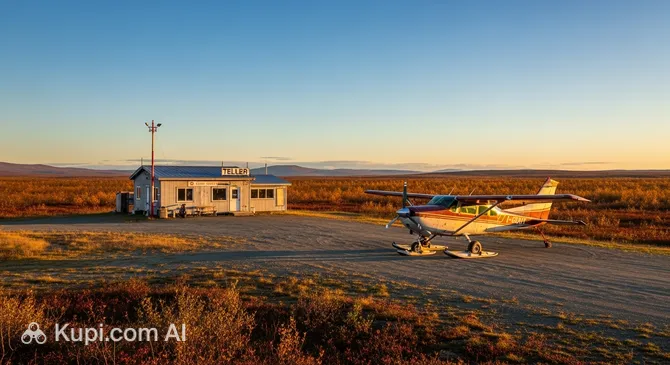
Teller Airport. Source: Kupi.com Binoculars

Teller Airport is not just a transport hub, but a true "lifeline" for a remote settlement on the western coast of Alaska. Located in the rugged yet picturesque lands of the Seward Peninsula, it connects local residents with the "mainland" and the neighboring hub in Nome. You will not find familiar terminals and shops here; instead, you will experience the authentic atmosphere of the Far North, where aviation remains the primary and most reliable mode of transport amidst the endless tundra.

IATA Code TLA
ICAO Code PATE
City Teller, Alaska (United States)
Distance to Center About 4 km
Status Regional / Domestic
Annual Passengers Low passenger traffic (less than 3,000 people)
Schedule Check with the air carrier

Features and Advantages of the Airport:

Teller Airport represents a classic example of Alaskan bush aviation. Its infrastructure is minimalist but critically important for the region.

  • Gravel Runway: The runway has a gravel surface. This requires special skill from pilots and makes airport operations dependent on weather conditions, which can change rapidly in this region.
  • Scenic Approach: The flight to Teller offers travelers breathtaking views of Grantley Harbor and the wild expanses of Alaska, where untouched nature can be seen from a bird's-eye view.
  • Key Role in Logistics: Since road access to the village can be limited (especially during the winter period), the airport is the main channel for delivering mail, groceries, and medicine, as well as transporting passengers.
  • Atmosphere of Adventure: There are no complex security checks or queues here. Boarding and disembarking happen as quickly as possible, allowing you to immediately immerse yourself in the unique rhythm of life in a subarctic village.

Contact Information

  • Official Airport Website: dot.alaska.gov (Alaska Department of Transportation page) or carrier page beringair.com
  • Inquiry Service Phone: +1 907-443-5464 (Bering Air desk in Nome, primary contact for passengers) or +1 907-443-3431 (Airport Administration, Manager)
  • Airport Address: Teller Airport, 2 miles South of Teller, Teller, AK 99778, USA (Approximately 4 km south of the village center)
  • Email: reservations@beringair.com (Booking and passenger inquiries to the main carrier)
  • Social Media: Facebook DOT&PF (Infrastructure news) or Facebook Bering Air (Flight news)
  • Lost Luggage Information: Luggage issues are handled by the air carrier. Contact the Bering Air office by phone at +1 907-443-5464 or via email.
  • Passenger Support Contacts: Bering Air 24-hour line (toll-free in Alaska): 1-800-478-5422.

How to Get to the Airport

Transport accessibility to Teller Airport has its own specifics, dictated by the remoteness of the region and the harsh climatic conditions of Alaska. Since the terminal is located just a few kilometers from the village of the same name, the trip to it usually takes minimum time, however, one should not expect transfer options familiar to major metropolises here.

Car and Taxi

There are no official taxi services, aggregators like Uber or Lyft, or car rental desks directly in the airport building in Teller. The main way to get to your flight is by personal arrangement.

  • Private Transport: Most movements are carried out using the personal vehicles of local residents (pickup trucks, SUVs). If you are staying with someone in the village or are part of an organized tour, the transfer to the runway is usually provided by the host.
  • Seasonal Transport: In winter, when roads are covered with snow, snowmobiles become the most popular means of transport to the airport. In summer and the off-season, ATVs (All-Terrain Vehicles) are also actively used.
  • Road from Nome: Teller is connected to the city of Nome by a gravel road, the Nome-Teller Highway, approximately 115 km long. In summer, the journey by rental car from Nome will take about 2–2.5 hours. However, it is worth remembering that the road is open only during the warm season (usually from May to October) and can be difficult for an unprepared driver. You can rent a car upon arrival at Nome Airport, where rental agencies are represented.

Public Transport

There is no public transport system in the village of Teller and its surroundings. There are no shuttle buses, railway connections, or metro services here. The only regular link with the outside world is small aviation flights.

Parking

The parking infrastructure at Teller Airport is extremely simple. There are no paved lots with markings, barriers, or parking meters.

  • Cost: Parking is free.
  • Features: The parking zone is an open gravel area next to the runway. Leaving a car here is at your own risk; no security is provided.

Recommendations for Travelers

When planning a departure from Teller, always consider the weather factor. Fog and blizzards can make adjustments to the schedule. It is recommended to arrive at the departure point in advance, although there are no strict check-in rules like in major hubs—usually, it is sufficient to be at the plane 20–30 minutes before departure.

Nearest Alternative Air Hubs

If weather conditions do not allow flying out of Teller, connections to the region are provided by other airports, although reaching them by land is often impossible without special equipment. Important hubs in this part of Alaska are also Ralph Wien Memorial Airport in Kotzebue and Unalakleet Airport, which receive flights from Anchorage and distribute passenger traffic to small settlements.

Terminals and Map

The infrastructure of Teller Airport (TLA) differs radically from the familiar standards of international hubs. You will not find multi-story terminals, glass facades, jet bridges, or confusing corridors here. The airport is a small aviation facility where functionality and reliability come first.

Terminal Structure

In fact, Teller Airport lacks a classic passenger terminal building. The entire "air harbor" consists of a fenced area with a gravel runway and a small apron for aircraft parking. The waiting area is often conditional—passengers wait for the plane's arrival either in their cars or directly at the edge of the apron, if weather conditions permit.

Features and Zoning

Due to the minimalist arrangement, there is no separation into departure and arrival zones, transit halls, or luggage belts here. All processes take place in a single open-air space.

  • Check-in Zone: The check-in procedure takes place directly at the aircraft side. The pilot or airline representative checks passenger lists and accepts luggage.
  • Waiting Zone: There are no specialized heated waiting rooms with amenities (toilets, cafes, shops) on the runway territory. It is recommended to wait for the flight in warmth (in a car or in the village) until the aircraft arrives.
  • Transfers: The concept of transfers between terminals is irrelevant here. The distance from the parking area to the plane's steps is only a few dozen meters.

Check-in and Screening Procedures

Despite the absence of scanners and metal detector frames, flight safety remains a priority. Procedures here have their own specifics and take minimum time.

  • Arrival Time: Passengers do not need to arrive 2–3 hours in advance. The optimal arrival time is 20–30 minutes before departure.
  • Weighing: This is the most important stage of preparation for a flight on small aircraft (Cessna, Piper, and similar). Not only luggage is weighed, but often the passengers themselves (or they state their exact weight). This is critically important for the aircraft's balance.
  • Screening: There is no classic TSA security screening here, as flights do not enter the "clean" sterile zone of major airports directly (you will have to pass screening there if transferring at large hubs). However, the pilot has the right to visually inspect luggage.

Navigation and Traffic Scheme

It is impossible to get lost at Teller Airport—the entire facility is visible at a glance. Navigation is intuitive:

  1. You drive up the gravel road to the aircraft parking area.
  2. Visually locate your airline's plane (usually small aircraft with Bering Air logos or other local carriers).
  3. Park your car in the adjacent area and approach the pilot.

Recommendations for Passengers

Since the airport does not protect against the whims of Alaska's weather, preparation for departure requires attention to detail:

  • Dress Warmly: Even if the flight is short, waiting in the wind by the runway can be uncomfortable without a windproof jacket and hat.
  • Check Flight Status: There are no departure boards in the building (as there is no building). All information about delays due to fog or wind must be obtained in advance by phoning the airline.
  • Be Ready for Hand Luggage: Luggage compartments of small planes are limited. Bulky suitcases may not fit or may require additional payment; it is better to use soft bags.

Airport History

The history of Teller Airport is inextricably linked with the history of Arctic exploration and the development of bush aviation in Alaska. Unlike major international hubs, there are no dates of ceremonial ribbon-cutting or laying the first stone of a huge terminal here. The airport developed evolutionarily—from a natural necessity for connection with the outside world to the status of an official state transport facility.

The Birth of Aviation and the "Airship Norge"

Although the modern runway appeared much later, Teller entered the world history of aeronautics back in the early 20th century. The most significant event for this area was in 1926. It was here, in Teller, that the world's first verified flight across the North Pole by airship ended.

The expedition led by Roald Amundsen, Umberto Nobile, and Lincoln Ellsworth on the airship "Norge" took off from Svalbard, crossed the polar cap, and landed in Teller on May 14, 1926. Due to bad weather, they could not reach the planned finish line in Nome and landed here. This event forever inscribed the small settlement in aviation history textbooks, making it the finish point of one of the greatest aerial odysseys.

Establishment of Infrastructure

In the mid-20th century, with the active development of "bush piloting" (flying in the wilderness), the need for permanent infrastructure arose. For a long time, planes landed on coastal spits, beaches, or frozen water surfaces in winter. However, a reliable site was required for regular mail and medical communication.

The airport began to acquire its modern look in the second half of the 20th century when the Alaska Department of Transportation (DOT&PF) took on the obligations of arranging and maintaining regional airfields. A gravel strip was profiled and strengthened, capable of receiving light aircraft not only on skis but also on wheeled landing gear all year round.

Development and Modernization

Over the decades, the development of the airport has been aimed not at expansion (passenger traffic here remains consistently small), but at improving flight safety in extreme conditions:

  • Surface Improvement: Regular work on leveling and adding gravel helps minimize the risk of damage to aircraft landing gear.
  • Lighting Equipment: The installation of a high-intensity lighting system on the runway became a critically important stage, allowing flights to be carried out during the polar night and twilight.
  • Navigation: The introduction of modern GPS approaches simplified the landing approach for pilots who previously had to rely exclusively on visual landmarks.

Interesting Facts

  • Historical Coincidence: The airport (as a landing site) became known to the world precisely because of the non-flying weather in Nome, which forced Amundsen to land in Teller. Local residents helped dismantle the huge airship and pack it for shipment back.
  • Two Runways: Historically, registries often mention two runways, but in fact, one main gravel artery is operated and maintained in proper condition, oriented taking into account the prevailing winds from the Bering Sea.
  • Lifeline: During periods when the Nome-Teller Highway becomes impassable due to snowdrifts or mud, the airport remains the only "window" to civilization for the village residents.

Services and Facilities

Given the specific nature of Teller Airport (TLA) as a small aviation facility with a gravel runway and no capital terminal building, the level of service here can be described as "expeditionary." Passengers should not look for familiar urban amenities here. All comfort and safety depend on your personal preparation and the professionalism of the pilots.

Dining and Shopping

There are absolutely no cafes, restaurants, food vending machines, or Duty-Free shops on the runway territory. There are not even kiosks with press or souvenirs.

  • Recommendation: Take care of snacks and water in advance. If you are flying from Nome, buy everything you need there. In the village of Teller itself, a general store (Teller Native Store) operates, where you can purchase basic groceries and snacks before leaving for the plane.

Communication and Electronics

The airport is not equipped with electricity for public use, so there is nowhere to charge a phone or laptop before departure.

  • Wi-Fi: There is no public Wi-Fi network.
  • Mobile Connection: Signal quality depends on your operator (GCI works best in Alaska). Directly at the strip, the connection may be unstable, but usually allows for a call.
  • Charging: It is strongly recommended to carry a fully charged power bank, as batteries drain faster in the freezing cold.

Financial Services

There are no ATMs, currency exchange points, or bank branches on the airfield territory. Most settlements in the village (for example, for souvenirs from locals) may be made in cash.

  • Tip: Withdraw the necessary amount of US dollars in cash in Anchorage or Nome before traveling deep into the region.

Waiting Lounges and VIP Service

The concept of a "business lounge" is absent in Teller. The "VIP zone" here serves as the cabin of your rental car or the aircraft cabin. The only exception is the stunning view of the tundra, available to absolutely all passengers for free.

Medical Assistance

There is no medical center or pharmacy at the airport. A first aid kit is located on board the aircraft with the pilot.

  • In Emergencies: Medical assistance can be obtained at the village clinic (Teller Health Clinic), which is serviced by the regional health corporation. For serious cases, the airport is used as a site for air ambulance (medevac) to the hospital in Nome.

Passengers with Children

There are no special mother-and-child rooms or play areas. Traveling with children in such conditions requires increased attention from parents.

  • Safety: Watch children carefully near operating aircraft. The noise of propellers can frighten a child, so we recommend having noise-canceling headphones or earplugs.
  • Clothing: Dress children in layers. Waiting for boarding in the open air can be very windy.

Services for Passengers with Reduced Mobility

The airport infrastructure is not adapted for people with disabilities (no ramps, hard surfaces for wheelchairs). Nevertheless, Alaskan bush aviation is famous for its responsiveness.

  • Boarding Assistance: Local airline pilots are accustomed to helping passengers. They will provide physical assistance when boarding a small plane (where you often need to climb several steps). If you require assistance, be sure to notify the airline (e.g., Bering Air) when booking your ticket.

Accommodation (Hotels)

There are no hotels at the airport or in its immediate vicinity. Teller is a small traditional village where tourism infrastructure is poorly developed.

  • In Teller: There may be no official hotels. Accommodation is possible only by prior arrangement with local residents or in the school building (a common practice for official delegations in Alaska), but this requires coordination with the village administration.
  • In Nome: The nearest comfortable hotels are located in the city of Nome (Aurora Inn, Nome Nugget Inn). Most tourists visit Teller as part of a day trip, returning to Nome for the night.

Business Services

Conference rooms or business centers are absent. If you need to hold a meeting or send urgent documents, this can only be done upon returning to civilization.
Where to Eat

The issue of dining at Teller Airport (TLA) requires special planning from travelers. Since the airport is a gravel runway without a passenger terminal building, familiar gastronomic infrastructure is completely absent here. You will not find restaurants, coffee shops, lounges, or even vending machines here.

Restaurants and Cafes: Reality

Neither in the "departure zone" nor in the "arrival zone" (which are conditional concepts here in the open air) are there any catering establishments. The airport serves a village with a population of fewer than 300 people, and passenger traffic is insufficient to support commercial outlets.

Where to Eat: Alternatives

Despite the lack of service directly at the plane's steps, you will not go hungry if you prepare in advance or use the infrastructure of the village itself.

  • Village Store (Teller Native Store): This is the only place within a radius of several kilometers where you can buy food. The store is located in the village of Teller itself (about 4 km from the strip). Basic goods are sold here: canned food, bread, snacks, drinks, and semi-finished products.
    • Opening Hours: Usually from 11:00 to 18:00 (may change, closed on Sundays).
    • Assortment: Limited, typical for remote Alaskan settlements.
  • Dining in Nome: It is strongly recommended to eat a hearty meal before flying to Teller. In the city of Nome, which is the starting point for most flights here, there are full-service restaurants, cafes, and supermarkets.

Local Cuisine and Delicacies

Although there are no haute cuisine restaurants at the airport, the region is famous for its traditional products, which local residents may treat you to if you are visiting:

  • Gifts of the Sea and Tundra: The basis of the diet is salmon (dried, smoked, or salted), reindeer meat, and berries (cloudberries, blueberries).
  • Eskimo Ice Cream (Akutaq): A traditional dish made of whipped fat, sugar, and berries. It cannot be bought in a store; it is a homemade delicacy.

Special Dietary Needs (Vegetarian, Halal, Gluten-Free)

Finding specialized food in Teller itself is extremely difficult, and at the airport, it is impossible.

  • Recommendation: If you follow a strict diet (Halal, vegan, gluten-free, etc.), be sure to bring food with you from Anchorage or Nome. Count on the fact that the selection of vegetables and fruits in the local store may be minimal, and specialized products will not be available at all.

Tips for Passengers

To make waiting for a flight on a windy strip comfortable:

  1. Bring a Thermos: Hot tea or coffee is the best way to keep warm while waiting for the plane. There is nowhere to get boiling water at the airport.
  2. Dry Rations: Always have energy bars, nuts, or chocolate with you. The weather in Alaska is unpredictable, and in case of a flight delay, such a reserve will be indispensable.
  3. Drinking Water: There are no drinking fountains at the airport. Carry a bottle of water with you.

Travel Tips

Traveling through Teller Airport is a unique experience that differs greatly from flights on regular airlines. There is no familiar bureaucracy here, but the harsh laws of polar aviation apply. To ensure your flight goes smoothly and safely, use the following tips.

Arrival Time: When to Arrive?

Forget the "two-hour" rule. Since there is no terminal and no queues for screening in Teller, arriving too early makes no sense, especially in cold or windy weather.

  • Optimal Time: Be at the runway 20–30 minutes before the scheduled departure time. This is enough for the pilot to mark you on the list and load luggage.
  • Communication with the Pilot: Pilots often call passengers or local agents to report the exact arrival time of the aircraft. Keep your phone switched on.

Check-in and Safety: Specifics of "Small Aviation"

The check-in procedure here is simple but strict regarding weight.

  • Honesty in Weighing: This is the most important moment. The pilot needs to know the exact weight of every passenger and every bag to calculate the aircraft's balance. Do not understate your weight—flight safety depends on it. You may be asked to step on scales right at the plane or at the airline office in Nome before flying here.
  • Visual Control: Instead of X-ray scanners, visual inspection is used here. The pilot has the right to check the contents of your bags if suspicions arise.
  • Documents: Despite the informal atmosphere, always carry identification (passport or ID).

Choosing a Seat on the Plane

In small planes (like Cessna Caravan or Piper Navajo), seats are usually not assigned during booking.

  • Distribution by Weight: The pilot will indicate where you should sit based on weight distribution. Arguing in this case is not customary.
  • Co-pilot Seat: If the plane is full and the balance allows, one of the passengers might be lucky enough to occupy the seat next to the pilot (co-pilot seat). This provides the best view and unforgettable impressions. Politely inquire about such a possibility when boarding.

Hand Luggage and Baggage: Do's and Don'ts

Luggage compartments of small planes have non-standard shapes and limited volume.

  • Use Soft Bags: Hard plastic suitcases are difficult to place in the "belly" of a small plane. Backpacks and sports bags (duffel bags) are much more practical.
  • Dangerous Items: It is strictly forbidden to carry bear spray in the cabin or luggage unless it is packed in a special way and declared. Due to pressure changes, the canister may explode. Flammable liquids and fuel for burners are also prohibited.
  • Valuables: Keep your camera, medicines, and documents with you or in a small bag at hand, as access to main luggage during the flight will be impossible.

Recommendations for Connecting Flights

If Teller is only part of your route, and you are flying further from Nome to Anchorage or outside Alaska, consider the following nuances:

  • Large Time Buffer: Never plan a connection "back-to-back." Weather on the Bering Sea coast changes instantly. A delay in departure from Teller by 2–3 hours or even rescheduling to the next day is a common occurrence.
  • Luggage Does Not Transfer: If you are flying with different airlines (for example, Bering Air to Nome, and then Alaska Airlines), you will have to collect your luggage in Nome yourself and check it in again for the next flight.

Customs Control

Teller Airport serves exclusively domestic flights. Customs and border controls are absent here. If you are an international tourist, you will pass all formalities at the first major international airport of arrival in the US (usually Anchorage, Seattle, or Los Angeles).

Tips for Saving Time and Money

  • Group Shipments: Transporting cargo by small aviation is expensive. If you are traveling as a group, try to minimize the number of bags. You will have to pay extra for every pound of excess weight.
  • Bring Food: Buy food and water at a supermarket in Nome or Anchorage. Prices in the rural store in Teller are significantly higher due to complex logistics, and the selection is more modest.

What to Do in Case of Flight Delay?

This is the most frequent scenario in Alaska.

  1. Do Not Wait in the Wind: If the plane is delayed, wait in the car or ask to wait in the school building or store in the village.
  2. Have a Plan "B": Always have a reserve of cash and contacts of local residents with whom you can stay if the flight is canceled due to fog or blizzard.
  3. Offline Entertainment: Download books, movies, or music to your phone in advance. Mobile internet may work slowly, and there is no Wi-Fi in the open field.

Reached the end of the page?

That means the route is fully explored