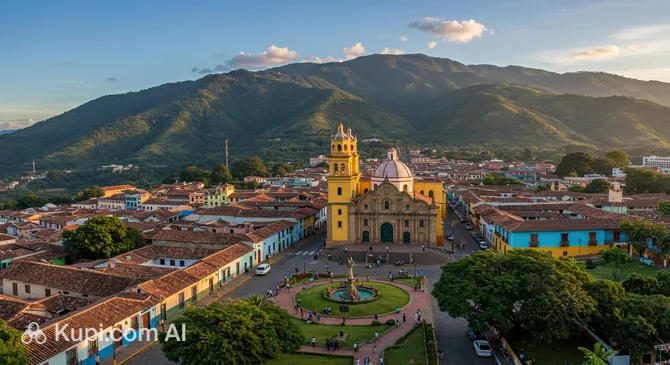
San Cristóbal is a vibrant and authentic city nestled in the picturesque Andean mountain region of western Venezuela. Situated in the Torbes River valley at an altitude of approximately 818 meters above sea level, it combines the charm of mountain landscapes with its status as a major commercial hub. Life here is bustling thanks to its proximity to the Colombian border, making the city an important link between the two countries.
The rich history of San Cristóbal began in 1561 when it was founded by the Spanish conquistador Juan de Maldonado. Since then, the city has evolved into a major industrial and agricultural center for the state of Táchira. Today, it is home to about 285,000 people, known for their industriousness and conservative traditions, which are carefully preserved in local folklore.
San Cristobal. Illustration.
Source: Kupi.com AI
For the traveler, San Cristóbal is interesting primarily for its authenticity. This is not a classic tourist attraction, but a living, working city where you can feel the true rhythm of the Venezuelan Andes. Strolling through the central squares, exploring local pottery production, and tasting coffee from nearby plantations will allow you to see the country as it is, in all its everyday diversity.
Visiting this region is an excellent choice for those who want to explore the "other" Venezuela—mountainous, business-oriented, and hospitable. We invite you to immerse yourself in the atmosphere of San Cristóbal and discover its hidden charm.
Weather Overview
The climate of San Cristóbal is often called "eternal spring," yet it has its own mountain characteristics. Thanks to its location on the slopes of the Cordillera de Mérida, the city is protected from the grueling heat of the coasts. The average temperature throughout the year stays at a comfortable +21°C, while during the day it can warm up to +26°C, and at night in the mountains, it becomes noticeably cooler—down to +16°C.
The local terrain promotes good ventilation; however, in the Andes, it is important to consider the seasonality of rainfall. The wettest months are traditionally April, May, October, and November, when rain can be quite intense. It is worth checking the current weather forecast in San Cristóbal in advance to bring an umbrella or a light raincoat, as precipitation often starts suddenly.
Despite the dense urban development, which sometimes traps air in the valley, the proximity of the Torbes River and mountain winds provide natural circulation. The best time to visit is between January and March or in August, when the weather is most stable and the sky is clear, revealing magnificent views of the Andean peaks.
Average monthly temperature
Average monthly precipitation
Interesting Facts
The city was established in a strategically advantageous location—on three natural river terraces that provided the settlement with natural protection against attacks.
San Cristóbal is considered an important "coffee" hub: the main export routes for famous Venezuelan coffee, sugar, and tobacco pass through it.
The elevation of the city center is about 860 meters above sea level, making the air here noticeably fresher than in the country's coastal regions.
The city is a significant educational center—it is home to two major universities and the headquarters of the influential Sofitasa bank.
The distance from San Cristóbal to the Colombian border is only 56 kilometers, which leaves a unique mark on the city's culture, trade, and cuisine.
How to Get There
San Cristóbal is a vital transport hub in western Venezuela, connecting the Andean mountain regions with the central part of the country and neighboring Colombia. Despite the challenging terrain, the city remains accessible to travelers thanks to a developed network of roads and air connections. You can learn more about the region's logistics on the page detailing how to get to San Cristóbal.
The main air gateway is the San Cristóbal International Airport (IATA: SCI). It handles regular domestic flights, connecting the region with Caracas and other major cities. The trip from the airport to the city center by taxi or bus usually takes between 20 and 40 minutes. Travel time can vary depending on traffic and the weather conditions typical of mountainous areas.
Land transport also plays a key role. If you are coming from Colombia, the journey from the border takes about 1–2 hours. Bus routes connect San Cristóbal with Caracas; however, keep in mind that the approximately 700 km journey can take up to 16 hours due to winding mountain switchbacks and potential road delays. Traveling by car requires attentiveness but rewards drivers with stunning views of the Andes.
Main Attractions
Although San Cristóbal is primarily an industrial and commercial center, it offers visitors the unique atmosphere of the Venezuelan Andes and interesting locations for walks. The city's main charm remains its landscape—panoramic views of the Torbes River and the surrounding mountain ranges create a majestic backdrop for the daily life of its residents.
The heart of the city is its historic center. It preserves the colonial street layout typical of old Spanish settlements. Walking through the center, you can see monumental government buildings and central squares that serve as the main meeting points for locals. While the city lacks grand cathedrals of global scale, the local architecture reflects the rugged and dignified character of the mountain region.
Fans of modern urban environments should visit Plaza Container. This is a popular spot for youth and families, featuring a concentration of gastronomic outlets and relaxation areas. It is perfect for grabbing a bite and observing the life of modern San Cristóbal in an informal setting. The local agricultural markets are also noteworthy—they are true living museums of regional culture, where you can see the full variety of Táchira's products, from tobacco to exotic fruits.
For a deeper look at the city, it is recommended to visit the areas surrounding the local universities. These zones are characterized by a special energy and an abundance of bookstores and small cafes, shaping San Cristóbal's intellectual image as the region's educational hub.
Local Cuisine
The gastronomy of San Cristóbal is a delightful blend of rugged Andean traditions and the fresh products for which this agricultural region is famous. The cuisine here is simple, hearty, and based on corn, meat, and local vegetables. The main symbol of the region is coffee: beans from local plantations have a rich aroma, and a cup of the strong brew is a mandatory ritual here at any time of day.
Be sure to try the traditional corn flatbreads—arepas—which in the Andes are often prepared with special care and served with local cheese or meat fillings. Juicy steaks and dishes made from sugarcane are also popular. The city has developed an interesting fusion culture, where classic Latin American recipes sit alongside globally popular pizza and burgers.
You can experience the true taste of the city in places like Plaza Container, which features steakhouses and modern snack bars. If you want a bite in a more relaxed setting, stop by one of the Ta Bom Pan bakeries—they always have fresh pastries and excellent desserts. Locals often eat at markets and in small family cafes, where the atmosphere is very simple and the portions are generous.
Among the drinks, in addition to coffee, the fresh tropical fruit juices, including pineapples grown nearby, are worth highlighting. Overall, San Cristóbal's culinary scene reflects its character: it is food for hardworking people who value natural ingredients and home-style comfort.
Travel Tips
San Cristóbal is a city with character, and a bit of preparation will help you make your journey through the Venezuelan Andes as comfortable and interesting as possible.
Clothing and gear: The mountain climate is changeable. Bring light clothing for daytime walks, but be sure to pack a windbreaker or sweater for cool evenings. Comfortable shoes with good grip are a must-have for the local hilly streets.
Transport: The optimal choice is a taxi. Public buses can be too crowded and slow for a tourist. If you plan to head into the mountains, it is better to rent a vehicle with high clearance.
Finances: The main currency is the Venezuelan bolivar. Always keep cash in small denominations for payments at markets and in taxis. International cards do not work everywhere, so stock up on currency in advance.
Health and safety: Follow standard precautions: do not display expensive equipment or jewelry, especially in markets. After dark, avoid walking alone in the outskirts and choose verified taxi services.
Communication: The main language is Spanish. English is not widely spoken, so learn a few basic phrases or download an offline translator. Locals appreciate a polite greeting like "Buenos días" or "Buenas tardes."
Local etiquette: Andean residents are known for their politeness and conservatism. It is customary to say hello when entering a shop or cafe. Be patient in queues—tranquility is valued here.
What to avoid: It is best not to discuss sensitive political topics with strangers. Also, avoid photographing government buildings and military sites without explicit permission.
Extra tip: Be sure to try the local coffee at the central market—it's the best way to experience the true flavor of Táchira state!
San Cristóbal will surely show you its best side if you show sincere interest and respect. We wish you vivid impressions and pleasant discoveries in the heart of the Venezuelan Andes!
Entertainment & Nightlife
Nightlife in San Cristóbal is subdued and largely family-oriented, reflecting the conservative traditions of Táchira state. Here, you won't find endless rows of nightclubs operating until dawn; however, the city offers cozy spots for evening relaxation. Most activity is centered around popular cafes and restaurants where locals gather in large groups.
One of the key places for evening entertainment is Plaza Container. In this area, you can find bars, steakhouses, and pizzerias where the crowd enjoys live music and socializing in the open air. The atmosphere here is friendly and casual, and prices remain affordable for most visitors. For a quieter evening, the Ta Bom Pan chain establishments are ideal, functioning as cozy cafe-bakeries offering excellent coffee and fresh pastries.
Daytime entertainment in the city includes attending sporting events, which are very popular among residents, and strolling through shopping areas. During local festivals, the city is transformed: folklore groups representing traditional Andean music and dance can be found on the streets. For those seeking more high-energy entertainment, locals sometimes head to border areas, but San Cristóbal itself remains a place for calm and safe relaxation among friends.
Parks & Museums
Green spaces and cultural institutions in San Cristóbal are closely woven into the urban fabric, although their number may seem modest for such a large industrial center. The main relaxation spots for residents are the cozy squares (plazas), which in the Latin American tradition serve the role of small parks. One of the natural recreational areas is the banks of the Torbes River, where the terrain allows visitors to enjoy natural landscapes without traveling far outside the city.
Despite the lack of major world-class art galleries, the city takes pride in its educational spaces. Local universities often become venues for cultural exhibitions and creative evenings, reflecting the region's intellectual potential. Walking through the center, you can come across small historical monuments telling the stories of the city's founding and the struggle for independence.
Nature lovers should pay attention to the rural farmlands surrounding San Cristóbal. Just a few minutes' drive from the residential quarters, the picturesque slopes of the Andes begin, which are in themselves a massive open-air museum. Here, you can see how the famous local coffee and tobacco are grown, giving tourists a unique opportunity to experience the agricultural heritage of Táchira state.
Getting Around
The transport system of San Cristóbal is adapted to its challenging mountain terrain and its status as a significant commercial hub. The main forms of public transport here are buses and shared taxis (rutas). They connect residential areas with central markets, universities, and the bus station. Be aware that buses can often be overcrowded, especially during peak hours when residents are commuting to work or school.
One of the main features of traffic in the city is congestion on the primary transit highways. Due to the proximity to the border and active trade, there are many heavy goods vehicles on the roads, which slows down traffic. During rush hours, travel time can increase by 20–30%, so tourists are advised to plan their trips with time to spare.
For more comfortable travel, it is best to use a taxi or a rental car. Taxis are the fastest and most reliable way to get to your destination, but it is worth agreeing on the fare in advance. Pedestrian infrastructure in some parts of the city can be limited by steep inclines and descents, so comfortable shoes are a must for those who decide to explore the city center on foot.
Accommodation
Accommodation in San Cristóbal is primarily geared toward business travelers, transit passengers, and people visiting for trade purposes. In the city, you will find classic middle-class hotels, as well as numerous apartments and guesthouses that often offer better rates for longer stays.
The most convenient areas to find housing are the central districts located near shopping zones and banking institutions, as well as the areas near universities. These neighborhoods provide quick access to infrastructure, restaurants, and transport links. Due to the city's transit status, these zones always maintain an active pace of life.
When planning your trip, it is recommended to book accommodation in advance, especially during regional holidays or fairs when the influx of visitors from neighboring states and Colombia increases. Most accommodation options can be found on popular international booking platforms, though some private guesthouses may only accept cash in local currency.
Nearby Cities
San Cristóbal serves as an excellent starting point for exploring the picturesque surroundings of the Venezuelan Andes and the border territories. Thanks to its location, the city allows travelers to reach unique spots in a short time, where rural life is closely intertwined with regional trade and natural beauty.
Just a few kilometers from the center is the town of Táriba, known for its religious traditions and colorful markets. It is also worth visiting Rubio, often called the "City of Bridges." This cozy place is surrounded by coffee plantations and offers a slower pace of life. For those interested in cross-border culture and shopping, a trip to San Antonio del Táchira, located right on the border with Colombia, is a must.
Exploring the surroundings of Táchira state will help you better understand the spirit of this mountain region. Every trip to neighboring towns will reveal new facets of Venezuelan hospitality and allow you to enjoy the magnificent mountain panoramas that accompany the traveler every mile of the way.
Shopping & Souvenirs
Shopping in San Cristóbal is primarily about discovering the products of a rich agricultural region. The city is not famous for massive futuristic malls; instead, trade in natural goods and handcrafted items flourishes here. The main magnets for shoppers are the central squares and adjacent streets, where many specialized shops are concentrated.
If you are looking for authentic gifts, look for local ceramics and woven baskets—these crafts are traditional for the Andean people. But the ultimate souvenir from San Cristóbal is undoubtedly coffee. Freshly roasted beans bought at the local market will be the best reminder of your trip. The region is also known for its tobacco and leather goods, which are of high quality and available at affordable prices.
Main shopping zones are centered around the central agricultural markets. Here, you can always find fresh vegetables, exotic fruits, and sugarcane sweets. Shops usually operate from morning until early evening, with many shopkeepers observing a traditional lunch break. Payment is most often made in cash, although larger retail outlets and restaurants accept bank cards.