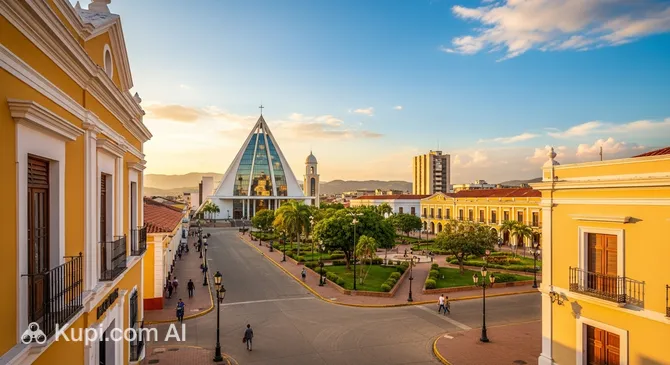
San Felipe is the charming administrative center of Yaracuy State, nestled in a picturesque and fertile valley in northern Venezuela. The city sits at an altitude of approximately 250 meters above sea level, which provides it with milder air compared to the coastal regions. As a major agricultural hub, San Felipe enchants visitors with its peaceful atmosphere, where life moves to the rhythm of the cocoa and coffee harvests.
With a population of about 220,000, the city serves as the commercial heart of the region. There is none of the hustle and bustle of massive metropolises here; instead, you can feel the authentic flavor of the Venezuelan province. Surrounded by low hills and sugarcane plantations, it offers travelers a chance to experience the country's real life, tucked away from the beaten tourist paths.
San Felipe. Illustration.
Source: Kupi.com AI
The city's rich heritage is inextricably linked to its complex history of development. Following a devastating earthquake in the early 19th century, the residents showed incredible resilience by rebuilding the city slightly north of its original location. Today, San Felipe is a place where historical memory meets modern commercial potential, creating the unique character of a regional hub.
We invite you to discover this quiet corner, where you can stroll through shaded streets, see the ruins of the "Venezuelan Pompeii," and experience the hospitality of the locals. San Felipe is an ideal destination for those seeking authenticity and a look behind the scenes of the country's agrarian sector.
Weather Overview
San Felipe is characterized by the typical tropical climate of the country's central part. Warmth and high humidity prevail here year-round. Average air temperatures usually range between +24°C and +27°C, reaching maximums around +31°C in the spring and autumn months. Thanks to its location in the valley and at a slight elevation, there is often a pleasant breeze that helps make the heat more manageable.
The rainy season in the region is quite pronounced, especially from May to November. June and October are traditionally considered the wettest months, when precipitation can occur almost daily. If you are planning a trip, keep in mind that the weather in the city can change quickly, with bright sunshine giving way to tropical downpours, which, however, are usually short-lived.
The driest and most comfortable period to visit the city lasts from December to March. During this time, humidity decreases and the number of sunny days increases, which is ideal for exploring ruins and walking through plantations. But even in the dry season, it is always worth having a light umbrella or raincoat with you, as the tropical nature of the Yaracuy valley loves to bring surprises.
Average monthly temperature
Average monthly precipitation
Interesting Facts
The city was founded in 1729 following a successful mission by Capuchin monks, but its modern appearance is the result of large-scale reconstruction. A terrible earthquake in 1812 almost completely wiped the former San Felipe off the face of the earth, forcing survivors to move the settlement further north.
San Felipe ranks 20th in population in the country and is the undisputed leader and economic core of the entire Yaracuy State.
The city holds the status of a Catholic diocese seat, underscoring its high spiritual and administrative significance in the region since its very founding.
The name of the historical park "San Felipe el Fuerte," which preserves the ruins of the old city, translates to "San Felipe the Strong"—a tribute to the resilience of its residents in the face of natural disaster.
The city covers an impressive 472 square kilometers, allowing it to harmoniously combine the dense development of the center with vast agricultural lands on the outskirts.
How to Get There
San Felipe's accessibility is due to its role as an important regional center. For many, the railroad remains the main and most convenient way to reach the city. The local station is integrated into the national network, allowing for a trip from Caracas or other major cities in about 4–6 hours. It is a wonderful opportunity to see the country's picturesque agricultural landscapes from a train window.
Station
Passenger traffic
Distance
Las Adjuntas
7
190 km
Libertador Simón Bolívar Terminal
6
198 km
For those who prefer road travel, modern highways lead to the city through the fertile valley. The distance from the national capital to San Felipe is about 300 km. It is worth noting that during peak hours, traffic congestion at the approaches to the center is possible, which can add 30 to 60 minutes to the total travel time. Traveling by bus or rental car is a popular choice thanks to the good condition of Yaracuy's main roads.
Regarding air travel, the city has its own San Felipe Airport (IATA: SNF). However, keep in mind that scheduled flights here are limited and often depend on the season or the current schedules of local carriers. Most tourists prefer ground transport, but it is worth checking detailed routes in advance for up-to-date flight information.
The city's main attraction is undoubtedly the "San Felipe el Fuerte" Historical Park. This unique open-air archaeological site is a place where time seems to have frozen in 1812. Walking through its grounds, tourists can see the ruins of ancient buildings destroyed by a powerful earthquake. Often called the "Venezuelan Pompeii," it leaves a deep impression with its silent grandeur and evidence of the former life of a colonial city.
In the center of modern San Felipe, its squares and religious buildings draw attention. As the city is the seat of a Catholic diocese, churches play a vital role in its architectural landscape. The Cathedral and smaller parish churches, linked to the heritage of the Capuchin mission, demonstrate the continuity of traditions and the spiritual significance of the city for the entire state of Yaracuy.
For those interested in industrial and transport aesthetics, the local railway station is an interesting site. It serves as an important landmark and a vital link for the region. While San Felipe is not overloaded with museums, the atmosphere of the administrative districts itself—with their functional architecture and green zones—allows visitors to feel the pulse of the main trading center in the Yaracuy River valley.
Local Cuisine
San Felipe's gastronomic scene is a true hymn to the bounty of the Yaracuy valley. Local cuisine is based on fresh products grown on the surrounding plantations. Be sure to try dishes based on corn and cocoa, as well as products that use local sugarcane. Traditional Venezuelan arepas are often prepared here with a special farmhouse flair, using the freshest ingredients straight from the fields.
Among beverages, local coffee is the undisputed leader, possessing a rich aroma and deep flavor, alongside strong ron (rum) produced in local distilleries from cane sugar. These drinks are the pride of the region and are often served as the perfect conclusion to a hearty meal in cozy city establishments.
The food culture in the city is simple and democratic. Most restaurants and snack bars are concentrated in the center, offering visitors home-cooked meals in a hospitable setting. You won't find high-end world-renowned restaurants here, but you will be able to enjoy the authentic taste of the Venezuelan province. Be sure to visit the local markets, where you can buy fresh fruit and sweets prepared according to old recipes using products from local sugar mills.
Travel Tips
Preparing for your trip to San Felipe will help you fully enjoy the atmosphere of this agricultural region. Here are some practical tips to make your journey comfortable and safe:
Clothing and Essentials: Choose light clothing made from natural fabrics, as it can be hot and humid in the valley. Be sure to bring comfortable shoes for walking around historical ruins. If you plan to visit churches, remember the modest dress code (covered shoulders and knees).
Transport: To get around the city, it is best to use official taxi services or buses departing from the railway station. Take into account potential traffic jams in the center during morning and evening hours.
Finances: Cash is the predominant method of payment in San Felipe, as the city's infrastructure is basic. Be sure to carry a sufficient supply of local currency in small bills for paying at markets and on transport.
Health and Safety: Stick to central areas, especially in the evening. Avoid remote outskirts without a local escort. Pharmacies can be found in the center, but it is better to bring specific medications with you.
Communication: The main language of communication is Spanish. English is not widely spoken, so it is worth learning a few basic phrases or having an offline translator handy. A SIM card is easiest to purchase at official points of sale in the center.
Local Etiquette: It is customary to greet people politely when entering shops or cafes. Local residents appreciate friendliness and a respectful attitude toward their work and traditions.
What to Avoid: Do not display expensive equipment or jewelry in crowded places. Also, avoid walking alone in unfamiliar areas after sunset.
Extra Tip: Be sure to try the local coffee at one of the markets—it is the best way to start your day in San Felipe!
May your introduction to San Felipe be filled only with pleasant discoveries and bright impressions of this unique Venezuelan region!
Entertainment & Nightlife
Entertainment in San Felipe is primarily quiet and traditional. Since the city is an important religious center, major cultural events are often tied to the church calendar and festivals organized by the Diocese of Yaracuy. These holidays are a great opportunity to see vibrant processions and learn about the folk customs of the local people in an atmosphere of collective inspiration.
The city's nightlife is not very pronounced. You can find a few local bars and cafes in the center where residents gather in the evenings, but for fans of loud clubs and massive parties, San Felipe might seem too quiet. Young people often head to larger coastal cities or the capital for more active night dynamics. Nonetheless, evening strolls through the central squares allow you to enjoy the cool air and local character.
For daytime recreation, walks through the Yaracuy River valley or visits to historical zones are best. The lack of large amusement parks is compensated for by the proximity to natural landscapes and plantations, where you can arrange a tour to see how cocoa or sugarcane is grown. This is an ideal option for those who prefer educational and leisurely outdoor activities.
Parks & Museums
The cultural and natural heritage of San Felipe is concentrated in several key spots, the main one being the "San Felipe el Fuerte" Historical Park. This site serves as an open-air museum, preserving fragments of paved streets and building foundations destroyed by the earthquake more than two centuries ago. For tourists, it is not just a walking area but a living page of history, allowing one to grasp the scale of the tragedy and the strength of the townspeople's spirit.
The city's greenery is directly related to its geographic position in the fertile valley. Although there are no giant landscaped parks typical of megacities, San Felipe is steeped in the greenery of the surrounding hills and plantations. The city's central squares are neatly landscaped and serve as a place of rest for residents during hot hours, creating a pleasant atmosphere for leisurely walks under the canopies of tropical trees.
Important cultural sites also include ancient churches and the buildings of former missions. The religious heritage of the Capuchins has left a noticeable mark on the architecture and interior decoration of the temples. These places are interesting not only for believers but for all history lovers, as it was around these spiritual centers that the city's life once began. Visiting the churches allows for a better understanding of the traditions and cultural roots of the residents of the Yaracuy valley.
Getting Around
The public transport system in San Felipe is primarily represented by a network of bus routes and minibuses. Buses connect residential areas with the city center and administrative institutions. This is the most affordable way to get around, though you should be prepared for transport to be crowded during peak hours and for schedules not always being strictly followed.
The railway station plays a special role, making San Felipe an important transit point. Trains connect the city with other regions of the country, which is convenient for long-distance travel, but this mode of transport is not used for moving specifically within city neighborhoods. Nevertheless, the proximity of the railroad tracks leaves its mark on the logistics of the entire city.
For faster and more comfortable travel around San Felipe, tourists most often choose taxis. A car can be hailed on the street or found at special stands in busy areas. In the central part of the city, many sites are within walking distance, so strolling through the center is an excellent alternative to transport, allowing for a better look at the architecture. Bike rentals and car-sharing are not yet developed here, so plan your routes with available buses or private carrier services in mind.
Accommodation
Accommodation options in San Felipe are primarily geared toward business travelers and those visiting the region for work. You won't find luxury five-star resorts here, but the city offers a decent selection of mid-range hotels and budget guesthouses. Many of them are concentrated in the central part of the city or in close proximity to the railway station, which is convenient for transit passengers.
For those planning to stay in the region longer, apartments and private guesthouses are excellent options. These are often chosen by specialists involved in the agricultural sector, so they are functional and provide a basic set of amenities. Staying in such places allows for a deeper immersion into the city's daily life and helps save on your budget.
It is recommended to book accommodation in advance, especially if your trip coincides with major regional holidays or agricultural fairs. As the tourism infrastructure is still developing, the number of online offers may be limited, so it is better to use verified services or contact hotels directly. Aim for the central districts—they are considered the most convenient in terms of safety and access to major shops and cafes.
Nearby Cities
Thanks to its location in the very center of the state, San Felipe is an excellent starting point for exploring the surroundings and neighboring regions. The fertile valley hides many interesting places that are ideal for day trips and getting to know the country's agricultural life.
One popular destination is the charming city of Montalbán, known for its picturesque views. It is also worth visiting Yaritagua—a large town located just a half-hour drive away, which plays an important role in the state's life. For those who miss the sea breeze, a trip to Tucacas is available, which opens the gates to beautiful coastal areas.
City
Population
Distance
Montalban
24 908
50 km
Yaritagua
140 256
51 km
Cabudare
70 578
66 km
Tinaquillo
110 000
67 km
Tucacas
13 901
68 km
In addition to major cities, the region around San Felipe offers many routes through agricultural areas and historical sites in Yaracuy State. We recommend not limiting yourself to the city center, but instead taking a small journey along the surrounding roads to fully appreciate the natural diversity and hospitality of this region.
Shopping & Souvenirs
Shopping in San Felipe is primarily an opportunity to purchase unique products of local agriculture. The city is not famous for huge shopping malls, but traditional markets flourish here, where you can find the full variety of the Yaracuy valley's bounty. Special attention should be paid to the stalls selling cocoa beans, natural coffee, and sugarcane products.
The main shopping streets are located in the city center, where small shops selling clothing, electronics, and daily necessities are concentrated. These zones are the heart of the state's commercial life, and it is here that you can feel the true rhythm of local daily life. Shops usually operate with a siesta break, so plan your purchases for the morning or evening hours.
As souvenirs from San Felipe, it is best to bring back locally produced items. Sets of high-quality Venezuelan cocoa, aromatic coffee beans, or traditional sweets from sugar mills make excellent gifts. You can also find folk crafts at the markets that reflect the region's rural character. Payments are most often made in cash, as terminals may not be available at all retail outlets.