Brazil

About

Brazil is a country of vast expanses and incredible cultural diversity, occupying almost half of South America. From the fiery rhythms of samba to the calm waters of the Amazon, Brazil offers a unique experience for every traveler. Its capital, Brasilia, is a masterpiece of modernist architecture, designed from scratch in the mid-20th century.
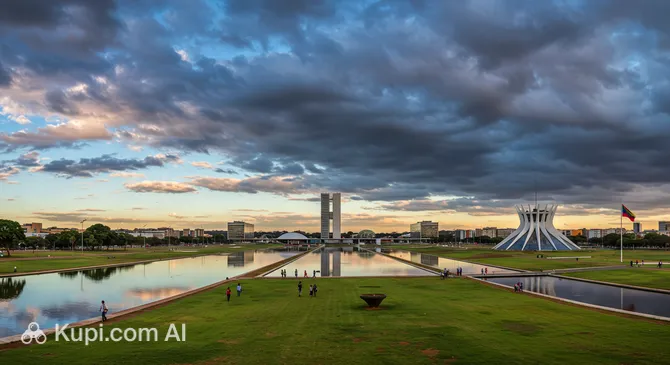
Illustration.
Source: Kupi.com AI

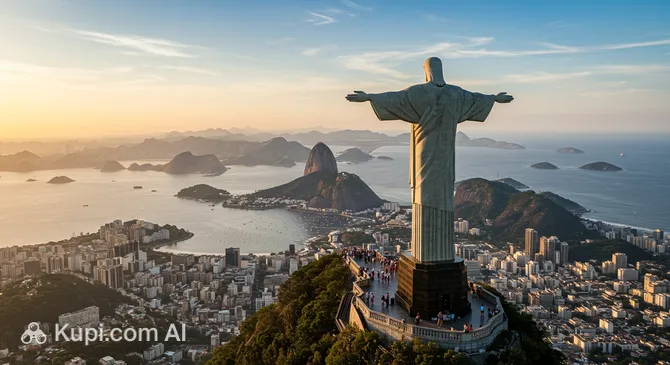
Brazil's nature is breathtaking: here you will find the famous Amazon rainforest, the impressive Iguazu Falls, and thousands of kilometers of magnificent beaches. The country is famous for its warm tropical and subtropical climate, making it an attractive destination for vacation all year round. Cities such as Rio de Janeiro are world-renowned for their beauty and iconic landmarks, including the statue of Christ the Redeemer on Corcovado Mountain.

The atmosphere of Brazil is a celebration of life, which is especially vivid during the famous Carnival. Football here is not just a sport, but a true religion that unites the nation. The hospitality of the locals, a rich history, a mix of cultures, and stunning cuisine make Brazil one of the most exciting and memorable travel destinations in the world.

Currency

The national currency of Brazil is the Brazilian Real (international code BRL). Real banknotes feature vibrant designs and often depict representatives of the country's rich fauna. For example, on the 50 real bill, you can see a jaguar, and on the 100 real bill, a dusky grouper (garoupa). A 200 real banknote featuring the maned wolf was introduced relatively recently. Coins are also in circulation and are used for small transactions.

It is recommended to exchange currency at official banks or exchange offices known as "casas de câmbio." Try to avoid exchanging money with street changers, as this can be risky. At airports, the exchange rate is often less favorable than in the city. Credit cards, especially Visa and Mastercard, are widely accepted in most cities, tourist centers, hotels, and restaurants. However, it is always useful to have some cash in reals for small purchases, public transport fares, or when visiting markets and remote areas where card terminals may be unavailable.

Visa Requirements

When planning a trip to Brazil, it is important to check visa requirements in advance. For citizens of many countries, including European Union countries, a visa-free regime often applies for tourist trips. However, for citizens of other states, for example, the USA or some CIS countries, a tourist visa may be required. Usually, it is arranged in advance through the Brazilian embassy or consulate in your country. Regardless of visa requirements, to enter Brazil you will definitely need a valid passport with an expiration date covering the entire period of your stay. It is also recommended to have return tickets, proof of hotel reservation, and medical insurance, although these are not always strictly checked.

Visa rules can change, so it is highly recommended to check the most up-to-date information on the official website of the Brazilian embassy or consulate in your country or on the visa center's website before your trip. This will help avoid misunderstandings and ensure a smooth start to your journey to this amazing country.

We'll let you know if you need a visa

Enter your destination or
Your nationality
Destination

Timezones

When planning a trip across Brazil, it is important to remember that this vast country spans four time zones. They range from UTC-2 on Atlantic islands like Fernando de Noronha to UTC-5 in the westernmost states, such as Acre. The official time of the capital, Brasilia, and most densely populated coastal areas, including Rio de Janeiro and Sao Paulo, corresponds to UTC-3 (BRT – Brasília Time).

Such a variety of time zones means that when moving across the country, especially over long distances from east to west, tourists need to consider the possible time difference. This is particularly relevant when planning domestic flights, bus trips, and connections to avoid misunderstandings and delays. Always check the local time at your destination.

Getting There

Brazil is a huge country, and the most common way to get here is, of course, by air. The country has many international airports, the main ones often being the air hubs of Sao Paulo and Rio de Janeiro, which receive flights from all over the world. There is also an international airport in the capital, Brasilia. Direct flights or convenient connections are available from North and South America, Europe, as well as some countries in Asia and Africa.

Given Brazil's long land borders with ten countries, land travel is also an option, especially from neighboring South American states. International bus routes connect Brazil with countries such as Argentina, Paraguay, Uruguay, and Bolivia. Rail connections for international travel are less developed.

The sea route to Brazil is mainly represented by cruise ships, which often include Brazilian ports in their South American itineraries, especially during the peak tourist season. Regardless of the chosen mode of travel, it is highly recommended to book tickets well in advance, especially if your trip coincides with major holidays, such as Carnival, or the high season. This will not only help you save money but also guarantee seat availability.

AirportCityIATA
Sao Paulo-Guarulhos International AirportSao PauloGRU
Sao Paulo/Congonhas AirportSao PauloCGH
Brasilia International AirportBrasiliaBSB
Galeão Antonio Carlos Jobim International AirportRio de JaneiroGIG
Viracopos AirportSao PauloVCP

Brazil is a country of incredible diversity, offering tourists a kaleidoscope of experiences, from bustling metropolises to serene beach resorts and charming mountain towns. Here, everyone will find a destination to their liking, whether it is seeking adventure, cultural enrichment, or a relaxing vacation.

Illustration.
Source: Kupi.com AI

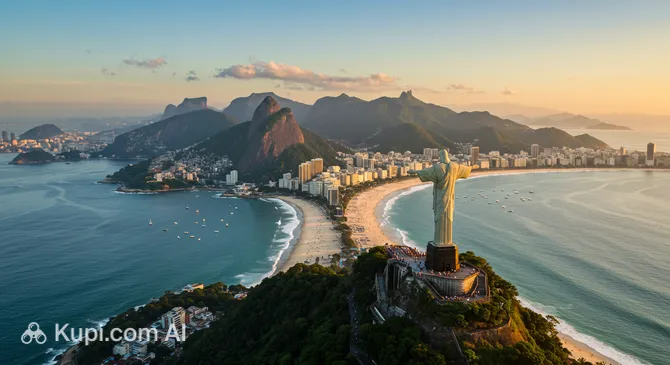
One of the most famous and attractive cities in the world is undoubtedly Rio de Janeiro. This city lures tourists with its legendary Copacabana and Ipanema beaches, the world-famous statue of Christ the Redeemer on Corcovado Mountain, and, of course, the unforgettable Carnival. No less colorful is Salvador, the first capital of Brazil and the heart of Afro-Brazilian culture. Its historical center with bright colonial architecture is a UNESCO World Heritage site and attracts visitors with its authenticity and musical rhythms.

For those who prefer a cooler climate and a European atmosphere, Gramado, located in the mountains in the south of the country, is an excellent choice. This city is known for its chocolate factories, Christmas festivals, and picturesque landscapes reminiscent of Alpine villages. Mountain lovers will also appreciate Campos do Jordão, often called the "Brazilian Switzerland" for its Alpine-style architecture and mild climate. And, of course, one cannot fail to mention the capital—Brasilia, a city designed from scratch that amazes with its futuristic 20th-century architecture.

Top Attractions

Brazil is a country of carnivals, football, and incredible nature, offering tourists many unique attractions. From world-famous monuments to amazing natural parks—there is something for everyone here. Here are just a few places to include in your itinerary.

One of the most recognizable symbols not only of Rio de Janeiro but of all Brazil is the statue of Christ the Redeemer. This majestic monument, towering on Corcovado Mountain, impresses with its size and the panoramic views of the city, Guanabara Bay, and Sugarloaf Mountain opening from its base. Visiting this landmark will leave an unforgettable impression.

Illustration.
Source: Kupi.com AI

Traveller photos:

For fans of football and sports history, the legendary Maracanã Stadium in Rio de Janeiro is a must-visit. This arena has witnessed many historic matches and records. Even if you are not a die-hard fan, a tour of the stadium will allow you to touch Brazil's football culture and feel its grand atmosphere.

Illustration.
Source: Kupi.com AI

Traveller photos:

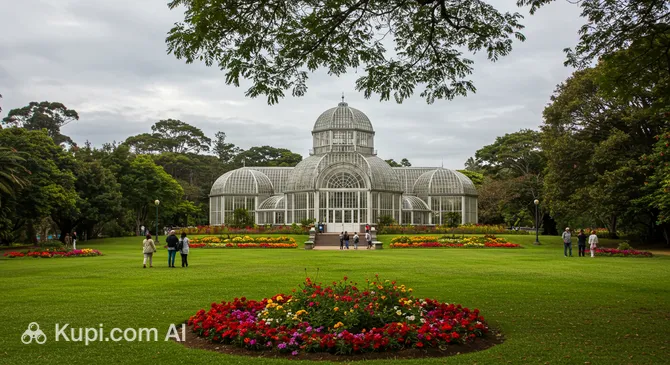
If you are looking for peace and natural beauty, head to the Curitiba Botanical Garden. This magnificent garden, created in the style of French gardens, is famous for its elegant Art Nouveau greenhouse, which houses a collection of plants from the Atlantic Forest. A walk through its well-kept alleys and exploring the diversity of flora will be a real pleasure.

Illustration.
Source: Kupi.com AI

Traveller photos:

Best Time to Visit

Brazil is a country of enormous proportions, and the climate varies greatly depending on the region and the time of year. In general, high season falls during the Brazilian summer (December to March), as well as in July, when locals have winter holidays. During this time, the weather along most of the coast and in popular tourist centers like Rio de Janeiro is typically hot and sunny, which is perfect for beach holidays and outdoor activities. However, be prepared for large crowds of tourists and, as a result, higher prices for accommodation and services.

Low season, or shoulder season, covers the periods from April to June and from August to November. During this time, there are significantly fewer tourists, and prices are more pleasant. The weather can be milder and more comfortable for excursions, especially in the south of the country. A downside can be unstable weather in some regions; for example, in the Amazon, this may be the rainy season, while in the south, there may be cooler days. The most important event that attracts millions of tourists and radically changes the atmosphere is the famous Brazilian Carnival, usually held in February or March. If your goal is to attend this spectacular show, it is necessary to plan your trip and book everything well in advance.

Given the diversity of Brazil's climate zones—from equatorial in the north to subtropical in the south—it is highly recommended to check the weather conditions for the specific region you plan to visit. For example, the northeast of the country, including cities such as Salvador, enjoys sun almost year-round, while in the southern states, it can be quite cool in winter. When planning a trip to such a multifaceted land as Brazil, it is always useful to check the forecast and choose the time most suitable for your goals, whether it is exploring the jungle, relaxing on the beach, or immersing yourself in the culture of vibrant metropolises.

Traditions

Brazilians are famous for their friendliness and openness. Handshakes are common when meeting, often accompanied by eye contact. Among friends and acquaintances, hugs and kisses on the cheek are common (the number may vary depending on the region). Hospitality is an important part of the culture here. If you are invited to a home, a small token of appreciation, such as flowers, chocolate, or a drink, will be received with gratitude. In communication, Brazilians are quite expressive and often use gestures; however, it is worth remembering that the common "OK" gesture (a circle made with the thumb and index finger) in Brazil can have an offensive meaning.

In everyday life, the dress code in Brazil is quite casual, especially in beach areas. Nevertheless, when visiting churches and other religious sites, it is worth choosing more modest clothing that covers shoulders and knees. At the table, cutlery is usually used for most dishes, including those eaten with hands in other cultures. Try to keep your hands in sight, not under the table. To avoid awkward situations, refrain from public displays of impatience or irritation, as this is considered impolite. One of the most vibrant cultural events reflecting the soul of the country is, of course, Carnival—a spectacular celebration with music, dancing, and colorful parades held before Lent.

By showing respect for local customs, friendliness, and a little patience, you will easily find common ground with Brazilians and get many positive impressions from traveling through this amazing country. A smile and openness will always help establish contact and make you feel like a welcome guest.

Entertainment

Brazil is a country where everyone will find entertainment to their liking, from fiery carnivals to peaceful relaxation in nature. Fans of active recreation can enjoy surfing on famous beaches, diving in crystal-clear waters, or embarking on exciting expeditions through the Amazon jungle. The country also offers rich opportunities for hiking and exploring unique ecosystems.

Brazil's cultural life is intense and diverse: from world-famous music festivals and dance shows demonstrating samba and capoeira to numerous museums, galleries, and theaters, especially in cities like Rio de Janeiro and Salvador. As evening falls, these cities come alive, offering a vibrant nightlife with many bars, clubs, and restaurants where you can enjoy local cuisine to the sound of live music.

For those traveling as a family, Brazil offers many options: from visiting theme parks and water parks to getting to know the amazing wildlife in national parks and reserves. Shopping in Brazil is a special pleasure. Tourists often bring home famous Brazilian coffee, precious stones, leather goods, hammocks, and colorful handmade souvenirs, which can be found both in colorful street markets and modern shopping malls.

Currency rates

Planning a trip? Wonderful! To make sure the financial side of your journey holds no surprises, it's worth remembering that exchange rates are constantly changing. That's why we strongly recommend keeping an eye on current rates both before departure and throughout your trip. To help with that, you can use the data provided below — we monitor exchange rates 24/7 and strive to provide the most up-to-date information.

BRL exchange rate for 13/08/2026

1 AED
~ 1.40 BRL
71.12 AMD
~ 1 BRL
1 AUD
~ 3.63 BRL
1 AZN
~ 3.03 BRL
1 BYN
~ 1.73 BRL
1 CAD
~ 3.69 BRL
1 EUR
~ 5.93 BRL
1 GBP
~ 6.95 BRL
61.44 HUF
~ 1 BRL
18.54 INR
~ 1 BRL
17.00 KGS
~ 1 BRL
275.37 KRW
~ 1 BRL
90.55 KZT
~ 1 BRL
1 PLN
~ 1.38 BRL
16.09 RUB
~ 1 BRL
1 SAR
~ 1.37 BRL
1 SGD
~ 4.02 BRL
9.28 TRY
~ 1 BRL
8.71 UAH
~ 1 BRL
1 USD
~ 5.14 BRL
2318.17 UZS
~ 1 BRL

Reached the bottom of the page?

Looks like you know this route inside out

We use cookies and services to collect user information. This is essential for the functioning of the site and for marketing purposes. You can find out more in .