Peru

About

Peru, an amazing country in western South America, beckons travelers from all over the world with its ancient mysteries, rich cultural heritage, and incredible variety of natural landscapes. This is a place where history comes alive at every step, and the majestic Andes stand alongside the mysterious Amazon jungles and the picturesque Pacific coast, offering unique experiences for every guest.
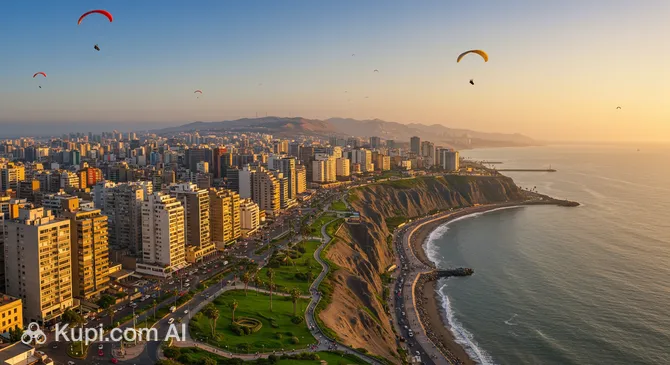
Illustration.
Source: Kupi.com AI

The capital of Peru is Lima – a dynamic city where colonial architecture harmoniously blends with modernity. However, the true soul of the country is revealed through the heritage of the powerful Inca Empire, especially in the legendary lost city of Machu Picchu and the ancient Inca capital – Cusco. Peru offers a journey through various climatic zones: from the arid coastal deserts to the humid tropical forests and high-altitude plateaus. The country's atmosphere is steeped in the mysticism of ancient civilizations and the warm hospitality of the locals, who are ready to share their unique culture and traditions.

Currency

The national currency of Peru is the Peruvian Sol (PEN). Banknotes and coins are decorated with images of prominent Peruvian figures, as well as representatives of the country's flora and fauna. On the bills, you can see portraits of famous personalities such as historian Jorge Basadre Grohmann or singer Chabuca Granda, as well as iconic sites like Machu Picchu.

You can exchange currency at banks, official exchange offices (casas de cambio), or at some hotels. It is recommended to avoid exchanging money with street money changers due to the risk of fraud or receiving counterfeit notes. Credit cards (Visa, MasterCard, American Express) are widely accepted in most hotels, restaurants, and large stores in tourist centers and major cities like Lima. However, in smaller towns, at markets, or in small establishments, it is preferable to carry cash.

Visa Requirements

When planning a trip to Peru, it is important to check the visa requirements in advance. For citizens of many countries, including the European Union, the USA, and some CIS countries, a visa-free regime usually applies for tourist trips for a certain period. However, regardless of citizenship, you will need a valid passport to enter the country, and its validity must cover the entire period of your stay. It is also recommended to have return tickets, proof of hotel booking, and travel insurance with you, although these may not always be checked.

If a visa is still necessary for your country, it will likely be a tourist visa, which should be applied for in advance at the embassy or consulate of Peru in your country of residence. As visa rules can change, we highly recommend checking the most up-to-date information on the official websites of embassies or visa centers of Peru before your trip. This will help you avoid unpleasant surprises and make your journey as comfortable as possible.

We'll let you know if you need a visa

Enter your destination or
Your nationality
Destination

Timezones

When planning a trip to Peru, you won't have to worry about changing time zones within the country. A single time zone operates throughout the entire territory of Peru – UTC-5. This means that the time in Lima will be the same as in Cusco, Arequipa, or any other Peruvian city.

The absence of multiple time zones significantly simplifies the planning of internal transfers and excursions, allowing you to focus on enjoying the rich culture and stunning landscapes of this amazing country.

Getting There

Getting to Peru, a country with a rich history and incredible natural landscapes, is possible in several ways, but the most common and convenient is by air. The main gateway to the country is the Jorge Chávez International Airport in Lima, the capital of Peru. Direct flights are operated here from many major cities in Europe, North and South America. From other regions of the world, convenient connecting flights are usually available. In addition to the capital's airport, some other cities also receive international flights, which can be convenient for starting a journey through a specific region of the country.

For those who prefer land travel or are combining a visit to Peru with a trip to neighboring countries, there is the possibility of crossing the border by bus. Peru shares land borders with Ecuador, Colombia, Brazil, Bolivia, and Chile, and international buses run between them. This can be a more budget-friendly, albeit longer, option. Rail transport in Peru is mainly developed for internal tourist routes, such as to Machu Picchu, but it is not a primary method of international travel. Sea transport, in the form of cruise ships, occasionally docks at Peruvian ports such as Callao (the port of Lima), but this is more often part of a large cruise than a regular way to reach the country.

When planning a trip to Peru, it is recommended to book flights and accommodation in advance, especially if your trip coincides with the peak tourist season (usually June to August, as well as December-January). Also, do not forget to check the visa requirements for citizens of your country in advance to ensure your journey goes smoothly and without surprises.

AirportCityIATA
Jorge Chavez International AirportLimaLIM
Alejandro Velasco AsteteCuscoCUZ
Rodriguez Ballon International AirportArequipaAQP
Cad. FAP Guillermo del Castillo Paredes AirportTarapotoTPP
Cap. FAP Guillermo Concha Iberico International AirportPiuraPIU

Peru is a country of amazing contrasts, offering travelers both an immersion into ancient history and culture and an introduction to vibrant modern cities and unique natural landscapes. One of the main centers of attraction is the capital – Lima. This dynamic metropolis on the shores of the Pacific Ocean is famous for its colonial architecture, excellent museums, world-renowned gastronomy, and lively cultural life.

Illustration.
Source: Kupi.com AI

No less important a destination for any traveler is Cusco – the ancient capital of the Inca Empire, located high in the Andes. This charming city serves as the starting point for exploring the Sacred Valley and, of course, for the journey to the legendary Machu Picchu – the lost city of the Incas, one of the New Seven Wonders of the World, which amazes with its grandeur and mystery.

For those who appreciate colonial heritage and impressive landscapes, Arequipa is a must-visit, known as the "White City" due to its buildings made of light sillar volcanic stone. The city enchants with its beautiful squares and proximity to canyons. And if you are looking for completely different impressions, then Iquitos, the largest city in the Peruvian Amazon, which can only be reached by air or river, will open the gates to a world of incredible rainforest biodiversity.

Top Attractions

Peru is a country with an incredibly rich history and culture, offering travelers an amazing variety of attractions. From ancient civilizations to colonial heritage and natural wonders – there is something for everyone here. Let's get to know some of the most iconic places that should not be missed during your journey through this amazing country.

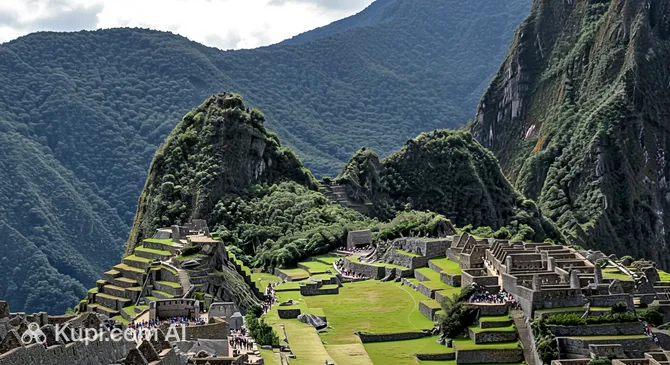
One of the main jewels of Peru is undoubtedly Machu Picchu. This lost city of the Incas, recognized as one of the New Seven Wonders of the World, impresses with its mysterious atmosphere, striking architecture, and breathtaking views of the surrounding mountains. A visit to Machu Picchu is a true immersion into the history of an ancient civilization.

Illustration.
Source: Kupi.com AI

Traveller photos:

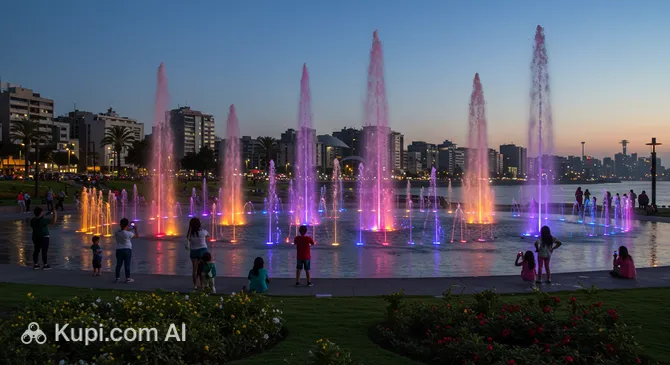
In the country's capital, Lima, it is definitely worth visiting the Magic Water Circuit. This complex, listed in the Guinness World Records as the world's largest fountain complex in a public park, offers unforgettable evening shows with music, light, and water extravaganzas. It is a wonderful place for relaxation and vivid impressions.

Illustration.
Source: Kupi.com AI

Traveller photos:

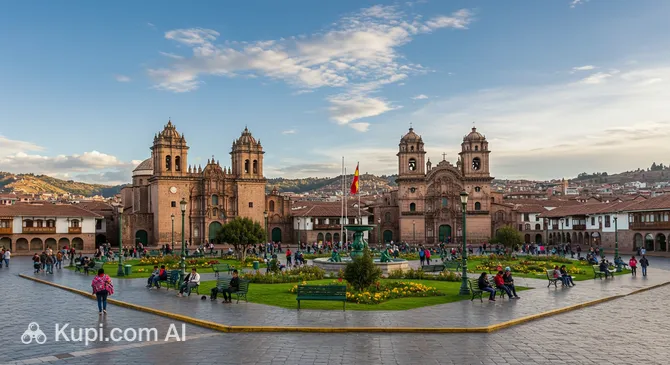
One cannot overlook the Main Square of Cusco, the historical heart of the former capital of the powerful Inca Empire. The square is surrounded by majestic colonial churches and buildings with carved wooden balconies, many of which are built on the foundations of Inca palaces. Here you can feel a unique weaving of two cultures.

Illustration.
Source: Kupi.com AI

Traveller photos:

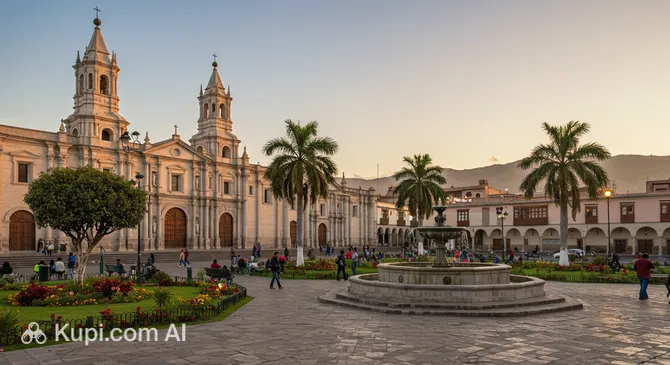
Another iconic square is the Plaza de Armas of Arequipa, the central square of the "White City". Arequipa is famous for its unique architecture made of white sillar volcanic stone, and the Plaza de Armas is a magnificent example of it. The main decoration of the square is the impressive Cathedral and elegant arcades.

Illustration.
Source: Kupi.com AI

Traveller photos:

Best Time to Visit

Peru is a country with an incredible variety of climate zones, so choosing the best time for your trip largely depends on your plans and the regions you wish to visit. In general, the high (dry) season lasts from May to October. This is the ideal period for exploring the Andes, including the famous Machu Picchu and the ancient Inca capital Cusco, as the days are usually sunny and the skies are clear, which is especially important for trekking. It is in June that the colorful Inti Raymi (Festival of the Sun) takes place in Cusco, attracting many visitors. The downsides of this time are the large number of tourists and, as a result, higher prices for flights and accommodation, so you should take care of booking in advance.

The low (wet) season falls between November and April. During this time, it often rains in the mountain regions and the Amazon, which can make some routes, such as the Inca Trail, less accessible (it traditionally closes for maintenance in February). However, on the coast, for example in Lima, the weather can be warm and sunny. The advantages of the low season are fewer travelers, more affordable prices, and the chance to see the Andes covered in emerald green. It is important to keep in mind that Peru offers three distinct climatic regions: the arid coast (costa), the temperate Andes (sierra), and the humid Amazon jungle (selva), so always check the forecast for specific locations on your itinerary before your trip to ensure your journey is as comfortable as possible.

Traditions

Peruvians are known for their hospitality and friendliness. When meeting and greeting, a handshake accompanied by direct eye contact is standard. In more informal settings between well-acquainted people or when being introduced (especially between women or a man and a woman), a light kiss on the right cheek is common. If you are invited to a home, a small gift such as sweets, fruit, or a souvenir from your country will be much appreciated. Interestingly, punctuality in Peru is perceived quite flexibly, and being 15-30 minutes late for an informal meeting is usually not considered a problem. In communication, try to avoid pointing at people or objects with your index finger – this can be perceived as impolite; it is better to use an open-palm gesture or a light nod of the head in the required direction. Also, always ask for permission before photographing local residents, especially in rural areas and representatives of indigenous communities.

When visiting churches and other religious sites, it is important to follow a dress code: clothing should cover the shoulders and knees. Otherwise, there are no strict rules, although in expensive restaurants and at official events in major cities like Lima, locals prefer a more elegant style. At the table, it is customary to keep your hands in sight (wrists can rest on the edge of the table), and it is considered polite to try all the dishes offered to you. Don't be surprised if the hosts insistently offer seconds – it is an expression of hospitality. Of the national holidays, the Fiestas Patrias (Independence Days) on July 28 and 29 are celebrated with particular brightness and scale, with parades and public festivities taking place across the country. Also, an iconic event reflecting the rich cultural heritage is Inti Raymi (Festival of the Sun) in Cusco, a colorful reconstruction of an ancient Inca ceremony that takes place in June. Showing respect for local customs and traditions will not only help you avoid awkward situations but will also open the hearts of Peruvians, making your journey through Peru unforgettable.

Entertainment

Peru offers an incredible variety of entertainment to satisfy the tastes of any traveler. For fans of active recreation and sports, the country opens up endless possibilities: from exciting trekking routes through the majestic Andes and surfing on the Pacific coast to exploring the mysterious Amazon jungles. Peru's cultural life is no less rich: numerous museums will introduce you to the vast heritage of ancient civilizations and the colonial era, while in major cities like the capital Lima, you can visit theaters, art galleries, and enjoy performances by musicians.

As darkness falls, Peruvian cities come to life. Lima and Cusco are particularly famous for their nightlife, where you will find many bars with exotic cocktails, restaurants offering local delicacies, and clubs with upbeat music. For shopping enthusiasts, Peru is a true paradise. Here you can purchase unique items made from alpaca wool, colorful handmade textiles, original ceramics, and elegant silver jewelry. Be sure to visit local markets and craft shops to find authentic souvenirs.

Peru also offers interesting options for family vacations. While there aren't as many large theme parks as in some other countries, young travelers will be delighted to meet exotic animals in nature reserves, visit interactive museums, or simply stroll through picturesque parks and squares. Overall, Peru is a country where everyone will find something to their liking, whether it's adventure in the heart of nature, immersion in ancient history, or an introduction to a vibrant and unique modern culture.

Currency rates

Planning a trip? Wonderful! To make sure the financial side of your journey holds no surprises, it's worth remembering that exchange rates are constantly changing. That's why we strongly recommend keeping an eye on current rates both before departure and throughout your trip. To help with that, you can use the data provided below — we monitor exchange rates 24/7 and strive to provide the most up-to-date information.

PEN exchange rate for 13/08/2026

1.09 AED
~ 1 PEN
108.95 AMD
~ 1 PEN
1 AUD
~ 2.37 PEN
1 AZN
~ 1.98 PEN
1 BYN
~ 1.13 PEN
1 CAD
~ 2.41 PEN
1 EUR
~ 3.87 PEN
1 GBP
~ 4.54 PEN
94.11 HUF
~ 1 PEN
28.40 INR
~ 1 PEN
26.04 KGS
~ 1 PEN
421.77 KRW
~ 1 PEN
138.71 KZT
~ 1 PEN
1.11 PLN
~ 1 PEN
24.64 RUB
~ 1 PEN
1.12 SAR
~ 1 PEN
1 SGD
~ 2.62 PEN
14.22 TRY
~ 1 PEN
13.34 UAH
~ 1 PEN
1 USD
~ 3.36 PEN
3550.73 UZS
~ 1 PEN

Reached the bottom of the page?

Looks like you know this route inside out

We use cookies and services to collect user information. This is essential for the functioning of the site and for marketing purposes. You can find out more in .