Support

Suriname

Cities in the country

About

Suriname, the smallest country by land area in South America, is an amazing combination of untouched nature and rich cultural heritage. Located on the northeastern coast of the continent, between Guyana and French Guiana, Suriname offers travelers a unique experience that differs from most South American destinations. Its capital, Paramaribo, with its distinctive wooden colonial architecture listed as a UNESCO World Heritage site, is a living testament to the Dutch past and a vibrant center of the country's multi-ethnic culture.
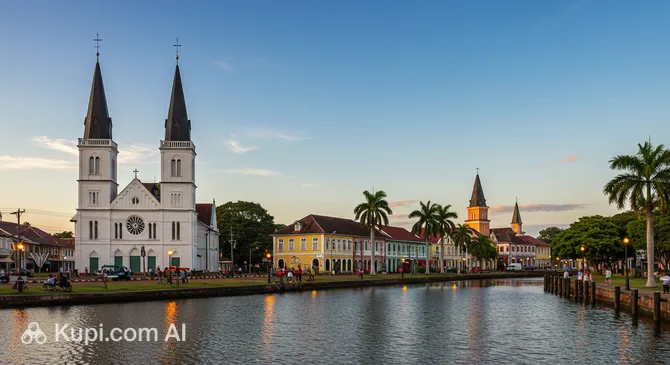
Illustration.
Source: Kupi.com AI

More than 80% of Suriname's territory is covered by pristine Amazon rainforest, making it one of the "greenest" nations in the world and a true paradise for ecotourism. Exciting adventures await you here: from exploring dense jungles and spotting exotic animals like jaguars, sloths, and numerous bird species, to rafting down mighty rivers and visiting impressive waterfalls. The climate in Suriname is tropical, hot and humid year-round, which contributes to the abundance of flora and fauna. Cities like Nieuw Amsterdam, located at the mouth of the Suriname River, offer a glimpse into the country's history and culture beyond the capital.

Suriname is a country of contrasts and discoveries, where Indigenous, African, Indian, Javanese, Chinese, and European traditions are woven into a unique pattern. This destination is for those seeking authentic experiences, untouched nature, and the opportunity to immerse themselves in an original culture far from mass tourist routes. Friendly locals, delicious local cuisine, and an atmosphere of the unknown await everyone who decides to discover this hidden gem of South America.

Currency

The national currency of Suriname is the Surinamese dollar (SRD). Surinamese dollar banknotes feature colorful designs, often depicting local flora, fauna, and the country's iconic architectural landmarks. Coins are also in circulation and are used for small transactions.

You can exchange foreign currency for Surinamese dollars at banks and official exchange offices, which are usually located in the capital, Paramaribo, and other major cities. It is recommended to avoid exchanging money with street changers due to the risk of fraud or unfavorable rates. Credit cards (mostly Visa and Mastercard) are accepted in large hotels, restaurants, and some shops, especially in tourist areas. Nevertheless, for daily expenses, shopping at markets, or in smaller towns, it is always better to carry a sufficient amount of cash with you.

Visa Requirements

When planning a trip to Suriname, it is important to check the visa requirements in advance. For citizens of most countries, including EU countries, the USA, and the CIS, a visa or an electronic entry permit (E-Visa/E-Tourist Card) is generally required to enter Suriname. A tourist visa can usually be applied for online via the official Suriname visa portal or, in some cases, through the country's embassies and consulates. To enter, you will need a valid passport, which usually must be valid for more than six months from the time of your intended departure from the country. Return tickets, proof of hotel reservation, and medical insurance may also be required.

Visa rules are subject to change, so it is strongly recommended to check for updated information on the official website of the Ministry of Foreign Affairs of Suriname, or at the Suriname embassy or consulate in your country of residence before your trip. This will help avoid unforeseen complications when crossing the border and make your trip more peaceful.

We'll let you know if you need a visa

Enter your destination or
Your nationality
Destination

Timezones

When planning a trip to Suriname, you don't have to worry about changing time zones within the country. Suriname operates on a single time zone throughout its territory—Suriname Time (SRT), which corresponds to UTC-3. This means the time in the capital, Paramaribo, and in any other corner of the country will be the same.

Getting There

The easiest way to reach Suriname is by air. The country has international airports, the main one being Zanderij International Airport (PBM), which serves the capital, Paramaribo. Regular flights connect Suriname with some European countries (notably the Netherlands), the Caribbean, and North and South America. Direct flights are not available from all regions, but convenient connections can usually be found through major international hubs.

Overland travel to Suriname is also possible, though it requires more careful planning. The country borders Guyana to the west, French Guiana to the east, and Brazil to the south. Border crossings are possible by car or bus, often involving ferry crossings over border rivers. For example, you can enter Suriname from French Guiana by ferry across the Maroni River. As for sea travel, it is mainly represented by freight shipping. While some cruise ships may include Paramaribo in their itineraries, this is not a regular method of arrival for most tourists.

AirportCityIATA
Zanderij International AirportParamariboPBM

Suriname offers travelers an amazing variety of experiences, from immersing yourself in colonial history to exploring the Amazonian wilderness. The main magnet for tourists is certainly the capital, Paramaribo. This city, whose historical center is a UNESCO World Heritage site, impresses with its unique wooden architecture, where European styles blend harmoniously with local traditions. You can spend hours wandering through old streets, admiring colonial mansions, churches, and synagogues.

Illustration.
Source: Kupi.com AI

Beyond the capital, Suriname boasts other interesting locations. For instance, the city of Nieuw Nickerie, located in the west of the country, is an important agricultural center and the gateway to the Bigi Pan Nature Reserve, known for its rich birdlife. For those seeking adventure and wanting to get closer to nature, Brokopondo is an interesting destination, home to the reservoir of the same name surrounded by tropical forests. History buffs will also appreciate Nieuw Amsterdam with its old fort, which once protected plantations along the Suriname River. Each of these destinations offers its own unique perspective on the culture and nature of Suriname.

Top Attractions

Suriname is ready to surprise its guests not only with natural beauty but also with unique places where you can get to know its culture more deeply. Among these notable spots are gastronomic oases that have become true attractions for many travelers.

One such place to immerse yourself in local flavor is the restaurant Las Tias. This is not just a place for dinner, but a real opportunity to get acquainted with authentic Surinamese cuisine. Visitors value it for traditional dishes prepared with heart and a welcoming atmosphere that makes every visit special.

Illustration.
Source: Kupi.com AI

Traveller photos:

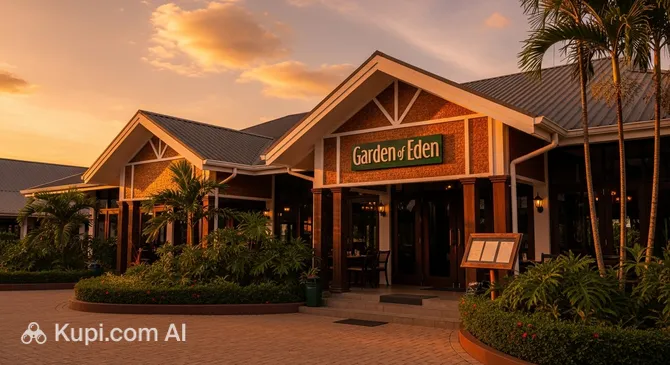
Another interesting place attracting both locals and tourists is the Garden of Eden. This restaurant is famous not only for its exquisite dishes reflecting the multi-ethnic heritage of Suriname but also for its unique atmosphere. The name speaks for itself—here you can relax surrounded by greenery and enjoy the tranquility while tasting culinary masterpieces.

Illustration.
Source: Kupi.com AI

Traveller photos:

Best Time to Visit

When planning a trip to Suriname, it is important to consider its tropical climate with alternating dry and wet seasons. The high season, most favorable for a visit, falls during two dry periods: the short one (from early February to late April) and the long one (from mid-August to early December). During these times, sunny weather prevails, rain is rare, and humidity levels are more comfortable. These are ideal conditions for exploring the country's rich nature: hiking through tropical forests, visiting national parks and reserves, and observing the unique phenomenon of sea turtles nesting on the coast from February to August. While Suriname is not a mass tourism destination, it can be a bit busier during the dry seasons, especially during local festivals such as the colorful Hindu holiday Phagwa (Holi), celebrated in the spring.

The low season in Suriname coincides with two rainy periods: the long one (from late April to mid-August) and the short one (from early December to early February). These times are characterized by frequent, sometimes heavy, but usually short-lived downpours and high humidity. Traveling during the rainy season has its advantages: nature appears in all its lush greenery, rivers and waterfalls become particularly full, there are significantly fewer tourists, and accommodation prices may be lower. However, you should take into account that some roads, especially those leading deep into the country, can be washed out, and mosquito activity increases. Despite possible weather fluctuations, it is in December that the famous Surifesta New Year's festival takes place in Paramaribo, attracting many guests. Overall, the climate is fairly uniform across the country, but it is always recommended to check current weather conditions for trips to remote jungle areas.

Traditions

Suriname is a country with an amazing cultural kaleidoscope, which is clearly manifested in everyday communication and traditions. Greetings here usually include a friendly handshake and a smile; direct eye contact is important but should not be made too intense. Local residents are known for their genuine hospitality. If you are invited to visit, a small gift, such as fruit or sweets, is a pleasant gesture of appreciation, although not a strict requirement. In communication, try to be patient and respectful, especially towards the older generation. It is also always polite to ask permission before taking photos of people.

Regarding clothing, a fairly casual style prevails in Suriname; however, when visiting religious sites—whether mosques, Hindu temples, or churches—it is important to show respect and choose modest clothing that covers shoulders and knees. There are no strict etiquette rules at the table, but it is customary to wait until the hosts begin the meal. In some communities, such as Indian or Javanese, it is customary to use the right hand when eating without cutlery. To better understand the spirit of the country, look out for significant holidays like Independence Day (Srefidensi Dey), celebrated on November 25th with parades and public festivities, and the colorful spring festival of Holi (Phagwa), which unites people of all cultures. These events particularly highlight the multi-ethnic character of the capital Paramaribo and all of Suriname.

Entertainment

Suriname offers travelers a unique range of entertainment, primarily related to its rich nature and multi-ethnic culture. Active recreation enthusiasts will find exciting opportunities to explore pristine tropical forests: hikes of various difficulty levels, river rafting, and observing exotic flora and fauna in numerous nature reserves. While there are no classic ski resorts or surfing spots here, nature adventures more than make up for it.

The country's cultural life is most vibrantly presented in its capital, Paramaribo. Here, you can visit small museums detailing Suriname's history and ethnic diversity, and get acquainted with colonial architecture and local art. For those interested in shopping, local markets and craft shops offer authentic souvenirs: woodwork, traditional textiles, handmade jewelry, and exotic spices that reflect the country's rich cultural heritage.

Nightlife in Suriname is quite relaxed and mainly concentrated in Paramaribo, where you can find cozy restaurants serving Creole, Indian, Indonesian, and other cuisines, as well as bars with live music or a relaxing atmosphere. For family vacations, Suriname primarily offers educational and informative adventures: jungle excursions, getting to know the animal world, visiting butterfly farms, or turtle beaches (in season). There are few specialized theme parks or water parks; the main focus is on connecting with nature and cultural enrichment.

Currency rates

Planning a trip? Wonderful! To make sure the financial side of your journey holds no surprises, it's worth remembering that exchange rates are constantly changing. That's why we strongly recommend keeping an eye on current rates both before departure and throughout your trip. To help with that, you can use the data provided below — we monitor exchange rates 24/7 and strive to provide the most up-to-date information.

Reached the bottom of the page?

Looks like you know this route inside out

We use cookies for your convenience.