Micronesia

Cities in the country

About

Micronesia, officially the Federated States of Micronesia, is a stunning country spread across more than 600 islands and atolls in the western Pacific Ocean. This is a destination for those seeking solitude, untouched nature, and immersion in unique island cultures. Imagine endless turquoise lagoons, lush tropical forests, and hospitable locals ready to share their traditions.
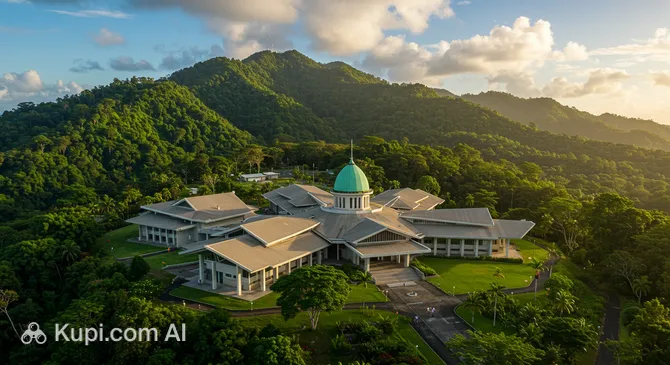
Illustration.
Source: Kupi.com AI

Each of Micronesia's four states—Yap, Chuuk, Pohnpei, and Kosrae—possesses its own unique atmosphere and cultural heritage. The country's capital, Palikir, located on the island of Pohnpei, is the administrative center, but Micronesia's true treasures are hidden in its natural diversity and ancient customs. From the mysterious ruins of Nan Madol on Pohnpei to the unique culture of the island of Yap with its famous stone money—everyone will find something here to capture their imagination.

Micronesia is a true paradise for divers and snorkelers. The world-famous Truk (Chuuk) Lagoon attracts underwater explorers with its sunken World War II ships, which have transformed into artificial reefs. The climate here is tropical and marine, with high humidity and warm weather year-round, making water activities particularly pleasant. A trip to Micronesia promises unforgettable impressions from encounters with exotic nature and an authentic culture far removed from the bustle of the modern world.


Currency

The official currency of Micronesia is the US Dollar (international code: USD). The country does not issue its own national banknotes or coins, so standard American dollars are in circulation. This is convenient for many travelers as it eliminates the need to learn a new currency and its features.

Other foreign currencies can be exchanged for US dollars at bank branches, which are primarily concentrated in the administrative centers of the states, such as the capital Palikir. Some major hotels may also offer exchange services; however, the rate there may be less favorable, and the number of exchange points throughout the country is generally limited. Therefore, it is recommended to ensure you have US dollars in advance or bring them with you. Credit cards (mostly Visa and Mastercard) are accepted in large hotels and some restaurants and shops in more touristy and developed areas. Nevertheless, for daily expenses, shopping at local markets, and visiting remote islands, it is highly advisable to carry a sufficient amount of cash, as ATMs are scarce and may not always be accessible or operational.

Visa Requirements

When planning a trip to Micronesia, it is important to familiarize yourself with the visa requirements in advance. For citizens of many countries, including EU countries, the US, and some others, a visa may not be required for short-term tourist trips, or it can be obtained upon arrival. However, for citizens of other states, it may be necessary to apply for a tourist visa in advance through a Micronesian embassy or consulate.

Regardless of visa rules, you will definitely need a valid passport to enter the country, the validity of which should usually exceed the intended date of departure. It is also recommended to have return tickets, hotel booking confirmation, and medical insurance with you. Since visa rules can change, we strongly advise checking the latest information on the official websites of Micronesian embassies or visa centers before your trip.

We'll let you know if you need a visa

Enter your destination or
Your nationality
Destination

Timezones

When planning a trip to Micronesia, it is important to remember that the country is located in two time zones. This is due to the geographical extent of the island nation.

The western states, Yap and Chuuk, are in the UTC+10 time zone, while the eastern states, Pohnpei (where the capital Palikir is located) and Kosrae, operate on UTC+11 time. Therefore, if you plan to travel between different island groups in Micronesia, be sure to account for this time difference when planning your itinerary and booking flights or ferry crossings.

Getting There

The most convenient way to reach the island nation of Micronesia is by air. Several international airports operate in the country, serving flights from various regions. A key hub is often the airport located in or near the capital, such as Pohnpei International Airport in Palikir. Direct flights or convenient connections are usually available from the Asia-Pacific region, including Guam, Hawaii, and sometimes Australia or the Philippines. It is important to research routes and available airlines in advance, as the number of flights may be limited.

Given Micronesia's geographical location as an archipelago in the Pacific Ocean, there are no options to reach the country by land from other nations. Sea travel is theoretically possible for private yachts or rare cruise ships that include Micronesia in their itineraries; however, this is not a regular or mainstream method of arrival for most tourists. The main focus when planning your trip should be on air travel.

Regardless of the chosen method, it is recommended to book tickets, especially flights, well in advance. This is particularly relevant during peak tourist seasons when demand increases and the number of available seats may be limited. Early planning will not only help save money but also ensure a wider choice of flight options for your journey to this exotic corner of the world.

AirportCityIATA
Pohnpei AirportPalikirPNI
Chuuk International AirportWenoTKK
Yap International AirportYapYAP

Micronesia is an amazing necklace of thousands of islands and atolls scattered across the Pacific Ocean, where every corner holds its own unique charm. There are no noisy metropolises here, but there is a unique opportunity to immerse yourself in authentic island life, explore ancient cultures, and enjoy pristine nature. The country offers travelers an introduction to various administrative centers and picturesque islands, each attractive in its own way.

Among the most interesting destinations is Palikir, the country's capital, located on the island of Pohnpei. It is not only an administrative center but also a starting point for exploring the island's rich history and nature, including the famous ruins of Nan Madol.

Illustration.
Source: Kupi.com AI

Diving enthusiasts from all over the world are drawn to Chuuk Atoll (formerly known as Truk), whose lagoon is one of the world's largest underwater museums of sunken World War II ships. A completely different experience awaits you on the islands of Yap, famous for their unique culture, traditional dances, and massive Rai stone money. Meanwhile, Weno, the main town of Chuuk State, serves as a convenient base for exploring the lagoon and its many islands, offering both historical attractions and water sports opportunities.

Each of these places offers its own unique perspective on Micronesia, revealing the wealth of its culture, history, and natural wonders to travelers. Explore them in more detail to plan your unforgettable adventure through these paradise islands!

Top Attractions

Nan Madol is perhaps the most mysterious and impressive attraction in the country, located off the eastern coast of Pohnpei island. This ancient stone city, often called the "Venice of the Pacific," consists of nearly a hundred artificial islets connected by a network of canals. The massive basalt megaliths used to build the walls of palaces and temples stagger the imagination and raise many questions about how ancient builders were able to move such heavy weights without modern machinery. It is a one-of-a-kind archaeological site in Oceania, included in the UNESCO World Heritage list.

For fans of history and diving, Truk (Chuuk) Lagoon has become a true legend. This place is known as the world's largest underwater museum of military equipment. Dozens of ships and aircraft rest on the bottom, having sunk during World War II and transformed over decades into picturesque artificial reefs. Diving here allows you not only to see colorful corals and tropical fish but also to touch history frozen underwater while exploring the decks and holds of sunken giants.

On the islands of Yap, you can witness a unique cultural phenomenon with no parallels in the world—Rai Stone Money. These huge limestone disks with a hole in the middle, some of which reach human height and weigh several tons, are still valued by locals and used for important symbolic transactions. A walk through the alleys where these "coins" are displayed provides a rare opportunity to immerse yourself in the authentic traditions of Micronesians, which have been carefully preserved for centuries.

Another impressive piece of evidence of ancient civilization is located on the island of Kosrae—the Lelu Ruins. This historic city, built of basalt slabs and coral blocks, was once the residence of kings and a thriving center of the region. Unlike Nan Madol, Lelu is partially hidden by thick tropical growth, giving a walk along its surviving walls and canals a special atmosphere of mysterious adventure and union with nature.

Best Time to Visit

The best time to visit Micronesia largely depends on your preferences and vacation plans. Overall, the climate here is tropical, hot, and humid year-round. Two main seasons can be roughly distinguished. The high season usually falls between December and April, when the weather is drier with less precipitation. This is an ideal time for beach vacations, diving, snorkeling, and island exploration, as underwater visibility is at its peak and sea conditions are calmer. However, during this period, there is a higher influx of tourists, and prices for accommodation and services may be higher.

The low season, or rainy season, lasts approximately from May to November. During this time, rains occur more frequently, though they are usually brief and followed by sunny weather. Humidity levels rise. The advantages of this period are fewer tourists and generally lower prices for accommodation. However, be prepared for possible changes in excursion schedules due to the weather. While Micronesia does not have major global festivals attracting tourists at specific times, local cultural events may take place on different islands. Since Micronesia consists of many islands scattered over a large area, it is recommended to check weather conditions for the specific island or state (such as Chuuk, Yap, Pohnpei, or Kosrae) you plan to visit, as there may be local climatic variations.

Traditions

The culture of Micronesia is rich in traditions, and showing respect for local customs will make your trip more enjoyable and memorable. Greetings usually involve a light handshake; however, prolonged direct eye contact, especially with elders or people you don't know well, can be perceived as a challenge, so it is considered more respectful to look away slightly. Micronesians are famous for their exceptional hospitality. If you are invited into a home, it is a great honor. A small gift for the hosts, such as fruit or sweets, will be accepted with gratitude, although your sincere friendliness is most important. Generally, modesty in clothing is valued, especially when visiting villages or religious sites—it is recommended to cover your shoulders and knees. On beaches and in tourist areas, standards are more relaxed, but outside of them, it is better to dress conservatively.

At the table, people often eat with their hands, and if you are offered food, try to taste all the dishes provided—this is a sign of respect. Refusing food can be perceived as impolite. Speaking loudly or publicly expressing dissatisfaction or anger is considered unacceptable. Always ask for permission before taking photos of locals or entering private property. One significant holiday is Constitution Day (May 10), marking the country's self-governance. Additionally, various islands host vibrant cultural festivals with traditional dances and songs, which provide a wonderful opportunity to get closer to the local culture.

It is important to remember that life on the islands moves at a slow pace, so patience and calm are your best allies. Show respect to elders, be polite and open to communication, and you will certainly feel the warmth and hospitality of the Micronesian people. Avoid criticizing local ways and traditions, even if they seem unusual to you. Remember that you are a guest, and your main task is to observe, learn, and enjoy a unique experience.

Entertainment

Micronesia offers travelers a unique experience where entertainment is closely intertwined with nature and local culture. The main magnet for active tourists is, undoubtedly, water sports. The crystal-clear waters of the Pacific Ocean create ideal conditions for world-class diving, especially at atolls like Chuuk, famous for its shipwrecks, or Yap, where you can swim with manta rays. Snorkeling, surfing on certain islands, kayaking, and fishing are also popular. For lovers of land-based adventures, there are hiking trails across picturesque islands that allow you to enjoy tropical forests and panoramic views.

The cultural program in Micronesia focuses on getting to know the unique traditions of the islanders. Although there are no large European-style theaters or concert halls, you can visit local villages, see traditional dances, and learn about crafts such as palm leaf weaving or wood carving. In small cultural centers and museums, for example, in the capital Palikir or the town of Kolonia, you can learn more about the history and daily life of the Micronesian people. Nightlife here is quiet and unhurried, offering cozy gatherings in local cafes or restaurants under the stars rather than noisy clubs. Shopping is mainly represented by souvenir shops where you can purchase local crafts, shells, and traditional clothing. Family entertainment also revolves around nature: safe beaches, encounters with marine life, and the calm atmosphere of the islands make a holiday with children pleasant and educational.

Currency rates

Planning a trip? Wonderful! To make sure the financial side of your journey holds no surprises, it's worth remembering that exchange rates are constantly changing. That's why we strongly recommend keeping an eye on current rates both before departure and throughout your trip. To help with that, you can use the data provided below — we monitor exchange rates 24/7 and strive to provide the most up-to-date information.

USD exchange rate for 13/08/2026

3.69 AED
~ 1 USD
367.67 AMD
~ 1 USD
1.42 AUD
~ 1 USD
1.71 AZN
~ 1 USD
2.99 BYN
~ 1 USD
1.40 CAD
~ 1 USD
1 EUR
~ 1.15 USD
1 GBP
~ 1.34 USD
317.64 HUF
~ 1 USD
95.86 INR
~ 1 USD
87.89 KGS
~ 1 USD
1423.55 KRW
~ 1 USD
468.12 KZT
~ 1 USD
3.75 PLN
~ 1 USD
83.16 RUB
~ 1 USD
3.77 SAR
~ 1 USD
1.29 SGD
~ 1 USD
47.99 TRY
~ 1 USD
45.00 UAH
~ 1 USD
11984.22 UZS
~ 1 USD

Reached the bottom of the page?

Looks like you know this route inside out

We use cookies and services to collect user information. This is essential for the functioning of the site and for marketing purposes. You can find out more in .