Tuvalu

Cities in the country

About

Tuvalu is a tiny island nation in the heart of Polynesia, one of the smallest and most remote in the world. Located on nine coral atolls, it offers a unique experience for those seeking solitude and authenticity. The country's capital, Funafuti, is the main center of life on the islands and the gateway to this amazing world.
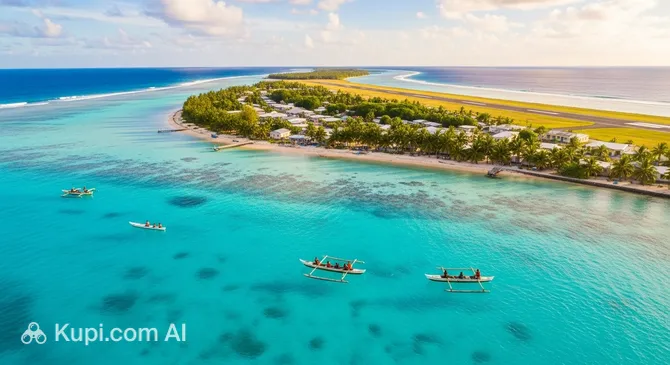
Illustration.
Source: Kupi.com AI

Tuvalu's main treasure is its pristine nature. White sandy beaches fringed by palm trees, crystal-clear lagoons, and a rich underwater world with coral reefs and colorful fish attract fans of peaceful relaxation and water sports. A warm tropical climate prevails here all year round, creating ideal conditions for unwinding. Tuvaluan culture is deeply rooted in Polynesian traditions, which is reflected in the music, dance, and exceptional hospitality of the local people.

Life in Tuvalu flows at a measured and leisurely pace, allowing guests to forget the city bustle and enjoy simple pleasures. Here you can go snorkeling or diving in the Funafuti lagoon, get acquainted with local crafts, try traditional cuisine, or simply relax on the beach while admiring the incredible sunsets. Tuvalu is a place where you can feel like you are at the edge of the world and find harmony with nature, experiencing a unique atmosphere of tranquility.


Currency

Tuvalu uses a dual currency system: the official currency is the Australian Dollar (AUD), but the country also issues its own coins – the Tuvaluan Dollar, which is pegged to the Australian dollar. Australian banknotes are used, while Tuvaluan coins can make an interesting souvenir as they often depict local fauna and elements of traditional culture. On Tuvaluan coins, you can see sea turtles, fish, and other symbols of island life.

When planning your trip, keep in mind that it is better to exchange currency in advance, before arriving in Tuvalu, or upon arrival at the National Bank of Tuvalu in the capital, Funafuti, as the number of exchange offices is extremely limited. Try to avoid exchanging with private individuals. The possibility of using credit cards in Tuvalu is very limited and they are practically not accepted outside of a few large hotels or government institutions in the capital. Therefore, cash, primarily Australian dollars, is the main means of payment in the country. It is recommended to carry a sufficient supply of cash for the entire duration of your stay.

Visa Requirements

When planning a trip to Tuvalu, it is important to clarify visa requirements in advance. For citizens of many countries, including the European Union, the USA, and CIS countries, a visa for short-term tourist trips to Tuvalu is generally not required, or it can be obtained upon arrival. However, even if a visa is not needed, you must have a valid passport, the validity of which should usually exceed the intended period of stay in the country.

In addition to a passport, you may be asked to present return tickets, confirmation of a hotel reservation or sufficient financial means for your stay, as well as medical insurance. Visa rules are subject to change, so it is strongly recommended to check the most up-to-date information on the official websites of consular services or Tuvalu visa centers in your country of residence before your trip.

We'll let you know if you need a visa

Enter your destination or
Your nationality
Destination

Timezones

When planning a trip to Tuvalu, you won't have to worry about changing time zones within the country. A single time zone applies throughout the entire territory of Tuvalu.

The official time zone of Tuvalu is TVT (Tuvalu Time), which corresponds to UTC+12. This means that the time here is 12 hours ahead of Coordinated Universal Time. Consider this difference when planning flights and contacting home.

Getting There

Tuvalu is a remote island nation in the Pacific Ocean, and for most tourists, it is accessible almost exclusively by air transport. The main and, essentially, only international air gateway of the country is Funafuti International Airport, which serves the capital Funafuti. Direct flights to Tuvalu are quite limited; most travelers arrive here with a connection, typically through Fiji (Nadi International Airport). Options through other Pacific island nations may occasionally be available, but this depends on airline schedules.

Given Tuvalu's geographical location, land transport from other countries is, of course, impossible. As for sea connections, although cargo ships and private yachts occasionally call at Tuvaluan ports, there is no regular passenger ferry service with other countries, and this method is not standard for tourists. Due to the limited number of flights and the small size of the aircraft serving the route, it is strongly recommended to book your flight tickets well in advance, especially if your trip is planned for the peak tourist season or during local festivals.

AirportCityIATA
Funafuti International AirportFunafutiFUN

Tuvalu, a charming island nation in the Pacific Ocean, offers travelers a unique experience far from the bustle of traditional tourist hubs. There are no huge metropolises or noisy resort areas in the traditional sense. Instead, Tuvalu is a scattering of coral atolls, each attractive in its own way with its untouched nature, idyllic beaches, and the possibility of complete privacy. The main settlement and administrative center of the country is its capital.

Illustration.
Source: Kupi.com AI

The primary focus of tourists arriving in Tuvalu is deservedly centered on Funafuti atoll, where the capital of the same name is located. This is not just an administrative center, but the heart of island life, where you can get acquainted with the unique Polynesian culture, enjoy the incredible beauty of the lagoon, and go snorkeling or diving. Funafuti offers a rare opportunity to see how an entire capital center harmoniously exists on a narrow strip of land surrounded by the boundless ocean, and to feel the unique, calm rhythm of life of the islanders.

Top Attractions

Tuvalu may not boast grand architectural monuments or huge museums, but its attractions possess a special natural charm and historical value. The main magnet for travelers is the Funafuti Conservation Area. This protected area covers a significant part of the lagoon, including several uninhabited islets where nature has been preserved in its original form. Here you can see sea turtles, many tropical fish, and enjoy snorkeling in crystal-clear water, far from civilization.

Another unique feature of the country is the Tuvalu Philatelic Bureau, located in the capital, Funafuti. Stamps from this tiny state are highly valued by collectors around the world for their rare print runs and colorful designs. A visit to the bureau allows you not only to purchase unique souvenirs but also to learn more about the country's history through the prism of philately, which was an important source of government revenue for a long time.

History buffs will find it interesting to explore World War II relics scattered across the islands. Tuvalu served as a strategic Allied base, and to this day, you can find remnants of military bunkers, abandoned equipment, and aircraft wreckage, some of which are visible right in the lagoon waters during low tide. These silent witnesses of the past create a striking contrast with the peaceful and relaxed atmosphere of this tropical paradise.

Best Time to Visit

Tuvalu, a charming island nation in the Pacific Ocean, enjoys a warm tropical climate year-round. To make your trip unforgettable, it is important to choose the right time to visit, considering the two main seasons, each with its own characteristics.

High season in Tuvalu typically lasts from May to October. This period is considered the best for a trip due to the predominance of sunny weather, lower rainfall, and lower humidity. It is the perfect time for enjoying the beaches, swimming, snorkeling, and diving in the crystal-clear waters of the lagoons. Both the air and water are very warm and comfortable. Although Tuvalu is not a mass tourism destination, there may be slightly more travelers during this time. One interesting local event falling within this period is Funafuti Lagoon Day (Te Namo), usually celebrated in August.

Low season, or the rainy season, spans the months from November to April. This time is characterized by higher humidity and frequent, though often brief, tropical downpours. Benefits may include fewer tourists and potentially lower accommodation prices. However, it is important to remember that this is also the official cyclone season in the South Pacific, which can lead to unstable weather and possible disruptions in transport links. If you are planning a trip at the turn of the seasons, take note of Tuvalu Independence Day (October 1st) – it is a vibrant national holiday that allows for a closer look at the country's culture.

Traditions

Tuvaluans are known for their exceptional hospitality and friendly attitude towards guests. When meeting, handshakes are usually exchanged, and a simple greeting in the local language, such as "Talofa," will be received with warmth. In communication, politeness, a smile, and a calm tone are valued; direct but not staring eye contact is the norm. If you are invited into a home, a small gift or souvenir from your country would be appropriate as a gesture of thanks, although the main expression of respect remains your sincere and friendly attitude.

When visiting Tuvalu, it is important to remember local dress codes: when in villages or visiting churches, men and women should cover their shoulders and knees. Swimwear is intended exclusively for the beach. It is customary to remove your shoes before entering a private home – this is a sign of respect for the hosts. If you are invited to share a meal, be open to new flavors and accept treats with gratitude. Always ask for permission before taking photos of local people, especially children and the elderly, as this is an important show of respect for their personal space.

One of the key events reflecting the culture of the islands is Tuvalu Independence Day, celebrated on October 1st with parades, traditional dances, and songs. In general, when interacting with Tuvaluans, try to avoid loud arguments or showing impatience; life here flows at a measured pace. Respect for elders is a fundamental value. By showing tact, modesty, and a genuine interest in local traditions, you will not only avoid awkward situations but also immerse yourself more deeply in the unique atmosphere of Tuvalu.

Entertainment

Tuvalu offers a unique and peaceful holiday where entertainment is closely intertwined with nature and local culture. The main pleasures here are water sports: snorkeling and diving in crystal-clear lagoons that allow you to explore the rich underwater world of coral reefs, as well as swimming and kayaking. Fishing is also a popular activity, both traditional and sport fishing. On land, you can enjoy leisurely walks or bike rides around the islands, getting to know the daily life of Tuvaluans.

Cultural entertainment in Tuvalu is mainly focused on traditional Polynesian customs. Tourists can witness or even participate in local "fatele" dance performances and singing evenings, which are often held during holidays or on special occasions. Although there are no large museums or theaters here, the very life of the islanders, their crafts such as weaving mats and making shell jewelry, represent a living culture. The capital, Funafuti, is the hub where you can get a deeper look at local traditions.

Nightlife in Tuvalu is modest and conducive to a quiet rest. Instead of noisy clubs, you can find small local bars or simply enjoy quiet evenings under the stars while listening to the sound of the ocean. Shopping is mainly represented by handmade souvenirs: these could be items made of wood, shells, woven baskets, and fans, as well as the colorful postage stamps for which Tuvalu is famous. There are no special entertainment centers for children, such as theme parks, but the safe beaches, shallow lagoons, and the friendliness of the locals make a family holiday pleasant and educational.

Currency rates

Planning a trip? Wonderful! To make sure the financial side of your journey holds no surprises, it's worth remembering that exchange rates are constantly changing. That's why we strongly recommend keeping an eye on current rates both before departure and throughout your trip. To help with that, you can use the data provided below — we monitor exchange rates 24/7 and strive to provide the most up-to-date information.

Reached the bottom of the page?

Looks like you know this route inside out

We use cookies and services to collect user information. This is essential for the functioning of the site and for marketing purposes. You can find out more in .