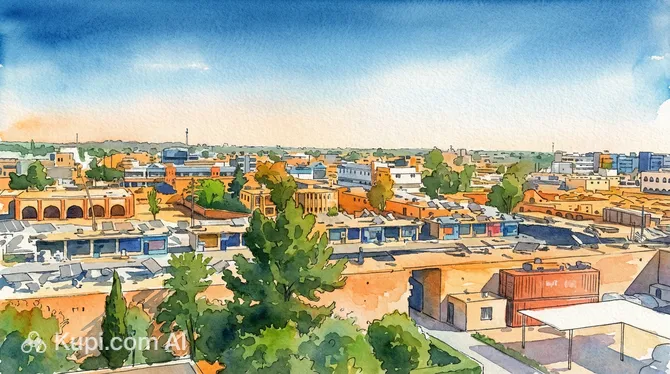
Farah is an important administrative and commercial center located in the western part of Afghanistan. The city serves as the heart of the province of the same name and has long played the role of a strategic hub connecting remote areas of the region. An atmosphere of the authentic East prevails here, where the rhythm of life is dictated by centuries-old traditions and the business activity of the local population.
Farah. Illustration.
Source: Kupi.com AI
Geographically, the city stretches across the Farah Rud river valley, which largely determined its development as an agricultural and logistics center. Despite the harsh desert climate of the surrounding areas, the city itself remains a lively place. Exploring the city's rich past, travelers can touch the heritage of the ancient trade routes that once passed through these lands, linking Central Asia with Persia.
Today, Farah attracts those seeking an authentic experience who want to see the country's life as it truly is. Traditional architecture, colorful bazaars, and the sincere hospitality of the locals make a visit to this city unforgettable. We invite you to get to know the unique culture of this region and discover the little-studied pages of Afghan history.
Weather Overview
The climate of Farah is characterized by pronounced continentality and aridity. The city is located in a zone where summers can be extremely hot, and the sky almost always remains clear. In July and August, temperatures often reach +43°C, accompanied by strong winds. Winters, conversely, can be quite cold: in January, the temperature sometimes drops to +1°C... +2°C, bringing refreshing coolness.
The most favorable time to visit the city is spring (March-April) and autumn (October-November), when moderately warm weather sets in. During these periods, the temperature fluctuates in a comfortable range from +15°C to +25°C. Precipitation in the region is rare, occurring mainly in the winter and early spring months, so you will hardly need an umbrella, but sunscreen will be relevant year-round.
For those planning a trip, it will be useful to study the detailed city climate to choose the right wardrobe. Keep in mind that due to low humidity, the difference between daytime and nighttime temperatures can be quite significant even during the warm season.
Average monthly temperature
Average monthly precipitation
Interesting Facts
Immersing yourself in the atmosphere of this western region reveals many surprising details that often escape the gaze of the average tourist.
Geographical Uniqueness: Farah is located exactly on the 32nd parallel north, which results in significant fluctuations in the length of daylight hours throughout the year.
Meteorological Precision: Due to the distance from major weather stations (the nearest is 152 km away in Zabul), high-precision NASA satellite data is actively used to compile weather forecasts for the city.
Time Consistency: Unlike many other countries in the region, Farah does not practice daylight saving time, which simplifies visit planning for travelers.
Strategic Hub: The city historically served as a vital communication bridge between Iran and the central regions of Afghanistan, which is reflected in its cultural diversity.
How to Get There
The transport accessibility of Farah requires careful planning from the traveler. For foreign guests, the main way to reach the region is usually a flight through the capital. Kabul International Airport (Hamid Karzai International Airport) receives flights from many countries around the world, after which the journey can be continued by domestic airlines to the local airport or by using land transport.
If you prefer air travel, we recommend checking route options to Farah in advance, as domestic flight schedules can change. Farah Airport (FAH) is located in close proximity to the city, allowing for a quick trip to the center by taxi or private transfer.
Land travel from Kabul or Herat is carried out by long-distance buses or private cars. This allows you to see the diversity of Afghan landscapes but requires taking road conditions into account. Railway service in this area is currently not developed, so the main methods of movement remain the highways connecting the province with other parts of the country.
Main Attractions
Farah preserves the spirit of antiquity, which is clearly felt while walking through its historical quarters. One of the main attractions is the traditional bazaars — the vibrant centers of local culture. Here, you can not only purchase unique handmade goods but also observe how crafts, passed down through generations for centuries, are preserved.
In the vicinity of the city and within the province itself, architectural monuments associated with ancient trade routes have been preserved. Local shrines and mosques are of particular interest to fans of Islamic architecture; they are not only spiritual centers but also reflect the aesthetic traditions of the region. The restrained yet majestic architecture of these structures harmoniously blends into the surrounding landscape.
The natural landscapes around the city deserve special attention. The desert and semi-desert plains of western Afghanistan possess a harsh but mesmerizing beauty. Traveling through these lands allows for a deeper understanding of the region's character and shows how nature and humans coexist in an arid climate. Visiting local cultural centers and interacting with residents will complete the picture, revealing the secrets of daily life in this remote corner of the country.
Local Cuisine
The culinary traditions of Farah are the quintessence of Afghan hospitality. The basis of the local diet is rice, which is prepared here with special skill. Be sure to try various types of pilaf — from classic meat versions to festive options with raisins and carrots. An integral part of any meal is freshly baked naan bread from a tandoor, served hot and crispy.
Meat dishes hold a place of honor on the menus of local establishments. Juicy kebabs cooked over charcoal and hearty stews with vegetables and legumes (qurma) will satisfy even the most discerning gourmet. Spices are used moderately, emphasizing the natural taste of the products, which makes the local cuisine accessible and pleasant for most tourists.
The tea culture in the city is elevated to the rank of a ritual. Green or black tea (chai) accompanies every meeting and is served in traditional bowls with sugar cubes or Eastern sweets. To taste local delicacies, it is best to go to cozy chaikhanas or small family-run restaurants, where dishes are prepared according to old recipes using the freshest products from local markets.
Travel Tips
A trip to Farah promises to be one of the most unusual events of your life, and these practical tips will help make it as comfortable and safe as possible.
Dress Code: Choose a conservative style. Men should not wear shorts, and women are advised to wear loose clothing covering their arms and legs, as well as a headscarf. During the summer months (June-August), sunglasses and a hat are essential due to the extreme heat.
Transport: It is best to move around the city by taxi. Always agree on the price of the ride before getting into the car.
Finance: The main currency is the Afghani (AFN). International cards are practically not accepted in Farah, so carry a sufficient supply of cash in dollars or euros for exchange at local currency exchange shops (sarrafis).
Health: Drink only bottled water and avoid ice in drinks. It is recommended to pack an extensive first-aid kit with medications for gastrointestinal issues and antiseptics.
Communication: The main languages are Dari and Pashto. English is not widely spoken, so learn a few basic phrases of greeting and gratitude — this will earn great respect from the locals.
Etiquette: Always ask for permission before taking photos of local residents, especially women. Greet people with your right hand placed over your heart.
What to Avoid: Do not discuss political topics and do not photograph government or military facilities — this can lead to misunderstandings with local authorities.
Connectivity: Buy a local SIM card (e.g., Roshan or AWCC) immediately upon arrival in the country, as hotel Wi-Fi can be unstable.
Following these simple rules will allow you to focus on the beauty of the region and the hospitality of its residents. Enjoy your journey!
Entertainment & Nightlife
Leisure in Farah is deeply rooted in local traditions and has a calm, contemplative character. The central place for social interaction is the chaikhana (traditional tea house). Here, men gather for unhurried conversations and games of chess or backgammon. Visiting such an establishment is the best way to feel the true spirit of the city, enjoy aromatic tea, and observe the daily life of the locals.
Modern nightlife in the form of clubs and discos is absent in the city due to the region's conservative traditions. However, the evening city offers its own special charm: when the daytime heat subsides, the streets and bazaars come alive, filling with people. This is an ideal time for walks through the central districts, where you can dine in local restaurants offering traditional dishes in a cozy atmosphere.
Cultural entertainment is often tied to religious holidays and folk festivals, during which you can see traditional dances and hear national music. For lovers of active outdoor recreation, trips to the city's outskirts can be organized for photo safaris or to get acquainted with the lifestyle of nomadic tribes, providing a unique opportunity to see Afghanistan from a different, less formal side.
Parks & Museums
The cultural space of Farah is inextricably linked with its history and religion. The main points of interest here are not classic amusement parks, but historical mosques and memorial complexes. These structures are not only religious centers but also architectural monuments preserving the memory of the region's prominent figures. Visiting such places requires a respectful attitude towards the dress code and local traditions.
For those who want to study the province's past more deeply, local museums operate in the city. Their exhibitions feature artifacts found during excavations in the vicinity, samples of ancient weapons, textiles, and traditional crafts. These small but informative collections help trace the city's development from an ancient trade hub to a modern administrative center.
Although there are no extensive parklands in the city, green zones around mosques and government buildings serve as quiet oases where one can rest in the shade of trees. During the spring period, when nature comes to life, the outskirts of the city turn into picturesque areas for walks, offering travelers the chance to enjoy views of blooming fields against the backdrop of harsh mountains.
Getting Around
The transportation system in Farah is characterized by simplicity and accessibility. The main form of public transport consists of minibuses and marshrutkas that ply the city's main streets. This is the cheapest way to get from one district to another, although you should be prepared for the vehicles to be crowded during peak hours. Payment is made in cash to the driver or conductor.
For more comfortable trips, tourists most often choose taxis. Cars can be found at special ranks or simply hailed with a wave of the hand. Taxis usually do not have meters, so the cost of the trip must be agreed upon in advance. Local drivers know the city well and can often recommend interesting places or the best stalls at the bazaar.
Walking is an excellent option for exploring the central quarters where the main attractions are located. If you plan to travel outside the city, the best solution would be to rent a car with a driver through a local agency. This will ensure not only comfort but also the necessary safety on the road, as the driver will be familiar with the specifics of local roads and the rules for passing through checkpoints.
Accommodation
Accommodation in Farah is oriented toward those who value authenticity and are ready to get acquainted with the traditional way of life. Most available options are concentrated in the central part of the city, within walking distance of the main bazaars and administrative buildings. Guest houses and small private hotels predominate here, where guests are welcomed with true Eastern hospitality.
Although there are no large international hotel chains in the city, local mid-range hotels provide all necessary basic amenities. Travelers should expect simple but clean interiors, as well as the opportunity to order home-cooked meals directly at the hotel. Booking is recommended in advance through specialized agencies or directly by contacting the owners, as the number of rooms in the city is limited.
When choosing accommodation, it is worth paying attention to the presence of air conditioning systems (especially in the summer) and autonomous power sources. Staying in a local guest house often provides the added benefit of interacting with the hosts, who can suggest the best places for walks and help with organizing transport around the region.
Nearby Cities
Farah can be an interesting starting point for those who want to explore more remote corners of western Afghanistan. The region is permeated by a network of roads leading to other provincial centers, each possessing its own unique flavor and historical background.
One of the nearest destinations is the city of Shindand, located less than 100 kilometers to the north. It is known for its strategic importance and traditional lifestyle. You can also consider a trip to Zaranj — a border town that serves as an important trade hub. A journey to it will allow you to see the endless expanses of the desert and get acquainted with the dynamic life of the borderlands.
City
Population
Distance
Shindand
27,402
95 km
Zaranj
160,902
167 km
Khaneh
—
169 km
Zabol
134,950
169 km
Zehak
13,357
178 km
Exploring the surroundings of Farah requires the accompaniment of an experienced guide who will help not only with navigation but also with understanding local customs. One-day trips to neighboring settlements will reveal the real, non-touristy Afghanistan to you, with its quiet villages, ancient ruins, and incredibly beautiful sunsets over the plains.
Shopping & Souvenirs
Shopping in Farah is primarily an immersion into the atmosphere of an Eastern bazaar. There are no huge, glittering malls here, but there are colorful trading rows where life bustles from early morning. The city's main treasures are considered to be handmade carpets and kilims. Each piece is unique, and its patterns often tell the story of the weaver's family or a specific tribe from the region.
In local markets, you should definitely pay attention to textiles and traditional clothing, hand-embroidered. Farah is also famous for its spices, nuts, and dried fruits. Fresh saffron, dried apricots, and almonds make excellent gifts for loved ones and allow you to take a piece of Afghanistan's aromas home with you. The quality of products in the bazaars is consistently high, as everything is supplied directly from surrounding farms.
When making purchases, remember that bargaining is an important part of the local culture. Do not hesitate to discuss the price with the seller: it is not only a way to save money but also a form of polite communication. Most shops and stalls accept only cash (local currency), so it is wise to take care of currency exchange in advance. Shopping here is not just about acquiring things, but a true cultural exchange.