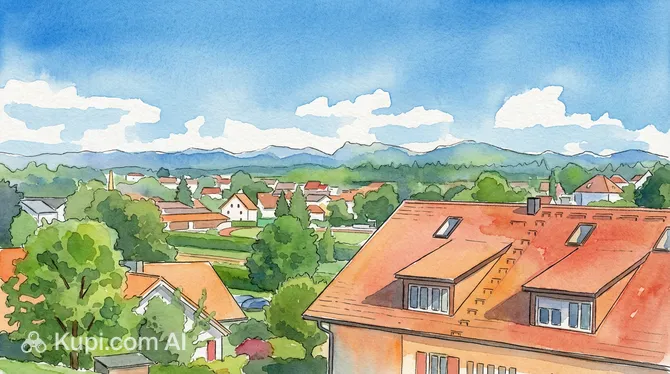
Taloqan is a peaceful provincial city nestled in a picturesque river valley in northern Afghanistan. Serving as the administrative center of Takhar Province, it retains the atmosphere of a traditional Eastern settlement where life moves at a measured pace, dictated by the centuries-old rhythms of agriculture and trade. The city is situated at the foot of majestic mountains, giving its modest appearance a special natural charm.
The city's geographical position at an altitude of about 876 meters makes it an important hub connecting mountainous regions with fertile plains. Taloqan. Illustration.
Source: Kupi.com AI
With a population of over 260,000 people, Taloqan is one of the country's significant regional centers. Despite the absence of gleaming modern skyscrapers, the city attracts visitors with its authenticity and the sincere hospitality of the local residents.
The rich history of this region dates back to antiquity, when the caravan routes of the Great Silk Road passed through these lands. Today, bustling bazaars serve as a reminder of its former glory, where grain and the famous local salt are traded just as they were hundreds of years ago. Visiting this city is a unique opportunity to see the real, non-touristy Afghanistan, feel the spirit of provincial life, and enjoy views of the river valley.
Weather Overview
Taloqan is characterized by a pronounced continental city climate, determined by its location in an intermountain valley. Summers here are usually hot and dry: in July, daytime temperatures often reach +35°C. Precipitation in the summer months is practically non-existent, which, combined with the winds, can lead to increased dust in the air.
Winters in the region are cool, and sometimes quite cold for southern latitudes. In January, the average temperature is around +2.4°C, though night frosts down to -3°C and below are not uncommon. Most precipitation falls during the spring period, especially in March and April, when the river valley fills with moisture, bringing the surrounding vegetation to life.
When planning your trip, expect a warm, sunny summer with occasional dust storms and cold, mostly dry winters. The most comfortable time for a visit is considered the transitional seasons—spring and mid-autumn—when the heat has subsided and the frost has not yet set in, creating ideal conditions for exploring the city.
Average monthly temperature
Average monthly precipitation
Interesting Facts
Ancient Mention: The famous traveler Marco Polo visited the city in 1275, mentioning it in his records as "Taikhan," a flourishing center for the salt trade.
Independent Coinage: Between 1200 and 1220, Taloqan held the status of an independent center and minted its own coins bearing the city's name.
Salt Wealth: For centuries, the city has been famous for its mountain salt, which is valued throughout the region for its exceptional purity and hardness.
Regional Leader:Taloqan ranks as the 15th most populous city in the country and is the largest settlement in its province.
Link to Bactria: Although the exact founding date is unknown, historians link its origins to the era of ancient Bactria and the development of branches of the Great Silk Road.
How to Get There
The accessibility of Taloqan largely depends on road conditions and weather. The city is a major hub in the north of the country, and reaching it is easiest by land. If you are planning a trip, it is worth researching route options in advance to choose the most comfortable way to travel.
The main flow of travelers arrives in the city via highways from neighboring provincial centers like Kunduz or Mazar-i-Sharif. A trip by taxi or intercity bus can take between 4 to 8 hours; keep in mind that the mountainous terrain makes the journey scenic but sometimes tiring. Road conditions can change significantly depending on the season, especially during the rainy period.
The city has its own Taloqan Airport (IATA: TQN), but regular air service is limited. Flights, mainly domestic ones from Kabul, are infrequent and can depend on current demand and weather conditions. For international visitors and specialists, renting a private vehicle with a local driver remains the most recommended way to get around.
There is currently no rail service in this part of the region, so land transport and rare flights remain the only ways to reach Taloqan. The city does not have major train stations, and all transport operations are concentrated at bus stations and the airport.
Station
Passenger traffic
Distance
Kulob Railway Station
—
130 km
Sangtuda Railway Station
—
147 km
Danghara Railway Station
45 000
148 km
Vakhsh Railway Station
35 000
154 km
Yavan Railway Station
—
182 km
Main Attractions
Since Taloqan is primarily an administrative and agricultural center, there are few classic tourist attractions in the traditional sense. However, the city itself is of interest to those seeking the authentic atmosphere of the region. One of the key spots is the Central Bazaar, which serves as the heart of urban life. Here, you can witness the trade of salt from local mountain deposits—a tradition that has persisted for many centuries.
From an architectural standpoint, administrative buildings draw attention, most notably the office of the Governor of Takhar Province. Although the city's development is largely haphazard, a stroll through its streets allows you to get acquainted with the typical Afghan architecture of provincial centers. The city's central square often becomes a gathering place for events, reflecting the pulse of daily life for local residents.
History buffs will appreciate being in a place that was once a vital point on ancient trade maps. The lack of prominent monuments is compensated for by the natural surroundings: the Taloqan River valley offers tranquil landscapes that are especially beautiful at sunset, when the mountains are painted in golden hues. This is a place for contemplation and immersion into the cultural context of the region, away from the hustle and crowds of tourists.
Local Cuisine
The culinary traditions of Taloqan are inextricably linked to the fertility of the valley where it sits. Local cuisine is a celebration of simple and hearty dishes, where grains, fresh meat, and the famous local salt play the leading roles. The signature dish you must try is plov (pilaf), which has its own unique flavors in Takhar province thanks to the use of local rice varieties and spices.
Juicy kebabs and traditional Afghan manti are prepared everywhere on city streets and in markets. Freshly baked flatbreads hold a special place on the table, served with almost every meal. The food culture here is centered in tea houses and small street eateries, where you can always find fresh food made from products grown in neighboring fields.
As for drinks, the undisputed leader is green tea, consumed in large quantities at any time of day. Refreshing ayran and compotes made from local fruits, for which the valley is famous, are also popular. The city's gastronomic scene lacks frills but wins you over with its naturalness and honest, deep flavors characteristic of this agricultural region.
Travel Tips
Traveling to Taloqan is an immersion into a completely different world, requiring preparation and respect for local customs. These practical tips will help make your trip more comfortable and safe.
Clothing and Dress Code: Choose the most modest clothing possible, covering your shoulders and knees. Women are advised to wear a loose dress or tunic over trousers and carry a headscarf. Comfortable closed shoes are essential due to dusty roads.
Transport: To move around the city and its surroundings, it is best to hire a private driver through trusted acquaintances or your guest house. This will avoid the complexities of public transport, which is often overcrowded.
Finances: Only cash Afghanis are accepted in the city. International payment cards are practically useless; ATMs are rare and may not work with foreign cards. Exchange currency in advance in larger cities.
Health and Water: Drink only bottled water and avoid ice in drinks. Carry a basic first-aid kit, as the selection in local pharmacies may be limited to specific medications.
Communication: The main languages are Dari and Pashto. English is very limited, so learn a few basic phrases or use an offline translator. It's best to purchase a SIM card in Kabul or Mazar-i-Sharif.
Local Etiquette: Always greet people with your right hand. Avoid photographing local residents, especially women, without their explicit permission. Be prepared for high, but usually friendly, interest in your presence.
What to Avoid: Do not discuss political topics and avoid walking alone on the outskirts of the city after dark. The crime rate in the center is low, but caution is advised.
Seasonality: The best time to visit is spring (April-May) or autumn (October), when the temperature is most comfortable for walking and the nature of the valley is pleasing to the eye.
Your journey to this region will be truly unforgettable if you open your heart to new experiences and follow the simple rules of this hospitable Afghan land.
Entertainment & Nightlife
Nightlife in Taloqan is practically non-existent in the Western sense; you won't find night clubs, bars, or discos here. Local evening leisure is centered around family and traditional social spots. The main hubs of evening activity are tea houses (chai-khana), where men gather over cups of green tea to discuss the day's news and play board games. These places have a very calm, conservative atmosphere where slow conversation is highly valued.
For daytime entertainment, the city offers walks through colorful markets and the surrounding countryside. There are no cinemas or large entertainment centers in Taloqan itself, so tourist leisure usually involves observing daily life and exploring local crafts. Residents sometimes travel to larger cities in the region for major cultural events or modern shopping.
Evening safety is ensured by the city's overall quiet rhythm; however, due to poor street lighting, walking on the outskirts after sunset is not recommended. The best way to spend an evening is having dinner at one of the local eateries, where you can try freshly prepared Afghan dishes in the company of hospitable townspeople.
Parks & Museums
Currently, there are no active museums or art galleries in Taloqan. The city's cultural life is centered in mosques and traditional festivals, and history is passed from generation to generation through the stories of elders and the living traditions of the bazaars. Nevertheless, for those interested in the past, the very look of the old quarters and the rhythm of life at the salt markets can serve as a kind of "open-air museum."
Park infrastructure in the city is also minimally developed. In the very center, greenery is quite sparse, and the city can often be dusty during the dry season. However, residents find relaxation in the Taloqan River valley, which turns green in the spring and becomes a favorite spot for walks and picnics by the water.
To enjoy nature and find truly picturesque recreation areas, it is recommended to travel outside the urban area toward the foothills. There, you can find orchards and rural landscapes that serve as urban parks for the residents. The lack of formal cultural institutions in the city is compensated for by the wealth of natural landscapes surrounding this oasis in the valley.
Getting Around
The public transport system in Taloqan is as simple and functional as possible. The main means of getting around the city and to the nearest suburbs are minibuses and shared taxis. They do not have a fixed schedule and depart as they fill up, requiring some patience and extra time from passengers. The main routes connect residential quarters with the central market and administrative districts.
A special flair is added to the local roads by the so-called jingle trucks—brightly decorated trucks and vans used for both cargo and passengers over short distances. A ride in such transport is an adventure in itself, letting you feel the local drive. Fares are always paid in cash to the driver and are very affordable.
For more comfortable and faster trips, tourists and locals use taxis. There are no standard ride-hailing apps in Taloqan, so you need to negotiate with a driver directly on the street or at designated stands. Due to the absence of subways or trams and the unpredictability of minibuses, taxis remain the most reliable way to reach your destination on time, especially on hot or dusty days.
Accommodation
The hotel infrastructure in Taloqan is quite modest and primarily aimed at local officials, humanitarian mission workers, and business travelers. Tourists are rare guests here, so do not expect large hotel chains or luxury five-star complexes. Most accommodation options consist of basic hotels and guest houses.
The city center is considered the most convenient area to stay, as most administrative institutions and markets are concentrated there. Staying in the center provides better access to transport services and dining options, though noise levels may be higher due to busy trade.
Prices for accommodation are usually low, but the service matches the budget level. Often, lodging is booked on-site or through personal contacts with guest house owners, as international online booking systems may not display all available options. If you are planning a long stay, it is worth considering renting private apartments, which is a common practice among expats.
Nearby Cities
Taloqan serves as an excellent starting point for exploring the northern regions, offering travelers the chance to see the diverse nature and life of neighboring provinces. Although the travel infrastructure can be challenging, visiting nearby settlements will provide a deeper understanding of the culture in this part of the world.
One of the most popular destinations for a trip is Kunduz, located about 60 kilometers away. It is a major trade and logistics hub where life is even more energetic than in Taloqan. Also of interest is the small town of Khanabad, famous for its agricultural lands and picturesque surroundings.
For those ready for longer journeys, paths open up to the northern borders, such as toward the city of Panj or Imam Sahib. These locations allow you to see border life and the unique natural landscapes of the great river's floodplain. Traveling to these areas requires good preparation and reliable transportation.
Exploring the surroundings of Taloqan is a path for true adventurers ready for simple conditions in exchange for unique experiences and the chance to see places where foreign tourists rarely set foot.
Shopping & Souvenirs
Shopping in Taloqan is, first and foremost, a visit to traditional Eastern bazaars where time seems to have stood still. You won't find modern shopping malls with global brands here, but you can immerse yourself in the atmosphere of genuine provincial trade. The main product that has made the city famous for centuries remains mountain salt mined nearby; it is often bought as a useful and authentic souvenir.
Central market streets are filled with stalls selling grain, legumes, and spices grown in the fertile valley. You can also find high-quality locally produced fabrics and traditional clothing. Attention should also be paid to the products of local craftsmen, who offer simple but sturdy utensils and household items characteristic of the northern region.
Shops usually operate from early morning until sunset, with a break for afternoon prayer. Payment is made exclusively in cash using local currency, and the ability to haggle politely is welcomed and part of the social culture. Despite the limited choice of tourist souvenirs, buying local products or fabrics will be a great reminder of your visit to this unique corner of the world.