Support

Bordj Mokhtar

About

Welcome to Bordj Mokhtar, a remote and fascinating settlement located in the far southern reaches of Algeria. Situated deep within the Sahara Desert, this town serves as a vital administrative center for the Bordj Badji Mokhtar Province. It offers a unique glimpse into life in one of the most arid and expansive regions on Earth, making it a destination for those seeking to understand the true scale of the desert.

Geographically, the town is positioned near the border with Mali, surrounded by vast stretches of sand and rock. The climate here is typical of the desert, characterized by high temperatures and dry air, which shapes the daily rhythm of its approximately 17,000 inhabitants. The isolation of the area contributes to a distinct atmosphere of tranquility and resilience, where the landscape dominates the horizon in every direction.

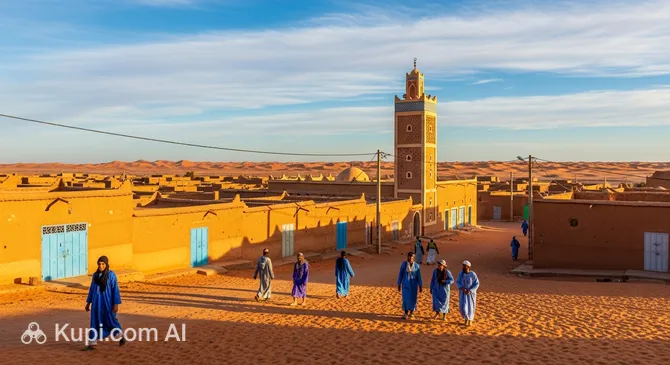
Bordj Mokhtar. Source: Kupi.Binoculars

Although it is often viewed as a transit point, the history of Bordj Mokhtar is intertwined with the ancient caravan routes that have crossed the Sahara for centuries. Travelers visiting the area can witness the stark beauty of the surrounding dunes and the incredible clarity of the starry night skies, which are unmarred by city lights. The local culture reflects the traditions of desert dwelling, offering a warm welcome to those who make the journey.

If you are an adventurous traveler drawn to the ends of the earth, Bordj Mokhtar provides an unforgettable backdrop. Whether you are passing through or aiming to experience the profound silence of the Sahara, this desert outpost invites you to discover a side of the country that is both challenging and majestic.

Weather Overview

The climate in this region is defined by extreme desert conditions, featuring scorching summers and mild winters. During the hottest months from June to September, the heat is intense, with average temperatures peaking around 36°C and daily highs frequently climbing above 40°C. In contrast, the winter season provides relief, as January sees average temperatures cool down to approximately 17.6°C, with nights becoming refreshingly brisk.

Precipitation is almost non-existent in this arid environment, creating dry landscapes throughout the year. While the skies remain clear for the vast majority of the time, there is a negligible chance of rain even during the summer. To help you pack appropriately for these conditions, we recommend consulting the detailed guide on the weather in Bordj Mokhtar before your journey.

Interesting Facts

Beyond its reputation as a remote desert outpost, Bordj Mokhtar holds intriguing details that reveal the remarkable resilience required to thrive in this environment. Far from being just a waypoint, the town offers a window into the extreme geography and history of the deep Sahara.

  • The Land of Thirst: The town is situated in the heart of the Tanezrouft, a region often referred to as the "Land of Thirst" due to its extreme aridity and lack of surface water. Unlike other parts of the Sahara that feature picturesque dunes, this area is known for its vast, flat gravel plains which historically made navigation incredibly difficult for ancient caravans without modern instruments.

  • Water from the Depths: Unlike traditional oases that form around natural springs or surface pools, Bordj Mokhtar exists thanks to modern engineering. The settlement relies entirely on water drawn from deep aquifers, with wells dug approximately 400 meters underground to reach the precious resource that sustains the population in this hyper-arid climate.

  • A Fortified Legacy: The name "Bordj" translates to "fort" or "tower," hinting at the town's origins as a military post. It was originally known as Bordj Le Prieur during the colonial era before being renamed to honor Badji Mokhtar, a key figure in the struggle for Algeria's independence.

  • A Crossroads of Cultures: Despite its isolation, the town serves as a cultural bridge between North and West Africa. It has long been a meeting point for Tuareg nomads and traders moving between the Algerian Sahara and the Sahel, creating a unique blend of traditions and a bustling atmosphere of cross-border commerce.

How to Get There

Reaching this remote settlement in the heart of the Sahara requires careful planning due to its isolated location near the Malian border. While the journey can be long, it offers a unique opportunity to traverse some of the most dramatic landscapes in North Africa. For a complete guide on logistics and routes, you can read more about how to get to Bordj Mokhtar.

The most direct and common method for travelers is to arrive by air. The town is served by its own domestic hub, Bordj Badji Mokhtar (BMW). Located approximately 6.2 km from the city center, this airport connects the region to major northern cities, often via stopovers in regional hubs like Adrar or Tamanrasset. Upon arrival, the journey to the town center is brief, typically taking around 30 minutes by taxi or local transport.

For clarity, here is a summary of the main airport serving the area:

Airport Name City Passenger Traffic Km from City
Bordj Badji Mokhtar Bordj Mokhtar 6.2

There is currently no railway infrastructure extending into this deep southern part of the country. Consequently, train travel is not an option for reaching Bordj Mokhtar. Visitors who do not fly typically arrive by road, utilizing the vast network of desert tracks and paved roads that cross the Sahara. This overland journey is an adventure in itself, often requiring a sturdy 4x4 vehicle and an experienced driver familiar with the desert terrain.

Main Attractions

The Tanezrouft is undoubtedly the most defining feature of the region and a primary draw for extreme travelers. Known as the "Land of Thirst," this vast expanse of the Sahara offers an awe-inspiring landscape of flat gravel plains that stretch endlessly to the horizon. For adventurous tourists and 4x4 enthusiasts, traversing this terrain provides a humbling experience of solitude and a rare chance to witness one of the most desolate and majestic environments on Earth.

At the historical core of the settlement stands the Bordj Badji Mokhtar Fort. Originally established as a military outpost known as Bordj Le Prieur, this structure is a tangible reminder of the town's origins and its strategic importance along ancient trans-Saharan routes. While it remains an administrative site, the architecture reflects the rugged durability required to sustain life in the deep desert, serving as a significant landmark for those arriving in the town.

For a glimpse into the local culture, the Central Market serves as the bustling hub of the community. Due to the town's proximity to the border, this market acts as a crossroads for trade between Algeria and the Sahelian regions to the south. Visitors can observe the daily rhythm of desert commerce, where goods, livestock, and traditional tea are exchanged, offering a vibrant contrast to the silence of the surrounding dunes.

Finally, the Desert Night Sky in this area is a natural spectacle that rivals any man-made monument. With virtually zero light pollution and an exceptionally dry atmosphere, the visibility of the stars, planets, and the Milky Way is unparalleled. It offers photographers and astronomy enthusiasts a perfect canvas to observe the cosmos in its purest form, making the long journey to this remote outpost truly rewarding.

Local Cuisine

The culinary experience in Bordj Mokhtar is deeply rooted in the traditions of the Sahara, offering hearty and simple meals designed to sustain travelers and locals in the harsh desert environment. The cuisine here is heavily influenced by Tuareg culture and the nomadic lifestyle, prioritizing ingredients that can be easily stored or sourced locally, such as grain, milk, dates, and meat.

One of the most iconic foods you must try is Taguella, a thick, unleavened bread that serves as the staple of the region. Traditionally baked beneath the hot sand and embers of a campfire, it is often broken into small pieces and mixed with a rich sauce made from tomatoes, vegetables, and spiced meat—typically mutton, goat, or occasionally camel. Another widespread dish is Couscous, which is prepared here with a distinct southern touch, often featuring larger grains and served with dried meat to add intense flavor.

No meal in this part of Algeria is complete without the ceremonial tea known as Atay. This strong, sweet green tea is brewed with fresh mint and poured from a height to create a frothy "crown" of foam in the glass. It is more than just a drink; it is a symbol of hospitality and a social ritual that can last for hours. Alcohol is generally not part of the local diet due to cultural and religious norms, so you will find fermented milk (Lben) and water are the standard accompaniments to meals alongside tea.

The food scene in Bordj Mokhtar is informal and community-focused. You won't find high-end dining establishments; instead, the town is dotted with small, modest eateries and roadside stalls, particularly near the central market. These spots offer a welcoming atmosphere where you can enjoy grilled skewers (brochettes) or a warm bowl of soup while sitting on simple mats or low stools. For tourists, accepting an invitation to share a meal in a local home is often the best way to experience the true authentic flavors of the desert.

Travel Tips

Traveling to Bordj Mokhtar is a unique adventure that demands thorough preparation due to its isolation and extreme environment. These practical tips will help you navigate the challenges of the deep desert while ensuring a respectful and safe experience in this remote community.

  1. Clothing and Gear: The desert climate is unforgiving, so pack loose-fitting, breathable cotton clothing that covers your arms and legs to protect against the sun and sand. A high-quality chech (headscarf) and sunglasses are essential for shielding your face during sandstorms. Since you are visiting a conservative region, modest dress is required; avoid shorts and sleeveless tops.

  2. Transportation: There is no public transport system like buses or taxis within the town itself. The primary mode of getting around is by private 4x4 vehicle, which is absolutely necessary if you plan to explore the surrounding desert. Walking is possible for short distances within the settlement, but avoid doing so during the midday heat.

  3. Finances: This is a cash-based economy, and credit cards are virtually useless here. Ensure you withdraw sufficient Algerian Dinars (DZD) in larger northern cities before your arrival, as ATMs in remote outposts can be unreliable or out of service. Tipping is not strictly mandatory but is appreciated for guides and drivers.

  4. Health and Safety: The most critical health rule is to stay hydrated; carry significantly more water than you think you need. Pharmacies are available but stock only basic supplies, so bring a personal medical kit with essentials. Regarding safety, always stay within designated areas and travel with an authorized local guide, as the surrounding desert can be disorienting and dangerous for the uninitiated.

  5. Communication: Arabic is the main language, though local dialects and Tuareg languages are also common; French is understood by officials but less so by the general public. Mobile network coverage exists but can be spotty, so purchasing a local SIM card (like Mobilis) in a major city beforehand is advisable. Do not rely on mobile data for navigation—download offline maps.

  6. Local Etiquette: The community is traditional and hospitable. Always greet people with a friendly "Salam" (Peace) and use your right hand for eating or shaking hands. If you are invited for tea, accept the offer, as refusing can be seen as impolite; sit respectfully on the mats provided and enjoy the conversation.

  7. What to Avoid: Strictly avoid taking photographs of any military personnel, police stations, or government buildings, as this is prohibited and can lead to serious legal issues, especially in a border zone. Also, never wander into the open desert alone without telling someone your plans.

  8. Respect the Siesta: Life in Bordj Mokhtar pauses during the hottest part of the day, typically from 1:00 PM to 4:00 PM. Shops close and streets empty out as locals retreat indoors to escape the sun. Plan your activities for the early morning or late afternoon to align with this local rhythm.

By keeping these practicalities in mind, you will be well-equipped to handle the rugged nature of the Sahara. A trip to Bordj Mokhtar is not just a journey across distance, but a shift in lifestyle, and embracing these local ways will make your visit both smoother and more rewarding.

Entertainment & Nightlife

Entertainment and nightlife in Bordj Mokhtar differ significantly from the bustling scenes found in northern coastal cities or Western metropolises. Due to the conservative culture and the town's remote desert location, you will not find nightclubs, bars, discos, or venues serving alcohol. Instead, the "nightlife" here is a relaxed, community-oriented affair centered around socializing, storytelling, and enjoying the cool desert air after the scorching heat of the day subsides.

The evening atmosphere is defined by tranquility and hospitality. As the sun sets, the town comes alive in a different way; locals emerge from their homes to gather in public spaces. The primary form of entertainment involves sitting at traditional tea houses and simple outdoor cafes. Here, the focus is on conversation, sipping strong, sweet mint tea (Atay), and perhaps watching a football match on a communal television. The vibe is slow-paced and friendly, offering a perfect opportunity to mingle with residents and learn about life in the Sahara.

The most active area in the evening is typically around the Central Market and the main thoroughfares that cut through the town. While formal shops may close, small stalls and food vendors often remain open, selling grilled meats and snacks. Walking through this district offers a sensory experience of smoky aromas and the murmur of lively discussions. It is the social heart of the town where the community reconnects after the workday.

For a truly unique evening experience, the best "venue" is the open desert surrounding the town. Many visitors and locals head slightly out of the settlement to the edge of the dunes to enjoy the pristine silence. Without the light pollution of a big city, the stargazing here is spectacular. It is not uncommon for groups to gather around a small fire for tea and traditional music, creating an intimate and memorable night under the Milky Way.

Regarding practicalities, evening social activities usually start after the Maghrib (sunset) prayer and can continue late into the night, as the temperatures are much more comfortable. Prices for tea or a light meal are very low compared to northern standards. Getting around is mostly done on foot within the center, or by arranging a ride with a local if you are venturing to the outskirts. Taxis are not standard, so having a reliable driver or guide is essential.

Safety at night is generally good due to the close-knit nature of the community and the heavy security presence in this border region. However, street lighting can be sparse or non-existent in some areas. It is advisable to carry a flashlight and stick to the main, populated streets. Avoid wandering into dark, unpopulated alleys or the open desert alone at night, as it is easy to lose your orientation.

As for daytime entertainment, options are limited to cultural and natural exploration rather than commercial amusement. There are no cinemas, theaters, or amusement parks in Bordj Mokhtar. Visitors typically spend their days visiting the local markets, observing the architecture of the Bordj Badji Mokhtar Fort, or preparing for desert expeditions. The town is functional and austere, so entertainment is largely what you make of the unique environment and cultural exchange.
Parks & Museums

Bordj Mokhtar is a settlement defined by the raw and unyielding beauty of the Sahara, rather than by manicured city parks or formal exhibition halls. In this remote desert outpost, the concept of a "green space" is replaced by vast, dramatic natural landscapes, and the history of the region is etched into the architecture and the land itself rather than displayed in glass cases. Visitors here should expect an open-air experience where the environment and the living culture serve as the primary attractions.

The Tanezrouft Plains serve as the region's most significant natural area, acting as a colossal, open-air reserve of solitude. While devoid of vegetation, this flat, gravel-covered expanse is a geological marvel that attracts those fascinated by extreme environments. For tourists, it offers a rare opportunity to experience the "absolute void," a landscape so vast and silent that it provides a meditative and humbling connection with nature that few other places on Earth can match.

Contrasting the flat plains are the Southern Dunes, which rise like golden sculptures around the periphery of the settlement. These shifting sand formations function as the town's natural playground and scenic viewpoints. They are particularly interesting at sunrise and sunset, when the changing light paints the sand in vibrant hues of orange and violet, offering photographers and nature lovers a spectacular canvas that changes daily with the wind.

In terms of cultural heritage, the Bordj Badji Mokhtar Fort stands as the town's most prominent historical landmark. While it functions primarily as an administrative and military site, its architecture preserves the history of the colonial era and the town's strategic role in trans-Saharan trade. For visitors, the fort is a visual anchor in the desert, symbolizing the resilience required to maintain a permanent settlement in such a harsh climate and offering a tangible link to the past.

The region itself is often described as an Open-Air Museum of Prehistory. The wider desert surrounding Bordj Mokhtar is part of the Saharan cultural sphere, which is rich in Neolithic history. Travelers venturing into the deep desert with local guides may encounter ancient rock engravings and artifacts scattered across the landscape. These remnants tell the story of a time when the Sahara was a lush savannah, providing a profound historical context that predates modern civilization.

For a look at contemporary culture, the local Artisan Workshops, often found near the central market, serve as informal galleries of Tuareg craftsmanship. Here, visitors can observe the creation of intricate leatherwork, silver jewelry, and traditional weapons. These spaces offer an authentic glimpse into the artistic heritage of the nomadic tribes, where every object is functional, symbolic, and crafted with techniques passed down through generations.

Insider Tip: Ask a local guide to take you to a nearby Guelta (a natural rock pool) after a rare rainfall, or to a specific vantage point for stargazing. These hidden spots are not marked on any map but offer some of the most serene and beautiful experiences in the region, known only to those who call the desert home.

Getting Around

The public transport system in Bordj Mokhtar is virtually non-existent in the conventional sense, reflecting the town's status as a remote desert outpost rather than a bustling urban center. Visitors should be aware that there are no metros, trams, trolleybuses, or formal municipal bus networks operating here. The infrastructure is basic and informal, designed to serve a small population in a rugged environment where scheduled transit routes are not required.

For the vast majority of movements within the town, walking is the most practical and common option. The settlement is compact, and key locations such as the central market, administrative buildings, and local eateries are generally within walking distance of one another. There are no designated bus stops or taxi stands; instead, the flow of traffic is dominated by private vehicles, trucks transporting goods, and sturdy off-road cars adapted for the terrain.

Regarding payment, the entire local transport economy operates exclusively on cash. There are no travel passes, smart cards, or mobile applications for booking rides. If you manage to secure a lift or hire a driver for a specific trip, you must pay in the local currency. Prices are not fixed by a meter or a tariff sheet, so it is standard practice to negotiate and agree on the fare before entering the vehicle. It is highly recommended to carry small bills, as drivers rarely have change for large denominations.

Tourists should plan their movements carefully, as you cannot rely on flagging down a taxi on the street. The most reliable way to secure transport—especially for the transfer from the airport (located about 6 km away) to the town center—is to arrange it in advance through your accommodation or a local contact. Operating hours for any informal transport are dictated by daylight and demand; finding a ride late at night can be extremely difficult without prior arrangement.

The primary alternative to walking is the 4x4 vehicle, which is less of a luxury and more of a necessity in this region. While there are no modern car-sharing or bike rental services, hiring a 4x4 with an experienced local driver is the standard method for any travel that goes beyond the paved streets of the center. These vehicles are the only reliable means of navigating the sandy tracks and desert surroundings safely.

A unique aspect of transport in this area is the occasional sight of traditional caravans. While not a mode of public transit for tourists, camels are still used in the region for transporting goods across the difficult desert landscape. Seeing these "ships of the desert" alongside modern off-road vehicles serves as a reminder that in Bordj Mokhtar, the most effective transport methods are those that have withstood the test of the Sahara's extreme conditions.

Accommodation

Accommodation options in Bordj Mokhtar are limited and reflect the town's status as a remote administrative center and transit point in the deep Sahara. Visitors should not expect the luxury resorts or international hotel chains found in Algeria's northern coastal cities. Instead, lodgings here are functional and modest, designed primarily to cater to passing traders, government officials, and the occasional adventurous traveler crossing the desert.

The available accommodation typically consists of small, locally run hotels and basic guesthouses. These establishments prioritize shelter and essential amenities over comfort or style. Rooms are generally simple, equipped with air conditioning—a necessity in this climate—and basic bedding. Water conservation is part of daily life here, so bathroom facilities may be shared or basic, and hot water is not always guaranteed.

Most places to stay are concentrated in the town center, near the primary administrative buildings and the central market. Staying in this area is the most convenient option, as it places you within walking distance of local eateries, shops, and transport connections. This central location also ensures you are close to the bustle of the community, which can be reassuring in such an isolated environment.

Booking Tips and Prices:
Due to the scarcity of rooms and the lack of digital infrastructure, booking accommodation in Bordj Mokhtar can be challenging. Major online travel platforms rarely list properties in this region. The most reliable way to secure a room is through a local contact or a travel guide before you arrive. Prices are generally very affordable and fall into the budget range by international standards. Be aware that credit cards are almost never accepted; you must pay in cash using Algerian Dinars upon arrival.

Nearby Cities

For those looking to explore the wider surroundings, Bordj Mokhtar serves as a remote base for journeys to several interesting locations in the Algerian Sahara. While the distances in this vast desert region are significant, the following cities act as the nearest major hubs and offer unique cultural experiences for those undertaking a regional tour:

Tamanrasset is the most prominent city relatively close to the area, situated approximately 500 km to the east. Known as the capital of the Algerian Tuareg, it is the gateway to the spectacular Hoggar Mountains (Ahaggar). Visitors are drawn here by the dramatic volcanic landscapes, the cooler high-altitude climate, and the rich indigenous culture that permeates the markets and daily life.

Another significant destination is Adrar, located to the north. Famous for its distinct red ochre architecture and the "red oasis" that surrounds it, Adrar offers a fascinating look at traditional desert living. It is particularly known for its ancient foggara irrigation systems, which have sustained agriculture in the hyper-arid environment for centuries, making it a compelling stop for history and engineering enthusiasts.

City Population Distance (km)
Bechar 165,627 1,184
Tamanrasset 76,000 500
Adrar 68,276 737
Tindouf 45,610 1,158
El Golea 40,195 1,044

These nearby destinations offer a glimpse into the diverse culture and landscapes of the region, providing a broader context to the isolation and beauty of the deep Sahara.

Shopping & Souvenirs

General Overview: Shopping in Bordj Mokhtar offers a raw and authentic experience that stands in stark contrast to the commercialized retail scenes of modern cities. Here, commerce is driven by necessity and tradition rather than luxury or leisure. Visitors will not find designer boutiques or sprawling department stores; instead, the shopping landscape is defined by small, family-run shops and open-air stalls that cater to the daily needs of the local population and the nomadic Tuareg tribes passing through the region.

Main Shopping Areas: The retail activity is almost entirely concentrated in the town center, along the main unpaved thoroughfares that bisect the settlement. This central zone serves as the commercial artery of the community, lined with modest storefronts selling everything from dry goods and hardware to traditional clothing. A stroll down these dusty streets provides a fascinating look into the local economy, where goods are often displayed outside in the open air, and transactions are conducted with a handshake and a friendly conversation.

Shopping Malls: Travelers should be aware that there are no shopping malls or large supermarkets in Bordj Mokhtar. The infrastructure supports a traditional souk-style economy. Those looking for Western-style shopping centers will not find them here; the charm of shopping in this remote outpost lies in its simplicity and the direct connection between the buyer and the merchant.

Markets: The heartbeat of the town's commerce is undoubtedly the Central Market (Souk). This bustling hub is more than just a place to buy food; it is a crossroads of culture where traders from Algeria and neighboring regions exchange goods. Here, you can find fresh produce like onions and potatoes, sacks of grain, and locally butchered meat. It is also the best place to observe the vibrant exchange of livestock, particularly camels and goats, which is a critical part of the desert economy.

Souvenirs: For those wishing to take a piece of the Sahara home, the best finds are traditional Tuareg handicrafts. Look for intricate silver jewelry, often featuring geometric designs and semi-precious stones, which are a hallmark of the region's artisans. Leather goods, such as handmade sandals, amulets, and camel-leather bags, are also highly prized for their durability and craftsmanship. Additionally, buying a high-quality chech (the traditional long headscarf) is both a practical purchase for the desert heat and a meaningful keepsake.

Opening Hours and Payment: Store hours in Bordj Mokhtar are dictated by the desert sun. Shops typically open early in the morning, around 8:00 AM, and remain active until midday. A long break, or siesta, is observed during the hottest hours (roughly 1:00 PM to 4:00 PM), after which businesses reopen until the evening. As for payment, this is strictly a cash-only economy. Credit cards are not accepted anywhere, so it is essential to carry sufficient Algerian Dinars (DZD) in small denominations to cover your purchases.

Tax-Free: There is no tax-free shopping or VAT refund system available for tourists in this region. Prices are generally low and often negotiable, particularly in the market, where bargaining is an expected and social part of the buying process.

Reached the end of the page?

That means the route is fully explored