Support

Parque Nacional Los Glaciares

About

Imagine a land where giant rivers of ice meet azure lakes and the rugged granite peaks of the Andes. Los Glaciares National Park is one of the most majestic natural wonders that Argentina has to offer. Located in the Santa Cruz province, near the town of El Calafate, this park is the second largest in the country and is recognized as a UNESCO World Heritage site.
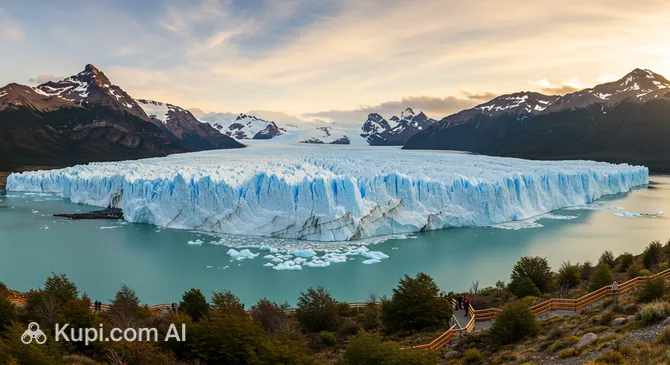
Los Glaciares National Park
Los Glaciares National Park. Иллюстрация. Источник: Kupi.com AI

The park's main feature is the Southern Patagonian Ice Field, considered the third-largest body of ice on the planet after Antarctica and Greenland. It feeds 47 large glaciers, creating a unique landscape that seems frozen in time. Here, you will find not only the famous Perito Moreno but also the massive Argentino and Viedma lakes, whose waters take on a milky blue hue due to unique "glacial flour."

The park is divided into several zones, each offering its own unforgettable views. The north is dominated by the sharp peaks of Mount Fitz Roy and Cerro Torre, which attract climbers from all over the world, while the southern part provides access to the most accessible and impressive glaciers. Los Glaciares is a living witness to the Ice Age, where every thunderous crack of ice falling into the water serves as a reminder of nature's relentless movement.

Contacts

To clarify travel details or obtain up-to-date information on trail conditions, you can contact the park administration. The office is located directly in the city and is ready to assist tourists with route planning.

How to contactContact
AddressAv. del Libertador 1302, Z9405 El Calafate, Santa Cruz, Argentina
Phone+54 2902 49-1005
Websitewww.argentina.gob.ar

What to Do

The highlight for most visitors is observing the Perito Moreno glacier. You can stroll along multi-level steel walkways that offer panoramic views of the ice wall, or take a boat tour to get within a safe but impressive distance of the giant. For the more adventurous, "mini-trekking" or "big ice" tours are available, where you can walk directly on the surface of the ancient ice accompanied by guides and wearing specialized crampons.

For outdoor enthusiasts, the park offers dozens of miles of trails. In the northern section, at the foot of Mount Fitz Roy and Cerro Torre, there are routes leading to lagoons with crystal-clear water. Here, you can spot Andean condors soaring in the sky or encounter graceful guanacos on the hillsides. Ecotourism in the park also includes kayaking among floating icebergs and photography of the unique flora of the Patagonian forests, consisting mainly of Nothofagus trees.

For those who prefer a more relaxed experience, cruises on Lake Argentino are organized to the remote Upsala and Spegazzini glaciers. This is a unique opportunity to see the park's tallest ice walls, which are only accessible by water. Regardless of your chosen activity, you will be accompanied by the incredible silence of Patagonia, broken only by the sounds of living, breathing ice.

Getting There

The journey to the icy giants usually begins with a flight from Buenos Aires to the El Calafate International Airport (FTE), which takes about 3 hours. From the airport, the city center is just a 20–30 minute ride by taxi or pre-booked transfer. The main information center and park administration are located at Av. del Libertador 1302.

To see the famous Perito Moreno Glacier, tourists need to travel about 80 km along the scenic Ruta 11 highway. This can be done via regular buses that depart from the El Calafate bus station in the morning, or as part of an organized excursion. The drive takes approximately 1.5–2 hours and runs along the shores of Lake Argentino.

For those planning to visit the northern part of the park (the Fitz Roy area), you will need to travel to the village of El Chaltén. Buses from El Calafate run regularly, and the journey takes about 3 hours. It is important to remember that there is an entrance fee for the park: tickets can be purchased online through the official website or directly at the ticket offices upon entering the protected area.

Ближайший город: El Calafate

History & Facts

The history of preserving this unique region began in the first half of the 20th century. The territory was placed under state protection in 1937, and Los Glaciares officially received national park status in April 1945. Global recognition followed in 1981, when UNESCO included it on the World Heritage list as a site of exceptional natural beauty and geological significance.

However, the history of human presence here is much older. Archaeologists have discovered that about 10,000 years ago, these harsh lands were inhabited by groups of hunter-gatherers. The ancient inhabitants of Patagonia used caves as shelters, leaving behind rock paintings and pottery fragments that today help scientists reconstruct the daily lives of prehistoric tribes.

The glaciers themselves are a living chronicle of the planet. They have formed over hundreds and thousands of years, storing information within their mass about climate changes over the last two million years. The first serious scientific expeditions reached these places only at the end of the 19th century, revealing the majesty of the ice fields and the sheer granite peaks of the Andes to the rest of the world.

Time Needed

To simply see the main star of the park — the Perito Moreno Glacier — you will need one full day. A standard excursion from the city, including travel time, walking along the observation decks, and a boat trip, takes between 8 to 10 hours. This is enough time to appreciate the scale of the ice wall and wait for the moment when massive chunks of ice crash into the water.

If you plan to explore the northern zone of the park as well (the El Chaltén area), home to the famous Fitz Roy and Cerro Torre peaks, you should allow at least 3–5 days for your trip. This will give you time to complete several hikes of varying difficulty and enjoy the Patagonian wilderness without rushing. For deep immersion and multi-day trekking enthusiasts, the park offers routes that can take an entire week.

Working Hours

The park's administrative office, located in El Calafate, operates on the following schedule:

  • Monday — Friday: 08:00 – 16:00
  • Saturday and Sunday: Closed

It is important to note that access to observation decks and hiking trails within the park depends on the season and the schedules of licensed tour operators. Generally, active operations in the park (transport and boat movements) take place during daylight hours, approximately from 09:00 to 17:00. During the winter period, visiting hours may be reduced due to shorter daylight.

DayWorking hours
Понедельник8:00 – 16:00
Вторник8:00 – 16:00
Среда8:00 – 16:00
Четверг8:00 – 16:00
Пятница8:00 – 16:00
СубботаЗакрыто
ВоскресеньеЗакрыто

Nearby

A stroll through the surroundings of El Calafate will allow you to immerse yourself deeper in the atmosphere of Patagonian hospitality. After a breathtaking day in the national park, it is a pleasure to return to the city to enjoy local cuisine or learn more about the history of the region's exploration.

In close proximity to the park's administrative center, you'll find cozy restaurants serving the famous grilled lamb and cultural sites telling the stories of the first settlers. Below is a list of interesting places to visit within walking distance.

NameDistance
Patagonia Dreams Tour Operator0.1 km
Patagonia Extrema0.1 km
El Gaita Pizza Bar0.3 km
Argentine Toy Museum0.4 km
La Trinchera Wine and Beer0.5 km
Buenos Cruces Pasta Bar0.5 km
Calafate Historical Interpretation Center0.8 km

Reached the end of the page?

That means the route is fully explored