Support

Mercedes

About

Mercedes is a charming city in the Buenos Aires province, which locals proudly call the "Pearl of the West." It attracts travelers with its cozy atmosphere, green streets, and rich cultural heritage, offering an ideal balance between provincial tranquility and developed urban infrastructure.

Located in the heart of the fertile pampas, the city is a perfect example of what traditional Argentina looks like outside the capital region. More than 63,000 people live here, creating a sense of a lively but not overcrowded community. The climate in this region is temperate and humid, making a visit to Mercedes comfortable at almost any time of year, especially in spring and autumn.
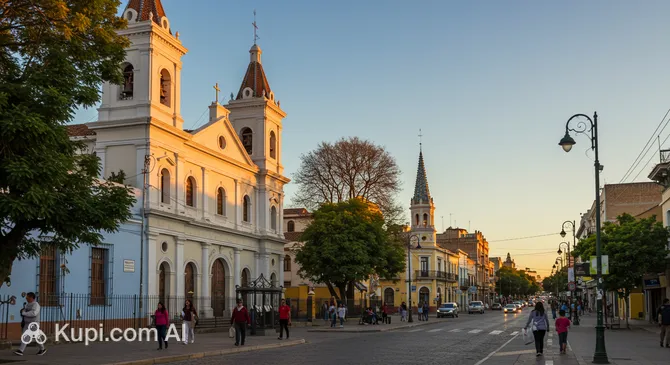
Mercedes. Illustration.
Source: Kupi.com AI

The fascinating history of Mercedes began back in the 18th century when a military outpost was founded here to protect the borders. Since then, the settlement has grown into an important railway and agricultural hub. Today, the city's architectural face is adorned with buildings from the late 19th and early 20th centuries, among which the majestic Cathedral Basilica of Our Lady of Mercy, built in the Neo-Gothic style, stands out.

Mercedes is widely known as the gastronomic capital of the region. The city is famous for its festivals: the National Quintero Salami Festival (Fiesta Nacional del Salame Quintero) and the National Peach Festival. Tourists should also drop by the legendary "Pulpería de Cacho Di Catarina" — one of the oldest traditional bar-stores in the country, operating since 1830, where time seems to have stood still.

A visit to Mercedes is an excellent choice for those who want to immerse themselves in authentic gaucho culture, enjoy delicious food, and take a break from the bustle of big cities surrounded by picturesque nature and hospitable people.

Weather Overview

The climate in Mercedes can be described as pleasant and temperate, making the city accessible for visits all year round. Summer here is truly warm and even hot: in January, the average temperature is about 24.7°C, and on the hottest days, the air warms up to 30.3°C. This time is ideal for those who love the sun, but keep in mind that the humidity can be high.

Winter months, by contrast, bring cool weather. The coldest period is July, with an average temperature of 10.5°C and nighttime drops to 6.0°C. Precipitation is distributed fairly evenly throughout the year: the number of rainy days varies from 4 in June to 9 in January. Expect a warm summer with occasional rain and cool, drier winters.

Spring and autumn are considered the most comfortable seasons for excursions, when the heat subsides but it is not yet cold outside. To ensure your trip goes as smoothly as possible and you can plan your wardrobe correctly, we recommend checking the current weather in Mercedes immediately before departure.

Average monthly temperature

Average monthly precipitation

Interesting Facts

In addition to the main attractions, Mercedes keeps many fascinating secrets and traditions that are revealed only to the most inquisitive travelers. This city is full of stories where real events are closely intertwined with local legends.

  • The Sanctuary of a Legendary Gaucho. The famous "Pulpería de Cacho Di Catarina," located on the outskirts of the city, is known not only for its venerable age. Legend has it that it was within the walls of this establishment that the famous outlaw and folk hero Juan Moreira once hid from pursuit. The pulpería still houses the original warrant for his arrest, which has become a kind of museum exhibit.

  • The Secret of "Quintero." The famous sausage that made the city famous is not just called salami, but "Salame Quintero." This name indicates a unique production method: the product is made exclusively on small suburban farms (quintas). Locals claim that the special taste is achieved thanks to the specific water of the region and strict adherence to old immigrant recipes passed down from generation to generation.

  • European Heritage. The city's hallmark — the Cathedral Basilica of Our Lady of Mercy — is built in the exquisite Neo-Gothic style characteristic of French architecture. The construction of this temple was a real logistical feat of that time: materials for finishing were delivered from different parts of Europe. For example, marble was brought from Italy, and high-quality slate for the roof came from England. Today, this majestic building is recognized as a national historical monument in Argentina.

  • Land of Peaches. Although Mercedes is more associated with meat delicacies today, historically it was one of the main centers for growing peaches in the country. It was here in the mid-20th century that huge fruit orchards were planted, and the quality of local peaches was so high that it led to the creation of the National Peach Festival, which is celebrated with great fanfare to this day.

How to Get There

When planning a trip to this cozy Argentine city, it is important to think through the logistics in advance. Mercedes has good transport accessibility, especially due to its proximity to the country's capital. You can find out more and consider all the ways to get to the city on a separate page, and below we will tell you about the main transport hubs.

There is no airport of its own in the city of Mercedes, so most tourists arrive via the air gateways of Buenos Aires. One of the most convenient options is Ezeiza Airport (IATA: EZE). This is Argentina's largest international airport, receiving flights from all over the world. It is located in the city of Buenos Aires, approximately 84 km from Mercedes. The journey by car or taxi from here will take about 2.5 hours.

An alternative option is Jorge Newbery Airfield (IATA: AEP), which is also located in Buenos Aires, at a distance of 93.7 km from the destination. This airport mainly serves domestic flights and flights from neighboring countries. The journey from the airport to the center of Mercedes by taxi or transfer will take approximately 2 hours and 40 minutes. Both airports are characterized by high passenger traffic and developed infrastructure.

For clarity, here is summary information on the main airports:

AirportPassenger trafficDistance
Ministro Pistarini Airport10.3 mln84 km
Jorge Newbery Airport13.5 mln94 km
Fisherton Airport530 000231 km

As for the railway connection, it is worth paying attention to the regional network. Available data mentions Bragada station (IATA: QRF). It is important to note that it is not located in Mercedes itself, but in the city of Bragado, which is about 111 km from your destination. If you arrive at this station, the trip to Mercedes by taxi or bus will take about 3 hours.

Below is information about the nearest railway station according to our data:

StationPassenger trafficDistance
Bragado18 199111 km

Main Attractions

Mercedes is a city where history is harmoniously intertwined with nature and culture. Although it is known for its gastronomic festivals, there are several iconic places worth visiting to truly feel the spirit of this corner of the Buenos Aires province.

Cathedral Basilica of Our Lady of Mercy. This majestic structure is the heart of the city and a main landmark for tourists. Recognized as a National Historical Monument, the basilica impresses with its Neo-Gothic architecture. Visitors are attracted not only by the scale of the building but also by the exquisite stained glass windows and the peaceful atmosphere inside. It is the perfect place to start your acquaintance with the city's architectural heritage.

Independencia Municipal Park (Parque Municipal Independencia). For lovers of outdoor recreation, this park will be a real discovery. It is a huge green area of more than 50 hectares, crossed by the Luján River. Here you can have a picnic in the shade of ancient trees, play sports, or just walk along the river. The park is a favorite vacation spot for locals and is great for family time.

La Trocha Cultural Complex. History buffs and fans of local flavor should look into the grounds of the former narrow-gauge railway station. Today, this space has been transformed into a vibrant cultural center. The old station buildings and platforms have been preserved, now serving as atmospheric backdrops for craft fairs and exhibitions. It is a great place to buy handmade souvenirs and get acquainted with the work of local artisans.

Local Cuisine

The gastronomic scene in Mercedes is one of the main reasons to visit this cozy corner of the province. The cuisine here is based on farming traditions and the recipes of the first settlers, offering tourists authentic flavors that are hard to find in metropolises. Food here is not just about satisfying hunger, but a real ritual that unites history and local products.

The undisputed king of the local table is the famous Salame Quintero (Quintero Salami). This delicacy, for which the city gained nationwide fame, is produced on small suburban farms (quintas). The unique taste is achieved through a special ratio of pork, beef, and fat, as well as long aging under natural conditions. Usually, salami is served as an appetizer (picada) along with homemade cheese and crispy galleta de campo — traditional country bread.

Since Mercedes is located in a fertile region, other classic dishes that Argentina is famous for are also excellently prepared here. Be sure to try the local asado (grilled meat) — the quality of the beef here is superb. In addition, the city is famous for its peaches. During the season, you should enjoy fresh fruit or try desserts based on them, such as peaches in syrup, which are often prepared according to home recipes.

Among the drinks, red wine holds the lead, especially the Malbec variety, which perfectly complements meat dishes. In recent years, craft beer from local enthusiasts has also been gaining popularity in the city. If you want to feel like a real local, join the ceremony of drinking mate — a tonic herbal drink consumed in parks and on embankments with friends.

Special attention should be paid to the atmosphere in which food is consumed. Mercedes has preserved a unique culture of pulperías — old rural bars that once served as a place of rest for gauchos. These are the best places to try simple but delicious food: empanadas (meat pies), cold cuts, and local wine. Lunch in such a historical setting, at worn wooden tables, will give you many more impressions than a visit to a regular modern restaurant.

Travel Tips

A trip to Mercedes promises to be peaceful and gastronomically rich, but even in such a cozy city, it's worth knowing a few local nuances. We have collected practical recommendations for you that will help you plan your trip, avoid minor misunderstandings, and feel confident in the Argentine province.

  1. Clothing and Seasonality. The climate here is humid, so in summer (December-February), choose light natural fabrics, but be sure to bring a hat and sunscreen. In winter (June-August), you will need a warm jacket, as the evenings can be quite cold. Since Argentina is famous for long walks, comfortable shoes — sneakers or trainers — will be your best choice. For visiting the Basilica, there is no strict dress code, but it is recommended to cover your shoulders and knees as a sign of respect.

  2. Getting Around. The historical center of Mercedes is compact, and it is most pleasant to explore on foot. Public transport is represented by buses (colectivos), but their routes may not be obvious to a tourist. For trips to distant pulperías or parks, it's better to use a taxi or a "remis" (private transport at a fixed price) — it's inexpensive and safe. Apps like Uber may be unstable, so it is more reliable to ask for a car to be called at the hotel reception or in a restaurant.

  3. Money and Payment. The official currency is the peso. In Mercedes, it is strongly recommended to have cash with you, especially small bills. Cards are accepted in large supermarkets and hotels, but in souvenir shops, at fairs, and in old bars, terminals are often absent. ATMs are available in the city center, but they may have withdrawal limits. It is customary to leave tips in restaurants in the amount of about 10% of the check if you liked the service.

  4. Safety and Health. Mercedes is a quiet and safe city, but do not neglect basic rules: do not leave your things unattended and avoid walking on unlit outskirts at night. Pharmacies (Farmacias) are easy to find in the center. An important tip for the summer season: be sure to use repellents, as mosquitoes can be quite active in the province's humid climate.

  5. Language Barrier and Connectivity. The main language of communication is Spanish. English is not spoken everywhere, so download an offline translator or learn a couple of basic phrases ("Hola" — hello, "Gracias" — thank you). For stable connectivity, it's better to buy a local SIM card (for example, Claro or Movistar) upon arrival in the country. Free Wi-Fi is available in many cafes and on the main square, but the speed may be slow.

  6. Local Etiquette. Residents of Mercedes are known for their hospitality and openness. When meeting, even with acquaintances, it is customary to kiss each other on the cheek (usually once). Life in the city flows slowly: do not rush waiters and sellers, they value tranquility and live communication here. Remember that dinner starts late — restaurants come to life only after 9:00 PM.

  7. What to Avoid. Do not categorically refuse if locals offer you a taste of mate — it may be perceived as impolite, as sharing the drink is considered a sign of trust and friendship. Also, try not to compare Mercedes with bustling Buenos Aires in conversations: locals are very proud of their identity and the unique atmosphere of the "garden city."

  8. Consider the Siesta. This is an important feature of the local rhythm of life. Many shops, offices, and even some cafes close for a afternoon break from about 1:00 PM to 4:30 PM. Plan shopping and household matters for the morning or evening, and it is better to spend the hot afternoon hours resting in the shade of a park or enjoying a leisurely lunch.

Mercedes is a city that reveals itself to those who are in no hurry. By following these simple tips, you will be able to easily blend into the local rhythm of life, feel like a welcome guest, and take with you only the warmest memories of this corner of the Argentine pampas.

Entertainment & Nightlife

Entertainment and nightlife:

Nightlife in Mercedes differs from noisy metropolises in its soulfulness and gastronomic focus. You won't find neon districts with endless rows of nightclubs here, but the city offers something more — a cozy atmosphere of friendly gatherings, live music, and immersion in local traditions. It is customary to start an evening in Mercedes with a leisurely dinner, which smoothly transitions into long conversations over a glass of wine or a pint of craft beer.

The center of attraction in the evening is the area around the main square, Plaza San Martín, and the adjacent streets, especially Avenida 29. This is where most restaurants, modern bars, and cafes are concentrated. In recent years, there has been a boom in craft breweries (cervecerías) in the city, where young and middle-aged people gather. The atmosphere in such establishments is democratic and relaxed, and the dress code is "casual," so you will feel comfortable in regular, convenient clothes.

Historical establishments occupy a special place on the city's night map. If you are looking for an authentic experience, be sure to visit Pulpería de Cacho Di Catarina. It is the oldest operating pulpería in Argentina, located on the banks of the Luján River. In the evenings, a unique atmosphere of antiquity reigns here: locals and tourists gather at wooden tables to drink wine, snack on cheese, and listen to folk music. This place is a living legend where nightlife takes on a historical hue.

For those who prefer cultural leisure, the Complejo Cultural La Trocha is an excellent option. On weekends and holidays, evening fairs, open-air concerts, and gastronomic festivals are often held on the territory of this converted railway complex. It is a safe and lively space where you can spend pleasant time with family or a group of friends, enjoying local food and art.

Practical tips for night owls:

  • Timing: Life in the city wakes up late. Restaurants only start filling up after 9:00 PM, and bars closer to midnight. If you come for dinner at 7:00 PM, you risk being in an empty room.
  • Prices: The cost of dinner and drinks in Mercedes is noticeably lower than in the capital. The average check in a bar or restaurant will pleasantly surprise you with its affordability.
  • Safety and Transport: The city center is considered safe for evening walks; however, to return to your hotel late at night, it is better to use a taxi or "remis" services. Public transport runs rarely at night.

During the day, Mercedes offers more relaxed entertainment. Nature lovers can head to Parque Municipal Independencia — a huge green oasis where you can ride bicycles, have a picnic, or just relax by the river before a busy evening. There are also several small museums and theaters in the city that introduce guests to the rich history of the region.

Parks & Museums

Mercedes offers travelers a harmonious combination of nature retreats and educational tourism. This city, nestled in greenery, carefully preserves its heritage, inviting guests to stroll along the shady alleys of parks and look into unique museums telling about the distant past of the region.

The main natural attraction of the city is undoubtedly the Independencia Municipal Park (Parque Municipal Independencia). This is not just a square, but a vast recreational area of 54 hectares, divided into "old" and "new" sectors. The park is famous for its ancient eucalyptus groves and the fact that the picturesque Luján River flows through it. Tourists come here to have a barbecue in specially equipped areas, ride bicycles, or just enjoy the silence by the water. It is the ideal place to feel the rhythm of life in the local province.

The heart of urban life is considered to be Plaza San Martín. This central square is a model of classic Argentine urban planning. Surrounded by historical buildings and decorated with well-kept flower beds and fountains, it serves as the main meeting place for citizens. It is pleasant to relax here on a bench in the shade of trees after seeing the architectural monuments of the center, watching the slow flow of city life.

History and science buffs should definitely visit the Carlos Ameghino Natural Science Museum (Museo de Ciencias Naturales \"Carlos Ameghino\"). This museum is a real treasure trove for those interested in paleontology. The Luján River basin region is known for finds of remains of ancient megafauna, and the museum's exhibition features more than 4,000 exhibits, including fossils of giant sloths and glyptodonts that lived here thousands of years ago. This place will be especially interesting for families with children and natural history lovers.

To immerse yourself in the social history of the city, we recommend looking into the Víctor Míguez Municipal Historical Museum (Museo Histórico Municipal \"Víctor Miguez\"). Located in a beautiful 19th-century mansion, the museum recreates the atmosphere of everyday life in past centuries. The collection includes furniture, clothing, documents, and personal items of the first settlers and famous residents of the city. A walk through the museum halls allows you to better understand how Mercedes developed from a military outpost to a thriving city.

The cultural landscape is complemented by the Municipal Museum of Art (MAMM), which regularly hosts exhibitions of contemporary local painters and sculptors. The gallery often becomes a venue for cultural dialogues and temporary exhibitions reflecting the creative spirit of the region.

Insider Tip: If you find yourself in Independencia Park, pay attention to the banks of the Luján River. It was in these places, in layers of clay, that the famous naturalist Florentino Ameghino made his first discoveries. Although digging is prohibited there now, the realization that you are walking on land hiding secrets of prehistoric times gives the walk a special charm.

Getting Around

The transport system of Mercedes is compact and intuitive, which harmoniously combines with the measured rhythm of life in this provincial city. Since most key attractions, restaurants, and hotels are concentrated in the central part, many travelers prefer to move around on foot, enjoying the architecture and the greenery of the streets. However, if you need to get to distant areas, Independencia Park, or neighboring settlements, local transport will come in very handy.

The main form of public transport within the city is buses, which in Argentina are called "colectivos." Several local routes operate in Mercedes, connecting the center with the periphery. It is important to consider that the frequency of movement here is lower than in the capital: buses can run with an interval of 20 to 40 minutes. During siesta hours (after lunch) and on weekends, waiting times may increase, so having some extra time won't hurt.

To pay for travel on public transport, including city buses and suburban trains, you will need a single contactless SUBE card. This is the same system that works in Buenos Aires and other major cities in the country. Cash payment to the driver is not accepted. You can buy the card at kiosks (Kioscos) or lottery agencies with the SUBE logo. We recommend purchasing and topping up your card in advance, as not all sales points work 24/7.

A popular and comfortable alternative to buses is remises. This is a type of private taxi that cannot be hailed on the street with a wave of a hand — a car must be ordered by phone or in special offices ("remisería"), which are easily found in the center. The advantage of a remis is that the fare is often fixed or known in advance, and the service level is usually higher. Classic metered taxis are also available, and their stands are most often located by the main Plaza San Martín and near the railway station.

For lovers of active recreation, Mercedes is a wonderful place for cycling. The terrain here is flat, and car traffic is relatively calm. Although there may not be a single municipal bike-sharing system, some hotels and private rental points offer bicycles for rent. This is a great way to get to the famous historic pulperías on the outskirts, while admiring the landscapes of the pampas.

If you are traveling by car, there are usually no problems with parking. In the very center of the city, a paid parking system (estacionamiento medido) operates during business hours, but if you drive a couple of blocks away from the main streets, you can leave your car for free. Be attentive to road signs and remember that during the siesta, the streets become empty, and towards evening, movement becomes busy again.

Accommodation

Mercedes offers tourists a cozy and authentic choice of accommodation that perfectly reflects the quiet character of this provincial city. You won't find huge chain hotel skyscrapers or ultra-luxury international resorts here. The basis of the hotel stock consists of small urban hotels, cozy family guesthouses, and apartments oriented towards a comfortable stay. The format of country accommodation, which allows you to enjoy the nature of the pampas, is particularly popular in this region.

Most classic accommodation options are concentrated in the historic city center, within walking distance of the main Plaza San Martín and the Cathedral Basilica. By staying here, you will find yourself in the epicenter of gastronomic life, close to restaurants and shops, which is especially convenient for travelers without a car. For those looking for silence and full immersion in rural flavor, it is worth paying attention to the outskirts of the city and adjacent territories. There are numerous "quintas" (country houses with gardens and pools) located here, as well as traditional estates that are often rented out to tourists.

When planning a trip, it is important to consider the calendar of local events. Mercedes is known for its large-scale festivals, such as the National Salami Festival or the Peach Festival. During these events, as well as on long weekends, the city fills up with guests, and vacant rooms run out very quickly. To guarantee convenient accommodation during peak season, it is recommended to book your lodging in advance, preferably a few weeks before the intended visit date.

The price range in the city can be described as moderate and affordable, especially compared to the country's capital. Budget options and middle-class offers predominate, offering excellent value for money. Regarding booking methods, along with popular international online platforms, direct communication with owners is widespread in Mercedes. Many small hotels and apartments actively use social networks or instant messengers to confirm reservations, which often allows for more personalized service.

Nearby Cities

For those who want to explore the surrounding area, Mercedes serves as an excellent starting point for day trips to several interesting nearby places:

The absolute favorite for a short trip is the neighboring city of Luján, located just 30 kilometers away. This is the spiritual center of Argentina, where millions of pilgrims come every year to worship the country's patron saint. The main attraction is the monumental Neo-Gothic Basilica of Our Lady of Luján, whose spires are visible from afar. In addition to the temple, the city is interesting for its colonial museum complex, where you can learn more about the history of the Viceroyalty of the Río de la Plata.

Another interesting destination is General Rodríguez. This city is famous for its polo traditions and developed dairy industry — it is here that the headquarters of one of the country's largest dairy brands is located. A trip here will be of interest to fans of agritourism and those who want to see the more modern, industrial-rural side of the Buenos Aires province. Cities closer to the capital, such as San Miguel, offer a more lively urban atmosphere, large shopping centers, and a variety of entertainment.

CityPopulationDistance
Luján106 89930 km
Navarro11 56242 km
General Rodriguez85 31544 km
Carmen de Areco14 69247 km
Capilla del Señor9 24450 km

These nearby destinations provide an insight into the diverse culture and landscapes of the region.

Shopping & Souvenirs

Shopping in Mercedes is not about chasing fashion brands in huge shopping malls, but an exciting search for authentic goods that reflect the soul of the Argentine province. The main value of local purchases lies in their uniqueness and high quality of handiwork. It is customary to bring gastronomic delicacies and folk crafts from this city that are difficult to find in other regions.

The undisputed leader among purchases is the famous Salame Quintero (Quintero Salami). Since the city holds the title of the national capital of this product, buying a stick of fragrant sausage here is considered a mandatory part of the program. You can buy it in specialized shops (almacenes de campo), butcher shops, or directly from the producing farmers, whose farms are often open to visitors. In addition to meat delicacies, it is worth paying attention to local cheeses and traditional pastries.

Mercedes is also famous for its leather masters. In local workshops (talabarterías), you can find magnificent products made of genuine leather: from durable belts and wallets to elements of horse harnesses and traditional footwear — alpargatas. For connoisseurs of gaucho culture, handmade knives (cuchillos artesanales) with skillfully decorated handles made of bone or wood, as well as mate sets — calabashes and metal bombilla straws — make excellent souvenirs.

The main commercial life bustles in the city center, on the streets adjacent to Plaza San Martín (especially on streets 25, 27, and 29). Here you will find clothing stores, souvenir shops, and wine boutiques. If you want to find something truly unique, head to the artisan fairs that are regularly held at the "La Trocha" cultural center or in the main squares on weekends. There, local craftsmen offer ceramics, textiles, and jewelry.

When planning a shopping trip, it is important to remember the local daily routine. In Mercedes, the tradition of the siesta is sacredly observed: most private shops and stores close around 1:00 PM and resume work only after 4:30 PM or 5:00 PM. Supermarkets may operate without a break, but for authentic shopping, it is better to go in the morning or evening. Also, keep in mind that cash is preferred in small shops and at fairs.

Reached the end of the page?

That means the route is fully explored