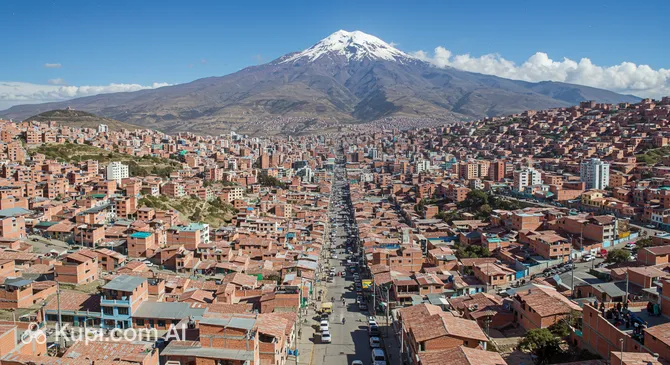
El Alto is a remarkable and rapidly developing metropolis located in Bolivia on the high Altiplano plateau. Founded only in 1903, the city today proudly holds the title of the world's highest city with a population of over a million, sitting at an altitude of more than 4,100 meters above sea level. Its unique atmosphere is permeated with the spirit of the highlands and the energy of a young nation, where more than half of the residents are under the age of 19.
The city is the second most populous in the country, with approximately 943,000 residents. Its geographical position on the edge of a giant canyon gifts visitors with breathtaking views of the snow-capped peaks of the Andes and La Paz sprawling below. In the history of this place, the indigenous population plays a key role: about 74% of the residents are members of the Aymara people, giving El Alto a distinct indigenous character and authenticity.
El Alto. Illustration.
Source: Kupi.com AI
Tourists are drawn here not only by the extreme altitude but also by the unique "neo-Andean" architecture, famous markets, and the opportunity to experience living traditions. El Alto serves as an important economic and transport hub, blending a modern rhythm of life with deep cultural roots. We invite you to explore this "city in the clouds," which is sure to surprise you with its sincerity and scale.
Weather Overview
The climate in El Alto is classified as high-altitude, due to its location at an elevation of over 4,100 meters. Cool weather persists here almost year-round, with moderate daytime temperatures and cold nights. The average maximum daytime temperature usually ranges between +12°C…+15°C, while at night the thermometer can drop to 0°C and below, especially during the winter months.
Precipitation falls mainly during the summer period (from December to March), when humidity increases significantly and rain often occurs. Winter (from June to August) is the dry season with clear skies and intense solar radiation, but this is also when night frosts become regular. Expect a cool summer with occasional downpours and frosty, dry winters.
When planning your trip, be sure to study detailed information about the city's climate, as the thin air makes the sun's rays very active, and the weather can change drastically within a few hours. Sunscreen and warm clothing for the evening are essential items at any time of year.
Average monthly temperature
Average monthly precipitation
Interesting Facts
El Alto is officially recognized as the world's highest metropolis with a population of over a million, situated at an altitude of approximately 4,150 meters.
The city demonstrates incredible growth rates: in just 30 years, its population has tripled—from 400,000 to more than a million residents.
It is one of the youngest cities in the region, not only by its founding date (1903) but also by the age of its residents—half of the city's population is under 19.
In 2012, El Alto surpassed La Paz in population, becoming the second-largest city in the entire country.
The city's architectural landscape is shaped by "cholets"—unique multi-story palaces with Andean motifs, the construction of which can cost hundreds of thousands of dollars.
How to Get There
Reaching the high-altitude El Alto can be done in several ways, but the fastest and most convenient is by air. The city has excellent transport accessibility thanks to a major international airport that receives flights from other regions of Bolivia as well as from neighboring South American countries. You can learn more about ways to get there on the specialized pages of our travel guide.
The region's primary aviation hub is El Alto International Airport (IATA: LPB). It is located directly within the city limits, making transfers to hotels extremely short. The airport is famous for its high-altitude runway, one of the longest in the world. From the terminal, it is easy to reach the central part of the metropolis by official taxi or regularly running microbuses.
In addition to planes, you can arrive in the city by bus from La Paz or other major cities in the country. Road connections are actively developing, though the specifics of mountain switchbacks should be considered. There are also railway tracks linking the city to other regions, though they are used less frequently for passenger transport than road vehicles.
Main Attractions
The main attraction of El Alto is the city itself, a living monument to the culture of the Aymara and Quechua peoples. Walking through its streets, it is impossible not to notice the unique "cholet" style buildings — bright, multi-colored mansions with whimsical facades that have become a symbol of the new economic prosperity of the locals. These architectural masterpieces reflect modern indigenous ideas of prestige and tradition.
One of the most impressive places is the massive 16 de Julio Market (Feria de 16 de Julio). It is one of the largest open-air markets in Latin America, where you can find absolutely everything: from traditional alpaca wool textiles to spare parts and antiques. The market allows tourists to immerse themselves in the daily life of the Bolivian Altiplano and witness the city's genuine commercial bustle.
Thanks to its location on the edge of the plateau, El Alto offers the best viewpoints, providing panoramic vistas of neighboring La Paz and the majestic Mount Illimani. The city also serves as a starting point for journeys to Lake Titicaca and other natural gems of the region, making it an essential link in any travel itinerary through highland Bolivia.
Local Cuisine
The culinary traditions of El Alto are a celebration of the flavors of highland Bolivia. Local cuisine is based on products that the Aymara and Quechua peoples have grown on the Altiplano plateau for centuries. The main ingredients here are hundreds of varieties of potatoes, corn, beans, and the nutritious grain quinoa. Llama meat holds a special place in the diet, distinguished by its low fat content and unique taste.
Be sure to try salteñas — juicy Bolivian pastries filled with meat, potatoes, and a sweetish sauce, which are typically eaten for breakfast. Another popular dish is anticuchos (beef heart skewers), which are cooked over an open fire right on the streets. For those who want a hearty meal, the filling chairo soup, made from dehydrated potatoes (chuño) and vegetables, is an excellent choice.
Food culture in the city is inextricably linked to markets and small family-run restaurants, which are always noisy and crowded. As a beverage, locals prefer mate de coca — an infusion of coca leaves that perfectly helps cope with symptoms of altitude sickness. It is also worth trying chicha — a traditional drink made from fermented corn, which has ancient roots.
Travel Tips
Preparing for a trip to El Alto requires attention to detail to ensure your journey to the "roof of the world" is comfortable and safe. These tips will help you settle into the world's highest metropolis more quickly.
Acclimatization and health: Due to the altitude of over 4,100 meters, altitude sickness is a real risk. Arrive gradually, drink plenty of water, avoid alcohol on the first day, and try local coca tea (mate de coca) to alleviate symptoms.
Clothing and equipment: The weather on the Altiplano is changeable. Dress in layers: it can be hot under the bright sun during the day, but the temperature drops sharply after sunset. Be sure to bring sunscreen with a high SPF and dark sunglasses—UV radiation here is very aggressive.
Finances: The main currency is the boliviano. In El Alto, cards are rarely accepted, mostly only in large hotels or at the airport, so always have small denomination cash for markets and transport.
Safety: Observe standard precautions: do not display expensive gadgets or large sums of money in crowded places. After dark, use only official radio-taxis.
Transport: The fastest and safest way to get to neighboring La Paz is the cable car. This will allow you to avoid hours of traffic on the switchbacks.
Language and communication: The primary language is Spanish, although many residents speak Aymara. English is not widely spoken, so learn a few basic phrases or use an offline translator.
Local etiquette: City residents can be reserved, but they are very hospitable. Always ask for permission before photographing people in national dress—many are cautious about this.
What to avoid: Do not plan intense physical activities for your first 24 hours. Give your body time to adjust to the thin air.
May your introduction to this unique highland city be filled with bright discoveries and warm encounters!
Entertainment & Nightlife
Social and entertainment life in El Alto centers around its markets and vibrant public spaces. By day, the city pulses with the energy of trade and street performances, while on weekends, traditional festivals featuring bright costumes and music are often held. Given the young age of the population, the city has many small cafes and venues where young people gather.
The nightlife here has its own flavor: the event halls in those famous "cholets" become centers for lavish weddings and corporate events where local folk ensembles perform. Unlike the tourist districts of neighboring La Paz, establishments in El Alto are geared toward locals, allowing guests to see authentic Bolivian parties without any embellishments.
For bars and nightclubs more familiar to European tourists, travelers often head down to the lower districts of La Paz using the cable car. However, an evening stroll along the central lit streets of El Alto under the starry highland sky is a unique experience in itself. For safety reasons, it is recommended to always use official radio-taxis for travel at night.
Parks & Museums
Despite El Alto being a young and industrial city, it has its own cultural oases. One of the key sites is the Antonio Paredes Candia Art Museum. It houses a rich collection of Bolivian art, including painting, sculpture, and archaeological finds that allow for a deeper understanding of the history and soul of the Altiplano peoples. The museum is located in a unique building and is a source of pride for the citizens.
The city itself can be described as an open-air museum. Its streets are decorated with murals and facades in the "Andean architecture" style, which tell the stories of ancestors and modern myths of the Aymara people. A walk through the neighborhoods with cholet houses replaces a visit to a modern design gallery, demonstrating how ancient symbols are integrated into the modern urban landscape.
In search of parks and green zones, locals often head to the city's border with the canyon, where viewpoints such as Mirador Virgen Blanca have been established. Here you can escape the city bustle while enjoying the silence and the majestic view of the mountains. To visit classic botanical gardens or major historical museums, tourists usually descend to neighboring La Paz, which takes no more than 20-30 minutes.
Getting Around
The transport system of El Alto is a unique blend of traditional shuttles and ultra-modern technology. The most striking and convenient mode of transport is the Mi Teleférico cable car. It is not just an attraction but a full-fledged "metro in the sky" that links the highland districts of the city together and provides a fast descent into La Paz. Traveling in a cabin allows you to avoid traffic jams and enjoy stunning views.
Ground transport is represented by a vast number of microbuses, called "micros" or "minibuses" here. They run throughout the city, and their routes are often marked by bright signs on the windshield. Payment is made to the driver in cash upon entry or exit. This is the cheapest way to get around, allowing you to feel the true rhythm of life of the local population.
For more comfortable trips, tourists use taxis. In El Alto, it is recommended to call cars through official radio-taxi services or apps, especially in the evening. The city is also a major hub for intercity buses and boasts an international airport, making it a key point on the transport map of the entire country.
Accommodation
Accommodation options in El Alto range from very basic budget hostels to modern mid-range hotels. The city is still developing its tourism infrastructure, so the hotel stock here is more modest than in major international centers. Most hotels are concentrated near the main transport arteries and the international airport, which is convenient for transit travelers.
Many tourists prefer to stay in central districts to have quick access to the famous markets and cable car stations. Room rates here are usually lower than in neighboring La Paz, making the city attractive for budget travelers wishing to immerse themselves in an authentic environment.
However, due to the extreme altitude and thin air, some travelers prefer to spend their nights at lower elevations. If you plan to stay specifically in El Alto, it is recommended to book accommodation in advance, especially during the dry season, and choose vetted options with good reviews, paying attention to the availability of heating, as nights on the Altiplano can be quite cold.
Nearby Cities
Thanks to its location, El Alto serves as an ideal starting point for exploring the central part of the Bolivian highlands. Its proximity to key transport hubs allows tourists to easily plan day trips to neighboring cities and unique natural sites.
The most popular destination is La Paz, which is only 9 kilometers away. It is the seat of government, located in a deep canyon that can be reached from El Alto via the modern cable car system. Also of interest are the town of Achocalla with its picturesque landscapes and Viacha, where you can get acquainted with the region's traditional way of life.
For those ready for longer trips, routes are open to Lake Titicaca or the tropical Coroico. Exploring the surroundings of El Alto will give you the chance to see the sharp contrast between the harsh peaks of the Andes and the humid forests, revealing the multifaceted nature of Bolivia.
Shopping & Souvenirs
Shopping in El Alto is primarily about visiting its legendary markets, where trade is a way of life. There are no massive sterile shopping malls here, but instead, there is incredible local color and the opportunity to find unique items. The city is famous for its textiles: here you can buy products made from high-quality llama and alpaca wool — ponchos, chullo hats, sweaters, and blankets with traditional patterns.
The main shopping area is considered to be the district around the 16 de Julio cable car station. On Thursdays and Sundays, a giant fair unfolds here, selling everything from handmade crafts to antiques and Bolivian musical instruments like the charango or zampoña. This is the best place to purchase authentic souvenirs and folk art at very attractive prices.
Shops in the city usually operate from early morning until evening with a short lunch break. Payments are most often made in cash in the local currency (boliviano), so it is worth taking care of currency exchange in advance. Despite the lack of a Tax-Free system, the low prices for local craftsmen's products make shopping in El Alto one of the most profitable and interesting experiences in Bolivia.