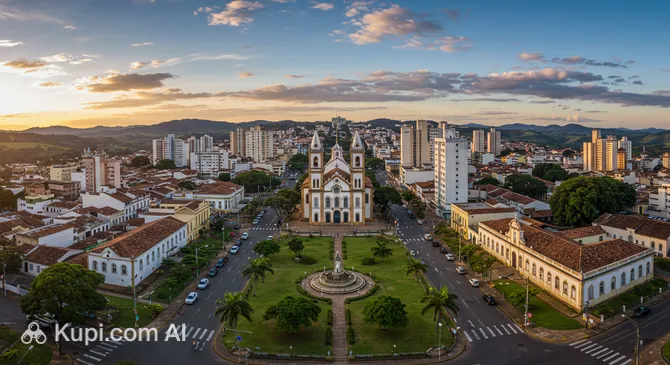
Americana is a dynamic and industrious city located in the heart of the state of São Paulo in Brazil. Known primarily as the country's textile capital, it boasts a unique atmosphere of an industrial center where modern factories sit alongside quiet residential neighborhoods. The city's name is no coincidence: its founding history is inextricably linked to immigrants from the southern United States who moved here after the Civil War in the 1860s, bringing with them their traditions and cotton-growing technologies.
Americana. Illustration.
Source: Kupi.com AI
Situated on a picturesque plateau of the Brazilian Highlands at an altitude of about 569 meters, Americana is home to more than 240,000 people. The city is part of the Campinas metropolitan area and is considered an important economic hub for the region. Despite its predominantly industrial character, you can find pleasant spots for walks along the Piracicaba River, which defines the local landscape.
For tourists, the city is primarily interesting for its unusual cultural heritage and religious architecture. It’s worth seeing the majestic Basilica Sanctuary of Saint Anthony of Padua and strolling through the shaded alleys of the botanical garden. Americana invites those who want to see a "different" Brazil—business-oriented, organized, and proud of its contribution to the country's economy.
Weather Overview
Americana features a pleasant tropical climate, tempered by its location on a plateau. Warm weather prevails almost year-round, making the city accessible for visits at any time. However, it's worth considering the seasonality of rainfall: the wettest time of year is from December to March, when average temperatures stay around +24°C...+25°C, and showers can be brief but very intense.
The winter months, especially June and July, delight visitors with dry and sunny weather. This is an ideal period for excursions and park walks, as humidity is minimal and daytime temperatures are a comfortable +19°C...+20°C. Nights during this time can be cool (down to +12°C), so a light jacket wouldn't go amiss. You can always check the current city climate before your trip to pack your suitcase correctly.
An important feature of the local weather is good ventilation due to the terrain; however, in areas with dense industrial development, the air may feel heavier. In general, expect a warm summer with occasional thunderstorms and a mild, sunny winter with clear skies.
Average monthly temperature
Average monthly precipitation
Interesting Facts
Americana was founded in 1875 around a railway station, although its settlement began as early as 1868 by people from the Confederate States of America.
The city is Brazil's largest textile center, producing about 150 million linear meters of fabric every month.
The region concentrates about 32% of all the country's textile companies and 27% of Brazil's garment enterprises.
The city only gained independent municipality status in 1924; before that, it was administratively dependent on neighboring settlements.
Thanks to its specialization in synthetic fibers, the city is considered one of the main innovation hubs in the light industry sector in all of Latin America.
How to Get There
Americana is located approximately 100 kilometers from São Paulo, making it easily accessible for travelers. The city is connected to the region's largest metropolises via the modern Anhanguera (BR-050) highway. The most convenient way to find out how to get to the city is by using intercity buses or a rental car; the journey from the state capital takes about an hour and a half to two hours.
Although Americana has its own small airport, it primarily serves private and cargo flights for the textile industry. Tourists most often arrive via the nearest major international hub—Viracopos Airport (VCP) in Campinas, located 30–40 kilometers away. From there, you can reach Americana in 30 minutes by taxi or a regular shuttle bus.
Railway communication in the city has a rich history—it was around the 1875 station that the future textile hub began to grow. However, today the railway is used almost exclusively for freight transport. Passengers are advised to rely on the extensive network of bus routes connecting the city with São Paulo, Rio de Janeiro, and other Brazilian centers.
Station
Passenger traffic
Distance
Antiga Estação Ferroviária do Distrito de Ártemis
1
45 km
Jundiaí train station
6
69 km
Várzea Paulista train station
6
73 km
Campo Limpo Paulista train station
6
76 km
Botujuru train station
6
80 km
Main Attractions
Even though the city is primarily an industrial center, there are several landmark sites worth visiting. One of the main architectural features of the center is the Basilica Sanctuary of Saint Anthony of Padua. This majestic structure attracts not only believers but also fans of monumental art, impressing visitors with its solemn atmosphere and rich interior decoration.
Nature lovers and those seeking a quiet retreat will certainly enjoy the Prefeito Carroll Meneghel Municipal Botanical Garden of Americana. This is a true green oasis amidst urban development, featuring collections of exotic and native plants. The garden is perfect for morning walks and discovering the flora of the state of São Paulo.
Another great place for family leisure is the Americana Ecological Park. This park combines the functions of a recreation area and an educational center where you can see various wildlife in their natural habitat. Visitors note the well-maintained paths and the opportunity to escape the city noise while enjoying fresh air and birdsong.
Local Cuisine
The gastronomy of Americana is a classic mix of São Paulo's Brazilian traditions with small touches of international cuisine. As in the rest of the region, people here love churrasco (grilled meat) and traditional feijoada—a hearty stew of black beans and various meats, usually served on Saturdays. The influence of US immigrants has almost entirely blended into local tastes over time, but the love for coffee and pastries remains unchanged.
For a quick snack or a leisurely breakfast, stop by Padoca da Alma. This place is famous for its fresh bread and cozy atmosphere, where you can try the famous Brazilian pão de queijo (cheese bread). If you're looking for Italian flavors with a Brazilian twist, Edwiges Pizza & Bistro offers an excellent selection of pizzas and bistro-style dishes that are very popular with locals in the evenings.
Be sure to try the local coffee, as the São Paulo region has historically been a center for coffee production. Among beverages, the caipirinha is a standout, crafted masterfully here. The food culture in the city is centered around shopping malls and the main downtown streets, where restaurants focus on high-quality and hearty meals for the working class, ensuring large portions and fair prices.
Travel Tips
When planning a visit to this unique Brazilian textile center, use our practical tips to make your trip as comfortable and interesting as possible.
Clothing and essentials: Choose light clothing made from natural fabrics, as the region can be quite humid and hot. When visiting the Basilica of Saint Anthony of Padua, it is recommended to cover your shoulders and knees. Don't forget comfortable walking shoes for the parks and sunscreen.
Transport: The most convenient way to get around the city is by taxi or via the Uber app. Public buses can be very crowded during factory shift changes (morning and early evening).
Finances: The official currency is the Brazilian Real (BRL). Bank cards are accepted almost everywhere, from shopping centers to small cafes, but having a little cash for small purchases at markets won't hurt.
Safety:Americana is relatively safe during the day, but like any Brazilian city, you should avoid walking alone in the outskirts and industrial zones after sunset. Keep valuables in inner pockets.
Communication: The primary language is Portuguese. English is not widely spoken, so it’s useful to learn a few basic phrases or have an offline translator handy. A SIM card can be purchased at any major shopping mall.
Local Etiquette: Brazilians are very friendly and sociable. Greetings are often accompanied by a light handshake. In restaurants, it is customary to leave a tip of around 10%; often this is already included in the bill as a "service charge."
What to Avoid: Do not take photos of industrial facilities or private factories without permission—this may arouse suspicion among security. Also, avoid discussing sensitive social topics with strangers.
Extra Tip: If you are planning serious textile shopping, it is best to come on weekdays when all the wholesale warehouses and factory outlets are open.
May your introduction to Americana be a pleasant discovery and offer many interesting impressions of this industrious land!
Entertainment & Nightlife
Nightlife in Americana is quiet and local in character, reflecting the city's working rhythm. Most activity after sunset is concentrated in the city center and around the main shopping malls. Residents prefer to spend their evenings in cozy bars where they can discuss the day's news over a glass of cold beer or a refreshing caipirinha.
If you're looking for a place with a great atmosphere and live music, check out John Gow Irish Pub. This establishment is very popular thanks to its stylish interior and wide selection of drinks. For those who prefer a simpler and more casual setting, Bar Pezão is perfect for experiencing the true flavor of Brazilian hangouts.
Daytime entertainment in the city is most often related to outdoor activities. Families with children often choose Vô Palmira Park, which features playgrounds and picnic areas. If you're looking for large nightclubs or loud parties, it's worth taking a short trip to neighboring Campinas, which is only 30 minutes away and famous for its developed entertainment industry.
Parks & Museums
The green zones of Americana play an important role in the life of this industrial city, offering residents and guests a much-needed break from factory noise. The main attraction for nature lovers is the Prefeito Carroll Meneghel Municipal Botanical Garden of Americana. Here you can see rare plant species and enjoy the silence in shaded alleys, making it an ideal place for meditative walks.
For active family recreation, the Americana Ecological Park is a great choice. It combines the features of a park and a zoo, where representatives of the local fauna live in spacious enclosures. This is one of the most popular locations in the city, where you can spend an entire day studying the region's biodiversity and relaxing by the water.
While the city lacks major art museums, its historical heritage is carefully preserved. It's worth visiting Vô Palmira Park, a favorite meeting place for locals. The spiritual and cultural center is the Basilica Sanctuary of Saint Anthony of Padua, whose architecture and history reflect the deep religious traditions of the region. Despite the dense development, the city strives to maintain its parks in excellent condition for the comfort of all visitors.
Getting Around
The transport system of Americana is based on an extensive network of bus routes connecting residential areas with industrial zones and the city center. The main passengers are textile factory employees, so during morning and evening rush hours, transport can be overcrowded. Buses run quite frequently, at 10–20 minute intervals on main routes.
There is no metro in the city, but Americana is well-integrated into the overall transport network of the Campinas metropolitan area. Regular suburban buses allow for easy and quick movement between neighboring cities. Special transport cards are most commonly used for fares, but cash payment is also possible upon boarding.
For tourists, the most convenient and safest way to get around remains taxis or popular ride-hailing apps like Uber. This avoids the difficulty of finding the right stop and saves significant time, especially when traveling to remote parks or the botanical garden. Cycling infrastructure is poorly developed, so it’s better to choose central squares or specially equipped park areas for walks.
Accommodation
Accommodation in Americana is primarily geared towards business travelers and specialists visiting the textile enterprises. Most hotels are modern, functional mid-range buildings offering all the necessary amenities for a comfortable rest after a workday. The majority of hotels are concentrated in the central district and near large shopping complexes.
If you're looking for budget options, the city offers a wide selection of apartments and guesthouses. Keep in mind that due to the city's industrial nature, there are virtually no luxury five-star resorts here. For exclusive service and international chain hotels, many tourists prefer to stay in neighboring Campinas, making day trips to Americana.
It is recommended to book accommodation in advance, especially if your visit coincides with major textile exhibitions or industrial forums, when demand for rooms increases sharply. On regular days, prices for accommodation remain quite affordable. To find the most suitable options, it's best to use international booking services, looking at reviews for breakfast quality and proximity to transport hubs.
Nearby Cities
Americana serves as an excellent starting point for exploring the industrial and cultural attractions of the state of São Paulo. Thanks to the developed road network, you can easily visit neighboring cities, each possessing its own unique character and history.
Just 6 kilometers away is the cozy Nova Odessa, which was founded by Latvian immigrants and is famous for its tranquility and green spaces. A bit further, 9 kilometers away, is the city of Santa Bárbara d'Oeste, closely linked to Americana by a shared history of American immigration and textile production. Also noteworthy is Sumaré—a major industrial center reachable in no more than 15 minutes.
We recommend setting aside time to visit Paulínia and Cosmópolis, which are also within a short drive. Exploring the surroundings of Americana will allow you to gain a deeper understanding of the economic structure of Brazil's wealthiest state and enjoy the variety of local architecture and nature.
Shopping & Souvenirs
Shopping in Americana is, first and foremost, an opportunity to purchase high-quality textiles directly at the source. The city market and specialized factory shops offer a huge selection of fabrics, clothing, and synthetic fibers. This is the ideal place for those looking for home goods or design materials at manufacturer prices.
For a more traditional shopping format, the city has modern shopping complexes. One of the most popular spots is the Welcome Center. Here, under one roof, you'll find shops of famous Brazilian brands, a food court, and a cinema, making it an excellent place for leisure on weekends.
Typical souvenirs from Americana are often linked to its unique history. You can find items with symbols of the first settlers or, more practically, purchase sets of high-quality bedding and knitwear that the city is so proud of. Shops typically operate from 9:00 AM to 6:00 PM on weekdays, while shopping centers are open until late evening. International bank cards are accepted everywhere, and in small shops, they will always be happy to help you choose the best product.