Limeira is a dynamic and thriving city in the state of São Paulo, Brazil, which harmoniously combines industrial power and agricultural heritage. Located at an altitude of 588 meters above sea level, the city welcomes guests with the atmosphere of a classic inland region, where modern factories coexist with vast sugarcane plantations and citrus groves.
Limeira. Illustration.
Source: Kupi.com AI
The history of Limeira is inextricably linked to the era of the "coffee rush," but today the city proudly holds the title of the "jewelry capital of Brazil." More than 450 enterprises are concentrated here, producing exquisite plated jewelry that is exported all over the world. With a population of about 300,000 people, Limeira is an important economic hub while maintaining the coziness and hospitality characteristic of the Brazilian countryside.
For tourists, the city is primarily interesting for its unique industrial tourism related to jewelry production and its architectural monuments preserved from the times of the coffee barons. If you are looking for authentic Brazil, far from the noisy beaches, Limeira is an excellent place to get acquainted with the real life of the country's industrial and agricultural heart.
Weather Overview
The climate in Limeira is typical for the tropical plateaus of the Brazilian Highlands: pleasant warmth prevails here with a pronounced alternation of wet and dry seasons. The average annual temperature ranges between 20–22°C, making the city comfortable to visit at almost any time of year. Thanks to its elevation, the sweltering heat common on the coast is rare here.
Summers in the city are hot and humid; from December to March, daytime highs often reach 30°C, while tropical downpours bring temporary relief. Winter, lasting from June to August, is characterized by dry and mild weather: daytime temperatures warm up to 25°C, while at night they can drop to 10–13°C. The city's climate during this period is especially favorable for walking, although the air can become dusty due to agricultural work in the surrounding fields.
Expect a sunny and warm summer with occasional short thunderstorms, while the winter months will delight you with stable blue skies and minimal precipitation. Travelers should remember that the driest period is in July and August, when air humidity can drop significantly.
Average monthly temperature
Average monthly precipitation
Interesting Facts
Jewelry heart: Limeira is officially considered the capital of Brazilian jewelry plating; about 50% of the country's total exports in this sector are produced here.
Citrus record: The city was once called the "citrus capital of Brazil"; more than 1.4 billion oranges and lemons are grown annually on local lands.
Historical crossroads: Founded in 1826, Limeira was one of the first settlements in the region to begin large-scale coffee cultivation using advanced technologies for that time.
Sugarcane energy: Today, the city's agriculture has shifted towards sugarcane, which produces more than 1 million tons of raw material for eco-friendly ethanol annually.
Convenient logistics: Limeira is located at the intersection of the state's two most important highways — Anhanguera and Bandeirantes, making it a key transport hub between São Paulo and the state of Minas Gerais.
How to Get There
Limeira has excellent transport accessibility thanks to its location in one of the most developed regions of Brazil. The main flow of tourists arrives from São Paulo, covering the distance of 154 km along modern multi-lane highways. More detailed information on routes can be found on the page how to get to the city.
Limeira's own airport (IATA: QGB) is used primarily for private aviation and charter flights. Most travelers use São Paulo's international airports, such as Guarulhos or Congonhas. From there, Limeira can be reached by comfortable intercity buses or a rented car in 2–3 hours, depending on traffic conditions.
The railway infrastructure in the region is developed, but currently, it is more oriented towards freight transport. Nevertheless, Limeira remains an important hub connecting the railway lines of the state of São Paulo. For travel within the region, tourists more often choose bus services, which are famous for their punctuality and a wide network of routes connecting Limeira with neighboring Campinas and other cities.
Station
Passenger traffic
Distance
Antiga Estação Ferroviária do Distrito de Ártemis
1
39 km
Jundiaí train station
6
87 km
Várzea Paulista train station
6
91 km
Campo Limpo Paulista train station
6
94 km
Botujuru train station
6
98 km
Main Attractions
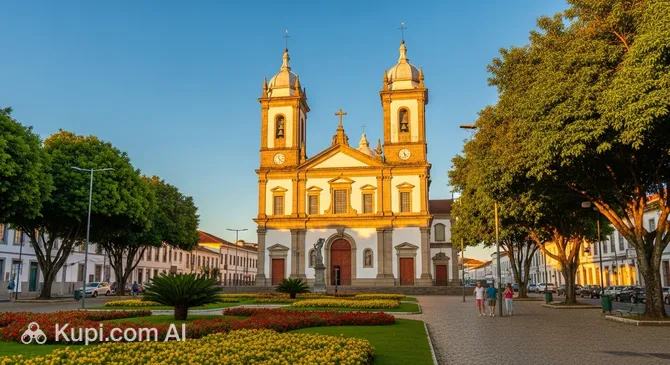
Despite its predominantly industrial appearance, Limeira hides several architectural and cultural gems. One of the city's main spiritual centers is the Church of Our Lady of Good Death and Assumption. This majestic temple attracts visitors with its austere beauty and peaceful atmosphere, serving as an important testament to the region's religious traditions.
For those who want to dive deeper into the past of the state of São Paulo, the Major José Levy Sobrinho Museum is open. The museum's exhibitions tell stories of the time when the city was a coffee capital, the life of the first settlers, and how Limeira transformed into a center for jewelry production. This is a must-visit place for all history buffs.
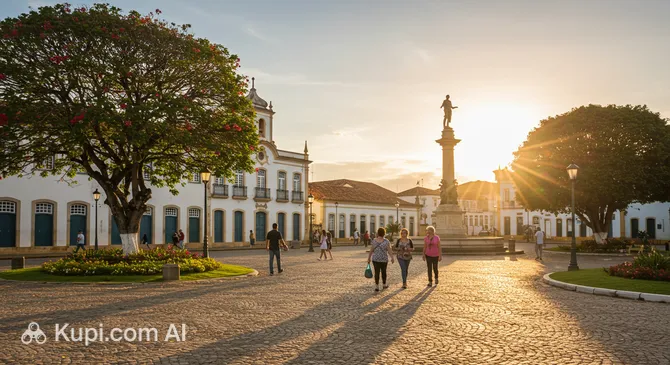
João Soares Pompeo Square. Illustration.
Source: Kupi.com AI
Traveler photos:
The heart of the city's social life is João Soares Pompeu Square. This is a popular spot for walks among locals, where you can feel the rhythm of the city, relax in the shade of trees, or witness one of the many city festivals. Also worth noting is the central cathedral, Catedral Nossa Senhora das Dores, whose monumental facade dominates the historical part of the city.
Local Cuisine
The gastronomy of Limeira is a bright reflection of the culinary traditions of inland São Paulo. Since the city was a center for citrus growing for a long time, you should definitely try freshly squeezed orange juice, which is considered one of the best in Brazil. The menus of local establishments often feature dishes made from cassava, rice, and beans, which form the basis of the daily Brazilian diet.
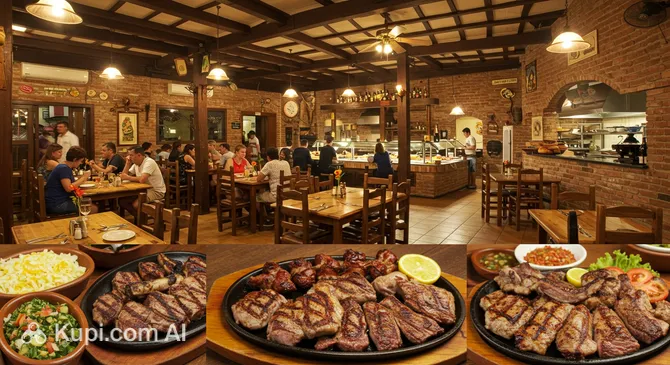
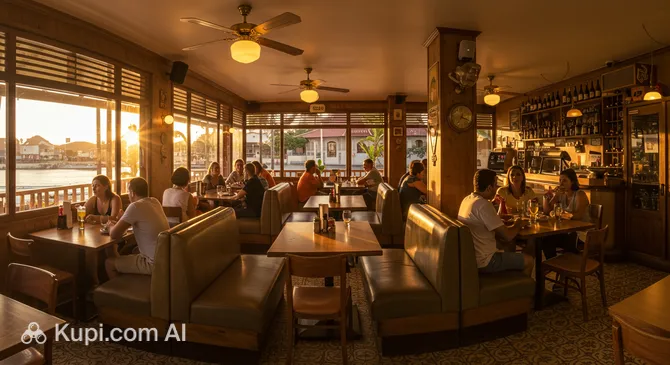
For those who appreciate atmospheric places, Retro House Limeira will be a real discovery. This establishment attracts not only with its cuisine but also with its original vintage-style decor. Lovers of traditional Brazilian meat should visit Roberto Restaurant and Churrascaria, where you can fully enjoy the art of grilling steaks over charcoal.
Roberto's Restaurant and Grill. Illustration.
Source: Kupi.com AI
Traveler photos:
Food culture in the city is centered around family restaurants and bustling markets. Be sure to try "feijoada" — a hearty stew of beans and various types of meat, traditionally served on Saturdays. For dessert, locals often choose sweets made from guarana or cane sugar, and the main drink of the evening invariably remains the refreshing "caipirinha."
Travel Tips
A trip to Limeira is a great opportunity to see Brazil from its business and hardworking side. To make your journey as comfortable and safe as possible, use our practical tips.
Clothing and gear: Limeira has a tropical climate, so choose light clothing made from natural fabrics. However, in the winter months (June–August), evenings can be cool, so a light windbreaker won't hurt. A strict dress code is not required for visiting churches and museums, but it is better to avoid overly revealing outfits.
Transport: For getting around the city, it is most convenient to use taxi apps (Uber). If you plan to use buses, it is better to purchase a rechargeable transport card in advance.
Finance: The local currency is the Brazilian Real (BRL). Bank cards are accepted almost everywhere, even in small shops, but a small supply of cash for markets and tips is always useful.
Health and Safety: Limeira is safer than megacities, but standard precautions are necessary. Avoid walking in the outskirts and industrial zones after dark and always keep an eye on your belongings in crowded places.
Communication: The primary language is Portuguese. English is not widely spoken, so it's useful to learn basic phrases or have an offline translator handy. A local SIM card can be bought at any large shopping mall.
Local Etiquette: Brazilians are very friendly and open. Greetings are often accompanied by a firm handshake or a friendly hug (among acquaintances). Being polite and smiling is the best way to win over the locals.
What to avoid: It is not worth displaying expensive jewelry or large sums of money in public places. Also, try not to touch on sensitive social topics in conversations unless you know the person well.
Jewelry advice: If your goal is to buy jewelry, set aside a whole day for this and visit the specialized commercial houses in the center, where prices are significantly lower than in the stores of São Paulo.
Following these simple rules will help you enjoy your visit to Limeira and discover the hospitality of this unique region of Brazil.
Entertainment & Nightlife
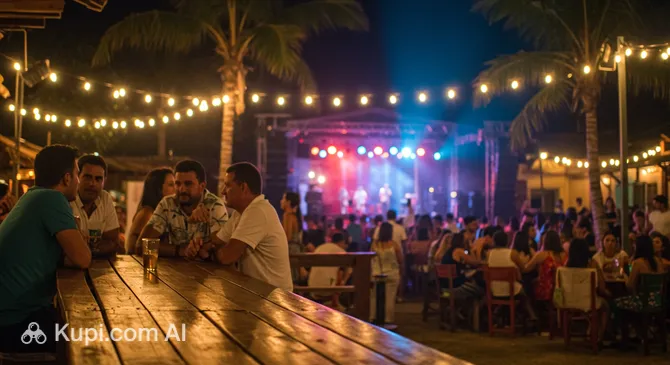
Entertainment life in Limeira is calm and down-to-earth, focused on cozy evenings with friends. Most activity after sunset is concentrated around the central squares and large shopping centers. Locals prefer to spend time in traditional "botecos" — Brazilian bars serving cold beer and various snacks.
One of the popular spots for evening relaxation is HotGrill Espeto Bar, famous for its grilled meats and casual atmosphere. If you're looking for an establishment with a more pronounced local flavor, it's worth checking out Nossa Boteco, where you can often find lively groups discussing the latest news over a glass of cachaça.
Gran St. John Social Club. Illustration.
Source: Kupi.com AI
Traveler photos:
For those who prefer more formal leisure or cultural events, the Gran São João Social Club opens its doors. Dance evenings, local music concerts, and formal receptions are often held here. On weekends, the city's youth often head to nearby large centers such as Campinas or São Paulo for noisier parties, but even in Limeira itself, you can always find a place with live sertanejo-style music.
Parks & Museums
Despite its industrial status, Limeira offers residents and guests pleasant areas for relaxation and cultural enrichment. The pride of the city is the Parque Ecológico Municipal de Limeira — a vast green area where you can walk along trails through the wild nature, have a picnic, or simply enjoy the silence away from city highways. Another popular spot is Lago Municipal, a lake with well-maintained paths, perfect for morning jogs.
The cultural component of Limeira is represented by interesting historical sites. An important point on the city map is the Zero Meridian of Limeira – Dr. Luciano Esteves Square. This place is considered the geographical and symbolic center of the city, from where its development began. City events are often held here, and the square's architecture is a reminder of the region's rich past.
Mercado Modelo. Illustration.
Source: Kupi.com AI
Traveler photos:
The city's museum life is focused on studying the history of the "coffee cycle" and the establishment of the jewelry business. The Limeira Municipal Museum houses unique collections of tools, documents, and household items that tell how an agricultural settlement turned into a modern industrial hub. Visiting these places helps to understand the true identity of the city, hidden behind the facades of its factories.
Getting Around
The public transport system in Limeira is represented by an extensive network of bus routes that connect the central districts with the outskirts and industrial zones. Buses are the primary mode of transport for locals working at large enterprises. During peak hours, in the morning and evening, transport can be crowded, so it is better to plan trips for off-peak times.
Special transport cards are used for payment, which can be topped up at authorized sales points, although in some cases, payment in cash to the driver or conductor is also possible. The interval of movement in the city center is 10–20 minutes, and schedules can often be found at stops. It should be noted that there is no metro in Limeira, and city buses are the most accessible and budget-friendly option for getting around.
As a convenient alternative, tourists often choose taxis or popular ride-hailing apps like Uber, which operate steadily and are relatively inexpensive in Limeira. For those planning to explore the surroundings and visit neighboring cities like Campinas, renting a car would be the best solution. The main roads in the city and its surroundings are in good condition, although central streets can be congested during the workday.
Accommodation
The hotel sector in Limeira is primarily oriented towards business travelers and professionals coming to the city for agribusiness and jewelry production. Modern mid-range hotels and apartments with a good level of service prevail here, offering everything necessary for comfortable rest and work.
The city center and the areas adjacent to major shopping complexes, such as Pátio Limeira Shopping, are considered the most convenient neighborhoods for staying. Well-known chain hotels are concentrated here, providing quick access to restaurants, banks, and main transport arteries. Budget travelers can find inexpensive motels and guesthouses along the main highways, which is convenient for transit trips.
Retro House Limeira. Illustration.
Source: Kupi.com AI
Traveler photos:
When planning a trip, keep in mind that hotel occupancy can be higher on weekdays due to business activity, so it is recommended to book accommodation in advance. The overall price range in Limeira is very reasonable compared to the state capital, allowing you to find a quality room at an affordable price through international booking services.
Nearby Cities
Limeira serves as an excellent starting point for exploring the inland areas of the state of São Paulo, rich in both industrial centers and cozy provincial towns. Thanks to the developed network of highways, many interesting locations are just an hour's drive away.
Just 11 kilometers away is the quiet Iracemápolis, which is perfect for a short walk. If you are interested in large urban centers, it is worth heading to Americana or Santa Bárbara d'Oeste, where you can find more shopping complexes and parks. Also nearby is Cordeirópolis, which has preserved the charm of a small Brazilian settlement.
For those ready for slightly longer trips, Campinas — one of the country's largest university and scientific centers — is just 50 kilometers away. Traveling around the Limeira area will allow you to see the diversity of Brazilian life: from endless sugarcane fields to modern metropolises.
Shopping & Souvenirs
Shopping in Limeira is a unique experience, as the city is known as the main center for the production of fashion jewelry and plated jewelry in Brazil. Tourists often come here specifically for accessories, which can be purchased here at factory prices. The main specialized stores and jewelry showrooms are concentrated in the central part of the city and in specialized commercial districts.
For a more familiar shopping format, Pátio Limeira Shopping is an excellent choice. This is a modern shopping complex featuring both Brazilian and international brands, as well as a cinema and a food court area. Here you can comfortably spend several hours enjoying the air conditioning and a wide selection of goods.
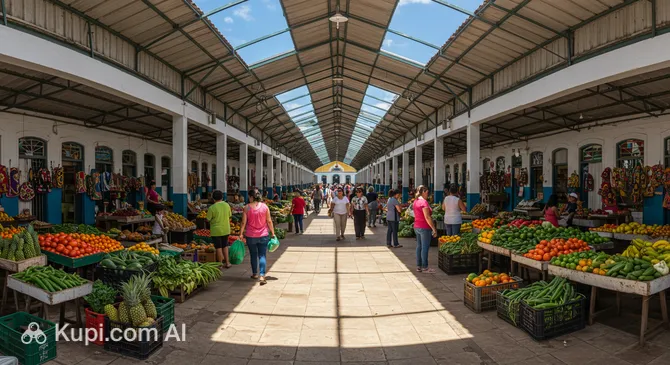
Mercado Modelo. Illustration.
Source: Kupi.com AI
Traveler photos:
Lovers of authentic local flavor should visit Mercado Modelo or the Municipal Market. At these venues, you can find fresh tropical fruits, local cheeses, handicrafts, and, of course, the famous Brazilian sweets. Stores usually operate from 9:00 AM to 6:00 PM on weekdays, while shopping centers are open until late evening. Bank cards are accepted everywhere, making shopping easy and pleasant.