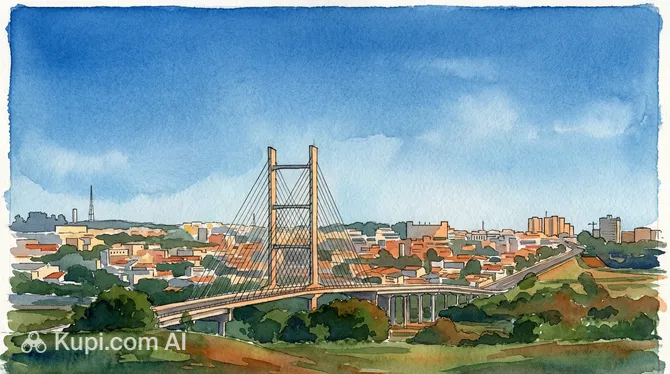
Hortolândia is a dynamically developing city in the state of São Paulo, serving as an important industrial and residential hub in Brazil. Located approximately 110 kilometers northwest of the state capital, the city is an integral part of the large Campinas Metropolitan Region. Hortolândia attracts attention with its compactness and high population density, creating the atmosphere of a lively metropolis constantly in motion.
Hortolândia. Illustration.
Source: Kupi.com AI
The modern history of Hortolândia began relatively recently—the city officially became an independent municipality in 1991, separating from neighboring Sumaré. Since then, it has transformed into a significant economic node within the so-called "Extended Metropolitan Complex" of São Paulo, home to more than 29 million people. Despite its small geographic size, the city ranks fifth in population in its region, highlighting its importance to the state.
For travelers, Hortolândia is primarily interesting as a modern urban center with a well-developed commercial infrastructure. Here, you can experience the true rhythm of Brazilian life away from classic tourist trails, enjoy the comfort of shopping areas, and use the city as a convenient base for exploring the state of São Paulo. We invite you to get to know this energetic city and its hospitable residents.
Weather Overview
A tropical climate prevails in Hortolândia, typical of the interior regions of the state of São Paulo. The weather here is characterized by distinct seasonality: summers are usually hot and humid, while winters are mild and dry. To better plan your visit, you can study the detailed Hortolândia's climate on a dedicated page.
The warmest months occur between December and March, when average maximum temperatures reach +29°C...+30°C. During this time, tropical downpours often occur, especially in December and January, which bring relief from the daytime heat. The driest and coolest period starts in July and August—this time is ideal for walking, as humidity is minimal and daytime temperatures stay at a comfortable level of around +25°C.
When planning your trip, it is worth considering that due to high urban density in the central areas, additional heat may be felt. In the summer months, it is recommended to bring light clothing and an umbrella, while for winter evenings, a light sweater or jacket will be useful, as nighttime temperatures can drop to +13°C...+14°C.
Average monthly temperature
Average monthly precipitation
Interesting Facts
Hortolândia is a city with a unique character and a history of rapid development. Here are a few interesting facts to help you get to know it better:
The city is one of the youngest in the state: it gained official independence only in 1991, separating from the neighboring municipality of Sumaré.
Despite its modest area of just 62 square kilometers, Hortolândia is among the most densely populated cities in the region—with about 3,800 people living in every square kilometer.
Hortolândia holds the respectable 40th place in population among all 645 municipalities in the state of São Paulo, confirming its status as an important residential center.
The city is part of the giant São Paulo Macrometropolis, whose population exceeds the total population of many European countries.
The city's official telephone area code is +55 19, and the main language of communication, as in the rest of the country, is Portuguese.
How to Get There
Hortolândia is conveniently integrated into the transport network of the state of São Paulo, making it easily accessible for travelers. The city is located just 110 kilometers from the state capital, and its primary link to the outside world is through an extensive network of modern highways. For those planning a visit, detailed information is available in the section on how to get to Hortolândia.
A car trip from the center of São Paulo usually takes between 1.5 to 2 hours, depending on traffic. The region is famous for its high-quality highways that connect the city to the country's largest industrial and cultural hubs. There is also a regular bus service: routes connect the city with neighboring municipalities of the Campinas Metropolitan Region.
For those who prefer air travel, the nearest major international airports are located in neighboring cities. From there, Hortolândia can be reached by taxi, rental car, or intercity buses that regularly run between the region's transport hubs.
Station
Passenger traffic
Distance
Jundiaí train station
6
52 km
Várzea Paulista train station
6
56 km
Campo Limpo Paulista train station
6
59 km
Antiga Estação Ferroviária do Distrito de Ártemis
1
60 km
Botujuru train station
6
63 km
Main Attractions
Hortolândia is primarily known as a major industrial and residential center, so you won't find the typical historical monuments found in older cities. Nevertheless, the city offers modern infrastructure that serves as the main points of interest for locals and visitors alike. The central districts are characterized by administrative buildings and municipal institutions that reflect the city's rapid growth since its founding.
The primary leisure spots in Hortolândia are modern shopping centers and commercial zones. These facilities function as full-fledged public spaces, housing shops, cinemas, and relaxation areas. Walking through the central streets, you can appreciate the modern architecture of the residential complexes that define the look of this densely populated municipality.
For tourists seeking classic sights or old museums, Hortolândia serves as an excellent starting point. Thanks to its convenient location, it is easy to reach the region's neighboring cultural centers, such as Campinas, which boasts parks, galleries, and theaters. A trip to Hortolândia is an opportunity to see Brazil from the perspective of its modern economic development and the daily life of its citizens.
Local Cuisine
The gastronomy of Hortolândia is a vibrant kaleidoscope of traditional Brazilian flavors with a slight touch of regional characteristics from the state of São Paulo. The city's culinary scene is very democratic: refined restaurants in shopping centers are just as popular as small, cozy snack bars known as "botecos," where life buzzes from morning until late at night.
Be sure to try the classic feijoada—a hearty dish of beans and various types of meat, which is considered the pride of national cuisine. No less popular is the Brazilian churrasco (grilled meat), and for a quick snack, locals prefer pastéis—crispy fried pastries with a variety of fillings. All this is perfectly complemented by a glass of freshly squeezed tropical fruit juice or a cup of strong Brazilian coffee, which is drunk everywhere here.
Street food plays an important role in city life, offering affordable and delicious lunch options. In the evening, many residents gather in bars to discuss the news over a glass of a chilled drink and light snacks. A gastronomic journey through Hortolândia will allow you not only to enjoy delicious food but also to gain a deeper understanding of the daily culture and traditions of this region.
Travel Tips
Visiting Hortolândia is a great opportunity to see modern industrial Brazil from the inside, and these tips will help you make your trip as comfortable as possible.
Clothing and Essentials: The region has a warm climate, so choose light clothing made of natural fabrics. However, in the winter months (June–August), it can be cool in the evenings, so a light windbreaker won't hurt. Don't forget comfortable shoes for walking through shopping centers and city districts.
Transport: The most convenient way to get around is via taxi apps (Uber or 99Taxi). Public buses can be overcrowded during peak hours, so plan your trips in advance to avoid the rush.
Finance: The local currency is the Brazilian Real. Cards are accepted almost everywhere, even in small kiosks, but a small supply of cash is useful for markets. Tips in restaurants are usually already included in the bill (around 10%).
Health and Safety: Follow standard precautions: do not display expensive equipment in uncrowded places. After dark, it is better to travel by taxi rather than on foot through deserted streets.
Communication: Knowledge of basic phrases in Portuguese will make life much easier, as English is mainly common in large hotels and malls. Install an offline translator on your smartphone.
Local Etiquette: Brazilians are very friendly and open. Greetings are often accompanied by a firm handshake, and in an informal setting, by a light hug.
What to Avoid: Try not to enter unfamiliar residential outskirts without an escort or clear necessity, especially at night. It is also not recommended to discuss sensitive political topics with strangers.
Extra Tip: Use Hortolândia as a convenient and quieter base for excursions to Campinas or other cities in the region—this will allow you to save on accommodation without losing comfort.
We wish you a pleasant and safe journey through this energetic region of the state of São Paulo!
Entertainment & Nightlife
Nightlife in Hortolândia is predominantly local in character and centered around cozy bars and small clubs (boates) located in the downtown area. These venues are popular among residents, creating a friendly and laid-back atmosphere. Here, you can listen to modern Brazilian music, order traditional drinks, and spend the evening in the company of the city's inhabitants.
The main entertainment hubs in the city are the large shopping malls. They offer a wide range of daytime and evening activities, from modern multiplex cinemas to gaming zones and diverse food courts. These are great places for family vacations or a quiet evening after walking around the city. The crowd here is very diverse—from young people to families with children—and the dress code remains as casual and relaxed as possible.
If you are looking for more vibrant nightlife with large dance floors and performances by famous DJs, residents of Hortolândia often head to neighboring Campinas. However, interesting leisure spots can also be found within the city itself, especially on weekends. For safe travel at night, it is recommended to use official taxi apps, which operate in the city 24/7.
Parks & Museums
Despite Hortolândia being a very densely built-up city, attention is paid to creating public spaces for relaxation. Green zones within the city limits serve as important places for walking and sports. Small municipal parks and landscaped squares are magnets for families with children and morning joggers, offering a breath of fresh air amidst the dynamic rhythm of the metropolis.
The city's cultural life is concentrated in modern multifunctional centers. Although there are few classic world-renowned museums here, the local administration actively supports cultural initiatives and temporary exhibitions that tell the story of the region's history and development. These venues allow residents and visitors to get in touch with modern Brazilian art and local traditions.
For those wishing to visit large botanical gardens or historical galleries, Hortolândia offers excellent transport accessibility to neighboring Campinas. There you will find extensive natural parks and museums that will perfectly complement your understanding of the culture of this region of Brazil. This combination of Hortolândia's industrial energy and proximity to cultural hubs makes a stay here balanced and interesting.
Getting Around
The transport system in Hortolândia is adapted to the needs of a dynamically developing city where many residents commute daily to neighboring industrial centers. Bus routes form the backbone of public transport. The network of lines covers all key areas of the city, providing connections both within the municipality and with the largest nodes of regional significance.
Bus fares are usually paid using special transport cards or in cash to the driver. Tourists should keep in mind that during rush hours—from 7:00 to 9:00 in the morning and from 17:00 to 19:00 in the evening—transport can be very crowded due to the large flow of workers. Nevertheless, buses remain the most affordable way to travel around the city and its surroundings.
For greater comfort and to save time, many travelers choose taxis or popular ride-hailing apps such as Uber. This is especially convenient for evening trips or when needing to reach remote industrial zones. The car remains the most popular means of transport for those who value independence, although during peak hours, it is worth allowing extra time for possible congestion on the main highways.
Accommodation
Since Hortolândia is primarily an industrial and business center, the accommodation sector here is focused on functionality and comfort. The choice of hotels within the city itself is limited, but they offer a decent level of service, especially for those visiting for business purposes or planning a short stopover.
Most available housing options are concentrated in the central part of the city and in areas adjacent to major shopping centers. Here, you can find mid-range hotels and cozy apartments, which are often rented for long-term stays. The city's housing stock consists of modern complexes, so private rentals are also a popular option among guests.
If you are looking for a wider selection of luxury hotels or budget hostels, you should consider accommodation options in neighboring Campinas, which is only a short drive away. In any case, due to high demand from business travelers, it is recommended to book your accommodation in advance, especially on weekdays.
Nearby Cities
Hortolândia serves as an excellent starting point for exploring interesting places in the state of São Paulo, thanks to its location in the heart of a developed region. Just a few kilometers from the city are settlements, each with its own unique character, which can become the destination for a pleasant day trip.
One of the most popular destinations is Campinas, located just 17 kilometers away. It is a major cultural and scientific center where you can visit beautiful parks, museums, and theaters. Also noteworthy are Sumaré—the city with which Hortolândia is closely linked historically—and Nova Odessa, known for its cozy green zones and calm atmosphere.
In addition, Paulínia and Monte Mor are within a short drive. Traveling through these cities will allow you to better understand the diversity of life in the Brazilian countryside, and enjoy the local cuisine and architecture. The well-developed road network makes such trips easy and comfortable, opening up many new opportunities for tourists.
Shopping & Souvenirs
Shopping in Hortolândia primarily involves visiting modern shopping centers, which are the city's main commercial hubs. They feature both well-known international brands and popular Brazilian brands of clothing, shoes, and accessories. These are convenient places where you can find everything you need under one roof: from electronics to cosmetics, as well as relax in the food court areas.
For those looking for everyday goods and groceries, the city has an extensive network of supermarkets and small local markets. Although Hortolândia does not specialize in tourist souvenirs, you can purchase high-quality Brazilian-made goods here, such as leather products or local coffee. Shops are usually open until late in the evening, and major centers accept all main types of international bank cards.
If your goal is unique handicrafts or antiques, locals recommend checking out the markets in neighboring Campinas. However, for comfortable shopping and getting acquainted with the modern Brazilian lifestyle, Hortolândia's infrastructure is perfectly suited. Don't forget to look out for seasonal sales, which are frequently held in the city's shopping malls.