Support

Conceicao do Araguaia

Attractions

About

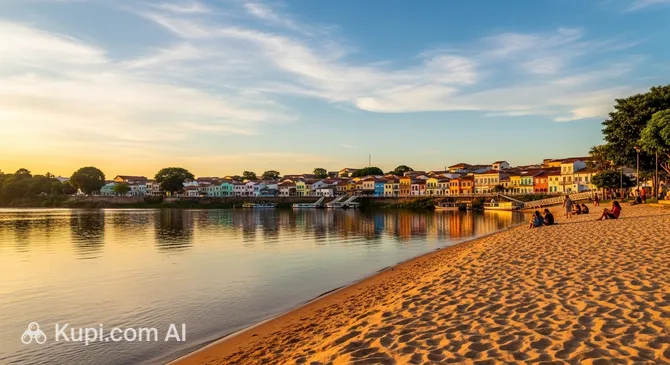
Conceição do Araguaia is a colorful city located in the south of the state of Pará, serving as a true gateway to the amazing world of the Amazonian wilderness. Spreading along the left bank of the majestic Araguaia River, it attracts travelers with its picturesque landscapes and the relaxed atmosphere characteristic of the hinterland of a country like Brazil.

Conceição do Araguaia. Illustration.
Source: Kupi.com AI

While it is now an important regional center with a population of about 46,000, the history of Conceição do Araguaia dates back to the end of the 19th century and is closely linked to the missionary activities of the Dominicans, who founded the first settlement here. The city's past has left its mark on local traditions, but the main draw for tourists remains nature and the river's bounties.

At the height of the dry season, especially in July, the river level drops, revealing wide sandbars and islands. The most famous location is Praia das Gaivotas ("Seagull Beach"), which for a few weeks turns into a lively resort with campsites, restaurants, and water activities. This place is perfectly suited for eco-tourism enthusiasts and sport fishing fans who want to enjoy the beauty of tropical sunsets over the water.

A visit to Conceição do Araguaia will give you a unique experience of getting to know the region's river culture and the opportunity to relax away from the noise of large metropolises.

Weather Overview

The climate in this region is typically tropical, with high temperatures year-round. When planning your trip and checking the weather in Conceição do Araguaia, it's important to consider the distinct seasonality that dictates the city's rhythm of life and the availability of river beaches.

The period from June to September is considered the most favorable for a visit, as this is when dry weather sets in. In July and August, rain is practically excluded, and the number of wet days is reduced to zero or one. The daytime temperature during this season gradually rises, peaking in September when the air warms up to 35°C, though nights can be relatively cool — around 22°C.

From November to April, the picture changes dramatically as the wet season arrives. Precipitation becomes a frequent companion for travelers — for example, in January and March, up to 27 rainy days per month are recorded. At the same time, the thermometer consistently shows an average temperature of around 26–27°C. Expect a sunny and dry period in the middle of the year and hot, humid months with frequent rain for the rest of the time.

Average monthly temperature

Average monthly precipitation

Interesting Facts

Along with popular tourist routes and picturesque river landscapes, Conceição do Araguaia holds interesting facts that reveal the unique character of this corner of Pará. Here are a few curious details to help you better understand the spirit of this place:
  • Founded by French Monks. The city owes its existence not to gold prospectors or the military, like many settlements in the region, but to a religious mission. It was founded in 1897 by the Dominican monk Frei Gil de Vilanova, who arrived here with a group of missionaries to establish contact with local tribes and settle on the banks of the Araguaia River.

  • Ephemeral Geography. The city's main attraction, the famous beaches, are technically temporary formations. The landscape of the shoreline changes every year: during the rainy season, the vast sandbars are completely submerged, only to "be reborn" in July, sometimes changing their shape and size.

  • At the Junction of Two Biomes. Conceição do Araguaia is located in a unique ecological transition zone. Here, two great natural systems for which Brazil is famous meet: the dense Amazon rainforests and the Cerrado savannas. This creates special biological diversity, where flora and fauna characteristic of completely different climatic zones can be found in the same territory.

  • The Summer Capital. In July, the city's population effectively doubles due to tourists. This phenomenon is so large-scale that Conceição do Araguaia is unofficially called the "summer capital" of the state of Pará, even though it is a fairly quiet and peaceful provincial town during the rest of the year.

How to Get There

When planning a trip to this region, keep in mind that the city is far from major metropolises, and the journey may take some time. You can find out more about how to get to Conceição do Araguaia to choose the most suitable route, which usually involves a flight followed by a trip by land transport.

Conceição do Araguaia itself does not have a large passenger air hub receiving regular flights. The nearest point of arrival is Araguaína Airport (AUX), located in the city of Araguaína. It is approximately 161 km from Conceição do Araguaia. This is a regional hub with low passenger traffic, but it is the most convenient in terms of distance. The journey from here by taxi or transfer will take approximately 4 hours and 20 minutes.

A more popular option for tourists is often Palmas Airport (PMW), located in the capital of the neighboring state of Tocantins, the city of Palmas. Although it is further away — about 246 km from the destination — it is a major airport with many more flights and better infrastructure. A journey by car or bus from here to Conceição do Araguaia will take about 6 hours and 30 minutes.

For clarity, here is a summary of the main airports:

AirportPassenger trafficDistance
Araguaina Airport65 000161 km
Palmas Airport723 000246 km
Carajas Airport216 803251 km

Since rail transport in this part of the country is virtually non-existent for passenger travel, the main way to reach the city after landing is by road. Intercity buses run between cities, and you can also use taxi services or rent a car to enjoy the scenic views on the way to the Araguaia River.

Main Attractions

The main attractions of Conceição do Araguaia are inextricably linked to the element of water and the region's unique ecosystem. The city is not abundant in museums or grand palaces, but it offers tourists something more — live interaction with Amazonian nature and the atmosphere of authentic Brazilian leisure.

The undisputed center of attraction is Praia das Gaivotas (Seagull Beach). This is not just a place for swimming, but a real seasonal attraction that appears in all its glory only during the low water period. The massive sand spit in the middle of the river is considered one of the most beautiful freshwater beaches in the country. Life is in full swing here: festivals are held, beach bars operate, and tourists enjoy the warm sand and safe swimming in the calm waters of the Araguaia.

The Araguaia River itself serves as a distinct tourist attraction. Travelers often rent boats for trips along the bank to observe wildlife. During these mini-cruises, you can see river dolphins, capybaras, and many exotic birds. For sport fishing enthusiasts, the river offers rich opportunities to catch local fish species, making it a popular destination for anglers from all over Brazil.

In the historic center of the city, the Cathedral of Our Lady of Conception (Catedral de Nossa Senhora da Conceição) is worth noting. This temple symbolizes the history of the city's foundation by Dominican monks. The modest yet expressive architecture of the building and the peaceful square in front of it create a calming atmosphere, allowing visitors to touch the spiritual heritage of this corner of Pará state.

Local Cuisine

The gastronomic scene of Conceição do Araguaia is a vibrant reflection of the city's geographic location: here, the rich traditions of Pará state meet the culture of the riverbank. The foundation of the local menu is invariably fresh fish caught in the waters of the Araguaia River, while Amazonian culinary influences add exotic notes to dishes that are hard to find in other regions of the country.

The main delicacy that every tourist must try is tucunaré (peacock bass). They prepare this fish masterfully here: most often it is served whole, fried, or grilled over charcoal. Tucunaré meat is tender and lacks small bones. Another popular option is caldeirada, a thick and aromatic fish stew with vegetables, spices, and sometimes coconut milk, which is perfect for restoring energy after a day on the river.

Since the city is in Pará state, there are strong traditions of using unique Amazonian ingredients. Don't miss the chance to try tacacá — a hot soup based on tucupi (yellow cassava juice) with shrimp and jambu leaves, which cause a slight numbing sensation in the mouth. It's also worth remembering that in this region, açaí is eaten not as a sweet dessert, but as a hearty side dish with fried fish, often mixing the berries with cassava flour.

As for drinks, the tropical climate is perfect for consuming freshly squeezed juices from local fruits. Be sure to order cupuaçu or bacuri juice — they have a rich flavor and are very refreshing. Those looking for something stronger might appreciate a traditional Brazilian caipirinha, which here is often made with local fruits instead of the usual lime.

The food culture in Conceição do Araguaia is very democratic and inseparable from outdoor recreation. The most atmospheric places for lunch are not expensive restaurants, but simple beach barracas (beach cafes) on the riverbank or on the island of Praia das Gaivotas. It is common to eat with your hands, enjoying fried fish with rice and beans (baião de dois), sitting right by the water and watching the sunset.

Travel Tips

Welcome to Conceição do Araguaia! To ensure your journey to the gateway of the Amazon is as comfortable and safe as possible, we have prepared a list of useful recommendations that take into account the local climate and lifestyle in this colorful Brazilian region.

  1. Clothing and Essentials. Given the hot tropical climate, bring clothes made of light natural fabrics (cotton, linen) in light colors. A hat and sunglasses are mandatory. Since the city is on the river, swimwear is the most important item in your suitcase. For evening walks, bring a light long-sleeved shirt to protect yourself from insects.

  2. Transport. Public transport in the form of buses is poorly developed and runs infrequently. The most popular and affordable way to get around the city is by motorcycle taxi (mototáxi). It's fast and inexpensive. For trips to the beaches and islands, motorboats known locally as "voadeiras" are used. Renting a car only makes sense if you plan to visit neighboring cities.

  3. Finances. The official currency is the Brazilian Real. Supermarkets, hotels, and large restaurants in the city accept cards, but beach kiosks (barracas) and boat crossings often require cash. ATMs (Banco do Brasil, Bradesco, CAIXA) are in the city center, but it's better to withdraw money in advance as they can run out of cash on weekends.

  4. Health and Safety. Conceição do Araguaia is a relatively peaceful city, but basic precautions are necessary: do not display expensive gadgets in deserted places. The main health tip: use repellent constantly, as mosquitoes are active in the region. Drink only bottled water. Pharmacies (farmácias) are in the center, but 24-hour ones are hard to find.

  5. Communication. English is practically not used here. The main language of communication is Portuguese. We recommend downloading an offline translator in advance and learning a few phrases, such as "Bom dia" (Good day) and "Obrigado" (Thank you). SIM cards from major operators (Vivo, Claro, TIM) can be bought at specialized kiosks; 4G coverage in the city is stable.

  6. Local Etiquette. Locals are very open and friendly. It is customary to greet even strangers in shops or elevators. A popular gesture of approval is the thumbs-up ("Joia"). Despite the beach atmosphere, walking around the city center, entering shops or banks in swimsuits or shirtless is considered bad manners.

  7. What to Avoid. Categorically avoid swimming in the river in unauthorized places, especially where there is a strong current or dense vegetation. Also, do not ignore the advice of local boatmen regarding water safety — the Araguaia River can be unpredictable.

  8. Beware of Stingrays! A specific tip for this region: when entering the water in wild parts of the river or shallow areas, try not to lift your feet high, but "shuffle" them along the bottom. This helps scare away freshwater stingrays (arraias), which like to bury themselves in the sand near the shore, and helps you avoid a painful sting.

By following these simple rules, you can fully relax and enjoy the hospitality of Conceição do Araguaia, taking home only warm memories and beautiful photos of sunsets over the river.

Entertainment & Nightlife

Nightlife in Conceição do Araguaia is fundamentally different from that of bustling metropolises. Here, you won't find multi-story nightclubs with lasers and strict face control. Instead, the city offers a warm, informal atmosphere where the fun spills out onto the streets and music mixes with the sound of the river. Evening entertainment here is closely tied to the culture of outdoor socializing, which is particularly pleasant in the tropical climate.

The main feature of local leisure is its seasonality. In July, when the river level drops, the epicenter of nightlife becomes the famous Praia das Gaivotas. During this period, huge stages and temporary bars are erected on the sand. The night here turns into an endless festival: concerts by popular Brazilian artists take place, DJs play, and tourists dance right under the starry sky until dawn. This is a unique experience that draws thousands of people.

At other times of the year (outside the beach season), nightlife moves to the city center. Most of the action is concentrated along the main streets and the riverfront (Orla). One of the busiest areas is the Avenida Araguaia district. Numerous bars and snack bars are located here, where locals gather in large groups.

The atmosphere in these establishments is as relaxed as possible. There is no dress code: shorts and flip-flops are perfectly acceptable attire even for the evening. The musical backdrop usually consists of popular Brazilian genres: sertanejo (Brazilian country), forró, and piseiro. Live music is a common feature even in small bars. People often sing along with the musicians and dance between the tables, which, according to local tradition, are set out right on the sidewalks.

If you are looking for specific spots, look for the crowds in the center. Popular formats include "churrascarias" (steakhouses) and open-air bars serving ice-cold beer and dried meat snacks. For example, walking along the Orla, you will find a row of kiosks and cafes with river views — an ideal place to start the evening by watching the sunset with a cocktail in hand.

Practical Tips and Safety:

  • Transport: Public transport does not run at night. The most reliable way to get to your hotel is to call a motorcycle taxi (mototáxi) or a regular taxi. It is recommended to have the contacts of reliable drivers or ask bar staff to call a car.
  • Safety: Central areas and the Orla are patrolled on weekends and are considered safe due to the large crowds. However, avoid walking alone in dark, remote streets on the outskirts of the city.
  • Prices: Prices in the bars of Conceição do Araguaia are very reasonable compared to major Brazilian cities. A large bottle of beer (600 ml) and a portion of snacks will not be expensive.

As for daytime entertainment, it is quite calm here. The city doesn't have large theaters or amusement parks. Cultural leisure can be varied by visiting city squares, such as Praça da Bíblia, where families with children often stroll in the evenings. Boat trips are also popular during the day, allowing you to see the local nature in all its glory before the city dives into nighttime fun.

Parks & Museums

Conceição do Araguaia is a city where the boundaries between the urban environment and the Amazonian wilderness are blurred, and cultural heritage lives not so much in museum halls as in the streets and squares. Green zones are organically woven into the urban landscape, offering tourists places to relax in the shade of tropical trees overlooking the majestic river.

The main place for walking and outdoor recreation is the Araguaia Riverfront (Orla). This is not just a fortified bank, but a real linear park stretching along the water. Pedestrian paths are laid out here, benches are installed, and trees are planted to provide saving shade. For tourists, this is the best point in the city to watch the famous local sunsets, when the sun sinks right into the river waters, painting the sky in incredible shades of orange and purple.

In the city center, Praça da Matriz is worth a visit. This is the historical heart of Conceição do Araguaia, located in front of the cathedral. The square is a classic example of Brazilian provincial coziness: well-kept flowerbeds, spreading trees, and an atmosphere of tranquility. Locals often gather here to discuss news, and for travelers, it is a great place to rest after excursions and feel the steady rhythm of city life.

As for museums and galleries, you won't find major world-class exhibition complexes in Conceição do Araguaia. Culture and history here have an applied, "living" character. The role of the main ethnographic museum is effectively played by the Municipal Market (Mercado Municipal). A walk through its aisles will tell you more about the life of the region than any tour: here you can see traditional handicrafts, ceramics, medicinal herbs from the Amazon forests, and get acquainted with the gastronomic traditions of Pará.

The most important architectural and historical monument is the Cathedral of Our Lady of Conception. Although it is an active church, it serves as a guardian of the history of the city's foundation by Dominican monks. Its architecture is simple and austere, but inside you can feel the spirit of the first missionaries who came to these lands at the end of the 19th century. The building is a visual landmark of the center and an important point of reference for tourists.

For those looking for authentic experiences, we suggest paying attention to small artisan shops (Artesanato) scattered throughout the city center. Local craftsmen create amazing things from natural materials — seeds, wood, and clay, reflecting local flora and fauna motifs in their work. Visiting such workshops is a great alternative to going to an art gallery.

Getting Around

The public transport system in Conceição do Araguaia differs significantly from what residents of large metropolises are used to. You won't find subways, trams, or trolleybuses here. The city is small, and its transport infrastructure is simple and informal, focusing on the needs of the local population and the terrain.

The most popular and affordable way to get around the city is by motorcycle taxi (mototáxi). This is a fast and inexpensive way to reach any point. Official drivers wear special vests (usually bright-colored with a number) and are required to provide the passenger with a helmet. Mototáxi stands are scattered throughout the center, especially near markets and the bus station. It's best to agree on the price of the trip in advance, although rates within the city are generally fixed and low.

Classic city buses in Conceição do Araguaia run infrequently and do not have a set schedule convenient for tourists. The route network is poorly developed and mainly connects remote residential areas with the center. Therefore, you shouldn't rely on the bus as your primary means of transport. If you do decide to use this mode of transport, payment is made in cash to the driver or conductor upon boarding.

A special type of "public transport" here is river boats, which locals call "voadeiras." They are vital for crossing to the beaches, especially during the season (July), and for visiting the islands on the Araguaia River. Boats depart from the city pier. Payment for the crossing is almost always made in cash directly to the boatman. In high season, boats run constantly as they fill up, while at other times, you might have to wait for them or hire one individually.

Ride-hailing apps (such as Uber or 99), popular in large cities, may work inconsistently here or be completely unavailable due to the small number of drivers. Locals and tourists more often use regular taxis, which can be found at special ranks (ponto de táxi) or called by phone (often via WhatsApp). Cash is also preferred in taxis, although many drivers are starting to accept transfers via the Pix system, which requires a local bank account and internet.

For paying for any type of transport in Conceição do Araguaia, it is highly recommended to always carry cash (Reais) in small bills. Motorcycle taxi drivers or boatmen don't always have change for large banknotes. Transport cards or passes are not used in the city.

The city center is quite compact, so many attractions, shops, and the riverfront are easily accessible on foot. Renting a car makes sense if you plan to travel outside the city or value the comfort of air conditioning on a hot day. There are car rental points in the city, but the fleet may be limited, so it's best to book transport in advance.

Accommodation

Accommodation options in Conceição do Araguaia are mainly represented by small city hotels and cozy guest houses, which in Brazil are called "pousadas." It is difficult to find luxury five-star resorts of international chains here. The hospitality infrastructure focuses on practicality and home comfort, offering tourists clean rooms with basic amenities such as air conditioning, a bathroom, and a minibar, which is critical in the hot tropical climate.

When choosing a location to stay, tourists should look at two main areas. The City Center (Centro) is most convenient in terms of logistics: shops, pharmacies, banks, and restaurants are concentrated here, as is the bus station. This is a practical choice for those who value proximity to urban infrastructure. The second popular area is the zone by the Araguaia Riverfront (Orla). Hotels here attract travelers with their proximity to the water and boat docks where transfers to the beaches depart. This is the best option for those who come for outdoor recreation and beautiful sunsets.

Booking Tip: It is critical to consider seasonality. If your trip falls in July — the peak of the beach season and school holidays — you must book accommodation as far in advance as possible (ideally 2–3 months). During this period, the city's population effectively doubles due to tourists, and finding a free room upon arrival is practically impossible. During the rest of the year (low season), there are usually no problems with accommodation, and you can find an option even on the day of arrival.

Pricing in the city remains very democratic: budget and mid-range options predominate. Regarding booking methods, major hotels are already represented on international online platforms. However, the nature of the Brazilian hinterland is such that many small family-run pousadas operate the old-fashioned way or through social media. Often, the most reliable and fastest way to book a room is to contact the management directly via messaging apps (such as WhatsApp), where you can discuss details and even ask for a discount.

Nearby Cities

For those who want to explore the surroundings, Conceição do Araguaia serves as an excellent starting point for day trips to several interesting nearby locations:

The closest and most convenient destination for a short visit is the city of Redenção, located just 88 km away. This is an important commercial and economic center in southern Pará. Travelers often head here to take advantage of more developed urban infrastructure, visit shops, or simply enjoy a change of scenery, with the journey taking about an hour and a half.

If you are up for a longer trip, it is worth looking at Araguaína, located in the neighboring state of Tocantins, about 166 km from Conceição do Araguaia. It is a large regional center often called the "economic capital" of the state. Here you can find large shopping malls, a variety of restaurants, and well-maintained parks, such as Cimba Park, making it attractive for urban leisure lovers.

Another option for getting to know the region is Santana do Araguaia. Located at a distance of about 167 km, this city also sits on the banks of the Araguaia River. A trip here allows for a deeper immersion into the atmosphere of agricultural Brazil and the chance to enjoy new river landscapes characteristic of this area.

CityPopulationDistance
Santa Maria das Barreiras17 20683 km
Redencao75 55688 km
Colinas do Tocantins30 83890 km
Guaraí23 200105 km
Rio Maria17 697136 km

These nearby destinations provide a glimpse into the diverse culture and landscapes of the region.

Shopping & Souvenirs

Shopping in Conceição do Araguaia is far from the glitz of shiny boutiques in major metropolises, but that is precisely its charm. It is an immersion into the authentic atmosphere of the Brazilian hinterland, where trade is oriented toward the daily needs of locals and the requirements of tourists visiting for river recreation. You won't find global high-fashion brands here, but you can purchase unique regional goods that cannot be bought anywhere else.

The city's main commercial life is concentrated in the Center (Centro). The main artery for shopping enthusiasts is Avenida Araguaia and its surrounding streets. Clothing, footwear, home appliance stores, and pharmacies are located here. Strolling through this area, you can find everything needed for a beach holiday: from swimsuits and flip-flops (the famous Brazilian Havaianas) to sunscreens and hats, which is particularly relevant at the height of the season.

There are no large shopping malls in the usual sense in Conceição do Araguaia. The trade format here is represented by street stores and small shopping galleries. This makes the shopping process more "alive" and informal: you can walk into small shops, chat with the sellers, and enjoy the city's unhurried pace.

For true local flavor, head to the Municipal Market (Mercado Municipal) or local fairs (Feiras). This is the heart of city trade, where the freshest products are sold. Here you can see piles of exotic fruits like cupuaçu, bacuri, and açaí, as well as fresh fish caught in the Araguaia River. The market is not just a place for shopping, but an important part of the city's social life where you can experience its real taste and smell.

If you are looking for a souvenir to bring back, look for items made by local artisans. There are strong traditions of Indigenous art in the region: jewelry made of seeds, feathers, and wood, as well as woven utensils. Hand-made ceramics are also a popular gift. Gastronomic souvenirs are also highly regarded: a bottle of homemade cachaça (sugarcane spirit), tropical fruit jams, or a bag of Brazilian coffee make excellent reminders of a trip to Brazil.

Most shops operate on a standard schedule: from 8:00 AM to 6:00 PM on weekdays, with a lunch break (usually from 12:00 PM to 2:00 PM), and until noon on Saturdays. Sunday is a day off for most retail outlets except for supermarkets. Regarding payment, major stores and supermarkets accept credit and debit cards without issues. However, at the market, in small shops, or when buying souvenirs from street vendors, you will need cash in Reais. The Pix fast payment system is very popular but only available if you have a local bank account.

The Tax-Free system (VAT refund) is not common in Conceição do Araguaia. It is a small city not oriented toward international shopping tourism, so do not expect to file tax refund documents in local shops.
Reached the end of the page?

That means the route is fully explored