Support

Museu Pedro Ludovico

About

In the very heart of Goiânia lies a unique building that serves as a living bridge between the past and present of the state. The Pedro Ludovico Museum is not just an exhibition space, but the former residence of the city's founder, Pedro Ludovico Teixeira. Built in an elegant Art Deco style between 1934 and 1937, this house became a symbol of modernization and a decisive departure from the colonial architectural traditions that previously dominated Brazil.
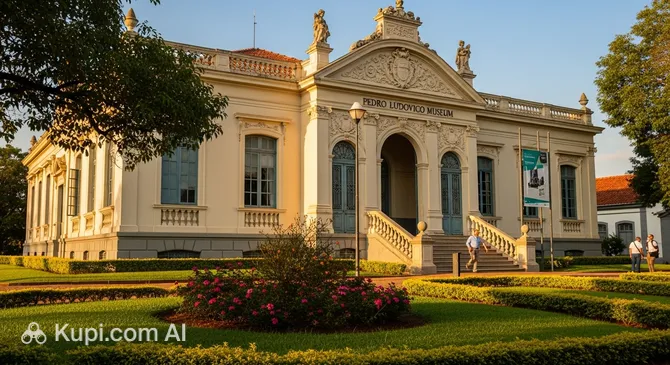
Pedro Ludovico Museum
Pedro Ludovico Museum. Иллюстрация. Источник: Kupi.com AI

The building was designed by the famous architect Attilio Corrêa Lima, who also developed the master plan for the entire new capital of the state of Goiás. The museum, officially opened in 1987, carefully preserves the spirit of the 1940s. Here, visitors can see authentic furniture, original room decorations, and even two precious fresco paintings created by the Italian artist Frei Nazareno Confaloni in 1953.

The site's status as a cultural heritage landmark underscores its significance: the building is protected by the state government, and since 2023, it has been listed by the National Institute of Historic and Artistic Heritage (IPHAN). A spacious courtyard and a preserved fruit orchard complete the architectural ensemble, creating an atmosphere of comfort and the private life of an eminent political figure.

Contacts

To check for the most current information before your visit or to contact the administration, you can use the following contact details. The museum is managed by the State Secretariat of Culture (Secult Goiás).

How to contactContact
AddressR. Dona Gercina Borges Teixeira, 133 - St. Central, Goiânia - GO, 74015-090, Бразилия
Phone+55 62 3201-4678
Websitegoias.gov.br

What to Do

A walk through the museum is like a journey through time, where every room tells its own story. Visitors can peer into Pedro Ludovico's private office, walk through the dining room, bedrooms, and kitchen, where authentic household items of the Teixeira family have been preserved. The exhibition features not only official documents and books but also delicate mementos of the era: fine porcelain, silver, crystals, and personal photographs.

Special attention should be paid to the amenities that were unique for their time. It is here that you will find Goiânia's first private swimming pool built in a residential home, as well as the first color television in the entire state — true symbols of progress in those years. Art lovers will appreciate the wall paintings that are harmoniously integrated into the residence's interiors.

In addition to exploring the permanent exhibition, you can visit the Mauro Borges Teixeira Library. This space often becomes a hub for cultural life, regularly hosting book presentations, classical music concerts, and theatrical performances. Such interaction with modern art makes the museum a living space visited monthly by hundreds of people wishing to touch history through the prism of culture.

Getting There

Finding this historic gem in the heart of a modern metropolis is quite easy. The attraction is located in the central district at Rua Dona Gercina Borges Teixeira, 133. Thanks to its convenient location, the site is well-integrated into the city's infrastructure, making it easily accessible for both tourists and locals.

If you prefer public transport, use the bus routes that pass through the city center to stops in the Setor Central area. From most central hotels, you can quickly reach the museum by taxi or ride-sharing apps. For those traveling by private or rental car, it is recommended to use GPS navigation with the exact address of the site.

A walk from the city's main squares can also be a pleasant option, allowing you to admire other examples of Art Deco architecture that the city center is famous for along the way. The building is clearly visible and recognizable by its distinct historic appearance.

Ближайший город: Goiania

History & Facts

The main visionary behind the city's creation and the owner of this house was Pedro Ludovico Teixeira — an outstanding physician and politician whose name is inextricably linked with the development of the state of Goiás. It was he who initiated the relocation of the capital and the construction of a new city from scratch, which was part of the large-scale federal program "March to the West" (Marcha para o Oeste), aimed at developing the country's interior territories.

The history of the museum began almost immediately after the owner's death in 1979. Within a month, the state government passed a law to establish a cultural institution in the former residence of the founder. However, the museum officially opened its doors to its first visitors only in 1987, after the building was finally purchased by the authorities for a sum of 17 million cruzados, which was significant at the time.

Today, the museum's collection is impressive in its scale and the care taken in its preservation. The archives hold more than 8,560 personal and political documents, as well as about 1,830 pieces of furniture. Of particular value is the archive of 1,140 historical photographs, which allow visitors to literally peer into the past and see how the state capital grew and changed from the moment of its founding.

Interestingly, the building itself is recognized as a cultural heritage site not only at the regional level but also at the national level. Since 2023, it has been under the protection of the National Institute of Historic and Artistic Heritage (IPHAN), confirming its exceptional architectural and memorial significance for the entire nation.

Time Needed

To leisurely explore all the rooms of the former residence, study the rich display of personal belongings, and stroll through the cozy courtyard with its fruit orchard, it is recommended to set aside 1.5 to 2 hours. This is quite enough time to soak up the atmosphere of the mid-20th century and admire the interior details.

If you plan to visit the library or participate in one of the cultural events often held on-site, you should allow for a bit more time in your schedule. The museum is small but very densely packed with authentic details that deserve careful study.

Working Hours

The doors of this historic residence are open to guests during the work week and on Saturdays. You can plan your visit from Tuesday to Saturday: the museum is open from 8:00 AM to 12:00 PM and, after a lunch break, from 1:00 PM to 5:00 PM. Please note that Monday and Sunday are closing days.

As the schedule may change on public holidays or during special cultural events, tourists are advised to check the official website or call for information before their trip.

DayWorking hours
понедельникЗакрыто
вторник08:00–12:00, 13:00–17:00
среда08:00–12:00, 13:00–17:00
четверг08:00–12:00, 13:00–17:00
пятница08:00–12:00, 13:00–17:00
суббота08:00–12:00, 13:00–17:00
воскресеньеЗакрыто

Nearby

The city's central district offers many interesting locations to visit before or after your trip to the house-museum. A walk around the neighborhood will allow you to dive deeper into the atmosphere of the state and find entertainment for every taste — from shady parks to modern entertainment centers.

NameDistance
Pedro Ludovico Square0.3 km
Buritis Forest0.3 km
Goiânia Art Museum0.4 km
Cora Coralina Cultural Center0.5 km
Metropolitan Cathedral of Goiânia (Our Lady Help of Christians)0.7 km
Texas Center1.1 km
Praça do Sol1.2 km

Reached the end of the page?

That means the route is fully explored