Support

Museu Nacional de Imigração e Colonização – MNIC

About

Immerse yourself in the atmosphere of the past at the National Museum of Immigration and Colonization — one of the most significant cultural centers in the city of Joinville. This unique museum, located in the state of Santa Catarina, Brazil, is dedicated to the history of the brave people who left Europe for a new life in the south of the American continent.
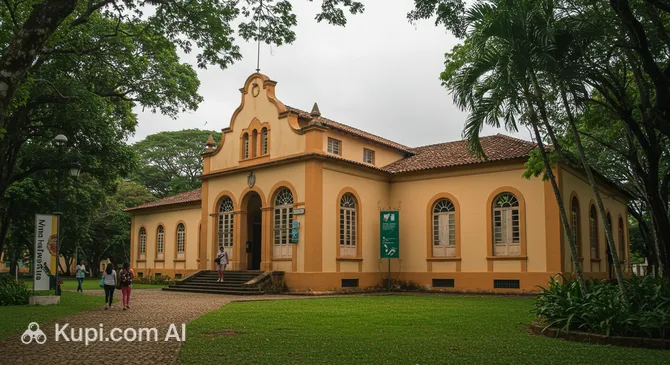
National Museum of Immigration and Colonization
National Museum of Immigration and Colonization. Иллюстрация. Источник: Kupi.com AI

The museum is housed in the majestic historical building, Maison de Joinville, built in 1870. This architectural masterpiece, inspired by 19th-century Parisian style, once served as the residence for the managers of the Prince of Joinville's estate. Today, its halls hold thousands of artifacts: from the personal belongings of the first settlers to agricultural tools and rare documents.

The exhibition covers the daily lives of immigrants from Germany, Italy, Poland, and Ukraine, clearly demonstrating their contribution to the region's development. On the museum's extensive 6,000 m² grounds, you can find not only exhibition halls but also an authentic wooden house from the early 20th century, as well as take a stroll through the shady forest of Bosque Tranquilo, which offers peace right in the heart of the busy city.

Contacts

To clarify information about special exhibitions or to plan a group visit, you can use the museum's official contact details.

Contact Information:

How to contactContact
AddressR. Rio Branco, 229 - Centro, Joinville - SC, 89201-080, Brazil
Phone+55 47 3433-3736
Websitewww.joinville.sc.gov.br

What to Do

A fascinating journey through time awaits you within the museum walls. You can explore the daily life of the first colonists in detail: see antique furniture, kitchen utensils, craftsmens' tools, and the personal belongings of families arriving from Europe. Pay special attention to the collection of photographs and letters, which literally allow you to hear voices from the past and understand the challenges people faced in the New World.

Be sure to head out to the garden to see the traditional wooden house (chalet) from the early 20th century. It was moved here from the surrounding area and fully restored, preserving original wagons and farming equipment. This site allows you to see firsthand the construction techniques that settlers brought from their homelands and adapted to local conditions.

After exploring the exhibits, it’s pleasant to take a walk through Bosque Tranquilo — the "Quiet Woods" surrounding the museum. This park area is perfect for quiet reflection. If you're lucky, you might catch one of the cultural events or festivals regularly held on the museum grounds, introducing guests to the music, dance, and cuisine of the region's founding peoples.

Getting There

The National Museum of Immigration and Colonization is located in the heart of the city at Rua Rio Branco, 229. Thanks to its central location, it is easy to reach both by public transport and on foot from the city's main tourist spots.

If you prefer buses, most city routes pass through the central terminal, from where the museum is just a 5–10 minute walk. This makes visiting the museum a convenient point on any traveler's itinerary.

For those who value comfort, taxi services or ride-sharing apps are always available. If you are traveling by rental car, there are parking spaces near the museum complex, which significantly simplifies navigation in the center of Joinville.

Ближайший город: Joinville

History & Facts

The building that houses the museum today is a unique historical monument in its own right. Known as Maison de Joinville or the "Prince's Palace", it was erected between 1867 and 1870. Originally, the house was built as a residence for the administrator of the lands belonging to Prince François d'Orléans, Prince of Joinville, and his wife, Princess Dona Francisca.

Interestingly, although the Prince and Princess owned this territory (it was part of their wedding dowry), the royal couple never actually visited the place. Nevertheless, it was their decision to open these lands for colonization that opened the doors for thousands of European settlers, whose history is now carefully preserved within the museum walls.

In the early 20th century, the complex was expanded: a typical settlers' wooden house was moved to the site and restored. This allowed for a visual representation of how the region's architecture and daily life changed under the influence of German, Italian, Polish, and Ukrainian traditions.

Following a recent large-scale restoration of the main building, the exhibitions have become more modern. The museum does not just display antiques; it tells a story of success, hardships, and the cultural fusion that formed the unique character of the southern part of the country.

Time Needed

To leisurely explore the main exhibition in the primary building, visit the authentic wooden house, and walk through the garden, visitors usually need about 1 hour. This is enough time to soak in the history and take some memorable photos.

If you plan to study the documents and photographs in detail or take advantage of a guide's services for a deeper dive into the context, you should allow 1.5–2 hours for your visit. The museum is an excellent place for an educational break in the middle of a busy sightseeing day.

Working Hours

When planning your visit to the National Museum of Immigration and Colonization, please note that the museum is open to visitors six days a week. Admission to the museum is free for all categories of visitors.

Opening hours:

  • Monday: Closed
  • Tuesday – Sunday: 10:00 AM to 4:00 PM
DayWorking hours
ПонедельникЗакрыто
Вторник10:00 – 16:00
Среда10:00 – 16:00
Четверг10:00 – 16:00
Пятница10:00 – 16:00
Суббота10:00 – 16:00
Воскресенье10:00 – 16:00

Nearby

A walk around the museum's surroundings will allow you to dive even deeper into the city's atmosphere and find interesting places for the whole family to relax. The central district offers both historical sites and modern entertainment venues.

Check out the list of nearby attractions:

NameDistance
Palm Tree Street0.1 km
Joinville Central Bus Terminal0.3 km
Quiero Café0.4 km
UNDR Bar0.4 km
Mueller Shopping Mall0.5 km
TYPE Joinville0.6 km
Café Retrô Confectionery0.6 km

Reached the end of the page?

That means the route is fully explored