Support

Phnom Bakheng

About

Atop a picturesque hill in legendary Angkor rises Phnom Bakheng — a grand Hindu mountain temple. This architectural masterpiece, located in the city of Siem Reap, was built as a symbol of the sacred Mount Meru, which in Hindu cosmology is considered the center of the universe. A journey to a country like Cambodia is hard to imagine without visiting this significant historical site.
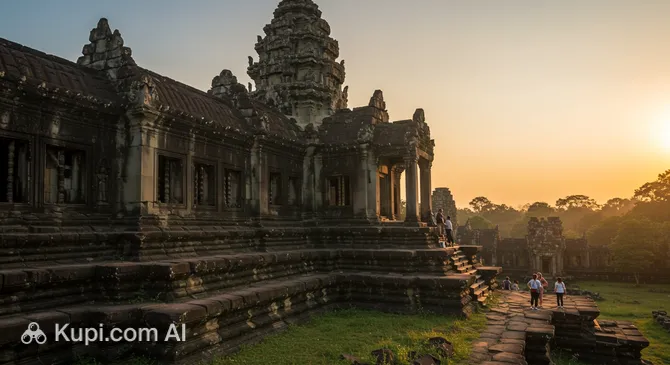
Phnom Bakheng
Phnom Bakheng. Иллюстрация. Источник: Kupi.com AI

The temple is a majestic stepped pyramid with a square base. Five terraces, rising one above the other, were once adorned with 109 sandstone towers. Five large prasat towers crown the upper level, creating a recognizable and mystical silhouette against the sky.

As one of the oldest structures of the Khmer Empire in this region, Phnom Bakheng attracts tourists with its monumentality and unique location. It serves as an excellent introduction to the rich history and spiritual heritage of ancient Angkor, offering guests a chance to touch eternity.

Contacts

To plan your visit to the temple complex, it's helpful to have the official contact details at hand. This will help you clarify information regarding access or visiting rules for Phnom Bakheng.

How to contactContact
AddressCVF4+GCF Angkor Archaeological Park, ក្រុងសៀមរាប 17000, Cambodia
Phone+855 63 765 577

What to Do

A visit to Phnom Bakheng offers a rare opportunity to see Angkor from a bird's-eye view. One of the main activities here is the ascent via four wide staircases to the summit, which offers a panoramic view of the surrounding area. From the highest point, you can spot the five famous towers of Angkor Wat, the forests stretching to the horizon, and even the waters of the West Baray.

Art lovers should take a close look at the temple's architectural design. Stone lion figures remain on the terraces, and the walls of the sanctuaries are decorated with images of apsaras — celestial nymphs. Pay attention to the tympanums depicting mythical makara monsters, which demonstrate the incredible skill of ancient Khmer stone carvers.

For those interested in ancient science, Phnom Bakheng reveals itself as a true astronomical calendar. The arrangement of its 108 towers symbolizes the four phases of the Moon, each lasting 27 days. A walk through the grounds becomes a fascinating exploration of how ancient builders embodied their knowledge of the cosmos in monumental stone forms.

Getting There

The most convenient way to reach the ancient Phnom Bakheng temple is from the center of Siem Reap. The site is located at: CVF4+GCF Angkor Archaeological Park, Cambodia. Most tourists prefer to rent a tuk-tuk or hire a taxi for the day to travel comfortably between the numerous monuments of Angkor.

For those who value organization, group or private tours that include hotel transfers are an excellent option. If you prefer independence, you can use mobile taxi-hailing apps or arrange a ride with local drivers. There is no direct public transport (such as metro or regular buses) to the temple.

Ближайший город: Siem Reap

History & Facts

The history of Phnom Bakheng dates back to the late 9th century. The temple was built between 889 and 907 under the orders of King Yasovarman I. After becoming ruler, he decided to found a new capital for the Khmer Empire — the city of Yasodharapura. This temple became his first primary sanctuary, marking the shift of the center of power from Roluos to the Angkor region.

Originally, this majestic structure was dedicated to the Hindu god Shiva. The temple was surrounded by an impressive wall, with each side measuring 4 kilometers. Phnom Bakheng holds immense historical significance as the earliest example of an architectural plan that became classic: the use of a multi-tiered foundation with five sanctuaries on the summit.

Over time, as Buddhism began to prevail in the region, the temple was adapted for the new faith. Buddha statues were installed here in subsequent centuries, though many have not survived to the present day. A period of active clearing and scientific restoration of the monument began in 1919 and lasted over ten years, restoring the grandeur of this Angkor "elder," built two centuries before the famous Angkor Wat, to the world.

Time Needed

For a complete and leisurely exploration of Phnom Bakheng, it is recommended to set aside about 1–2 hours. This will allow you to comfortably climb the hill, study the architectural details of the five terraces, and see the surviving sandstone towers.

If you plan to visit during hours when the light is most favorable for photography, or if you simply want to enjoy the panoramic views of the Angkor area for longer, you should budget for a longer stay. Keep in mind that climbing the hill requires some physical effort, so it is best to have a little extra time for rest.

Working Hours

Phnom Bakheng temple is hospitably open to visitors throughout the week. You can visit on any day from Monday to Sunday. The opening hours are from 06:00 to 19:00.

This schedule allows tourists to experience both the early morning hours, when the air is still cool, and the evening, when the soft sun paints the ancient sandstone in warm hues.

6:00 – 19:00

Nearby

Exploring the surroundings of Phnom Bakheng allows you to dive deeper into the atmosphere of the ancient civilization and witness the diversity of Khmer architecture. Since the temple is located in the heart of the archaeological park, many other iconic sites are nearby.

NameDistance
South Gate of Angkor Thom0.6 km
Angkor Wat1.7 km
Vimean Sokha Museum4.3 km
War Museum Cambodia4.7 km
Angkor Phokeethra Golf & Spa Resort5.6 km
The Community5.8 km
Angkor National Museum6.4 km

Reached the end of the page?

That means the route is fully explored