Support

Wat Luang

About

In the heart of Pakse stands the magnificent Wat Luang—the region's primary Buddhist temple and a true architectural masterpiece. This sanctuary is not only a significant religious site but also a national symbol of the rich spiritual heritage that Laos is proud of. The temple complex represents a harmonious blend of ancient traditions and exquisite decoration.
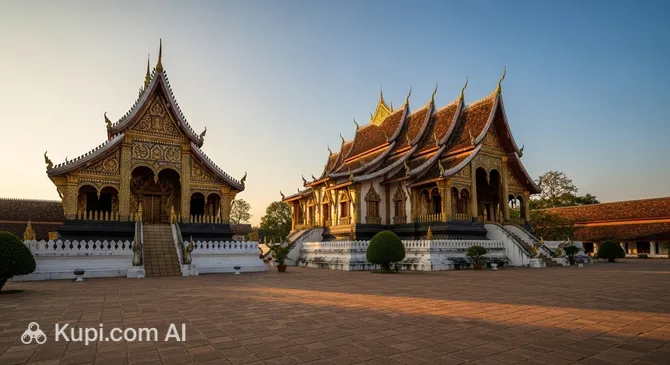
Wat Luang
Wat Luang. Иллюстрация. Источник: Kupi.com AI

The centerpiece of the complex is its majestic tower, with a base shaped like a blooming lotus flower. The shimmering gilding covering the facade creates an incredible impression, especially in the sunlight. It is rightfully considered one of the most significant Buddhist ensembles in Indochina, drawing pilgrims and travelers from around the world with its serene atmosphere.

A visit to Wat Luang allows you to touch history dating back to the 16th century. Although the main stupa in its current form took shape several centuries ago, it remains an intellectual center of Buddhism, where traditions are carefully preserved and passed down through generations.

Contacts

For up-to-date information on visiting rules or planned religious ceremonies, you can use the following contact details:

Please note that there is no official website or email listed for the temple complex in open sources, so it is best to resolve any questions on-site or by phone.

How to contactContact
Address4QCX+P49, 13, Pakxé, Лаос
Phone+856 20 91 473 699

What to Do

A visit to Wat Luang offers guests a rare opportunity to immerse themselves in a world of Buddhist aesthetics and tranquility. The main highlight is a careful exploration of the main tower and its surrounding galleries. By studying the architectural details, you can see how the concept of the universe is embodied in stone and gold, where every element holds sacred meaning.

For photographers, this place is a treasure trove of subjects. Golden ornaments, vibrant murals, and elegant Buddha statues look particularly striking in daylight, as sunlight glints off the polished surfaces. Be sure to take time to examine the decorative elements of the galleries encircling the central stupa.

Beyond visual delight, you can make a pilgrimage, observe the monks' daily rituals, or simply sit in silence, savoring the moment. The temple's atmosphere invites reflection and provides a chance to escape the city bustle, feeling the pulse of Pakse's spiritual heart.

Getting There

Reaching this spiritual center is easy as it is located within the city. The primary mode of transport for tourists in Pakse is tuk-tuks—this traditional transport allows for a quick ride to the complex entrance from anywhere in the center. Renting bicycles or scooters is also a popular way to explore the city independently.

If you are arriving in the region by air, the distance from the airport to the temple is about 15–20 kilometers. You can use a taxi or pre-book a transfer. The temple is within walking distance for those staying in central hotels, making it a convenient stop during a walk along the riverfront.

Ближайший город: Pakse

History & Facts

The history of this sacred site is rooted in the deep past. The modern appearance of Wat Luang is largely thanks to King Setthathirath, who ordered extensive construction on the site of an ancient 13th-century tower in 1566. For centuries, the complex served as an intellectual and spiritual center of Buddhism, attracting monks not only from neighboring regions but also from Thailand and Cambodia.

The architecture is steeped in deep symbolism. Every detail reflects Buddhist cosmology: the main tower represents the sacred Mount Meru, the galleries surrounding it symbolize mountain ranges, and the surrounding space represents the endless ocean. It is not just a building, but a stone model of the universe as envisioned by ancient architects.

In 1931, the complex underwent a major restoration, which helped preserve its unique decorative elements for future generations. Today, it remains an essential pilgrimage site, confirming its status as one of the most significant monuments of religious heritage in Southeast Asia.

Time Needed

To leisurely explore all the buildings in the complex, study the detailed carvings and gilding, and soak up the peaceful atmosphere, visitors typically need 1 to 2 hours. This is plenty of time for a thoughtful visit and taking beautiful photographs.

If you plan to attend a morning service or want to wait for the soft evening light, which highlights the golden architectural elements particularly well, it’s worth setting aside a bit more time. A visit here can easily be fitted into a morning itinerary, leaving the evening for walks along the riverfront.

Working Hours

The exact opening hours of Wat Luang may vary depending on the religious calendar and festivals. Typically, Buddhist temples in Laos are open to visitors from early morning until sunset, allowing you to see the complex in different lighting conditions.

Before planning your visit, it is recommended to check the current schedule on-site or verify information on official tourism portals. Remember to follow the dress code (shoulders and knees covered) and maintain silence when visiting this holy site.

Nearby

The temple's location in a lively part of the city allows tourists to easily combine a spiritual program with relaxation and exploring other interesting spots. A stroll around the area helps you better experience the local flavor and get a feel for the city's modern life.

NameDistance
Dok Mai Lao Café & Restaurant0.4 km
Heaven Guesthouse and Restaurant2.2 km
Champasak Grand Hotel2.3 km
Wat Phou Salao3.4 km

Reached the end of the page?

That means the route is fully explored