Support

Angkor National Museum

About

A deep dive into the majesty of ancient Khmer civilization should begin with a visit to the Angkor National Museum. This modern archaeological complex, located in the city of Siem Reap, serves as a "gateway" to understanding the grand temples that have made Cambodia world-famous.
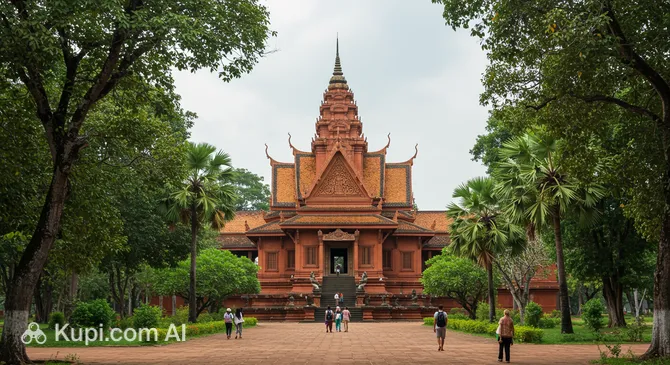
Angkor National Museum
Angkor National Museum. Иллюстрация. Источник: Kupi.com AI

The museum covers an impressive area of over 20,000 square meters and is one of the leading cultural centers in the region. Its mission is to carefully preserve and showcase priceless artifacts from the Khmer Empire period (9th–14th centuries), allowing visitors to see the art, religion, and daily life of this era in minute detail.

Unlike the open-air ruins, the exhibits here are displayed in high-tech, climate-controlled halls. The museum's collection features thousands of unique finds, ranging from delicate Apsara sculptures to monumental steles with ancient inscriptions. Visiting this site is highly recommended before heading to Angkor Wat itself, to arm yourself with knowledge and gain a new perspective on the ancient stones.

Contacts

For more details or group bookings, you can use the museum's official contact information.

How to contactContact
Address968 Vithei Preah Sihanouk Ave, Krong Siem Reap, Cambodia
Phone+855 63 966 601
Websitewww.angkornationalmuseum.com

What to Do

Your journey through the exhibits begins in the cinema, where a short introductory film is shown. This helps set the mood and provides a general overview of the history of the temples' construction and the reign of the great kings. Afterward, you will embark on a tour of eight thematic galleries, each revealing a different facet of Khmer culture.

Special attention should be paid to the "Gallery of a Thousand Buddhas," which houses an impressive collection of statues from various styles and eras. Visitors can examine the detailed Apsara sculptures—celestial dancers—study ancient scripts on stone tablets, and see how the empire's architectural trends evolved over centuries. For practicing Buddhists, there is a special hall where religious ceremonies can be performed in a quiet and solemn atmosphere.

Interactive elements, video materials, and detailed explanations in several languages make the walk through the halls engaging even for those who are not professional historians. Here, you can spend hours admiring the intricate stone carvings and learning the mythological stories that you will later encounter on the walls of the open-air temples.

Getting There

The Angkor National Museum is conveniently located at 968 Vithei Preah Sihanouk Ave. It is situated on the route from the city center to the famous temple complex, making it a logical first stop on an excursion around the region.

The most popular and colorful way to get here is by hiring a tuk-tuk. A ride from the center of Siem Reap takes no more than 10–15 minutes. You can also use a regular taxi or rent a bicycle if you prefer an active way of getting around.

For those traveling by their own or a rented vehicle, parking for cars and two-wheeled transport is provided on the museum grounds. Public transport in the traditional sense (buses) is not well-developed here, so relying on private drivers is the most practical solution.

Ближайший город: Siem Reap

History & Facts

The Angkor National Museum opened its doors on November 12, 2007. This project was an important step in preserving and promoting the rich cultural heritage of the Khmer Empire, providing the world with a modern space to study ancient artifacts.

The core of the impressive collection consists of items provided by the National Museum of Cambodia and the French School of the Far East (EFEO). Many of these objects were found during archaeological excavations in the historical region of Angkor, which had hidden its secrets in the jungle for centuries.

Today, the museum's archives house approximately six thousand artifacts. The exhibition is designed so that visitors can trace the entire development of the Khmer civilization—from the birth of religious traditions to the peak of the empire's architectural and cultural flourishing.

Interestingly, the museum complex itself is managed by the Thai company Thai Vilailuck International Holdings, which has provided the facility with modern infrastructure and high international standards of museum management.

Time Needed

To ensure your visit is more than just a quick look, we recommend allowing 2 to 3 hours for your tour. This is the optimal amount of time to immerse yourself in the history of each of the eight thematic galleries without rushing.

This timeframe allows for watching the introductory film, studying the information boards in detail, and quietly contemplating the unique statues. If you plan to use an audio guide or read the descriptions of each stele carefully, your visit could extend to half a day.

Working Hours

The Angkor National Museum is open to visitors daily, with no days off. The standard opening hours are as follows:

  • Monday — Sunday: 08:30 – 18:00

Please note that the schedule may change slightly during public holidays, so it is worth checking the official website or asking at your hotel's reception desk before your visit.

8:30 – 18:00

Nearby

A visit to the museum pairs perfectly with exploring other city sights. Since the museum is located right at the entrance to the historical zone, you can easily plan your day by adding parks or royal residences to your itinerary.

Exploring the surrounding area will help you better feel the atmosphere of the modern city and see how ancient history sits side-by-side with modern entertainment.

NameDistance
Royal Independence Gardens0.4 km
The Heritage Walk0.5 km
Preah Ang Chek Preah Ang Chorm Shrine0.5 km
The Community0.7 km
Angkor Phokeethra Golf & Spa Resort0.8 km
Made in Cambodia Market0.8 km
Wat Bo1.1 km

Reached the end of the page?

That means the route is fully explored