Support

Wat Thung Si Mueang

About

In the very heart of Ubon Ratchathani lies a true island of tranquility and spirituality—the ancient Buddhist temple Wat Thung Si Muang. Located on the grounds of the public park of the same name, this complex stands out for its peaceful atmosphere and impeccable cleanliness, offering travelers a rare opportunity to escape the city noise and immerse themselves in reflection.
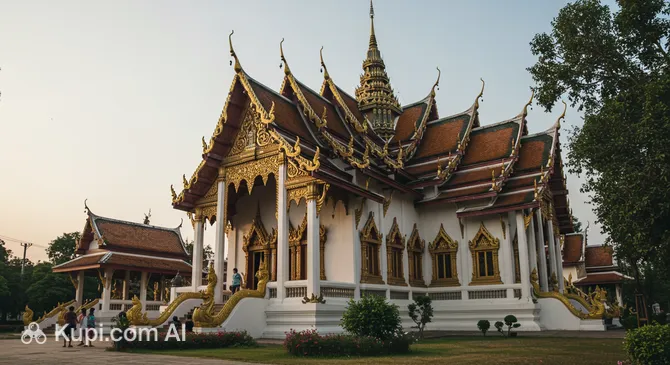
Wat Thung Si Mueang
Wat Thung Si Mueang. Иллюстрация. Источник: Kupi.com AI

The main treasure and visual symbol of the temple is Ho Trai Klang Nam—a unique Tripitaka Hall built right in the middle of a picturesque pond. This elegant wooden structure was created to store sacred texts and palm leaf manuscripts. Its architecture is an exquisite fusion of Thai, Burmese, and Lao styles, while its position over the water served as a reliable protection for the ancient relics against insects.

For anyone visiting Thailand in search of authentic culture, this temple will be an important discovery. Wat Thung Si Muang combines historical significance, refined art, and natural harmony, remaining one of the most significant and revered sites in the entire Isan region.

Contacts

To confirm up-to-date information before your visit or when planning group tours, you can use official resources and maps.

Below are the main contact details for communication and navigation:

How to contactContact
Address95, ซอย Soi Luang, ตำบล ในเมือง, Amphoe Mueang Ubon Ratchathani, Chang Wat Ubon Ratchathani 34000, Thailand
Website2voi.com

What to Do

A visit to this temple is, above all, an opportunity to slow down and enjoy the aesthetics of antiquity. Be sure to take the time to inspect Ho Trai Klang Nam. This building is incredibly photogenic: its wooden walls and carved elements are beautifully reflected in the still water of the pond, creating ideal conditions for memorable photos. Step closer to examine the finest carvings, where the traditions of different peoples are intertwined.

Take a walk through the spacious and well-maintained grounds of the complex. Here you can see how modern-day monks live, observe locals coming for prayer, and feel the living connection between eras. Meditation or simply quiet contemplation by the water will help restore your strength after exploring the city.

Those interested in history should pay attention to the sacred manuscripts kept here and appreciate the craftsmanship of the ancient builders who managed to create a building that has stood on stilts in the water for centuries. After touring the temple, you can continue your relaxation in the adjacent public park, which boasts a similarly welcoming and harmonious atmosphere.

Getting There

Finding this spiritual center is quite easy as it is located in the very heart of Ubon Ratchathani. If you are already in the central part of the city, the temple is easily reachable on foot by following signs for the Thung Si Muang public park.

For those traveling from more distant areas, the airport, or the railway station, taxis or traditional Thai tuk-tuks are the best choices. Local drivers know this place well, so you can simply state the name of the temple. Additionally, songthaews (shared pickup trucks) run through the city—this is the most budget-friendly way to get around and offers a taste of local life.

If you prefer complete freedom of movement and have rented a car or motorbike, enter the address into your navigator: 95 Soi Luang. There is usually plenty of parking space near the temple complex, and its central location allows you to combine your visit with other city attractions, such as Wat Luang.

Ближайший город: Ubon Ratchathani

History & Facts

The history of this sacred site dates back to the mid-19th century. The temple was founded around 1842 during the reign of King Rama III. Interestingly, it was originally part of the neighboring Wat Manivanaram, but the territory was later divided, and the sanctuary gained independent status.

The pride of the complex, the wooden Ho Trai Klang Nam library, also appeared during this period. Its construction served both aesthetic and purely practical purposes. Placing the library in the middle of the water was an ingenious engineering solution for its time: it allowed the priceless Buddhist manuscripts to be reliably protected from termites, ants, and other insects that could destroy the fragile palm leaves.

The architectural style of the temple buildings is a living testament to the cultural fusion of the Isan region. Here, you can see a harmonious blend of Thai, Burmese, and Lao styles, highlighting the city's important role as a historical crossroads of Southeast Asian civilizations.

For nearly two centuries, the temple has remained a vital cultural and spiritual anchor for the region. For its careful preservation of the unique Ho Trai library, the complex has been honored with prestigious awards, confirming its status as one of the most valuable architectural monuments in Thailand.

Time Needed

To leisurely admire all the details of this amazing place, visitors usually need about 1 to 2 hours. This time is quite sufficient to stroll along the well-kept paths, enter the main hall, and study the architecture of the famous library on the water in detail.

If you are a photography enthusiast or plan to practice meditation in a quiet setting, it is worth setting aside a bit more time. The reflections of the ancient buildings in the pond at different times of day create unique views that you will want to observe without rushing, enjoying the silence and the cleanliness of the grounds.

Working Hours

The temple is an active religious site and is typically open to visitors during daylight hours. Nevertheless, exact opening hours may vary depending on religious holidays or internal community events.

To plan your visit, we recommend following the standard schedule of most Thai temples (approximately from 08:00 to 17:00) or checking for up-to-date information on the official website before your trip.

Nearby

The city-center location makes this temple an excellent starting point for further exploration of the province's culture and daily life. A stroll through the neighborhood will allow you to see not only other sacred sites but also to immerse yourself in modern city life with its cozy cafes and leisure areas.

Exploring the nearby streets will help you form a more complete picture of Ubon Ratchathani, as historical monuments and family entertainment venues are located just a stone's throw away.

NameDistance
Ubon Ocha0.2 km
Thung Sri Mueang0.4 km
Ubon Ratchathani National Museum0.5 km
Phadaeng Hotel0.5 km
Wat Chaeng0.7 km
Huai Muang Park2.7 km
Nong Bua Public Park4.1 km

Reached the end of the page?

That means the route is fully explored